
Strategic Value of 700mm Excavator Rubber Pads
Disclaimer: Precise performance figures (such as surface-stress and noise reductions), torque specifications, and lifespan estimates provided in this article are illustrative guidelines. These values vary significantly by machine weight, substrate, pad compound, and OEM. Always consult the manufacturer’s specification sheet for exact values, as improper installation can void warranties or create jobsite hazards.
For complex urban infrastructure projects—such as utility trenching along a busy city street or operating on a heritage stone plaza—managing ground disturbance is as critical as the excavation itself. For mid-to-heavy machinery, utilizing bare steel tracks presents unacceptable risks to finished asphalt, concrete, and underground utilities. Using 700mm rubber pads provides the strict surface protection mandated by municipal regulations while maintaining necessary operational mobility.
However, operators must account for practical limitations and trade-offs. While these pads provide excellent grip on flat, hard surfaces, they reduce traction compared to bare steel on soft, muddy, or steep terrain, where bare steel or alternative track systems may be safer. Additionally, rubber compounds have specific temperature operating limits and can degrade rapidly when exposed to harsh oils, chemicals, or solvents. Adapting existing steel-tracked fleets with these bolt-on pads is often a practical alternative to maintaining dedicated rubber-tracked machines exclusively for city environments, provided these limitations are respected.
What 700mm Excavator Rubber Pads Are
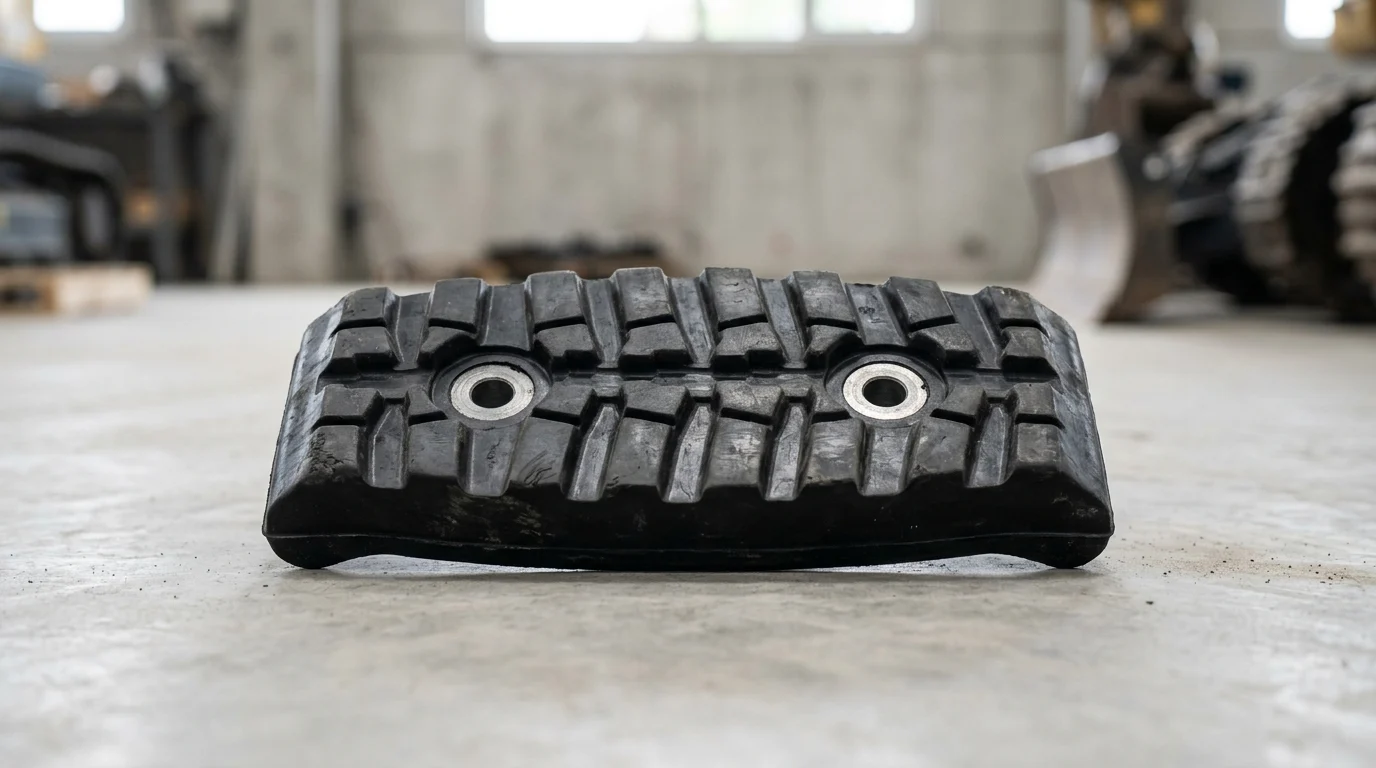
Understanding 700mm Excavator Rubber Pads requires looking beyond their basic geometric profile. The “700mm” designation refers specifically to the width of the steel track shoe they are designed to cover, rather than implying universal interchangeability across all machines with 700mm shoes. High-quality rubber pads are typically manufactured from a vulcanized blend of natural and synthetic rubber, reinforced with an internal steel plate. This dense composition helps ensure the pads can support heavy, dynamic machine weights without undergoing shear failure or chunking during high-friction pivot turns. Note that the added weight of these pads can slightly alter the machine’s transport requirements and overall ground bearing pressure.
Key Urban Site Conditions to Consider
Urban site conditions dictate strict operational and environmental parameters. When deploying equipment on metropolitan streets, minimizing ground bearing pressure and acoustic emissions is essential. A 700mm footprint effectively distributes the machine’s load, with surface stress reductions of up to 40% compared to exposed steel grousers. Furthermore, the rubber compound dampens structural vibrations transmitted from the undercarriage, which can yield a noise reduction of 5 to 10 decibels during tramming.
Crucially, these precise performance figures are not universal; they depend heavily on machine weight, substrate, travel speed, pad compound, and the specific OEM. Direct readers to the manufacturer’s specification sheet for exact values. Additionally, operators should check local road-authority, municipal permit, and utility-protection requirements, rather than treating noise reduction alone as sufficient for urban approval.
How to Compare 700mm Excavator Rubber Pads
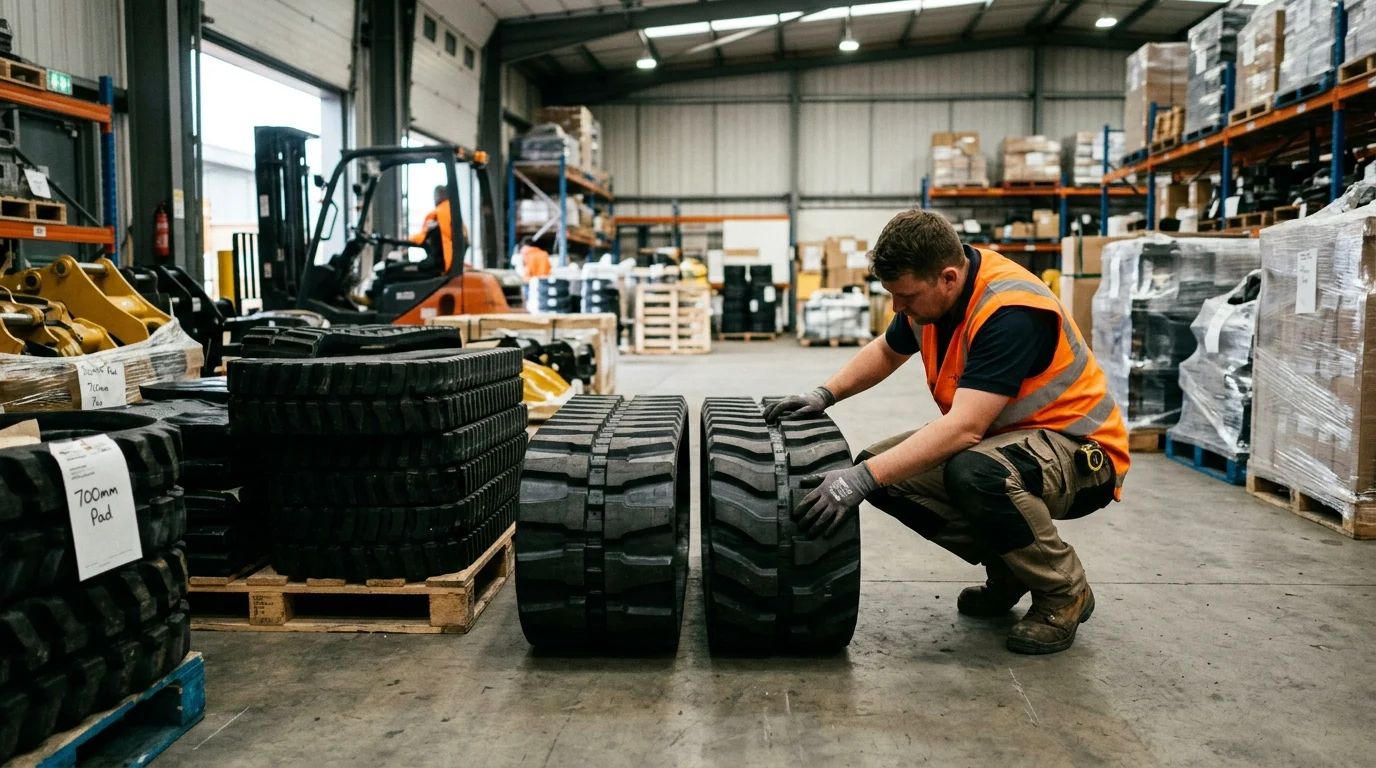
When evaluating procurement options, superficial similarities in rubber track pads often mask differences in steel-core grade, hardware quality, and vulcanized rubber compound. Comparing 700mm models requires an analysis of both material science and mechanical design to ensure a favorable total cost of ownership and prevent unexpected failures on the active job site.
Technical Specifications to Check
The technical specifications of the pad directly influence its operational lifespan and reliability. Buyers should prioritize examining the total rubber volume, the thickness of the internal steel core, and the specific abrasive resistance of the synthetic compound. Optimal durability generally relies on a high tensile strength (a measure of the force required to tear the rubber, often exceeding 15 MPa) alongside appropriate hardness and abrasion resistance.
Note: The following table is an illustrative example of one supplier’s product tiers and should not be read as an industry-wide standard, as metrics like DIN abrasion-loss, Shore A hardness, and lifespan numbers are not universal.
| Specification Metric | Standard Duty Pad | Heavy-Duty Premium Pad |
|---|---|---|
| Rubber Hardness | 65 – 70 Shore A | 75 – 82 Shore A |
| Internal Steel Core | 3mm Stamped Steel | 5mm Forged Steel |
| Expected Lifespan | 800 – 1,200 Hours | 1,500 – 2,000+ Hours |
| Abrasion Loss (DIN 53516) | < 0.8 cm³ | < 0.4 cm³ |
Understanding how to apply these metrics is key to matching a pad to your specific machine weight, travel distance, and surface abrasiveness. Shore A measures the rubber’s indentation hardness; selecting a higher Shore A (75+) for heavier machines helps resist punctures from urban debris. DIN 53516 abrasion loss measures the volume of rubber lost under standardized friction; a lower volume loss is critical for machines that will tram long distances over highly abrasive milled asphalt or concrete. Finally, align the Expected Lifespan with your project duration to avoid mid-job replacements.
Comparison Criteria for Bolt-On Pads
For the expansive 700mm track width, bolt-on pads are generally preferred over clip-on or chain-on variants. The lateral shear forces generated by heavy excavators turning on high-friction asphalt can stretch or dislodge clip-on brackets, making direct bolt-on mounting the most secure option for heavy-duty applications. However, clip-on or chain-on pads might still be appropriate for lighter machines or temporary jobs where rapid installation and removal are prioritized over maximum shear resistance.
When comparing bolt-on designs, scrutinize the mounting hardware and core design. The integration typically utilizes Grade 8.8 or Grade 10.9 high-tensile steel bolts. During installation, these bolts require a precise torque application—often cited as 150 to 200 Nm, though actual torque values are highly dependent on bolt diameter and grade. Installers must always use the specific torque settings found in the pad or OEM manual to prevent vibrational loosening. Pads featuring deeply recessed bolt holes are also recommended to protect bolt heads from direct abrasion against curbs, rocks, or construction debris.
Sourcing, Installation, and Selection Guidance
Proper sourcing, precise installation, and ongoing maintenance are the final steps in a successful deployment strategy.
Key Takeaways
- Use 700mm rubber pads on steel-tracked excavators when urban surface protection is required for asphalt, concrete, stone paving, or utility-sensitive areas.
- Verify that “700mm” matches the steel shoe width, but also confirm bolt pattern, machine model, shoe profile, and OEM fitment before purchase.
- Expect rubber pads to reduce surface damage, vibration, and noise on hard urban surfaces, but confirm exact performance values from the manufacturer’s specification sheet.
- Avoid relying on rubber pads for maximum traction in mud, soft ground, loose material, or steep terrain where bare steel tracks may be safer.
- Inspect pad compound condition, steel cores, and mounting hardware regularly because chemicals, heat, pivot turns, and loose bolts can shorten service life.
- Account for the added pad weight when planning transport, ground pressure, and equipment access on restricted city jobsites.
Frequently Asked Questions
What does 700mm mean on excavator rubber pads?
It refers to the width of the steel track shoe the pad is designed to cover. It does not guarantee universal fit, so buyers should confirm bolt pattern, shoe profile, machine model, and OEM specifications before ordering.
Why use rubber pads instead of bare steel tracks in cities?
Rubber pads help protect asphalt, concrete, stone paving, and utility-sensitive surfaces from steel grouser damage. They also reduce vibration and operating noise, which can support compliance with municipal jobsite restrictions.
Are 700mm rubber pads suitable for muddy or steep sites?
Not always. Rubber pads perform best on hard, flat urban surfaces. On mud, soft ground, loose material, or steep slopes, bare steel tracks or another track system may provide safer traction.
Can rubber pads reduce excavator noise?
Yes, rubber pads can dampen undercarriage vibration and may reduce tramming noise by several decibels. Actual results depend on machine weight, travel speed, surface type, pad compound, and OEM design.
What should be checked before installing bolt-on pads?
Confirm fitment, hardware grade, torque requirements, clearance, pad orientation, and manufacturer instructions. Incorrect installation can loosen hardware, damage the undercarriage, create jobsite hazards, or void warranties.
Post time: Jul-09-2026