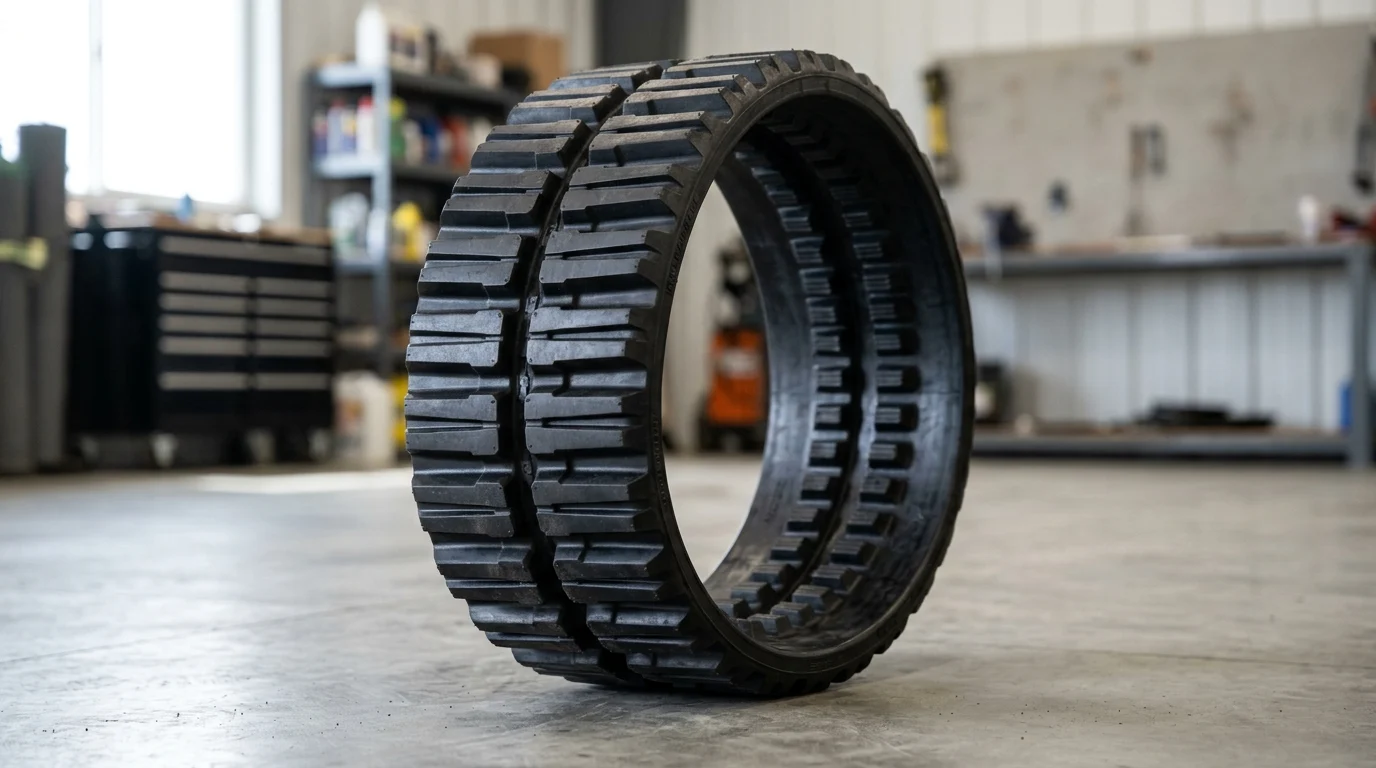
Define Your ASV Rubber Track Requirements
Selecting the correct ASV rubber track for a multi-terrain loader (MTL) is a critical operational decision for fleet managers, owner-operators, and purchasing staff. It directly impacts machine performance, undercarriage longevity, and overall return on investment. Unlike conventional compact track loaders (CTLs) that utilize heavy steel-embedded tracks, ASV’s proprietary Posi-Track undercarriage requires specialized non-metal core tracks. This unique architecture relies on internal drive lugs and an involute sprocket system—a curved gear design that allows for smooth, rolling engagement rather than sliding friction—to transfer power. Consequently, precise track selection is paramount to prevent premature wear, drive system friction, and catastrophic derailment in the field.
Identify the Loader Model and Track Size
The foundational step in the selection process is accurately identifying the specific loader model and its corresponding track dimensions. Track sizing for ASV machines is conventionally denoted by width, pitch, and the number of drive lugs. For example, a standard replacement track for an ASV RT-75 typically measures 18 inches in width, featuring a 4-inch pitch and 51 internal drive lugs (often formatted in catalogs as 18x4x51).
Common ASV track widths range from 11 inches for compact landscaping units up to 20 inches for heavy-duty forestry models like the RT-120. Operators and fleet managers must cross-reference the OEM service manual or locate the dimensional stamping on the inside of the existing track carcass to guarantee an exact match. Installing a track with an incorrect pitch or lug count will immediately cause sprocket binding and drive motor failure.
Document Terrain, Load, and Duty Cycle
Once baseline dimensions are established, buyers must evaluate the primary operating environment to determine the appropriate tread profile and rubber compound. Terrain characteristics strictly dictate the required ground contact area. ASV loaders are engineered to minimize surface disruption, often achieving exceptionally low ground pressures—typically ranging between 3.0 and 4.5 psi as a general example, depending on the specific machine model and configuration—when paired with the correct track width.
For applications dominated by delicate turf, golf courses, or snow removal, a smooth or multi-bar tread minimizes surface scarring while maximizing flotation. Conversely, aggressive block or staggered-pad treads are necessary for muddy, forestry, or highly uneven topography where forward traction is the primary constraint. Documenting the anticipated duty cycle—whether the machine will operate for a continuous 1,000-hour annual shift or intermittent 300-hour seasonal usage—further informs the required durability tier and helps justify the initial capital outlay.
Compare Track Specifications and Build Quality
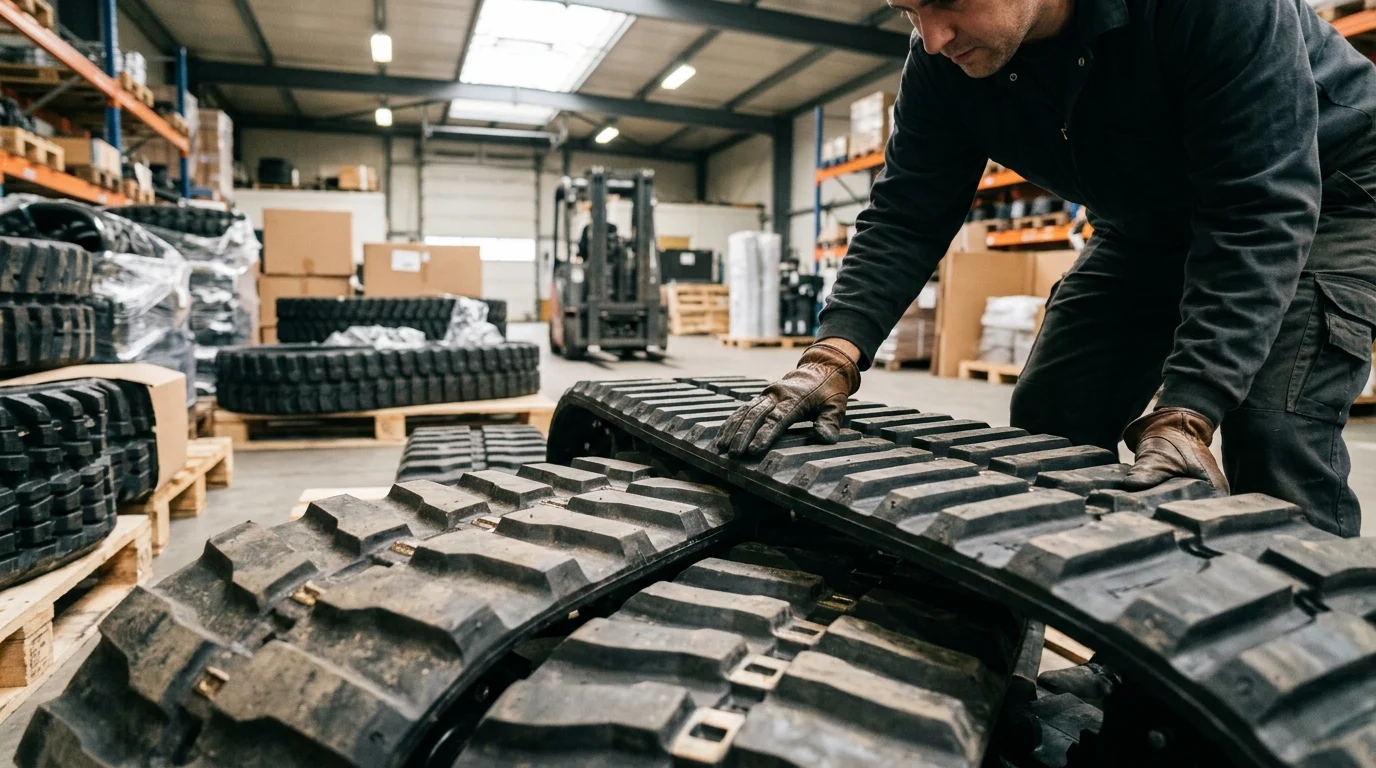
After defining the dimensional and environmental prerequisites, the focus shifts to evaluating the structural integrity of the track itself. Because ASV rubber tracks lack a rigid steel core, the carcass construction assumes the entire burden of structural stability. The tensile strength, anti-stretch properties, and tear resistance of the internal belting are the primary differentiators between high-performance replacement tracks and subpar alternatives.
Evaluate Tread Pattern and Carcass Construction
An expert evaluation of carcass construction begins with the internal cord material. Premium ASV tracks utilize continuous, high-tensile aramid fibers—commonly known as Kevlar—rather than standard polyester cords. Aramid cords provide superior resistance to elongation, ensuring the track maintains its required tension without stretching beyond the undercarriage’s adjustment limits. If a track stretches by more than 1.5 to 2.0 percent over its lifespan, it risks skipping over the drive sprocket and causing extensive undercarriage damage.
Furthermore, the rubber compound must be a specialized blend of natural and synthetic polymers designed to resist chunking, cuts, and thermal degradation. The internal drive lugs, which interface directly with the sprockets and roller wheels, must feature a high-durometer rubber formulation to withstand constant friction and high-torque transfer without shearing or snapping under heavy loads.
Compare OEM, Premium Aftermarket, and Economy Options
Buyers must navigate a market segmented into OEM, premium aftermarket, and economy tiers. While OEM tracks guarantee exact factory specifications, premium aftermarket options often leverage identical continuous aramid construction and advanced curing processes at a highly competitive price point. Economy tracks, however, frequently substitute aramid for standard synthetic cords, significantly increasing the risk of premature failure under heavy payloads.
| Track Tier | Internal Cord Material | Est. Service Life (Hours)* | Typical Cost Premium |
|---|---|---|---|
| OEM | High-Tensile Aramid (Kevlar) | 1,200 – 1,500 | Baseline (Highest) |
| Premium Aftermarket | Continuous Aramid | 1,000 – 1,400 | -15% to -25% |
| Economy / Standard | Polyester / Blended Synthetic | 500 – 800 | -40% to -50% |
*Note: Service life figures are illustrative estimates under typical conditions; actual longevity varies significantly based on maintenance, operator skill, and terrain severity.
Selecting between these tiers requires calculating the cost per hour of operation. While economy tracks present an attractive initial price, their reduced service life and higher derailment risk often result in a higher total cost of ownership for high-hour commercial operators.
Validate Fit and Make the Final Purchase
The final phase of the buying process involves validating physical compatibility and aligning the commercial terms of the purchase. Even minor deviations in manufacturing tolerances can severely disrupt the intricate interface between the ASV track and the Posi-Track undercarriage, leading to accelerated wear on expensive roller wheels, idlers, and sprockets.
Inspect Measurements and Guide System Compatibility
Physical validation requires a rigorous inspection of the internal drive lug dimensions and the guide system interface. The ASV undercarriage utilizes multiple lightweight roller wheels that ride directly on the track carcass, guided precisely by the internal lugs. The tolerance for these lugs is exceptionally tight; minor deviations in pitch or lug width can cause the roller wheels to chafe against the rubber.
This chafing generates excessive heat and will eventually shave the drive lugs off entirely, rendering the track useless. Before finalizing a bulk replacement order, fleet managers should verify that the supplier guarantees strict adherence to OEM dimensional tolerances, particularly regarding the involute lug profile—the curved geometry that ensures the track engages the drive sprocket smoothly without binding.
Key Takeaways
- Verify the ASV loader model and track size by checking the OEM manual or the stamping inside the old track before ordering.
- Match the width, pitch, and drive lug count exactly, because an incorrect fit can cause sprocket binding and drive motor damage.
- Choose smooth or multi-bar tread patterns for turf, golf courses, snow, and other surfaces where low disturbance matters.
- Select aggressive block or staggered-pad treads for mud, forestry, and uneven terrain where traction is the limiting factor.
- Use expected annual operating hours, such as 300 seasonal hours versus 1,000 continuous-duty hours, to justify the required durability level.
- Prioritize carcass strength and anti-stretch construction because ASV rubber tracks rely on non-metal core architecture rather than steel-embedded cores.
Frequently Asked Questions
Why do ASV multi-terrain loaders need specialized rubber tracks?
ASV Posi-Track undercarriages use non-metal core tracks with internal drive lugs and an involute sprocket system. The correct ASV rubber track prevents binding, excessive friction, premature undercarriage wear, and derailment.
How do I confirm the correct ASV rubber track size?
Check the OEM service manual or the stamping on the inside of the existing track. ASV track sizing is typically listed by width, pitch, and drive lug count, such as 18x4x51.
What happens if the pitch or lug count is wrong?
An incorrect pitch or lug count can cause immediate sprocket binding, abnormal drive friction, accelerated wear, and possible drive motor failure. Exact fitment is essential before installation.
Which tread pattern is best for turf or snow?
For delicate turf, golf courses, landscaping, or snow removal, a smooth or multi-bar tread is typically preferred because it improves flotation and reduces surface scarring.
Which ASV track is better for mud or forestry work?
Muddy, forestry, and uneven terrain usually require aggressive block or staggered-pad tread patterns. These designs improve forward traction and stability in demanding ground conditions.
Post time: Jun-24-2026