Why In-Stock ASV Tracks Matter for Equipment Uptime
Unplanned undercarriage failures on compact track loaders create severe financial liabilities. Heavy equipment downtime costs operators between $500 and $1,500 per day in lost productivity and delayed project milestones. For fleets utilizing ASV equipment, securing replacement tracks from global inventory hubs is a strict operational necessity. Maintaining access to in-stock ASV tracks ensures international shipping networks can dispatch replacements immediately, mitigating the compounding costs of idle machinery.
Strategic suppliers maintain localized distribution hubs to minimize cross-border transit times and streamline customs processing. By prioritizing vendors with verified on-hand inventory, procurement managers can bypass the lengthy lead times typically associated with custom manufacturing runs, keeping critical infrastructure and construction projects on schedule.
ASV Track Fitment, Rubber, and Tread Basics
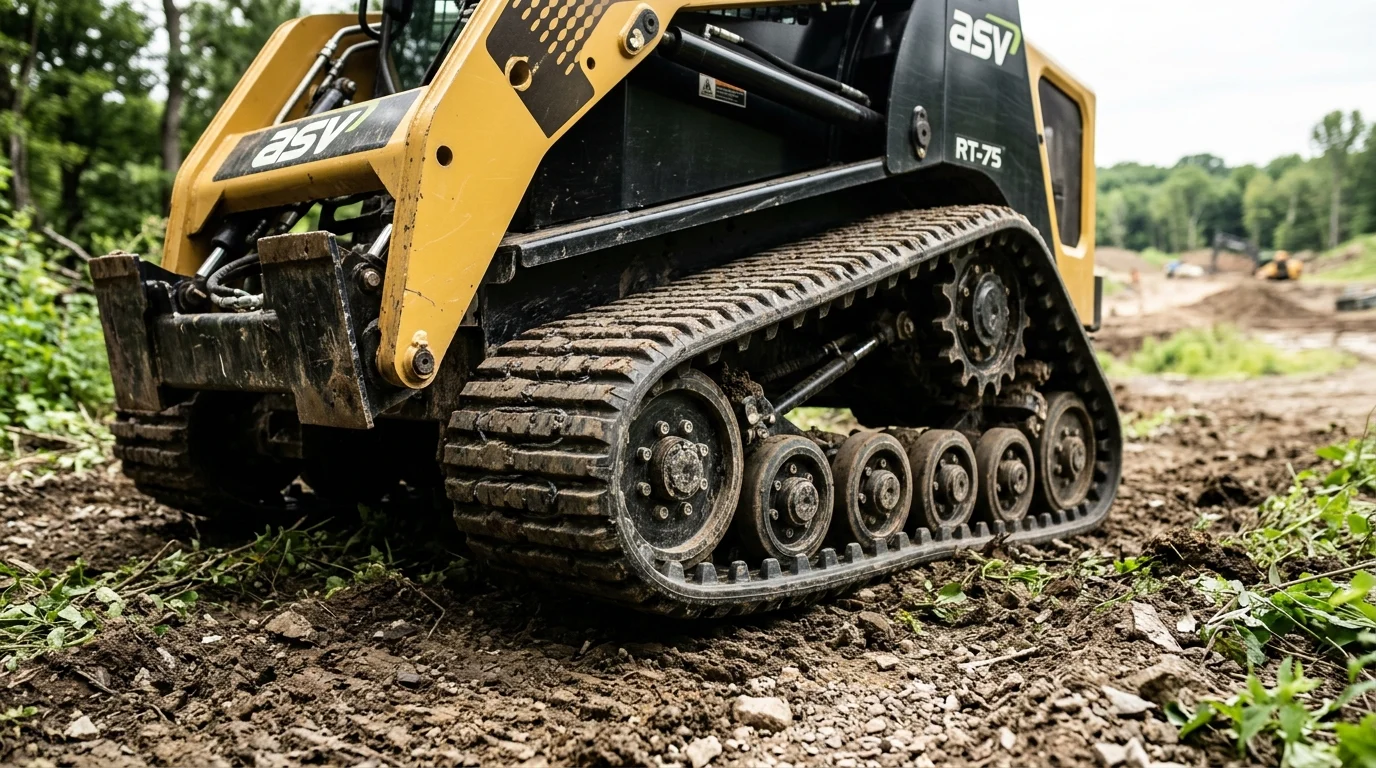
ASV machines utilize a proprietary Posi-Track undercarriage system, which dictates highly specific track manufacturing standards. Unlike conventional skid steer rubber tracks that rely on embedded steel links, genuine and premium aftermarket ASV tracks feature specialized non-metal cores constructed from high-tensile aramid or Kevlar cords. This continuous-wound design allows the track to flex efficiently over the machine’s multi-wheel undercarriage, reducing ground pressure to an industry-leading 3.0 to 4.5 psi, depending on the machine model.
Furthermore, tread patterns and rubber vulcanization must be optimized for the specific application. Standard turf treads typically feature a 25mm to 30mm depth to balance traction with minimal ground disturbance. In contrast, aggressive mud treads require deeper lugs and optimized void-to-lug ratios to ensure efficient self-cleaning capabilities during heavy operation.
Operating Conditions That Make Fast Shipping Critical
The necessity for expedited global shipping is directly tied to the harsh operating environments where ASV loaders are typically deployed. In demanding sectors such as heavy forestry, demolition, or abrasive quarry work, tracks are subjected to extreme shear forces and puncture risks. A sudden track tear caused by submerged rebar or sharp shale can instantly halt operations and leave equipment stranded in difficult terrain.
When operating on strict project deadlines, waiting four to six weeks for a factory production run is financially unfeasible. Access to pre-manufactured, in-stock tracks allows for rapid dispatch via air freight or expedited ocean LCL (Less than Container Load). This logistical agility ensures replacement parts reach international job sites within a critical 3-to-7-day window, restoring equipment functionality before project margins are severely impacted.
How to Compare ASV Tracks Before Buying
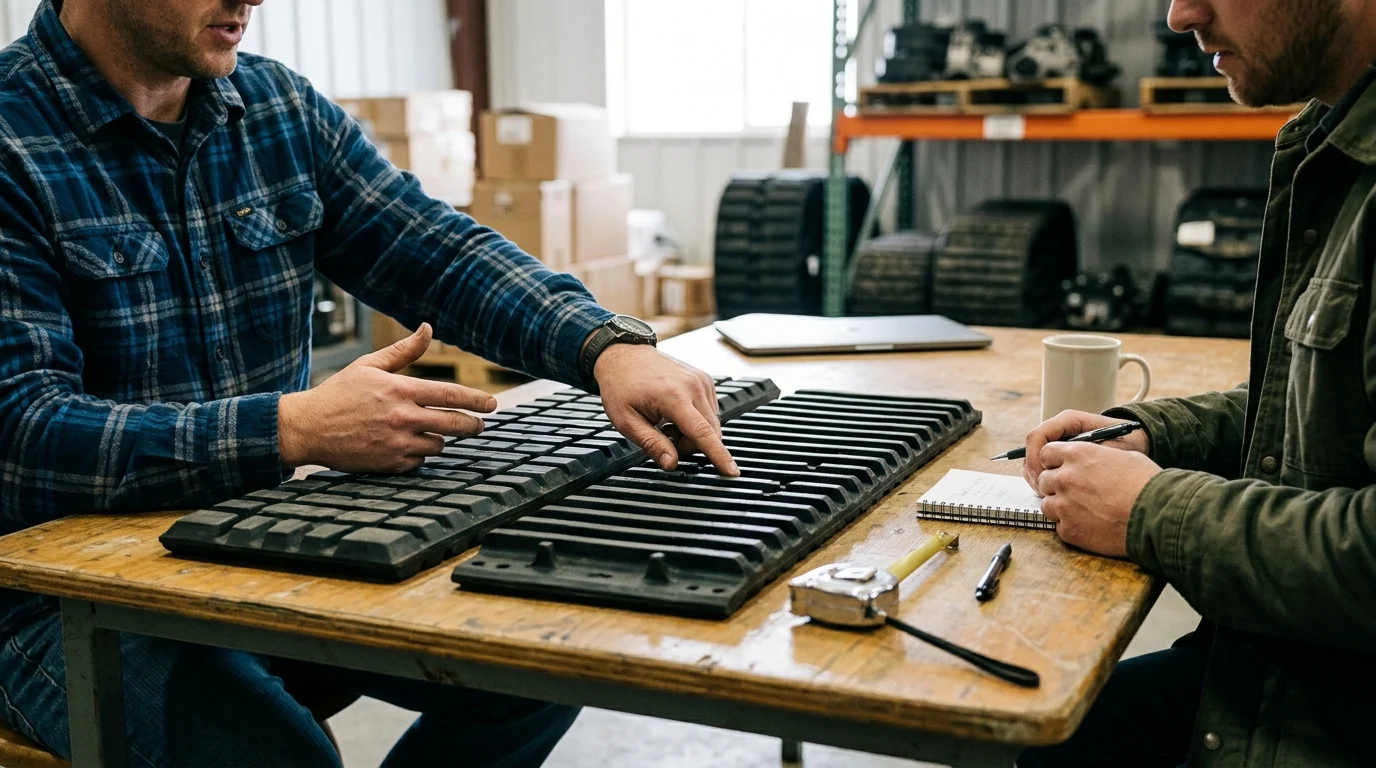
Selecting the appropriate replacement track requires a rigorous evaluation of structural specifications and manufacturing quality. Procurement managers must analyze the technical parameters of available ASV tracks to ensure seamless fitment and optimize the total cost of ownership over the equipment’s lifecycle. Establishing standardized procurement protocols prevents premature track degradation and protects expensive undercarriage components.
Key ASV Track Specifications to Verify
The foundational step in evaluating ASV tracks is verifying precise dimensional specifications: width, pitch, and the number of drive lugs. Even a minor 2mm deviation in pitch can cause accelerated sprocket wear, excessive vibration, or complete track derailment under heavy loads. Fleet managers must cross-reference their specific machine model with the manufacturer’s exact dimensional requirements to guarantee compatibility.
| ASV Machine Model | Standard Track Width | Pitch Dimension | Drive Lug Count | Typical Application |
|---|---|---|---|---|
| RT-25 | 11 inches (280 mm) | 3.54 inches (90 mm) | 37 | Landscaping, Turf |
| RT-40 | 15 inches (381 mm) | 5.08 inches (129 mm) | 42 | General Construction |
| RT-120 | 20 inches (508 mm) | 5.08 inches (129 mm) | 51 | Heavy Forestry, Grading |
OEM vs Aftermarket ASV Tracks Comparison
The decision between Original Equipment Manufacturer (OEM) and aftermarket tracks hinges on balancing upfront capital expenditure against long-term durability. OEM rubber tracks guarantee strict adherence to ASV’s proprietary tolerances but often carry a price premium of 30% to 45% over aftermarket alternatives. For fleets with strict capital constraints, this premium can significantly impact maintenance budgets.
Conversely, top-tier aftermarket manufacturers have engineered tracks that match or exceed OEM specifications, utilizing continuous-wound aramid cords and advanced virgin rubber compounds designed to resist tearing. When evaluating aftermarket options, buyers should demand technical datasheets confirming rubber tensile strength and verify that the manufacturer offers a comprehensive warranty equivalent to the industry standard of 12 to 18 months or 1,000 operating hours.
How to Reduce Risk When Sourcing ASV Tracks
International procurement of heavy equipment components introduces variables ranging from transit damage to complex customs delays. Mitigating these risks requires partnering with suppliers who not only hold physical inventory but also demonstrate deep expertise in global logistics, secure packaging, and strict export compliance.
Confirming Stock, Packaging, and Export Readiness
Before finalizing an international purchase order, buyers must verify real-time stock levels rather than relying on projected manufacturing schedules. A reliable global supplier should accommodate flexible Minimum Order Quantities (MOQs), allowing for the shipment of as few as two tracks (one complete set) for urgent replacements.
Export readiness is equally critical to prevent border delays. Rubber tracks must be secured on heavy-duty, ISPM-15 certified treated wooden pallets to comply with international phytosanitary regulations and prevent costly customs quarantine. Furthermore, commercial invoices and packing lists must accurately declare the correct Harmonized System (HS) codes—typically filed under 4012.90 for solid or pneumatic rubber tracks—to ensure swift clearance through destination ports.
Decision Criteria for Choosing the Right ASV Tracks
The final procurement decision should be driven by a matrix of supplier reliability, technical validation, and verifiable quality control. Procurement teams must establish strict acceptance criteria, prioritizing suppliers who maintain a proven defect rate of less than 0.5% across their global track inventory. High defect rates indicate poor vulcanization or inconsistent aramid cord placement, which will ultimately lead to catastrophic field failures.
Buyers should also inquire about inventory storage conditions, ensuring tracks are stored away from direct UV exposure to prevent premature rubber degradation before shipping.
Key Takeaways
- Choose suppliers with verified on-hand ASV track inventory to avoid four-to-six-week production delays.
- Account for downtime costs of $500 to $1,500 per day when deciding whether expedited replacement tracks are worth the investment.
- Verify ASV track width, pitch, and drive lug count before purchase to prevent sprocket wear, vibration, and derailment.
- Select tread depth and pattern based on application, using turf-style designs for surface protection and aggressive lugs for mud or harsh terrain.
- Prioritize premium ASV tracks with aramid or Kevlar-style non-metal cores for proper flex over Posi-Track undercarriages.
Frequently Asked Questions
Why should ASV replacement tracks be kept in stock?
In-stock ASV tracks reduce downtime after undercarriage failures. Since idle compact track loaders can cost $500 to $1,500 per day, immediate availability helps keep construction, forestry, and infrastructure projects on schedule.
What makes ASV tracks different from standard skid steer tracks?
ASV tracks are designed for Posi-Track undercarriages and often use non-metal cores with aramid or Kevlar cords. This supports flexible operation over multi-wheel systems and helps maintain low ground pressure.
How do I verify the right ASV track fitment?
Check the track width, pitch, and number of drive lugs before ordering. Even a small pitch mismatch can increase vibration, accelerate sprocket wear, or cause derailment under load.
Does Gator Track manufacture ASV rubber tracks?
Yes. Gator Track manufactures rubber tracks for ASV machines, skid steers, excavators, dumpers, and agricultural equipment, along with rubber track pads such as bolt-on, clip-on, and chain-on styles.
When is expedited shipping most important for ASV tracks?
Fast shipping is critical in forestry, demolition, quarry work, and deadline-driven construction, where track damage from sharp debris or abrasive ground can instantly stop a machine.

Post time: Jun-23-2026