
Key Risks for International Buyers
Managing cross-border procurement for undercarriage parts requires meticulous attention to detail. Under standard operating conditions, modern continuous-cord rubber tracks typically offer an estimated operational lifespan of 1,500 to 2,000 hours, making frequent replacements an inevitable reality for active fleets. However, this lifespan varies significantly based on terrain, machine weight, and maintenance practices. Because these tracks endure extreme mechanical stress, sourcing substandard replacements can halt an entire project.
Navigating the overseas market for these heavy-duty components introduces specific vulnerabilities. Failing to properly manage the sourcing process—such as overlooking quality control or miscalculating logistics—exposes operations to severe bottlenecks and financial setbacks.
Define Rubber Excavator Track Size Requirements
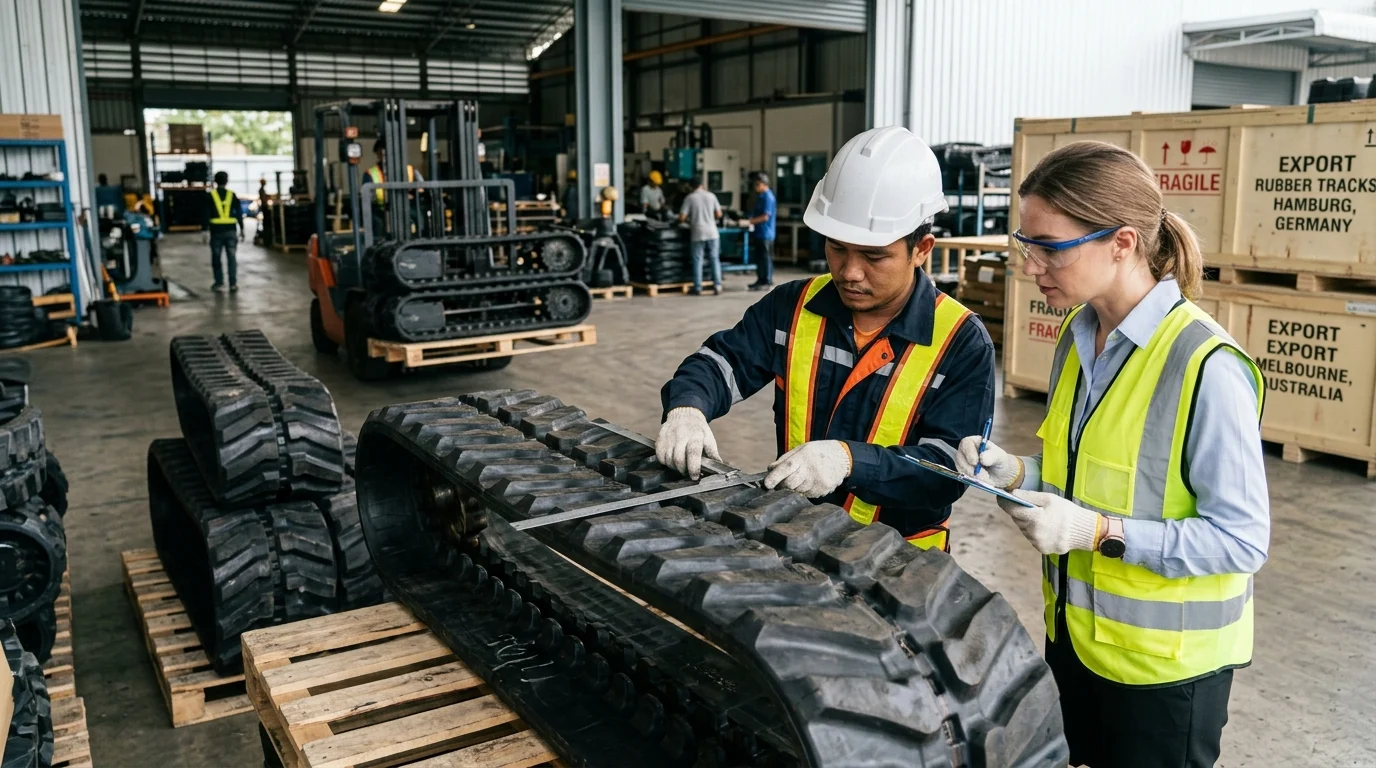
A common point of failure observed in international orders is incorrect sizing. A track size requires three metrics: Width (mm) x Pitch (mm) x Number of Links. For example, a 300×52.5×84 specification must be exact. The pitch represents the distance between the center of one metal core to the next; a deviation of just a few millimeters causes the track to slip or damage undercarriage sprockets.
Before placing a bulk order, verify the machinery model by cross-referencing OEM part numbers, requesting a technical spec sheet, or consulting a supplier’s reference catalog (e.g., Excavator Tracks). Because returning a defective or incorrectly sized 150-kilogram track across the ocean is practically impossible and financially unviable, precision on the first attempt is essential.
Assess Downtime and Commercial Risks Early
Commercial risks multiply when heavy machinery sits idle. Calculating potential downtime costs is a vital first step, as expenses can easily range from $500 to $1,000 per day for a stranded mini excavator on an active job site. Delays in customs or manufacturing quickly erase any savings from a cheaper overseas unit. Furthermore, enforcing warranties across borders for heavy industrial goods is notoriously difficult.
To mitigate financial exposure, negotiate secure payment terms and incorporate pre-shipment third-party inspection clauses. While a 30% T/T (Telegraphic Transfer) deposit with 70% paid against the Bill of Lading copy serves as a common benchmark, utilizing escrow services or letter of credit terms can offer better protection. Retaining financial leverage ensures the manufacturer remains motivated to meet deadlines and maintain quality before the goods ever leave the port.
Specifications and Supplier Evaluation
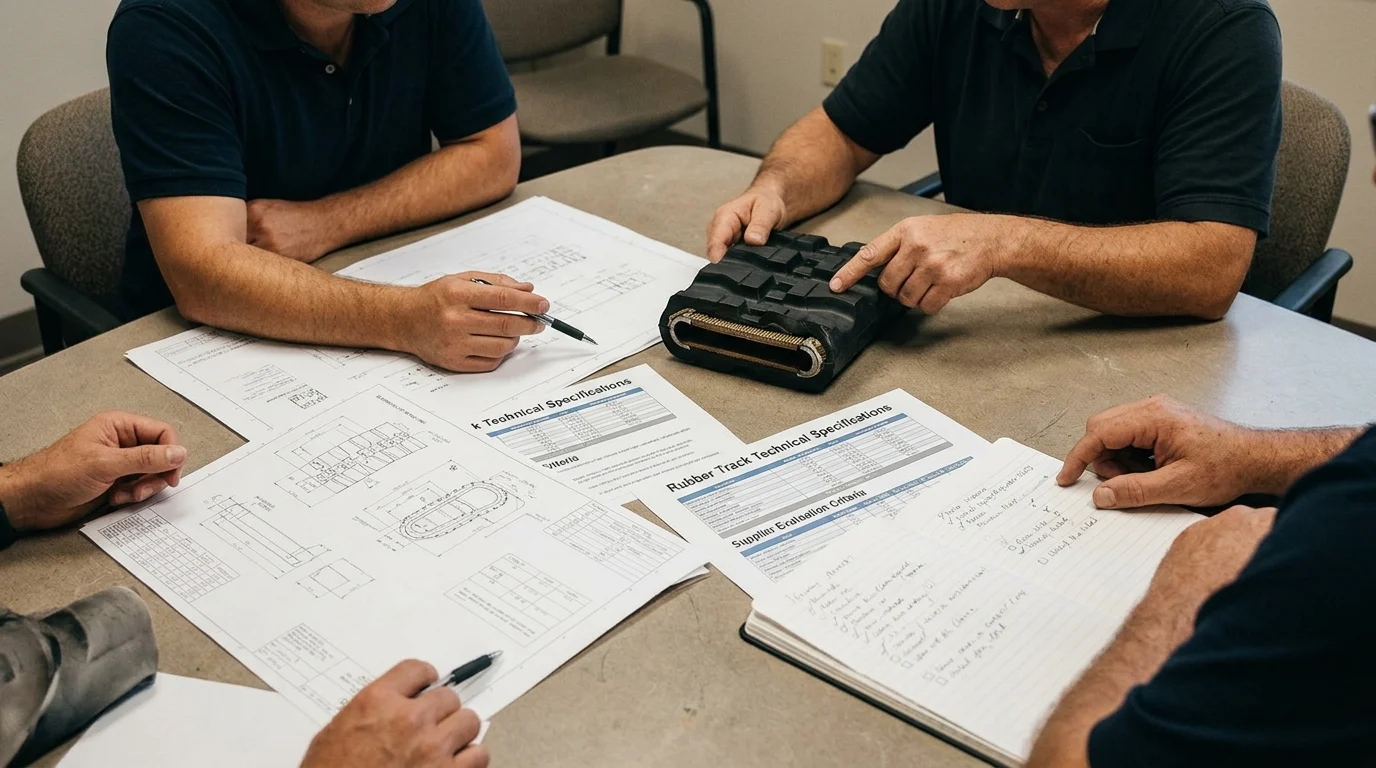
Once the initial risks are understood, the next step involves scrutinizing product engineering and manufacturing capabilities. Not all rubber tracks are equal, and visual inspections alone cannot reveal the internal steel core’s structural integrity.
The vulcanization process, binding rubber to metal inserts, is critical. While a standard warranty of 12 to 18 months (or 1,000 working hours) indicates that a manufacturer stands behind their compounding methodologies, it is not definitive proof of internal quality. To verify structural integrity, request material mill certificates, third-party tensile and abrasion test reports, or factory audit records.
Compare Critical Technical Criteria
The most critical specification is the internal steel cord structure. Historically, excavator tracks used overlapping steel cords, creating weak points vulnerable to snapping. Today, continuous steel cord technology is the benchmark, distributing tension evenly to prevent premature breakage. Investing in continuous cord architecture drastically reduces the likelihood of catastrophic failure mid-operation. Additionally, some manufacturers offer “anti-vibration continuous” track technology, which incorporates specialized interlocking forged metal cores to reduce machine vibration, further extending lifespan and operator comfort at a higher cost premium.
Evaluating the rubber blend is equally important. Premium grades typically feature a higher natural rubber content blended with synthetic polymers to provide superior cut resistance, though exact formulations vary by manufacturer and specific industry standards.
Below is a structural comparison matrix used during the sourcing phase. Note that these are illustrative estimates under standard operating conditions:
| Track Technology | Breakage Risk | Estimated Lifespan | Cost Premium |
|---|---|---|---|
| Overlapping Cords | High (at joint) | 800 – 1,200 hours | Baseline |
| Continuous Cords | Low | 1,500 – 2,000 hours | +15% to +20% |
| Anti-Vibration Continuous | Very Low | 2,000+ hours | +25% to +35% |
Evaluate Factories and Trading Companies
Deciding between a direct factory and a trading company fundamentally alters the procurement strategy. Direct factories require higher Minimum Order Quantities (MOQs), often demanding 10 to 20 pieces per size. However, they provide direct oversight of production and better OEM customization options.
Conversely, trading companies excel at consolidating mixed containers. If a fleet requires several track sizes, a trader might accept an MOQ of just 1 to 5 pieces per size. When using a trader, factor in a typical 10% to 15% markup, weighing this estimated premium against the logistical convenience of inventory consolidation. It is also important to note that hybrid models exist, such as manufacturer-owned export trading arms. Buyers should verify actual production assets through audits rather than relying solely on how the supplier labels itself.
Pricing, Compliance, and Logistics
The final phase involves locking in pricing, ensuring regulatory compliance, and orchestrating freight. Rubber tracks are dense, heavy cargo. A 20-foot shipping container holds roughly 10 to 12 tons of tracks, while a 40-foot container is typically limited to 20 to 25 tons due to regional trucking weight regulations post-shipment, rather than universal container maximums.
Managing this heavy freight requires a structured quoting process and a clear understanding of international shipping dynamics.
Prepare a Complete RFQ
An ambiguous Request for Quotation (RFQ) risks incorrect sizing or mismatched tread patterns. When drafting an RFQ, explicitly detail the machine model, track size, tread pattern (such as C-lug for mud), and application environment. Providing comprehensive specifications prevents suppliers from making incorrect assumptions or quoting their lowest-grade rubber just to win the bid.
Furthermore, verifiable compliance is essential. Require ISO 9001 certificates—noting that this certifies the management system rather than specific product quality—and any relevant CE markings for European imports. Requesting third-party material test reports for tensile strength and abrasion resistance must be a mandatory line item in the documentation.
Key Takeaways
- Verify every excavator rubber track order by Width x Pitch x Number of Links because a few millimeters of pitch error can damage sprockets or cause slipping.
- Plan replacement inventory around a typical 1,500 to 2,000 hour service life, while adjusting for terrain, machine weight, and maintenance conditions.
- Calculate downtime exposure before choosing a supplier because an idle mini excavator can cost about $500 to $1,000 per day on an active job site.
- Request mill certificates, tensile and abrasion test reports, and factory audit records to validate internal steel cord and rubber compound quality.
- Use payment structures such as 30% T/T deposit and 70% against the Bill of Lading, escrow, or letters of credit to preserve leverage before shipment.
- Prioritize suppliers offering continuous steel cord technology and clear 12 to 18 month or 1,000 working hour warranty terms.
Frequently Asked Questions
What track size information must buyers confirm before ordering?
Confirm the exact Width x Pitch x Number of Links, such as 300×52.5×84. Even a small pitch mismatch can cause slipping, sprocket damage, or premature failure.
How long do rubber excavator tracks usually last?
Under standard conditions, modern continuous-cord rubber tracks typically last about 1,500 to 2,000 operating hours, depending on terrain, machine weight, operator habits, and maintenance.
Why is incorrect sizing such a serious sourcing risk?
Rubber excavator tracks are heavy and costly to ship. Returning a wrongly sized 150-kilogram track internationally is usually impractical, so buyers should verify specs before production or shipment.
What quality documents should international buyers request?
Ask for material mill certificates, tensile and abrasion test reports, factory audit records, and clear warranty terms. These help verify internal steel cord quality and rubber compound performance.
What payment terms can reduce overseas sourcing risk?
A common structure is 30% T/T deposit and 70% against the Bill of Lading copy. For stronger protection, buyers may use escrow, letters of credit, or pre-shipment inspection clauses.
Post time: Sep-09-2026