Why 700mm Rubber Track Pads Matter
Equipping excavators with the right undercarriage components is critical for operational efficiency. When transitioning 15 to 25-ton excavators from dirt to paved surfaces, standard steel tracks cause unacceptable surface damage. This is where 700mm rubber track pads become essential. By distributing the machine’s weight over a wider surface area, these pads significantly reduce ground pressure compared to narrower alternatives, protecting delicate infrastructure while maintaining optimal traction.
What Defines 700mm Rubber Track Pads
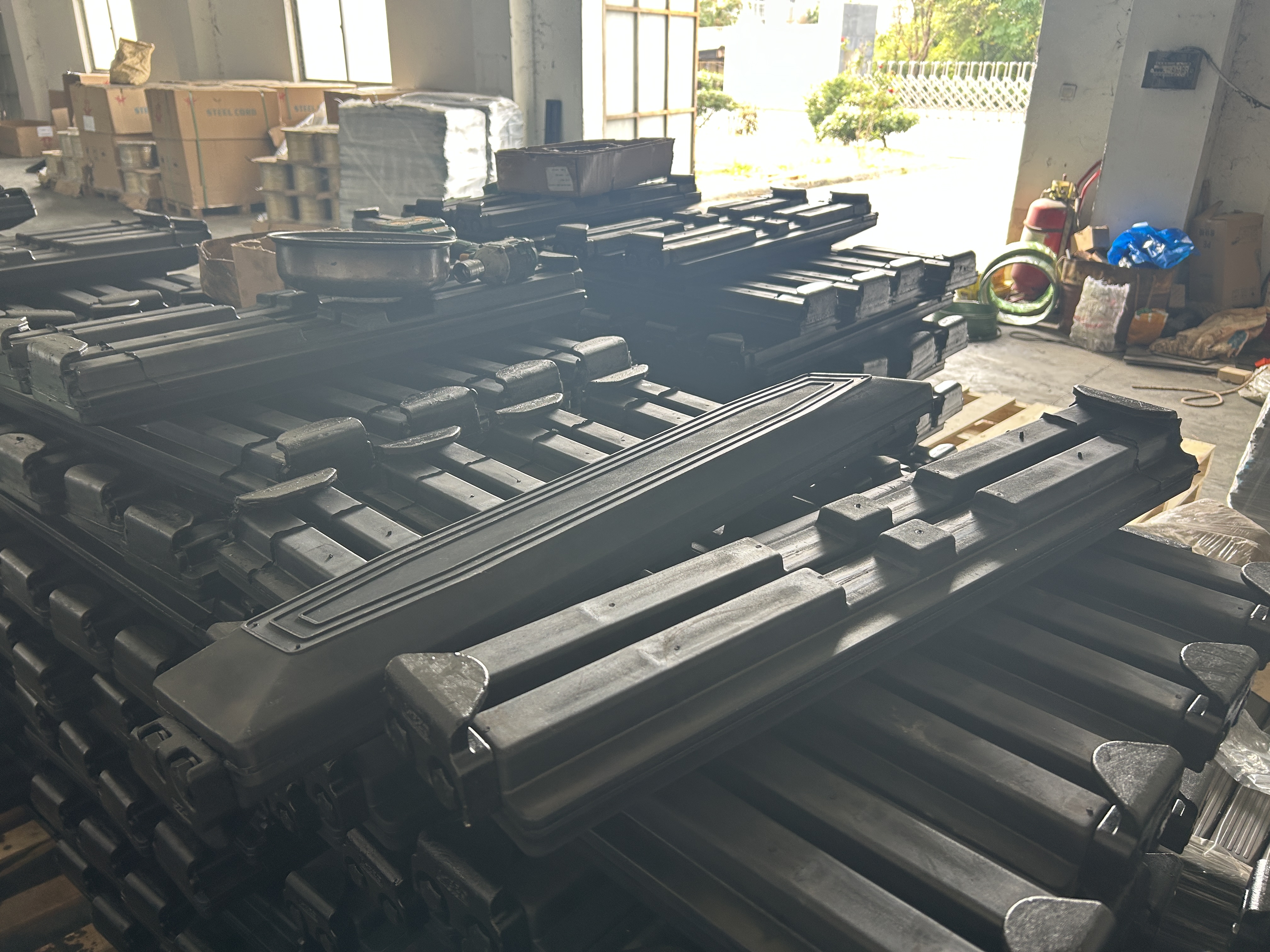
While 700 millimeters (approximately 27.5 inches) is a nominal width, true compatibility requires matching the existing track shoe width and undercarriage geometry. Pad dimensions, bolt-hole patterns, track pitch, grouser height, and side-frame clearance must be verified to prevent dangerous overhang or mechanical interference. These pads are engineered to bolt or clip onto existing steel track shoes or directly to the track chain.
The core definition of high-quality options lies in their dual-material construction: a robust inner steel plate bonded to a heavy-duty rubber compound. (For a standard example of this construction from a commercial supplier, refer to typical 700mm Rubber Track Pads datasheets). This design ensures that the pad retains the structural integrity of steel while providing the surface protection and noise reduction of rubber.
Depending on the specific machine, these pads are categorized into three main mounting styles: bolt-on, clip-on, and chain-on (roadliner). Each style is defined by how it interfaces with the excavator’s undercarriage, but all share the standard 700mm profile designed for mid-to-large tier earthmoving equipment.
When to Use 700mm Rubber Track Pads
These pads are typically deployed when excavators are tasked with urban construction, road milling, or utility trenching across finished asphalt and concrete. If a 20-ton machine operates on bare steel tracks in these environments, the resulting surface repair costs can quickly exceed the price of a premium rubber pad set.
Furthermore, they are highly recommended when operating in residential zones where noise ordinances are strictly enforced. The thick rubber profile effectively dampens the acoustic resonance of the track chain, reducing operational noise levels noticeably compared to bare steel. They are also highly effective when crossing delicate curbs and sidewalks, as the 700mm width bridges small gaps without concentrating destructive point loads.
However, it is equally important to know when not to use them, and to account for real-world trade-offs. Rubber pads add significant overall weight to the undercarriage and can push the machine’s transport width beyond standard trailer limits, requiring special permits. They can also alter ground pressure dynamics. Operationally, rubber pads experience accelerated wear and chunking on demolition sites with sharp debris, during high-heat asphalt milling, or in highly abrasive rock conditions. Furthermore, they offer reduced traction in deep mud and pose safety risks during prolonged side-slope operations, where steel grousers would otherwise be required to bite into the terrain.
How to Compare 700mm Rubber Track Pad Specifications
Note: Material grades, hardness ratings, installation times, and warranty terms discussed throughout this guide are common industry examples. Always verify exact specifications and tolerances against OEM or vendor datasheets.
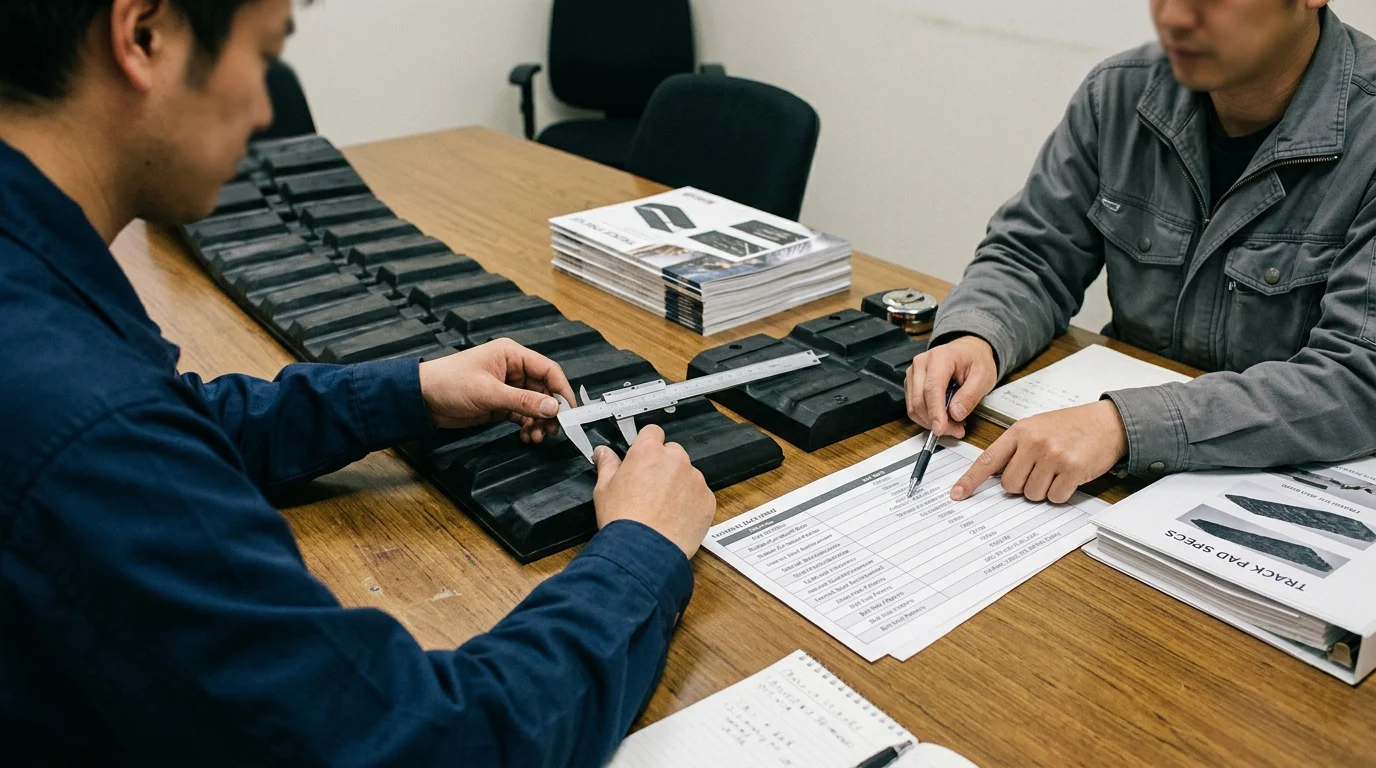
When evaluating different 700mm rubber track pads, it is important to note that dimensional accuracy and material composition vary significantly between manufacturers. Simply matching the 700mm width is not enough; buyers must rigorously compare the structural specifications to ensure the pads will withstand continuous high-torque operations without tearing or delaminating.
Key Size, Fit, and Machine Compatibility Checks
The most critical compatibility check is the track pitch. For 700mm width pads, a 216mm pitch is highly common as a manufacturer-specific example, but operators must verify the exact measurement. Follow a short step-by-step measurement guide to ensure a proper fit: First, measure the track pitch (the center-to-center distance between pins). Second, measure the bolt-hole spacing on the existing steel shoe (center-to-center, both horizontally and vertically). Finally, measure the grouser height to ensure the rubber pad clears the steel profile. Misalignment by even 2mm can cause installation failure or sheared bolts under load.
To help choose the right mounting style for your operating pattern and durability needs, consult the selection matrix below. Note: Installation times are indicative only and depend heavily on machine size, pad type, and technician experience.
| Pad Style | Mounting Method | Ideal Application | Durability Profile | Typical Installation Time (Per Set) |
|---|---|---|---|---|
| Bolt-On | Bolts directly through pre-drilled steel shoes | Permanent or long-term urban use | High | 6–8 hours |
| Clip-On | Wraps around standard steel shoes with a bracket | Quick, temporary transitions | Moderate | 3–5 hours |
| Chain-On (Roadliner) | Bolts directly to the track chain links | Dedicated road use | Maximum | 8–10 hours |
Material, Bonding, Bolt, and Wear Quality Factors
Beyond fitment, the chemical formulation of the rubber is paramount. Common supplier specifications suggest looking for pads molded from a virgin natural and synthetic rubber blend with a durometer hardness rating around 65 to 70 Shore A. This example hardness range provides the ideal balance: soft enough to grip pavement, yet hard enough to resist severe chunking from debris.
The bonding strength between the rubber and the internal steel core is the most common point of failure in inferior products. Fleet managers should look for a high minimum tensile bonding strength to ensure the rubber does not peel away during pivot turns. Furthermore, the internal steel plates are often stamped from high-strength Q235 or Q345 steel, and the embedded bolts typically meet grade 8.8 or higher to withstand the extreme shear forces generated by a 20-ton excavator. Buyers should always request explicit source verification for these material claims.
To maximize the lifespan of these materials, establish practical wear-inspection criteria. Inspect pads every 250 to 500 operating hours for bond-line cracks or severe chunking that exposes the internal steel. Additionally, monitor the minimum remaining rubber thickness; replacing pads before the rubber wears down to the steel core prevents catastrophic shoe damage and maintains traction.
How to Source the Right 700mm Rubber Pads
Sourcing industrial undercarriage
Key Takeaways
- Match 700mm rubber track pads to the excavator’s track shoe width, bolt pattern, pitch, grouser height, and clearance before purchase.
- Use 700mm rubber pads on 15 to 25-ton excavators working on asphalt, concrete, curbs, sidewalks, and other finished surfaces.
- Choose bolt-on, clip-on, or chain-on roadliner pads based on the machine’s undercarriage design and installation requirements.
- Avoid rubber pads in sharp debris, abrasive rock, deep mud, high-heat milling, or side-slope conditions where wear or traction loss becomes a risk.
- Check transport width, added undercarriage weight, and possible permit requirements before fitting wider rubber pads.
Frequently Asked Questions
What excavator size typically uses 700mm rubber track pads?
They are commonly used on 15 to 25-ton excavators that need to move from dirt work to paved surfaces while reducing surface damage.
Are all 700mm rubber excavator pads interchangeable?
No. You must verify track shoe width, bolt-hole pattern, track pitch, grouser height, and side-frame clearance before ordering.
What are the main mounting styles for 700mm rubber track pads?
The main styles are bolt-on, clip-on, and chain-on roadliner pads. The right choice depends on how the pad interfaces with the excavator undercarriage.
When should rubber track pads be used instead of steel tracks?
Use them on asphalt, concrete, sidewalks, curbs, urban job sites, residential areas, and utility projects where surface protection and lower noise matter.
When are 700mm rubber track pads not recommended?
Avoid them in sharp demolition debris, abrasive rock, deep mud, high-heat asphalt milling, and prolonged side-slope work where steel grousers provide better bite.
Yvonne
Post time: Jul-10-2026