How Skid Steer Rubber Tracks Improve Sanitation Work
Sanitation and waste management sites present unique challenges that demand specialized machinery. Transfer stations, recycling centers, and landfill perimeters are notorious for slick floors, abrasive debris, and muddy conditions. When equipping skid steer loaders, the choice of ground contact material directly impacts job site cleanliness, operator comfort, and site-access reliability.
Traditional wheeled machines often struggle in these environments, spinning out on wet concrete or losing traction in contaminated fluids. Transitioning to tracked systems drastically reduces ground pressure—often dropping from typical pneumatic tire pressures (which can range from 40–50 psi) down to a gentle 4–6 psi. These figures typically vary based on the machine’s operating weight, track width, and load. This broader weight distribution prevents surface damage, keeping sanitation sites cleaner and safer for ground crews while providing superior traction.
What Skid Steer Rubber Tracks Are
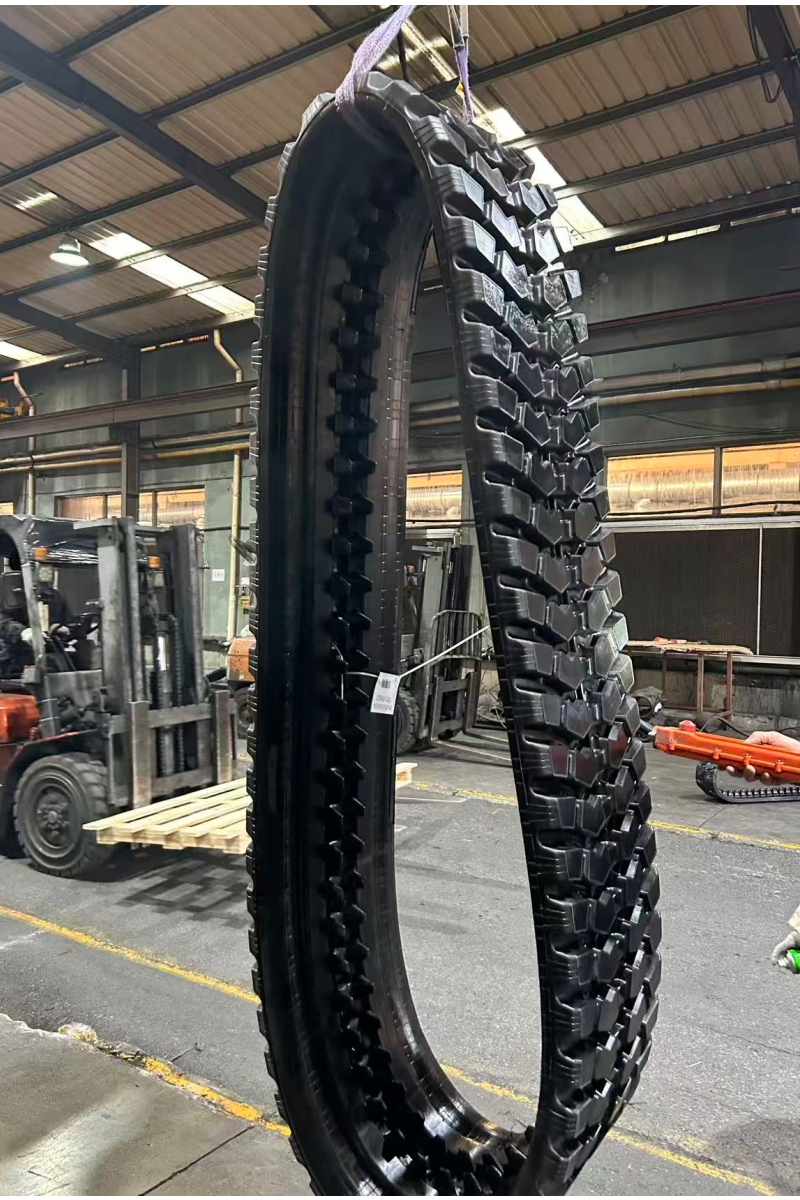
Unlike standard tires, these track systems consist of a continuous rubber loop reinforced with continuous steel cords and forged iron cores. This heavy-duty construction ensures that the tracks can support the immense weight of a loaded skid steer while flexing over uneven terrain.
The integration of advanced rubber compounds allows these tracks to resist the harsh chemicals and abrasive materials frequently found in sanitation yards. High-quality tracks offer a significant reduction in tearing and chunking. However, to maintain this resistance and avoid carrying waste off-site, the tracks require regular washdowns with chemical-resistant cleaning agents and proper tread clearing after exposure to wet waste or corrosive fluids. To ensure longevity in contaminated environments, operators should also perform daily inspections for embedded sharp debris or cord exposure, and check track tension frequently to account for debris buildup.
Where Tracks Outperform Tires
Tracks consistently outperform tires in environments where flotation and traction in contaminated fluids are critical. On concrete floors inside waste transfer stations, tires tend to slip and spin when pushing heavy loads of wet refuse, which damages the floor coating and creates a mess. Tracks provide a larger, more stable footprint that grips the surface without aggressive spinning.
Furthermore, on the unpaved edges of sanitation sites, tracks float over soft surfaces, maintaining a smooth, unrutted grade. This preserves the integrity of the site’s drainage systems and minimizes the amount of mud tracked onto nearby public roads. It is important to note a few practical caveats for buyers: rubber tracks typically cost more upfront than tires, can be slower and noisier on hard surfaces, and are often harder to repair in the field. Additionally, they can wear faster on hard, abrasive surfaces during long road travel, may leave black scuff marks on finished transfer-station floors, and are vulnerable to heat and debonding if operated at high speeds for extended periods.
Key Track Specifications for Sanitation Jobs
Specifying equipment for sanitation contracts requires a deliberate approach. The daily exposure to sharp metal, broken glass, and corrosive fluids demands specific track specifications to maximize equipment uptime and lower the total cost of ownership.
Tread Pattern, Rubber Compound, and Carcass
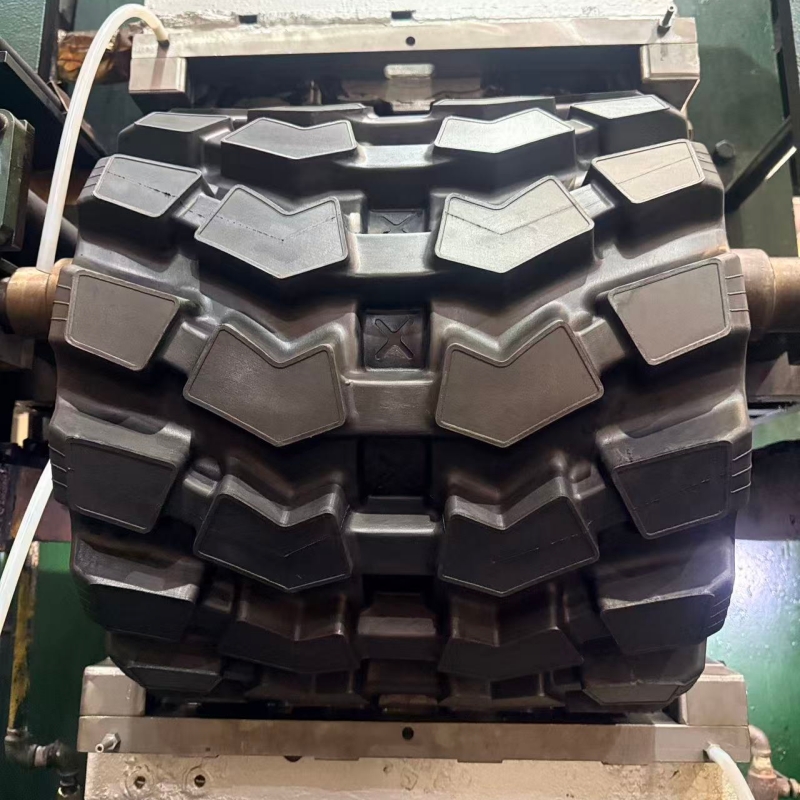
The tread pattern, rubber compound, and internal carcass form the foundation of a reliable track. For sanitation applications on hard transfer-station floors, a C-lug or block tread pattern is typically recommended. The C-shape provides a continuous edge that maximizes surface contact and minimizes vibration on concrete. However, the ideal tread depends on the site’s mix of paved versus unpaved surfaces, so buyers should match the pattern to their primary terrain. The rubber compound must boast high cut and tear resistance, utilizing blends designed specifically to withstand jagged debris.
Internally, the carcass must feature zero-splice steel cord technology. Traditional overlapping steel cords often create weak points that snap under heavy torque. Utilizing continuous steel cords extends the track’s operational lifespan significantly, though actual longevity depends heavily on the machine weight, duty cycle, and maintenance routine.
Tires vs. Rubber Tracks Comparison
A direct comparison between standard tires and premium rubber tracks illustrates why tracks are becoming the standard for sanitation and surface-sensitive operations.
| Specification / Metric | Pneumatic Tires | Rubber Tracks | Notes / Limitations |
|---|---|---|---|
| Average Ground Pressure | 40 – 50 psi | 4 – 6 psi | Tracks distribute weight evenly. |
| Surface Damage Risk | High (rutting, spinning) | Low (even weight distribution) | Tracks prevent deep rutting on soft ground. |
| Flotation in Mud/Waste | Poor (sinks into soft ground) | Excellent (floats over debris) | Crucial for landfill perimeters. |
| Average Lifespan (Sanitation) | Shorter (prone to punctures) | Longer (resists chunking) | Track lifespan varies enormously with machine class, load, and washdown habits. |
As the table demonstrates, the higher initial investment in tracked systems is often offset by extended lifespans and heavily reduced site remediation costs. The lower ground pressure alone frequently justifies the switch when operating on expensive concrete transfer pads.
How to Choose Skid Steer Rubber Tracks
Navigating the procurement process requires a clear understanding of a fleet’s mechanical requirements and operational limits. Selecting tracked systems methodically ensures that every replacement part perfectly aligns with the host machine to prevent premature wear or catastrophic failure.
Check Machine Compatibility
The first and most critical step is verifying machine compatibility. Track sizes are not universal; they are defined by a strict formula: Width x Pitch x Number of Links. This sizing can typically be read from the OEM plate or stamped on the inside of the old track. For instance, a common size for mid-sized loaders is 320x86x52, meaning a 320mm width, an 86mm pitch, and 52 metal links. Compatibility depends heavily on sprocket and roller geometry rather than size alone; installing a track with an incorrect pitch can cause severe sprocket damage and track derailment.
Evaluating the undercarriage condition before installation is also essential. If the sprockets, idlers, or rollers show visible wear beyond machine-manufacturer limits, they must be replaced alongside the new tracks.
Key Takeaways
- Use skid steer rubber tracks on wet concrete, muddy landfill edges, and recycling yards to improve traction and reduce tire spin.
- Specify track systems that can lower ground pressure from about 40–50 psi with pneumatic tires to roughly 4–6 psi, depending on machine weight, load, and track width.
- Choose reinforced rubber tracks with steel cords and forged iron cores for sanitation sites exposed to glass, scrap metal, corrosive fluids, and abrasive debris.
- Wash tracks, clear tread channels, and inspect daily for embedded sharp debris, cord exposure, and chemical damage after working around wet waste.
- Check track tension frequently in contaminated environments because debris buildup can accelerate wear and affect machine reliability.
- Factor in higher upfront cost, possible floor scuffing, harder field repairs, and faster wear on abrasive road travel before replacing tires with tracks.
Frequently Asked Questions
Why are rubber tracks useful for skid steers in sanitation sites?
Rubber tracks spread machine weight over a larger footprint, improving traction on wet concrete, muddy edges, and debris-covered surfaces. This helps reduce spinning, rutting, floor damage, and mud carryout.
How much can rubber tracks reduce ground pressure?
Depending on machine weight, track width, and load, rubber tracks can reduce ground pressure from typical pneumatic tire levels of about 40–50 psi to roughly 4–6 psi.
Do rubber tracks help keep waste sites cleaner?
Yes. Better flotation and reduced wheel spin help prevent ruts, splatter, and surface disruption. Regular washdowns and tread clearing are still necessary to avoid carrying waste or corrosive fluids off-site.
Are skid steer tracks resistant to sharp debris and chemicals?
High-quality tracks use reinforced rubber compounds, steel cords, and forged iron cores to resist tearing, chunking, and chemical exposure. Operators should still inspect daily for embedded glass, metal, cord exposure, and debris buildup.
What are the drawbacks of rubber tracks compared with tires?
Rubber tracks usually cost more upfront, can be slower or noisier on hard surfaces, may be harder to repair in the field, and can wear faster during long travel on abrasive pavement.

Post time: Sep-22-2026