Why Choose DV450x86 Tracks for Skid Loaders
Selecting the correct Tracks For Skid Loader is a critical maintenance decision that directly impacts a machine’s operational uptime and safety. The DV450x86 specification refers to the track’s physical dimensions—width, pitch, and link count—which must precisely match the loader’s undercarriage to function correctly. When paired with the New DV tread pattern, this specific track size offers improved traction and durability for mid-to-large frame compact track loaders. Upgrading to this configuration can yield noticeable improvements in heavy load distribution and handling precision, though actual performance will naturally vary based on the machine’s make, model, and operating conditions.
DV450x86 Fitment Basics
Understanding the nomenclature of the DV450x86 is the first step in ensuring proper fitment across a fleet. The “450″ denotes a track width of 450 millimeters (roughly 17.7 inches). While this provides a wide, stable footprint essential for heavy lifting, buyers should note that upgrading to a wider 450mm track may affect overall transport width and machine clearance. The “86″ signifies an 86-millimeter pitch, which is the exact distance between the drive lugs. Depending on the specific skid steer—such as compatible mid-to-large frame models from Bobcat, Kubota, or Caterpillar—these tracks typically require between 52 and 60 links.
It is crucial to note that DV450x86 tracks are not universal. Operators must consult their machine’s OEM manual or a qualified parts specialist before ordering. Always verify the link count stamped on the existing track, as a mismatch of even a single link will render the track unusable. Additionally, buyers should verify that non-OEM tread changes will not affect existing warranties or OEM approvals.
New DV Tread vs. Standard Tread
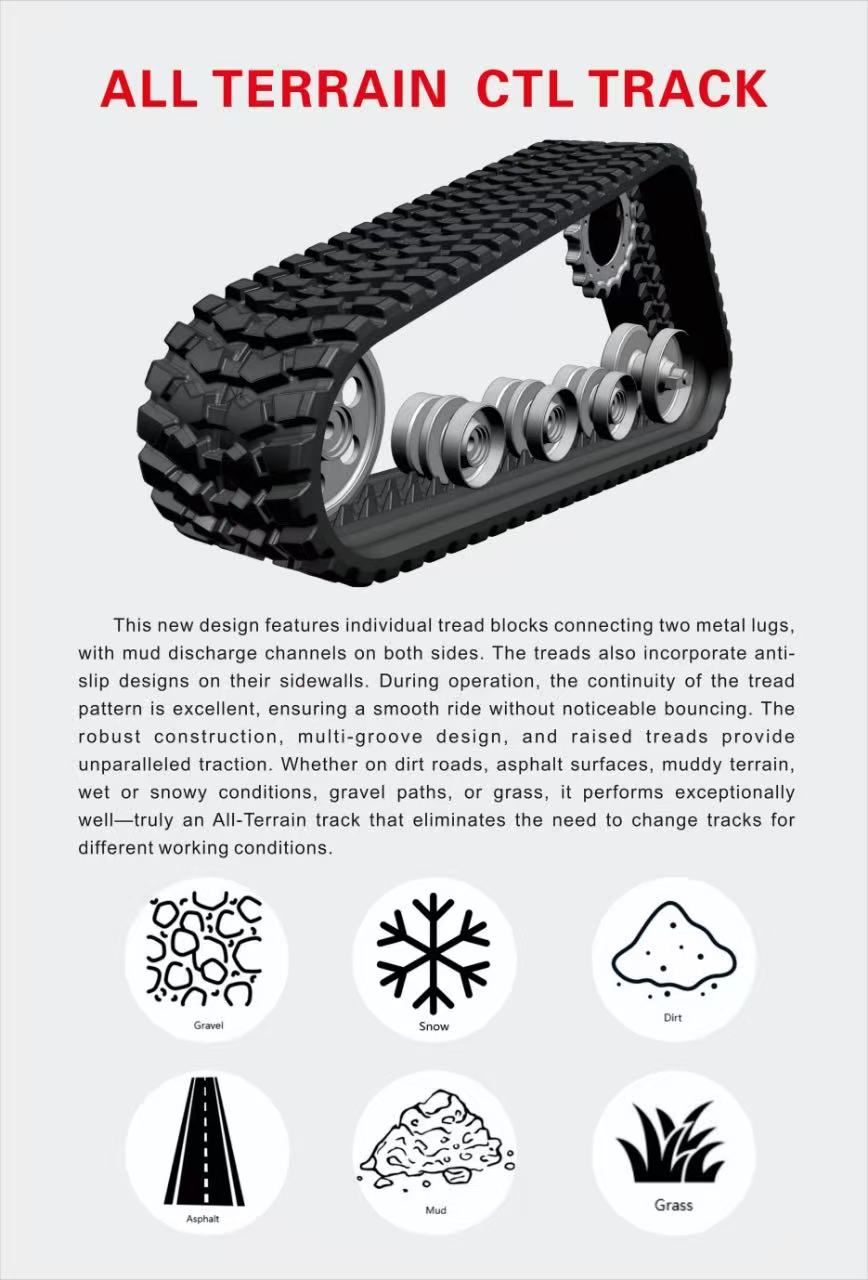
The New DV tread pattern offers a notable update from traditional C-lug or standard block designs. Field observations indicate that the staggered, multi-edge geometry of the New DV tread actively bites into loose surfaces while maintaining a smoother ride on hardpan.
| Feature | Standard Block Tread | New DV Tread Design |
|---|---|---|
| Lug Shape | Standard block or C-lug | Staggered, multi-edge |
| Self-Cleaning Channels | Standard spacing | Optimized for mud ejection |
| Recommended Surfaces | Hardpan and dirt | Mixed terrain, mud, and gravel |
| Expected Wear Characteristics | Standard edge wear | Distributed wear across multi-edge lugs |
*Note: Exact performance metrics vary significantly by machine weight, terrain type, and maintenance regimen.
By expanding the surface contact area and utilizing a specialized tread design, this engineering upgrade helps reduce cabin vibration and operator fatigue during demanding shifts.
DV450x86 Performance in Tough Jobsite Conditions
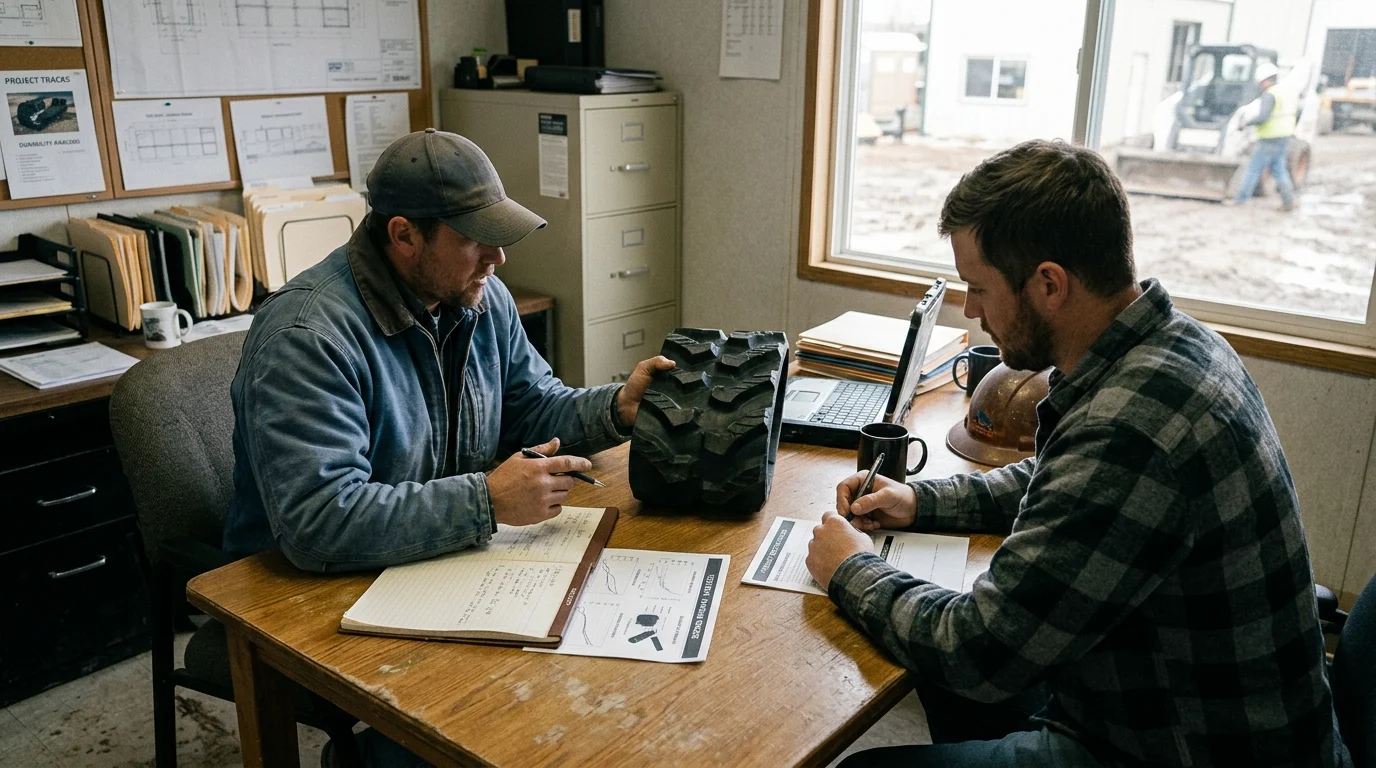
Equipment is often subjected to demanding environments, making track performance a highly scrutinized metric. The DV450x86 configuration is engineered with continuous wound steel cords encased in premium virgin rubber compounds. Field data suggests this continuous cord architecture helps reduce the likelihood of severe track snapping, ensuring that machines remain productive even under high torque when properly maintained.
Mud, Gravel, and Uneven Terrain Performance
Navigating deep mud, loose gravel, and uneven topography requires a track that can self-clean while maintaining grip. In saturated conditions, the strategic spacing between the deep lugs forces mud outward as the track flexes around the idlers, preventing the track from packing solid. On gravel and jagged demolition debris, the specialized rubber compound can help minimize chunking and tearing. When operating on uneven slopes, the wide 450mm track footprint successfully disperses the machine’s weight to achieve a lower ground pressure, allowing skid steers to traverse soft terrain with a reduced risk of bogging down or causing excessive rutting.
Maintenance Tips for Longer Track Life
Even the most robust tracks require disciplined maintenance to achieve their maximum service life. Industry best practices mandate a strict tensioning protocol for all undercarriages, with track tension inspected every 50 to 100 operating hours. Rather than relying on generic sag measurements, operators must follow the specific measurement method outlined in the OEM manual—typically measuring the gap between the center roller and the track while the machine is elevated. Running tracks too tight accelerates wear on the drive motors and sprockets, while excessive slack leads to de-tracking on side-hills. Additionally, enforcing daily clean-outs of the undercarriage is crucial; removing compacted dirt and sharp stones prevents abrasive friction that can prematurely degrade the internal steel cables.
How to Specify and Source DV450x86 Tracks
Procuring the correct replacement tracks requires balancing immediate operational needs with long-term asset management. Approaching the sourcing of DV450x86 tracks systematically ensures buyers secure maximum value without compromising on safety, machine compatibility, or job site performance.
Pre-Order Checklist for Replacement Tracks
Before authorizing a purchase order, fleet managers should utilize a standardized pre-order checklist. First, confirm the dimensions and the exact link count to guarantee seamless integration. Second, rigorously inspect the existing undercarriage components. Installing a brand-new track over heavily worn sprockets is a costly mistake; if sprocket tooth wear is significant, replacing the sprockets concurrently is highly recommended. Third, review the supplier’s warranty, return policy, and after-sales support, as these are practical considerations for fleet managers protecting their investment. Finally, account for procurement lead times. While domestic suppliers can fulfill standard orders quickly, bulk orders via overseas freight may require several weeks, necessitating proactive inventory forecasting.
Balancing Price, Service Life, and Machine Needs
The market offers a wide spectrum of pricing, but the lowest upfront cost rarely yields the best return on investment. Budget-tier tracks often utilize recycled rubber compounds and frequently fail prematurely. Conversely, investing in premium DV450x86 tracks requires a higher initial capital outlay and adds slight weight to the undercarriage. However, because these premium tracks reliably deliver an extended service life under heavy commercial loads, the actual cost per operating hour drops significantly. By prioritizing high-grade materials, appropriate tread designs, and strong supplier support, fleet managers ultimately lower their total cost of ownership while maximizing machine availability.
Buyer Decision Framework: Choose the premium DV450x86 with the New DV tread when operating heavy mid-to-large frame loaders in mixed, demanding terrains where maximum uptime is
Key Takeaways
- Verify the 450 mm width, 86 mm pitch, and exact link count before ordering DV450x86 tracks, because even one incorrect link can make a track unusable.
- Consult the OEM manual or a qualified parts specialist to confirm compatibility, since DV450x86 tracks are designed for specific mid-to-large frame compact track loaders.
- Choose the New DV tread pattern when working across mixed terrain, mud, and gravel, where staggered multi-edge lugs can improve bite and self-cleaning performance.
- Account for transport width and jobsite clearance before moving to a 450 mm track, as the wider footprint can change how the machine fits trailers and tight access points.
- Protect track life by maintaining proper tension, removing packed debris, and reducing aggressive counter-rotation on abrasive ground.
Frequently Asked Questions
What does DV450x86 mean for skid loader tracks?
DV450x86 identifies key track dimensions: 450 mm width and 86 mm pitch. The correct link count, often between 52 and 60 depending on the machine, must also match the undercarriage.
Are DV450x86 tracks universal for all skid loaders?
No. DV450x86 tracks are not universal. Always confirm your loader’s make, model, OEM specifications, and the link count stamped on the existing track before ordering.
What is the advantage of the New DV tread pattern?
The New DV tread uses staggered, multi-edge lugs to improve grip on mixed terrain, help eject mud, distribute wear, and provide a smoother ride than many standard block tread designs.
Can a 450 mm track affect machine transport or clearance?
Yes. A 450 mm track provides a wider, more stable footprint, but it may increase overall machine width and affect trailer fit, gate access, or clearance in tight work areas.
What jobsite conditions suit DV450x86 tracks best?
They are well suited for mixed terrain such as mud, gravel, dirt, and uneven surfaces, especially where traction, load distribution, and durability are important for productivity.
Post time: Jul-08-2026