What Are Dumper Tracks and ASV Tracks
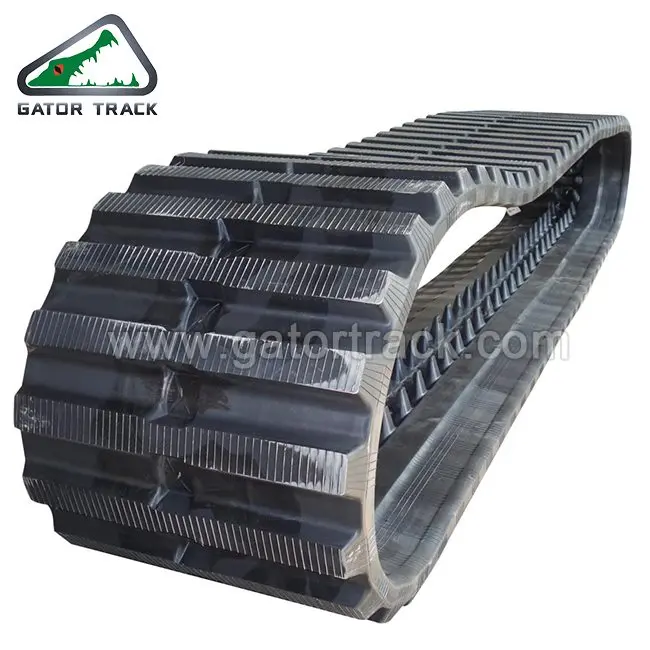
In professional landscaping operations, navigating the transition from wet spring soils to dry summer terrain requires machinery that minimizes unplanned downtime. The foundation of this operational consistency lies directly in the undercarriage. When moving bulk materials or executing complex grading tasks, selecting the correct rubber tracks is paramount to maintaining efficiency and protecting client properties. It is important to clarify the procurement landscape: buyers do not choose between these two track types for the same machine. “Dumper tracks” refers to a broad category of tracks used on dedicated material haulers, while “ASV tracks” refers specifically to proprietary tracks designed for ASV-brand compact track loaders (CTLs). The true choice lies in deploying the right machine—a tracked dumper or a CTL—equipped with the appropriate track for the jobsite.
Key Performance Roles
The primary function of a tracked dumper is to transport heavy materials across compromised terrain without getting bogged down or causing excessive rutting. These machines routinely handle substantial payload capacities, typically ranging from 1,000 to over 11,000 lbs (approx. 500 to 5,000 kg). By outfitting a fleet with specialized Dumper Tracks, operators ensure that bulk mulch, topsoil, and heavy hardscaping stones reach the installation site safely.
Conversely, ASV compact track loaders serve as the multi-tool of the landscaping site. They are tasked with lifting, precision grading, and operating high-flow hydraulic attachments (often requiring 20 to 45 gallons per minute, or GPM). Their tracks must accommodate frequent pivoting, reversing, and delicate maneuvering around existing landscape features without sacrificing lifting stability. While dumpers excel at hauling, CTLs provide the versatility required for complex installations.
Best Site Conditions for Each Track Type
Tracked dumpers are frequently deployed in unrefined environments where deep, straight-line traction is required. With aggressive tread patterns, dumper tracks grip slick mud effectively, allowing heavy loads to traverse active construction zones.
When operating on established lawns or delicate turf, professionals often rely on ASV Tracks. These tracks are deployed to minimize turf damage, frequently preventing the need for costly soil aeration and reseeding (which can cost $0.10 to $0.25 per square foot) after a project concludes. However, this seasonal framing has caveats: both machine categories support multiple tread patterns. A tracked dumper can be fitted with turf-friendly tracks for summer hardscaping, just as an ASV loader can utilize aggressive treads for wet spring excavations. Proper selection depends on the specific jobsite and regional climate, not solely the season.
How Do Dumper Tracks and ASV Tracks Compare
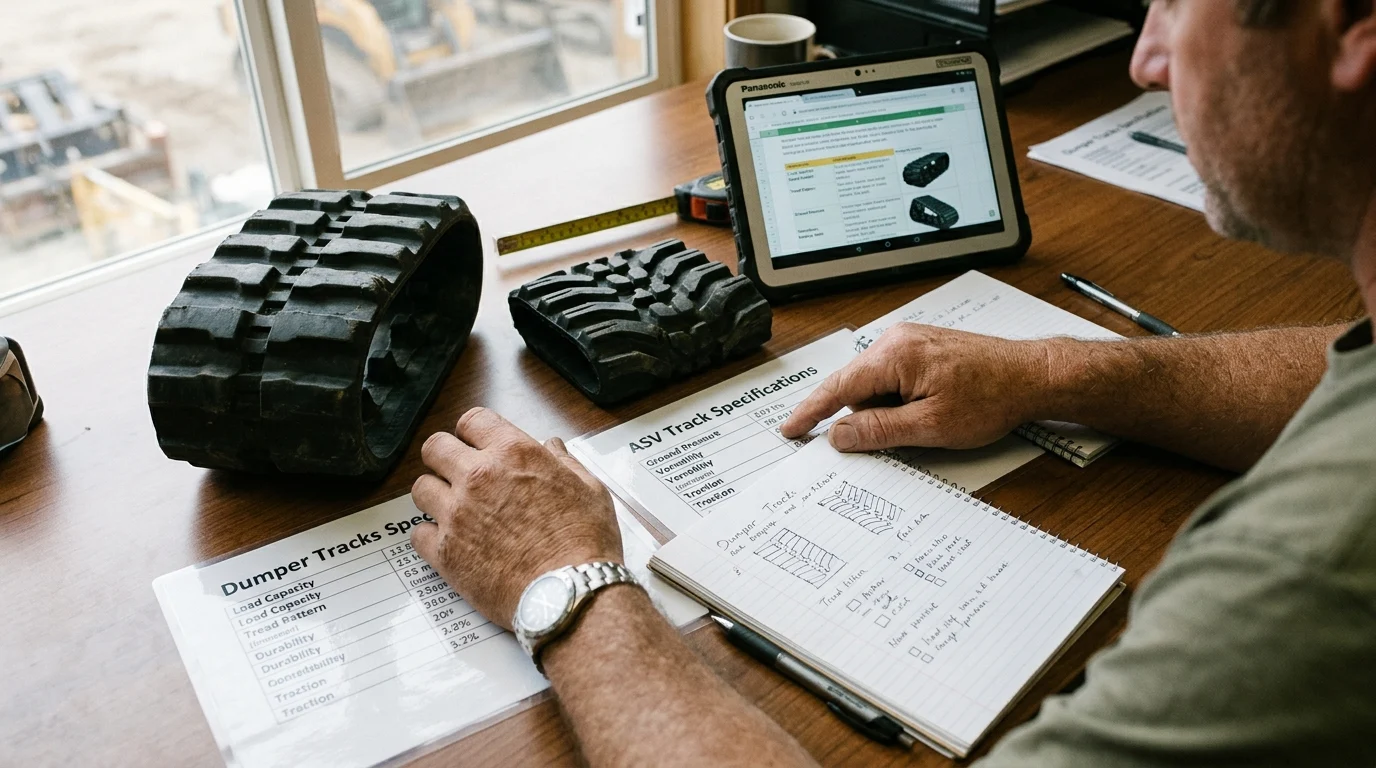
To make informed fleet procurement decisions, it is essential to examine the undercarriage engineering mechanics of these two systems. While both utilize continuous rubber belts, their structural designs and interactions with the machine’s undercarriage dictate entirely different performance profiles.
Traction, Stability, and Ground Pressure
ASV tracks utilize a proprietary undercarriage design featuring numerous suspended roller wheels to maximize contact points. This extensive contact area creates exceptional stability and allows the machine to distribute its weight evenly, significantly reducing ground pressure (often achieving an industry-leading 3.0 to 4.5 psi) and minimizing soil compaction during delicate turf management.
In contrast, dumper tracks operate on a more rigid, traditional undercarriage. This setup concentrates the machine’s weight over fewer rollers, generating higher ground pressures (typically 5.5 to 8.5+ psi). While this sacrifices some flotation, it maximizes the downward mechanical force required for straight-line traction when pushing through dense, clay-heavy soils.
Tread Pattern, Width, and Track Construction
The internal construction of these tracks further separates their engineering profiles. While both dumper and ASV rubber tracks typically rely on steel-cord reinforcement for maximum tensile strength, ASV tracks are uniquely engineered to flex around their specific roller systems. To achieve this flexibility, some specialized ASV models utilize aramid or Kevlar cords instead of steel, allowing them to remain exceptionally lightweight and compliant over uneven ground.
| Specification | Dumper Tracks | ASV Tracks |
|---|---|---|
| Primary Core Material | Steel Cords / Drop-Forged Links | Steel Cords (Aramid/Kevlar on select models) |
| Typical Ground Pressure | 5.5 to 8.5+ psi | 3.0 to 4.5 psi |
| Typical Width Range | 230mm to 800mm | 280mm to 510mm (11 to 20 inches) |
| Ideal Tread Pattern | Aggressive Block / Zig-Zag | Turf-Friendly Multi-Bar |
| Estimated Lifespan | 1,000 to 1,500 hours | 1,200 to 2,000 hours (terrain dependent) |
Operators consistently specify significantly wider tracks for dumpers when maximum payload support is required in soft conditions. Conversely, narrower turf treads are often selected for ASV loaders performing precision grading in confined residential spaces, though exact dimensions always depend on the specific OEM machine class.
How to Choose, Source, and Maintain Tracks
Sourcing the right tracks and maintaining them throughout the landscaping season is critical for fleet management. Proper procurement and diligent upkeep directly impact project turnaround times and overall client satisfaction.
Pre-Purchase Checklist
Before initiating a purchase order, buyers should adhere to a strict evaluation checklist. Crucially, track selection depends on the exact machine model, pitch (commonly ranging from 48mm to 150mm), width, and link count requirements. Fleet managers can typically locate these exact specifications stamped directly on the inside rubber lining of their existing tracks or detailed in the machine’s operator manual. Because ASV undercarriages use a unique suspended roller geometry, buyers must be explicitly cautioned that aftermarket tracks must meet exact OEM cord-flexibility and roller-engagement requirements. Incorrect flex characteristics can cause derailment even when nominal dimensions match.
Procurement teams must also evaluate supplier lead times (typically 30 to 90 days for ocean freight) and minimum order quantities (MOQs, which often range from 10 to 20 units for factory-direct wholesale, versus 1 to 2 units for local retail), accounting for adequate shipping buffers for imported rubber tracks. Finally, the tread pattern must be matched to the anticipated workload and site conditions.
Uptime, Soil Protection, and Total Cost
Maintaining these tracks requires a proactive approach to prevent unplanned downtime. Routine track tension checks are mandatory according to manufacturer guidelines.
Key Takeaways
- Choose a tracked dumper when the job requires moving bulk materials across soft or muddy ground, especially with payloads from about 1,000 to over 11,000 lbs.
- Choose an ASV compact track loader when the work involves lifting, grading, tight maneuvering, or hydraulic attachments that may require 20 to 45 GPM.
- Do not treat dumper tracks and ASV tracks as interchangeable products because they are built for different machine categories and undercarriage systems.
- Match tread pattern to the jobsite rather than the calendar, since both dumpers and ASV loaders can use turf-friendly or aggressive track designs.
- Use turf-sensitive tracks and careful operating techniques on established lawns to help avoid reseeding or aeration costs of roughly $0.10 to $0.25 per square foot.
Frequently Asked Questions
Are dumper Rubber tracks and ASV Rubber tracks interchangeable?
No. Dumper tracks are made for dedicated tracked material haulers, while ASV tracks are designed for ASV compact track loaders with proprietary undercarriages. The decision is usually which machine to deploy, not which track type to fit on the same machine.
When should landscapers use tracked dumpers?
Tracked dumpers are best when the priority is moving bulk materials such as mulch, topsoil, gravel, or stone across soft, muddy, or unfinished ground. Their rubber tracks help reduce rutting while supporting payloads that often range from 1,000 to over 11,000 lbs.
When are ASV Rubber tracks better for landscaping work?
ASV tracks are well suited for compact track loaders used in grading, lifting, attachment work, and maneuvering around finished landscapes. Their undercarriage design helps distribute weight and can reduce turf disturbance when the correct tread pattern is selected.
Do ASV tracks always cause less lawn damage?
Not always. ASV loaders are often chosen for turf-sensitive work, but lawn impact depends on tread pattern, soil moisture, operator technique, machine weight, and turning behavior. Even turf-friendly tracks can cause damage if used aggressively on wet ground.
What track type is best for wet spring soil?
Aggressive tread patterns are usually preferred for wet spring conditions because they provide stronger traction in mud. Both tracked dumpers and ASV loaders can be equipped for muddy conditions, so selection should match the machine’s role and the jobsite.
Post time: Jul-28-2026