Why Dumper Tracks Matter for Uptime, Risk, and Lifecycle
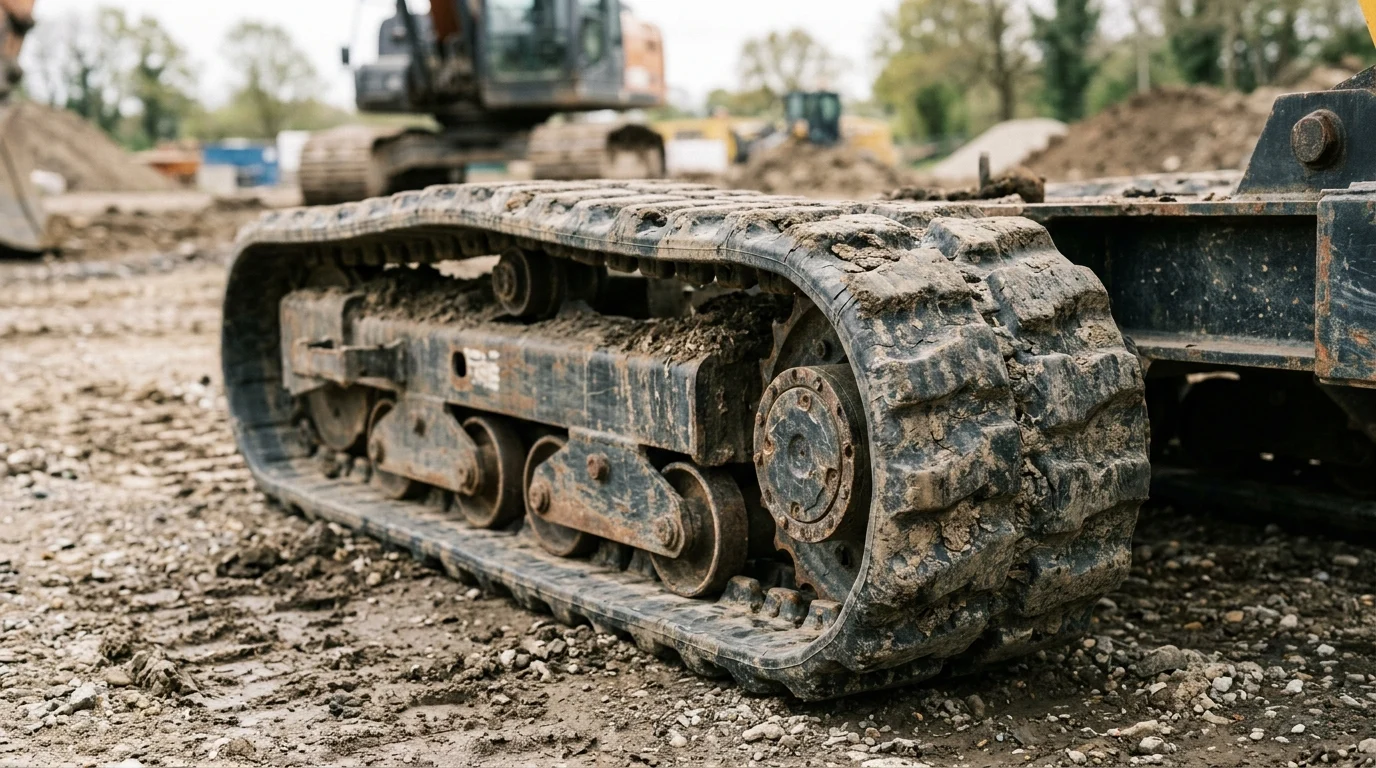
Dumper tracks serve as the foundational interface between high-payload machinery and challenging job site terrains. To clarify the scope, “dumper tracks” refers specifically to the undercarriage tracks on rubber-tracked or steel-tracked crawler carriers, rather than wheeled articulated dumpers (ADTs) that rely on pneumatic tires for standard hauling. These tracked crawler carriers are purpose-built for environments where wheeled machines would sink or lose traction. Because these tracked dumpers frequently operate in extreme conditions, the structural integrity of their tracks directly dictates machine uptime. Premature track failure not only halts material transport but also incurs severe financial penalties; industry estimates indicate that unplanned downtime in heavy earthmoving operations can easily cost hundreds of dollars per hour in lost productivity alone.
Dumper Track Types by Machine Class
Selecting the appropriate dumper track requires aligning the track architecture with the machine’s payload class. Compact and mini dumpers, typically carrying payloads under 3 metric tons, almost exclusively utilize continuous rubber tracks. These lightweight configurations allow for high maneuverability in tight residential or urban construction zones while minimizing soil compaction.
Conversely, heavy-duty rigid-frame or pivot-steer crawler carriers handling payloads of 10 to 15 metric tons demand significantly more robust solutions. While traditional ADTs are wheeled, heavy-payload tracked dumpers dominate soft-soil hauling by relying on heavy-duty rubber tracks embedded with forged iron cores and continuous steel cables. Fully modular steel tracks are sometimes used to withstand immense torsional stress when transporting bulk aggregates, but they remain a niche option for extreme environments rather than a default heavy-load alternative.
Operating Factors That Affect Track Life
The operational environment heavily influences the degradation rate of dumper tracks. While a high-quality rubber track might boast a theoretical lifespan of 2,000 operating hours in optimal dirt or clay conditions, deploying the same machine on abrasive surfaces like blasted rock or demolition debris can reduce track life by 30% to 50%.
Climate and rubber compound durability also introduce critical variables. Cold-weather flexibility, prolonged UV exposure, and thermal aging significantly affect track life by hardening or degrading elastomeric compounds over time, making them more susceptible to cracking even under standard loads.
Operator behavior plays a similarly critical role in lifecycle preservation. Operators who frequently execute counter-rotations (pivot turns) or operate continuously on steep side slopes place asymmetrical loads on the track edges and undercarriage rollers. This uneven stress accelerates lug wear, damages the internal steel cords, and significantly increases the risk of de-tracking during heavy-load cycles.
Key Dumper Track Specifications and Comparisons
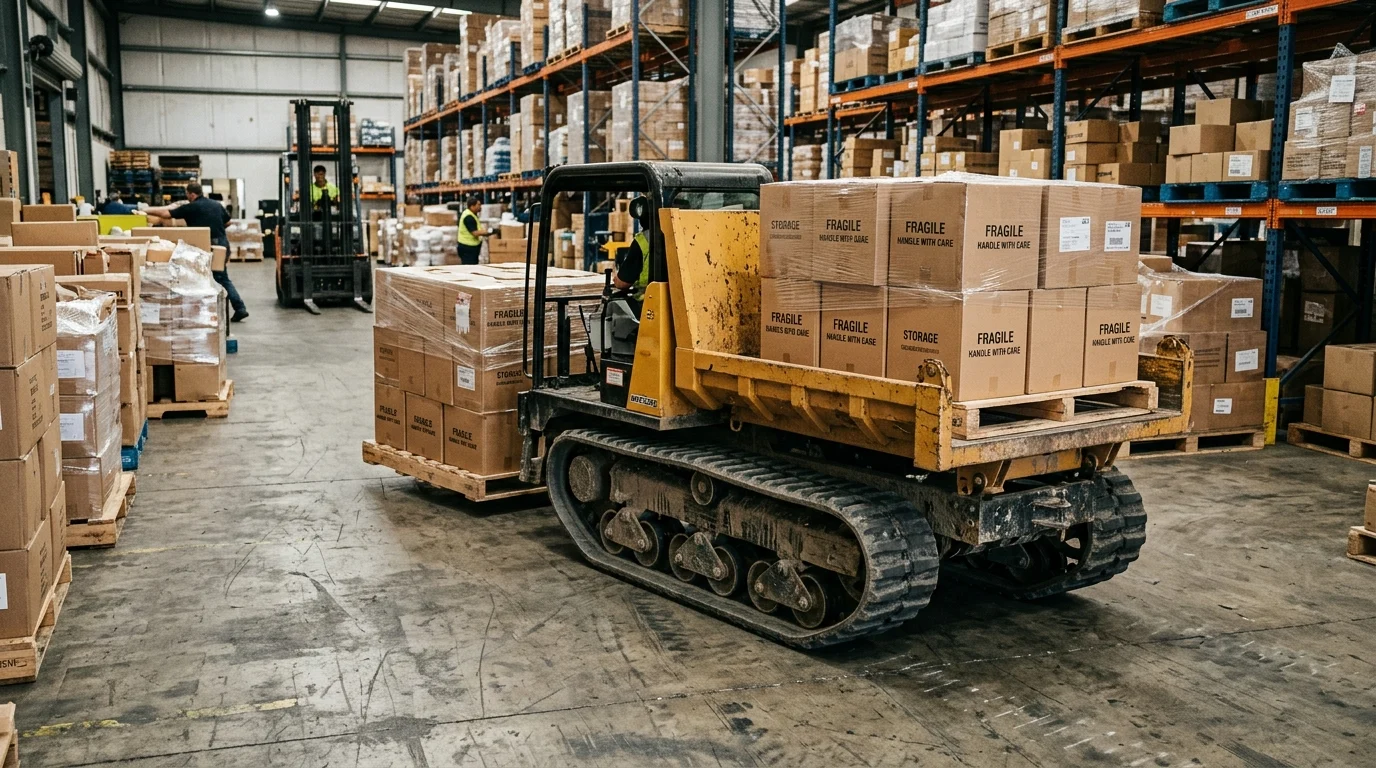
Evaluating dumper tracks requires a strict analysis of dimensional specifications and material compositions. Procurement managers must balance the need for flotation, traction, and durability against the specific geological demands of their primary work sites.
Rubber vs. Steel Dumper Tracks
The primary material debate centers on rubber versus steel configurations. Rubber tracks excel in minimizing surface disturbance, typically exerting a low, evenly distributed ground pressure of just 2.5 to 4.5 psi. This low pressure is critical for soft soils, turf, and finished pavements where environmental preservation is necessary.
In contrast, steel tracks are engineered for maximum durability in aggressive environments, such as quarries and forestry sites, where sharp debris would quickly shred elastomeric compounds. Steel tracks can often exceed 4,000 hours of service life but sacrifice ride comfort and travel speed. Furthermore, steel tracks often damage asphalt and finished surfaces, may face road-transport restrictions, and can accelerate expensive undercarriage component wear. It is also critical to note that switching between rubber and steel track systems often requires entirely different sprocket and roller configurations, not merely tension adjustments, meaning they are rarely directly interchangeable.
Note: In the comparison below, ground pressure and lifespan values are illustrative; actual figures depend heavily on overall machine weight and track width, not solely on the track material.
| Specification | Rubber Dumper Tracks | Steel Dumper Tracks |
|---|---|---|
| Average Ground Pressure | 2.5 – 4.5 psi | 5.0 – 8.0+ psi |
| Typical Lifespan | 1,500 – 2,500 hours | 3,000 – 4,500 hours |
| Optimal Terrain | Mud, turf, asphalt, sand | Blasted rock, demolition, ice |
| Relative Weight | Lighter machine weight | Heavier (increases stability) |
Track Width, Pitch, and Other Critical Specs
Beyond material type, dimensional specifications—specifically width, pitch, and the number of links—dictate compatibility and performance. Track widths vary drastically, scaling from 230mm for narrow-access micro dumpers up to 800mm or more for massive utility crawler carriers. A wider track increases flotation in marshy conditions but requires more engine torque to turn. Furthermore, fleet managers must carefully consider transport-width limits and roadability; oversized tracks can push a machine beyond standard trailer dimensions, creating significant logistical constraints and increasing transport costs.
Pitch, defined as the distance between the centers of two adjacent drive lugs, typically measures 90mm or 100mm on mid-sized machines. Short-pitch designs engage more sprocket teeth simultaneously. This specific engineering choice significantly reduces machine vibration, thereby improving operator comfort and minimizing structural fatigue on the undercarriage during high-speed transit.
Additionally, tread pattern types are a primary selection factor. Patterns such as the C-lug, block, or multi-bar directly impact the machine’s capabilities. For instance, a staggered block pattern offers excellent self-cleaning properties in thick mud, while a C-lug or multi-bar tread provides superior forward traction and enhanced side-slope stability.
Dumper Rubber Track Lifecycle Cost and Buying Decisions
The initial procurement cost of dumper tracks represents only a fraction of their total cost of ownership (TCO). Because undercarriage and track replacements typically consume 15% to 20% of a crawler dumper’s lifetime maintenance budget, strategic lifecycle management is essential for preserving capital and ensuring consistent site logistics.
Inspection, Installation, Tensioning, and Rotation
Proactive maintenance directly extends track longevity. Fleet technicians must verify track tension every 50 to 100 operating hours, as improper tensioning accelerates component failure. Tracks that are tensioned too tightly place excessive strain on the idlers and drive sprockets.
Key Takeaways
- Select dumper tracks by payload class, using continuous rubber tracks for compact machines under 3 metric tons and reinforced heavy-duty designs for 10- to 15-ton crawler carriers.
- Expect track life to vary sharply by terrain, as abrasive rock or demolition debris can reduce a rubber track’s service life by 30% to 50% compared with optimal dirt or clay conditions.
- Factor downtime into lifecycle cost calculations because an unplanned heavy-equipment stoppage can cost hundreds of dollars per hour in lost productivity.
- Use rubber tracks when flotation and surface protection matter, since they can distribute ground pressure evenly at roughly 2.5 to 4.5 psi.
- Protect internal steel cords and reduce de-tracking risk by limiting counter-rotations, side-slope travel, overloading, and operation with worn undercarriage components.
- Verify track dimensions, machine fitment, rubber compound quality, and reinforcement structure before purchasing replacement dumper tracks.
Frequently Asked Questions
What are dumper tracks used for?
Dumper tracks support rubber-tracked or steel-tracked crawler carriers used to haul heavy loads across soft, muddy, uneven, or low-bearing ground where wheeled dumpers may lose traction or sink.
Are rubber dumper tracks better than steel tracks?
Rubber tracks are usually better for lower ground pressure, surface protection, and mixed job sites. Steel tracks suit extreme abrasive or high-impact environments, but they are heavier, harsher on surfaces, and often more niche for heavy-load applications.
How long should a high-quality dumper rubber track last?
In favorable dirt or clay conditions, a quality rubber track may reach around 2,000 operating hours. Abrasive rock, demolition debris, poor tension, and aggressive turning can reduce life significantly.
What causes premature dumper track failure?
Common causes include abrasive terrain, excessive pivot turns, steep side-slope operation, incorrect track tension, overloading, UV or heat aging, and worn undercarriage components such as rollers, sprockets, and idlers.
How do I choose the right replacement dumper track?
Match the track to the machine model, payload class, track width, pitch, link count, terrain, and required flotation. A manufacturer such as Gator Track can help verify fitment and recommend rubber track options for heavy-equipment undercarriages.
Post time: Aug-27-2026