
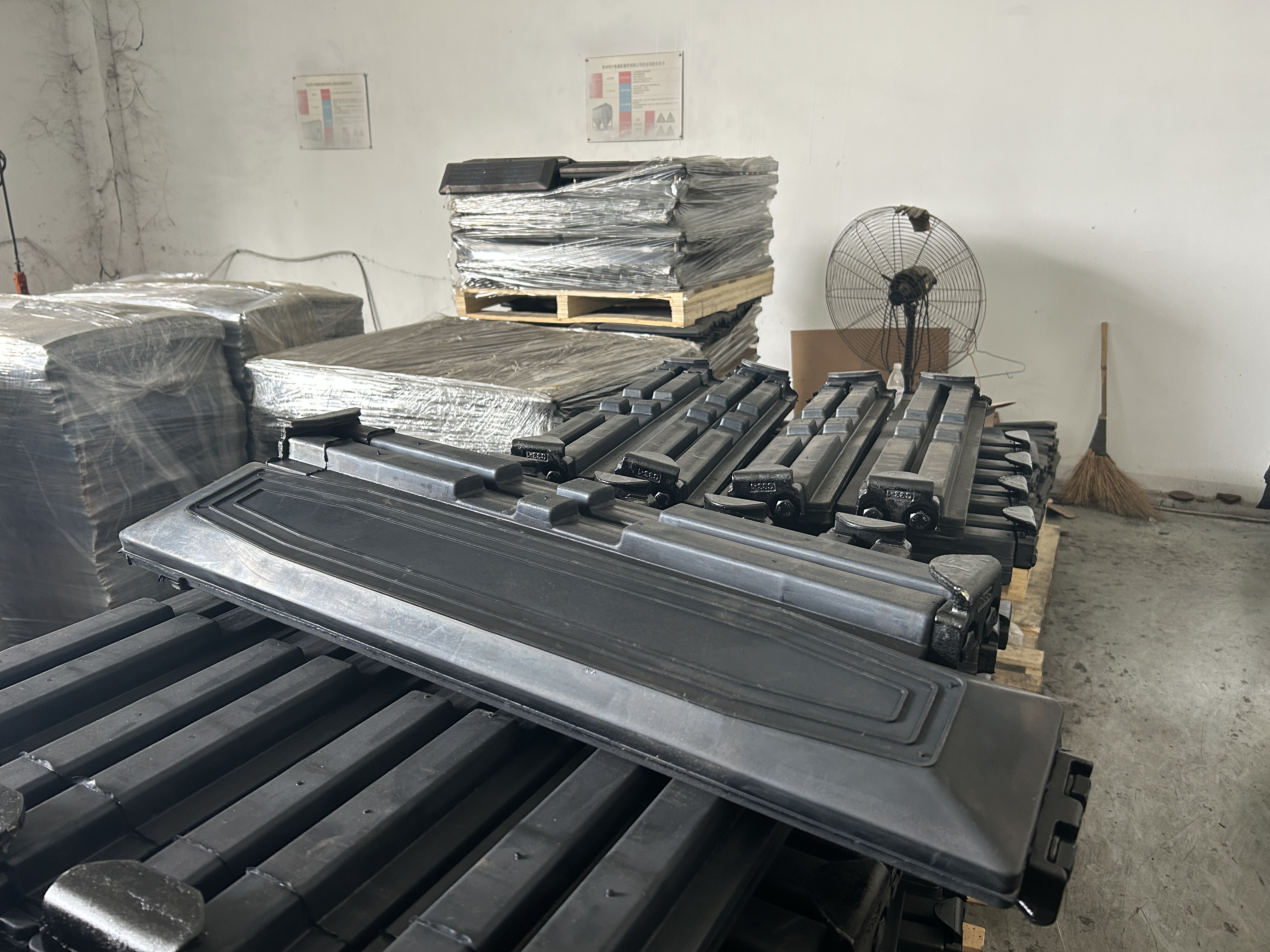
Why Excavator Rubber Pads Matter
Excavator rubber pads serve as a critical bridge between the high-traction, durable nature of steel tracks and the operational necessity of protecting delicate infrastructure. Operating steel-tracked excavators on finished concrete, asphalt, or paved urban environments without adequate protection guarantees severe surface damage. By retrofitting steel tracks with rubber pads, fleets can maintain the ruggedness, traction, and stability of a steel undercarriage while achieving the surface-friendly characteristics of a compact rubber-tracked machine (often distributing machine weight to a manageable 4 to 8 PSI).
The strategic deployment of these pads extends beyond simple surface protection; it directly influences project logistics, regulatory compliance, and overall job site profitability. Understanding the financial and operational factors of using rubber pads is essential for optimizing heavy machinery deployment in diverse environments.
Cost and Uptime Impact
The financial justification for outfitting excavators with rubber pads centers on the elimination of remediation costs and the optimization of operational uptime. Operating bare steel tracks on municipal roads or finished commercial sites often results in immediate infrastructure damage. Municipalities and private developers routinely levy heavy penalties for asphalt destruction, with fines and repair mandates that typically range from $1,500 to over $5,000 per incident depending on regional regulations.
Conversely, equipping a mid-sized excavator with a complete set of high-quality rubber pads requires a moderate capital outlay—typically ranging from $1,200 to $4,500 per set, varying based on the machine’s tonnage, regional pricing, and the specific pad style. However, these pads should be treated as consumables with finite lifespans. The true return on investment comes from comparing total lifecycle replacement costs against the ongoing savings from avoided fines and surface repairs, rather than viewing the initial purchase as a one-time shield. Furthermore, rubber pads eliminate the labor-intensive practice of continuously laying down and moving protective timber mats or plywood ahead of the machine, thereby saving an estimated 1 to 2 hours of manual labor per shift and significantly increasing daily operational uptime.
When Rubber Track Pads Are Worth Using
While the previous section highlights the financial benefits of pavement protection, rubber track pads deliver the highest return on investment when deployed specifically on machines operating in hybrid environments—sites requiring both heavy earthmoving capabilities and frequent transit across paved surfaces. They are particularly advantageous for excavators in the 5-ton to 25-ton operating weight class. In this range, transitioning to dedicated continuous rubber tracks often becomes cost-prohibitive and introduces a higher risk of de-tracking under heavy torque or uneven terrain.
Utilizing rubber pads allows operators to retain the durability of steel track chains for initial excavation phases, and simply attach the rubber pads when the project advances to final grading or utility installation on paved roads. However, critical operational caveats exist. Rubber pads generally reduce traction on slopes by 15% to 25% and perform poorly in loose fill or winter conditions compared to bare steel shoes. Furthermore, they are highly susceptible to rapid delamination and destruction if used in demolition, scrap yards, or highly abrasive and rocky terrain. Debris can also become trapped between the pad and the shoe, which may accelerate pin and bushing wear, while the pads themselves alter ground pressure and slightly reduce ground clearance by 1 to 2 inches. Understanding these constraints ensures the pads are deployed only when their benefits outweigh the risks.
Key Specifications to Compare

Procuring the correct rubber pads requires a technical evaluation of the materials and fitment styles available in the industrial aftermarket. Because excavators generate immense shear forces (often exceeding 10,000 lbf during counter-rotation and travel), substandard pads will rapidly delaminate, chunk, or shear off their mounts. Evaluating specific material specifications is necessary to ensure maximum lifecycle value.
Pad Type, Steel Core, and Rubber Compound
The overall strength of a rubber pad relies heavily on the quality of its internal steel core and the chemical composition of the rubber molded around it. Premium pads utilize high-quality steel cores with reliable rubber bonding to offer superior resistance to bending and fracturing under high point-loading. The rubber itself is typically a proprietary blend of natural and synthetic polymers designed to balance elasticity with abrasion resistance.
For commercial-grade applications, industry guidelines suggest prioritizing rubber compounds with high tensile strength (typically 15 to 20+ MPa) to help prevent tearing when traversing sharp debris. Additionally, engineers target a balanced hardness rating (generally 70 to 85 Shore A) based on manufacturer testing. A compound that is too soft results in accelerated wear on abrasive surfaces, while one that is too hard makes the pad brittle, leading to chunking during high-impact operations.
Fitment, Durability, and Performance Factors
Durability is inherently linked to the pad’s attachment method and its compatibility with the host machine. There are three primary configurations: clip-on, bolt-on, and chain-on (often referred to as roadliners). Each configuration offers a distinct balance of installation speed, stability, and longevity. It is important to note practical installation caveats: bolt-on pads usually require drilling standard steel shoes if they are not pre-drilled, and chain-on pads require removing the steel shoes entirely. Both scenarios significantly increase labor costs and downtime beyond standard installation metrics.
| Pad Style | Attachment Method | Best Application Profile | Est. Install Time | Typical Lifespan |
|---|---|---|---|---|
| Clip-on | Wraps around the existing steel shoe | Temporary urban use; frequent swapping | 1–3 hours | 800–1,200 hours |
| Bolt-on | Bolts directly to pre-drilled steel shoes | Semi-permanent use; high stability | 4–8 hours | 1,000–1,500 hours |
| Chain-on (Roadliner) | Bolts directly to the track chain (no shoe) | Continuous paved operations; maximum durability | 8–12+ hours | 1,500–2,000+ hours |
Evaluating the machine’s primary duty cycle is essential for selecting the appropriate style. Clip-on pads offer logistical flexibility for short-term urban contracts, whereas chain-on roadliners provide the lowest profile and highest durability for machines permanently dedicated to municipal street repair.
How to Select and Manage Rubber Pads
Effective procurement and maintenance of excavator rubber pads directly impact a fleet’s operational uptime and surface protection capabilities. Fleet managers must implement standardized selection protocols to ensure component compatibility and maximize long-term return on investment.
Steps to Avoid Fitment Errors
Incorrect sizing accelerates undercarriage wear and introduces the risk of track derailment. To ensure proper fitment of excavator rubber pads, procurement teams must verify three critical dimensions before issuing purchase orders:
- Track Width: Measure the existing steel shoe width (commonly 400mm, 450mm, or 500mm) to ensure the pad’s footprint aligns perfectly without overhanging.
- Pitch Measurement: Calculate the exact distance between the centers of two consecutive track pins.
- Mounting Mechanism: Identify the required pad type—bolt-on, clip-on, or chain-on (roadliner). Bolt-on pads require pre-drilled holes in the steel shoes, whereas clip-on variants utilize brackets to secure directly to the shoe edges.
Cross-referencing the machine’s make, model, and serial number with the Original Equipment Manufacturer (OEM) specifications provides a final safeguard against compatibility failures.
Balancing Price, Supplier Quality, and Lifecycle Value
Evaluating excavator rubber pads requires shifting procurement focus from upfront unit costs to the Total Cost of Ownership (TCO). High-quality pads typically feature a continuous steel core and a premium natural-to-synthetic rubber blend, which resists chunking and abrasions on harsh surfaces like milled asphalt or concrete.
| Procurement Focus | Low-Cost Alternative | Premium Specification |
|---|---|---|
| Rubber Compound | High recycled rubber content | Virgin natural/synthetic blend |
| Core Construction | Segmented or overlapping steel | Continuous steel cord |
| Lifecycle Expectancy | 500 – 800 operating hours | 1,200 – 1,500+ operating hours |
When selecting manufacturing partners, fleet managers should audit suppliers based on ISO 9001 quality management certifications, verifiable defect rates, and comprehensive warranty terms. While premium pads demand a higher initial capital outlay, they drastically reduce maintenance labor costs associated with frequent replacements and prevent collateral wear on the excavator’s broader undercarriage system.
Key Takeaways
- Use excavator rubber pads when steel-tracked machines must cross asphalt, concrete, or finished urban surfaces without causing costly damage.
- Compare pad lifecycle cost against avoided fines, repairs, and downtime rather than judging value only by the initial $1,200 to $4,500 set price.
- Prioritize rubber pads for 5-ton to 25-ton excavators working in mixed earthmoving and paved-surface environments.
- Plan for traction trade-offs because rubber pads can reduce slope grip by about 15% to 25% compared with bare steel shoes.
- Select bolt-on, clip-on, chain-on, or specialty pad styles based on the excavator’s steel shoe design, job conditions, and replacement workflow.
Frequently Asked Questions
What are excavator rubber pads used for?
They let steel-tracked excavators work on asphalt, concrete, and finished surfaces with less damage while retaining the strength and stability of a steel undercarriage.
When are rubber pads most cost-effective for a fleet?
They are most valuable on hybrid jobs where excavators move between earthwork and paved areas, especially in the 5-ton to 25-ton machine range.
How much do excavator rubber pads typically cost?
A full set for a mid-sized excavator often ranges from about $1,200 to $4,500, depending on machine size, pad style, fitment, and regional pricing.
Do rubber pads improve traction?
Not always. Rubber pads protect surfaces but can reduce slope traction by roughly 15% to 25% and may perform poorly in loose fill, mud, or winter conditions.
What pad styles are available from Gator Track?
Gator Track offers excavator rubber track pads in variants such as bolt-on, clip-on, chain-on, RP, HXP, and DRP styles for broad machine compatibility.

Post time: Aug-25-2026