Introduction
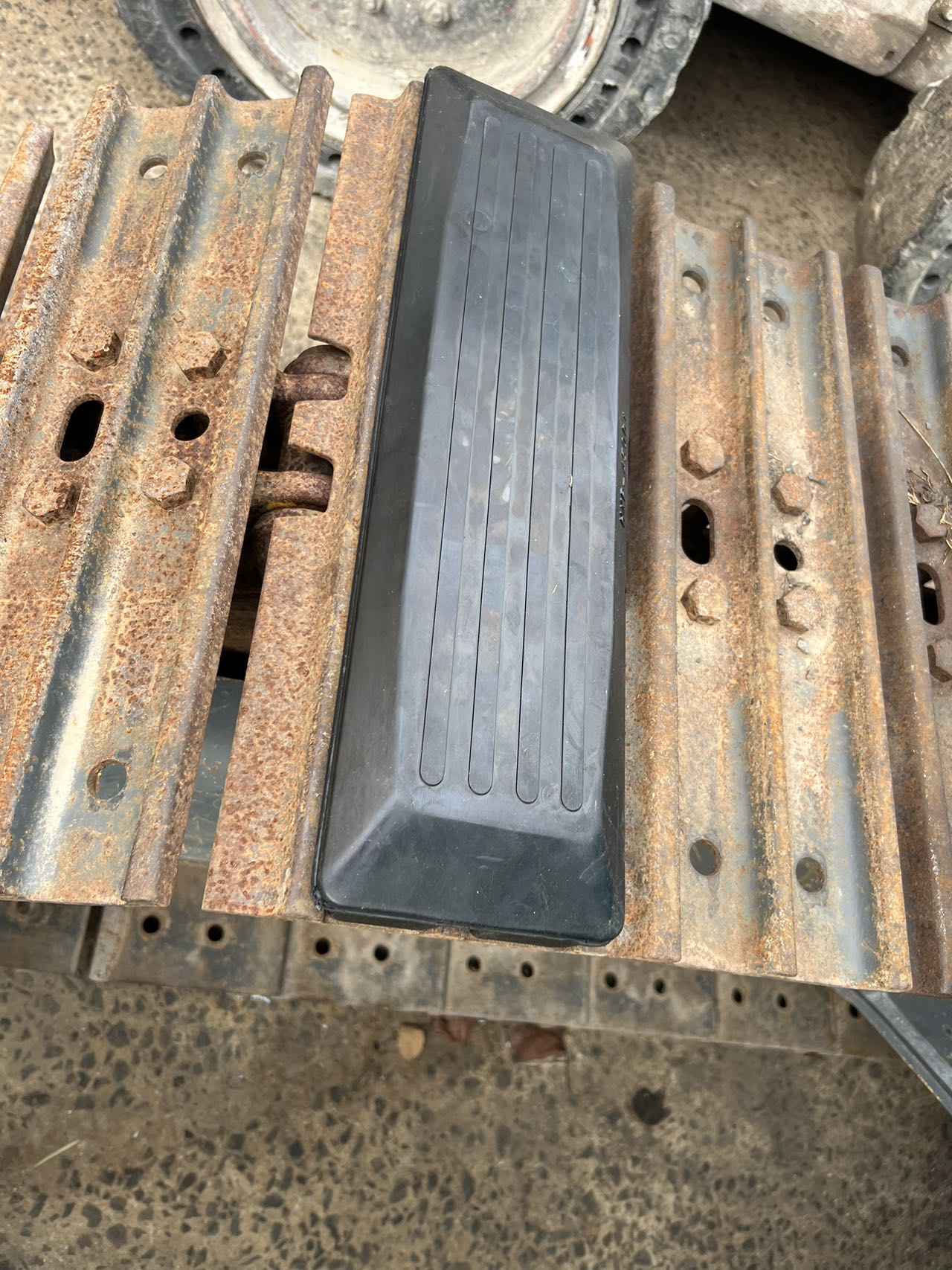
Tracked machines are no longer confined to rough ground, and that shift is changing how contractors think about undercarriage protection. Bolt on rubber track pads have emerged as a practical way to move steel-tracked equipment onto pavement, finished concrete, and other sensitive surfaces without sacrificing the durability of the base track system. This article examines how these pads reduce vibration, limit wear on rollers, idlers, and sprockets, and expand fleet flexibility in urban and mixed-terrain work. It also looks at the market and operational factors pushing adoption, helping readers understand where bolt on rubber track pads fit in future equipment strategy.
Strategic Value of Bolt-On Rubber Track Pads
The integration of bolt-on rubber track pads represents a critical pivot in heavy equipment fleet management, transitioning tracked machinery from specialized off-road assets to highly versatile urban infrastructure tools. By affixing elastomeric blocks directly to existing steel grouser shoes, these pads preserve the structural integrity of the base track while unlocking operational flexibility across sensitive surfaces. This dual capability eliminates the need for fleets to maintain separate wheeled excavators for urban environments and steel-tracked excavators for raw earthmoving, thereby optimizing capital expenditure and asset utilization.
How bolt-on rubber track pads reduce undercarriage wear
Mechanical degradation of undercarriage components stems primarily from high-frequency vibrations and abrasive ground contact inherent to heavy machinery locomotion. Bolt-on rubber pads mitigate this by acting as heavy-duty elastomeric dampers. High-grade natural and synthetic rubber blends—engineered with tensile strengths exceeding 15 MPa—absorb impact energy, significantly reducing shock transmission to sensitive undercarriage components like bottom rollers, front idlers, and drive sprockets. Field data indicates that utilizing premium rubber pads can decrease undercarriage vibration by up to 45%. This dampening effect subsequently extends the operational lifespan of the steel track chain and undercarriage bearings by 30% to 40% compared to bare steel operation on rigid hardscapes.
Market forces driving adoption
Regulatory pressures and escalating urban infrastructure demands are the primary catalysts accelerating the adoption of bolt-on pads. Municipal noise ordinances increasingly cap heavy machinery acoustic emissions at 85 dB(A) in residential and commercial zones, a compliance threshold virtually impossible to achieve with bare steel tracks clattering on asphalt. Furthermore, the prohibitive financial penalties associated with repairing damaged municipal roadways and curbs have prompted general contractors to mandate surface-friendly equipment on all infrastructure bids. With a complete set of bolt-on pads costing a fraction of a full undercarriage overhaul—often yielding a positive return on investment within the first 500 hours of urban operation—fleet managers are rapidly standardizing their use across 8-ton to 25-ton machine classes.
Key Buyer Comparison Factors

Procurement of bolt-on track pads necessitates a precise alignment between equipment specifications, metallurgical standards, and anticipated operational environments. Selecting the optimal configuration requires fleet managers to rigorously evaluate rubber compounding, internal core construction, and mounting architectures to prevent premature failure under high-torque, heavy-load conditions.
Core specifications to compare
Dimensional accuracy and material composition form the non-negotiable baseline of pad selection. Buyers must precisely match the undercarriage track pitch—commonly ranging from 135mm for compact excavators up to 216mm for heavy-duty 30-ton machines—and the corresponding shoe width, typically falling between 400mm and 800mm. The rubber compound’s durometer is equally critical; an optimal hardness of 75 to 80 Shore A strikes the necessary balance between abrasion resistance on concrete and the flexibility required to prevent chunking. Additionally, the quality of the vulcanization process bonding the rubber to the internal steel plate dictates the pad’s tear resistance.
| Mounting Architecture | Primary Advantage | Typical Installation Time (per pad) | Lateral Stability Rating | Ideal Application Profile |
|---|---|---|---|---|
| Bolt-On | Maximum security and shear resistance | 3–5 minutes | Excellent | Heavy excavation, permanent urban infrastructure projects |
| Clip-On | No pre-drilled grouser shoes required | 1–2 minutes | Moderate | Temporary urban transit, mixed-use light-duty fleets |
| Chain-On (Roadliner) | Integrated low-profile design | N/A (Full chain replacement) | Excellent | Dedicated urban paving and milling equipment |
Trade-offs among pad options
The selection architecture involves distinct mechanical and operational trade-offs. Bolt-on rubber track pads offer superior lateral stability and shear resistance, making them ideal for high-torque applications where lateral forces routinely exceed 50 kN. However, this unmatched stability requires the host machine’s existing steel grousers to possess pre-drilled mounting holes, and the initial installation is highly labor-intensive compared to clip-on alternatives. Conversely, while clip-on pads facilitate rapid deployment across mixed-use fleets lacking pre-drilled shoes, they rely on a wraparound bracket system. This design is susceptible to displacement, bracket deformation, or complete detachment under heavy side-loading, rendering clip-on variants suboptimal for severe grading, trenching, or demolition tasks where lateral friction is maximized.
Sourcing, Installation, and Supplier Evaluation
Transitioning from technical specification to field deployment demands strategic supplier partnerships and rigorous mechanical execution. The operational efficacy and economic lifespan of a track pad investment are entirely contingent upon securing high-yield manufacturing sources and adhering to stringent, documented installation protocols to prevent hardware shearing.
Steps for sourcing and installation
Sourcing begins with verifying the exact hole pattern, pitch, and bolt dimensions (typically M12 to M16) of the host machinery’s grousers. Once procured, installation dictates a highly systematic approach. Technicians must thoroughly clear the steel shoe of compacted debris, mud, and rust to ensure a perfectly flush seating of the pad. The mounting hardware must be secured using calibrated impact wrenches, applying a precise torque specification—usually between 130 Nm and 180 Nm, depending on the fastener grade and machine size. Under-torquing leads to vibrational loosening and eventual pad loss, while over-torquing stresses the internal steel core of the rubber pad, precipitating premature structural failure. Industry best practices also require a mandatory re-torquing of all bolts after the first 50 hours of operation to account for initial mechanical settling.
How to assess suppliers, lead times, and warranty
Evaluating industrial suppliers requires scrutinizing manufacturing consistency, logistical agility, and post-sale support. Expert procurement teams prioritize manufacturers demonstrating historical defect rates below 0.5% and utilizing forged internal steel cores rather than weaker cast iron alternatives. Standard Minimum Order Quantities (MOQs) for direct factory sourcing often hover around 100 to 150 units—sufficient for a standard 20-ton excavator fleet upgrade—with global maritime lead times averaging 30 to 45 days for custom production runs. Furthermore, tier-one suppliers should provide robust, documented warranty frameworks. A competitive industrial warranty typically guarantees structural integrity and rubber-to-metal bond adhesion for 1,000 to 1,500 operating hours or 12 months, backed by comprehensive metallurgical certificates and standardized tear-resistance testing data.
Key Takeaways
- The most important conclusions and rationale for Bolt On Rubber Track Pads
- Specs, compliance, and risk checks worth validating before you commit
- Practical next steps and caveats readers can apply immediately
Frequently Asked Questions
What are bolt-on rubber track pads used for?
They let steel-tracked excavators work on asphalt, concrete, and paved urban sites while reducing surface damage, noise, and undercarriage shock.
How do I know which bolt-on pad size fits my machine?
Match the track pitch, shoe width, and bolt-hole pattern on your steel grousers. Gator Track can help confirm fitment by machine model or pad code.
When should I choose bolt-on pads instead of clip-on pads?
Choose bolt-on pads for heavy-duty excavation, trenching, and jobs with strong side loads. They offer better shear resistance and lateral stability than clip-on styles.
Do bolt-on pads help reduce undercarriage wear?
Yes. Quality rubber pads absorb vibration and lessen impact on rollers, idlers, sprockets, and bearings, helping extend service life on hard surfaces.
What should I check before ordering from Gator Track?
Verify machine model, track pitch, shoe width, pad style, and whether your shoes are pre-drilled. Also confirm your application, such as urban roadwork or mixed-surface excavation.
Post time: May-28-2026