Why Advanced Tracks Matter for Skid Steer Loaders
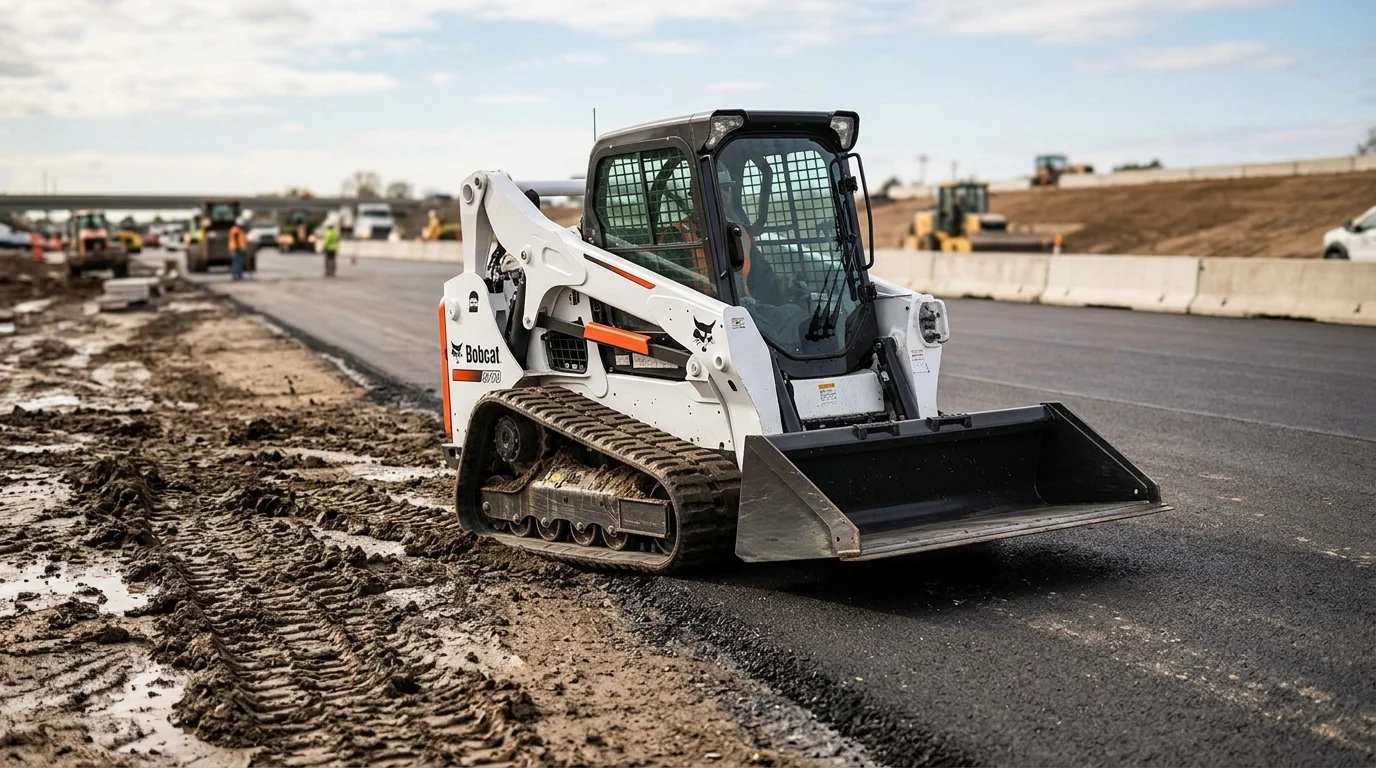
Transitioning skid steer loaders between soft, muddy terrain and abrasive asphalt presents a significant logistical challenge for multi-site operations. Moving equipment rapidly across vastly different ground conditions—often multiple times in a single week—exposes the limitations of standard tracks, which frequently fail to bridge this gap effectively. This results in compromised efficiency, transport delays, increased operator fatigue, and higher maintenance overhead. Upgrading machinery to advanced rubber track systems reduces unexpected downtime, streamlines site-to-site transport logistics, and helps control long-term operating costs.
Defining Advanced Skid Steer Tracks
Fully appreciating the value of these upgrades requires defining what elevates a track from a standard consumable to an advanced asset. Advanced skid steer tracks are characterized by three concrete technical differences:
- Cord Construction: They utilize continuous steel cord technology rather than traditional overlapping internal joints, eliminating the weakest point of the track to prevent sudden catastrophic snapping under heavy loads.
- Compound Type: Premium options integrate specialized synthetic rubber compounds engineered to resist chunking, tearing, and UV degradation during frequent surface transitions.
- Expected Lifespan: These structural improvements deliver significantly extended operating hours compared to standard tracks, provided they are properly maintained.
While advanced continuous-cord variants resist catastrophic failure, they are harder to repair in the field than jointed standard tracks—an important consideration for remote jobsites where downtime is critical. Overall, compared to standard tracks that can suffer premature structural joint failures depending on operator behavior and climate, advanced variants offer a substantial improvement in reliability for multi-site fleets.
Jobsite Conditions That Justify Upgrading
The higher initial investment in advanced tracks is justified when fleets operate across highly variable and unforgiving environments. Transitioning daily from deep, waterlogged mud to cured asphalt causes standard tracks to wear unevenly and vibrate excessively during rapid site-to-site transport. Operating consistently on abrasive concrete or asphalt accelerates standard tread wear compared to working exclusively on soft dirt. Advanced tracks mitigate this rapid degradation through optimized lug-to-void ratios and reinforced sidewalls. Consequently, whether pushing through a muddy trench or traversing a finished suburban street, the machine maintains optimal grip without destroying the pavement, burning through its tread prematurely, or delaying the next site deployment.
How to Compare Advanced Skid Steer Loader Tracks
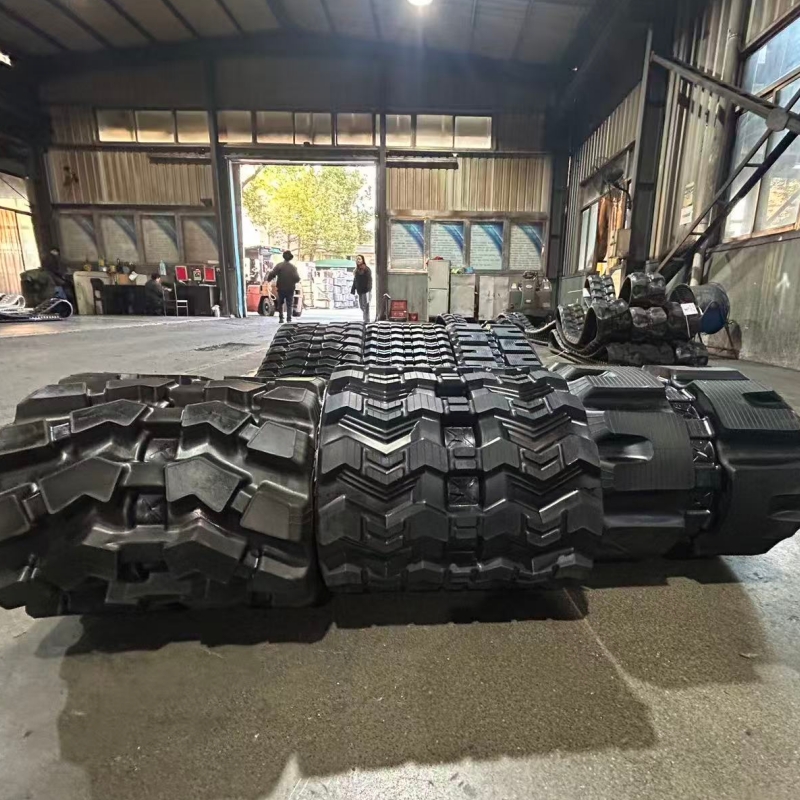
Procuring new tracks for a fleet involves more than looking at the lowest price tag. Comparing advanced tracks requires a thorough evaluation of how specific tread designs, internal engineering, and technical specifications align with daily operational demands and multi-site logistics. Making the wrong choice can lead to severe operational inefficiencies.
Traction, Flotation, and Surface Protection
Balancing aggressive traction in the mud with flotation and surface protection on hardscapes dictates the primary tread choice. Block pattern tracks are ideal for asphalt work to minimize ground disturbance and reduce operator vibration, while C-Lug or Zig-Zag patterns remain the go-to profiles for aggressive mud clearing and hill climbing.
| Tread Pattern | Primary Surface | Flotation Rating | Asphalt Protection |
|---|---|---|---|
| Block Pattern | Asphalt / Concrete | High | Excellent |
| C-Lug | Dirt / Mud | Moderate | Poor |
| Zig-Zag | Snow / Mixed | High | Moderate |
Note: Flotation and asphalt-protection ratings are relative to machine weight and jobsite contract requirements, not absolute metrics.
Matching the tread pattern to dominant jobsite conditions prevents unnecessary damage to client properties, keeps operators comfortable during long shifts, and ensures machines are versatile enough to handle rapid surface transitions across different locations.
Key Specifications to Verify Before Buying
Before finalizing any track purchase, core physical specifications—width, pitch, and the total number of links—must be meticulously verified. For instance, upgrading machines from a standard 320mm (12.5-inch) width to a 450mm (17.7-inch) wide track noticeably reduces the machine’s ground pressure. This reduction is crucial for maintaining flotation in deep mud and preventing deep rutting on sensitive turf. However, increasing track width involves practical trade-offs: it can affect transport dimensions, machine stability, and restrict access through narrow residential gates—critical constraints for multi-site logistics.
Verifying compatibility remains critical; switching to significantly wider tracks or different compounds may require offset rims, wider undercarriage kits, or OEM clearance approval. Warning: Unauthorized modifications or failing to meet undercarriage clearance requirements when switching track widths can void OEM warranty coverage and create liability issues for fleet operators. Carefully measuring the pitch—the precise distance between the center of one drive lug to the next—ensures flawless engagement with existing sprockets. A mismatch of even a few millimeters in pitch can accelerate sprocket wear significantly and lead to track derailment.
Practical Steps for Better Track Performance
Even the highest quality advanced tracks will fail prematurely if proper maintenance and operational protocols are neglected. Maximizing return on investment and keeping multi-site operations running smoothly requires enforcing strict standards for how tracks are handled, installed, and maintained across all active jobsites.
Inspection, Transport, and Installation Standards
During installation and routine daily inspections, proper track tensioning takes priority above all other maintenance tasks for skid steer. While 1 to 1.5 inches (25 to 38 mm) of sag between the middle track roller and the inside of the track is a common example, proper tension varies by manufacturer and model. Technicians must consult the operator’s manual for OEM-specific guidelines rather than relying on a universal measurement. Over-tensioning the tracks to prevent derailment risks significantly increasing premature undercarriage bearing failure rates due to excessive strain.
Additionally, crews should clean out the undercarriage daily; packed mud and debris can stretch the tracks overnight as the material dries and expands. During frequent site-to-site transport, operators must secure the machines using designated chassis tie-down points rather than routing heavy chains over the rubber tracks, which causes deep lacerations that expose the internal steel cords to corrosive moisture.
When to Choose Premium Tracks or Rotate Assets
Evaluating whether to invest in premium replacement tracks or strategically rotate existing assets is essential for prolonging track life.
Key Takeaways
- Choose advanced skid steer tracks when machines frequently transition between muddy jobsites and abrasive asphalt or concrete.
- Prioritize continuous steel cord construction if sudden track failure under heavy loads is a major downtime risk.
- Match tread patterns to the dominant surface: block patterns for asphalt protection and C-Lug or Zig-Zag designs for mud and slopes.
- Evaluate total operating cost instead of purchase price alone, including downtime, transport delays, tread life, and operator fatigue.
- Account for jobsite repair needs because continuous-cord tracks are more failure-resistant but may be harder to repair in remote locations.
- Use tracks with premium rubber compounds and reinforced sidewalls to reduce chunking, tearing, UV damage, and uneven wear across mixed terrain.
Frequently Asked Questions
When should a fleet upgrade to advanced skid steer rubber tracks?
Upgrade when machines regularly move between mud, asphalt, concrete, and other high-wear surfaces. Frequent site changes, transport delays, uneven wear, vibration, and unexpected track failures are strong signs that standard tracks are limiting productivity.
What makes advanced skid steer tracks different from standard tracks?
Advanced tracks typically use continuous steel cord construction, premium synthetic rubber compounds, reinforced sidewalls, and tread designs built for mixed terrain. These features improve durability, reduce sudden failures, and extend service life when properly maintained.
Are continuous-cord tracks better for every jobsite?
Not always. Continuous-cord tracks resist catastrophic snapping under heavy loads, but they can be harder to repair in the field than jointed tracks. Remote jobsites should weigh reliability benefits against repairability and downtime risks.
Which tread pattern works best on asphalt?
Block pattern tracks are generally best for asphalt because they reduce surface disturbance and operator vibration. They are a good choice for fleets that frequently work on roads, driveways, parking lots, or finished hardscapes.
Which tread pattern is better for mud and slopes?
C-Lug and Zig-Zag patterns are better suited for mud clearing, soft ground, and hill climbing. Their more aggressive profiles improve traction where block patterns may not provide enough grip.
Why Advanced Tracks Matter for Skid Steer Loaders
Transitioning skid steer loaders between soft, muddy terrain and abrasive asphalt presents a significant logistical challenge for multi-site operations. Moving equipment rapidly across vastly different ground conditions—often multiple times in a single week—exposes the limitations of standard tracks, which frequently fail to bridge this gap effectively. This results in compromised efficiency, transport delays, increased operator fatigue, and higher maintenance overhead. Upgrading machinery to advanced rubber track systems reduces unexpected downtime, streamlines site-to-site transport logistics, and helps control long-term operating costs.
Defining Advanced Skid Steer Tracks
Fully appreciating the value of these upgrades requires defining what elevates a track from a standard consumable to an advanced asset. Advanced skid steer tracks are characterized by three concrete technical differences:
- Cord Construction: They utilize continuous steel cord technology rather than traditional overlapping internal joints, eliminating the weakest point of the track to prevent sudden catastrophic snapping under heavy loads.
- Compound Type: Premium options integrate specialized synthetic rubber compounds engineered to resist chunking, tearing, and UV degradation during frequent surface transitions.
- Expected Lifespan: These structural improvements deliver significantly extended operating hours compared to standard tracks, provided they are properly maintained.
While advanced continuous-cord variants resist catastrophic failure, they are harder to repair in the field than jointed standard tracks—an important consideration for remote jobsites where downtime is critical. Overall, compared to standard tracks that can suffer premature structural joint failures depending on operator behavior and climate, advanced variants offer a substantial improvement in reliability for multi-site fleets.
Jobsite Conditions That Justify Upgrading
The higher initial investment in advanced tracks is justified when fleets operate across highly variable and unforgiving environments. Transitioning daily from deep, waterlogged mud to cured asphalt causes standard tracks to wear unevenly and vibrate excessively during rapid site-to-site transport. Operating consistently on abrasive concrete or asphalt accelerates standard tread wear compared to working exclusively on soft dirt. Advanced tracks mitigate this rapid degradation through optimized lug-to-void ratios and reinforced sidewalls. Consequently, whether pushing through a muddy trench or traversing a finished suburban street, the machine maintains optimal grip without destroying the pavement, burning through its tread prematurely, or delaying the next site deployment.
How to Compare Advanced Skid Steer Tracks
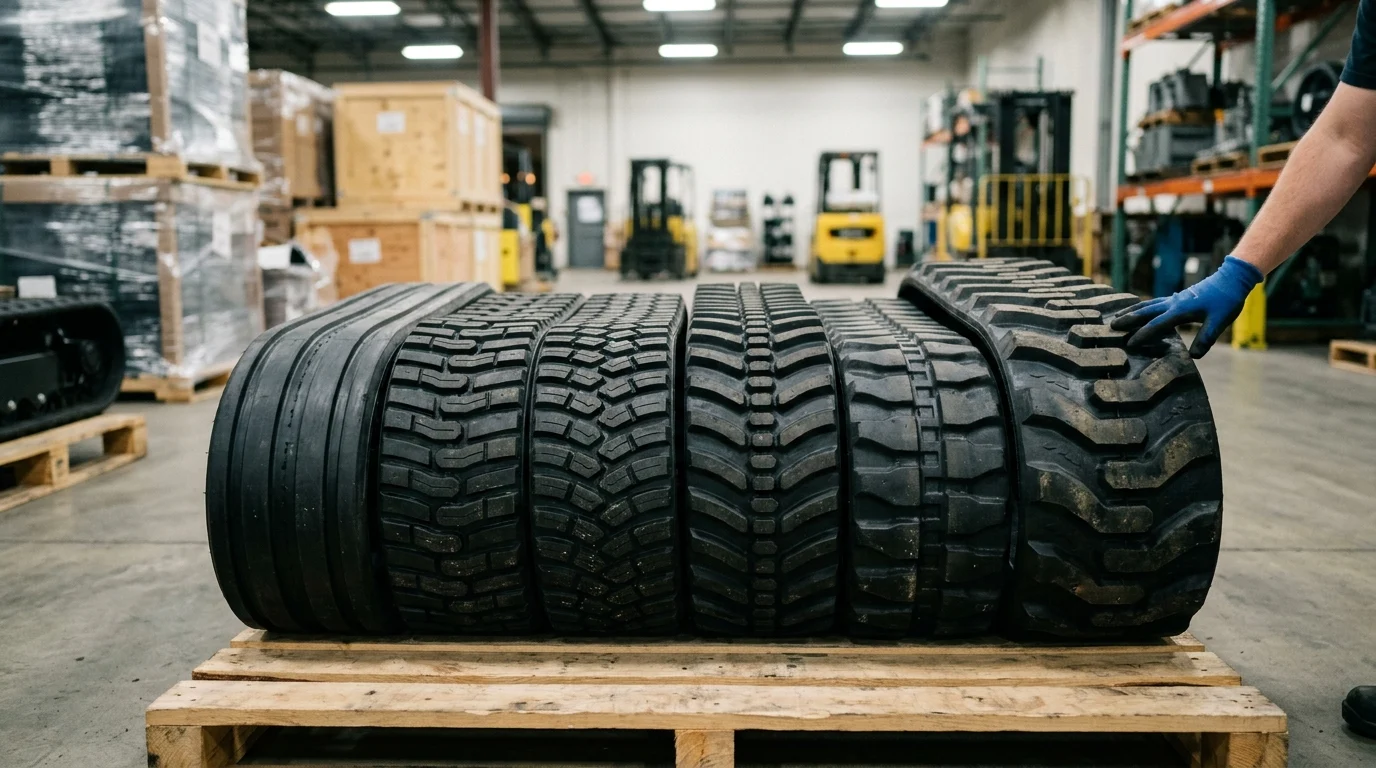
Procuring new tracks for a fleet involves more than looking at the lowest price tag. Comparing advanced tracks requires a thorough evaluation of how specific tread designs, internal engineering, and technical specifications align with daily operational demands and multi-site logistics. Making the wrong choice can lead to severe operational inefficiencies.
Traction, Flotation, and Surface Protection
Balancing aggressive traction in the mud with flotation and surface protection on hardscapes dictates the primary tread choice. Block pattern tracks are ideal for asphalt work to minimize ground disturbance and reduce operator vibration, while C-Lug or Zig-Zag patterns remain the go-to profiles for aggressive mud clearing and hill climbing.
| Tread Pattern | Primary Surface | Flotation Rating | Asphalt Protection |
|---|---|---|---|
| Block Pattern | Asphalt / Concrete | High | Excellent |
| C-Lug | Dirt / Mud | Moderate | Poor |
| Zig-Zag | Snow / Mixed | High | Moderate |
Note: Flotation and asphalt-protection ratings are relative to machine weight and jobsite contract requirements, not absolute metrics.
Matching the tread pattern to dominant jobsite conditions prevents unnecessary damage to client properties, keeps operators comfortable during long shifts, and ensures machines are versatile enough to handle rapid surface transitions across different locations.
Key Specifications to Verify Before Buying
Before finalizing any track purchase, core physical specifications—width, pitch, and the total number of links—must be meticulously verified. For instance, upgrading machines from a standard 320mm (12.5-inch) width to a 450mm (17.7-inch) wide track noticeably reduces the machine’s ground pressure. This reduction is crucial for maintaining flotation in deep mud and preventing deep rutting on sensitive turf. However, increasing track width involves practical trade-offs: it can affect transport dimensions, machine stability, and restrict access through narrow residential gates—critical constraints for multi-site logistics.
Verifying compatibility remains critical; switching to significantly wider tracks or different compounds may require offset rims, wider undercarriage kits, or OEM clearance approval. Warning: Unauthorized modifications or failing to meet undercarriage clearance requirements when switching track widths can void OEM warranty coverage and create liability issues for fleet operators. Carefully measuring the pitch—the precise distance between the center of one drive lug to the next—ensures flawless engagement with existing sprockets. A mismatch of even a few millimeters in pitch can accelerate sprocket wear significantly and lead to track derailment.
Practical Steps for Better Track Performance
Even the highest quality advanced tracks will fail prematurely if proper maintenance and operational protocols are neglected. Maximizing return on investment and keeping multi-site operations running smoothly requires enforcing strict standards for how tracks are handled, installed, and maintained across all active jobsites.
Inspection, Transport, and Installation Standards
During installation and routine daily inspections, proper track tensioning takes priority above all other maintenance tasks. While 1 to 1.5 inches (25 to 38 mm) of sag between the middle track roller and the inside of the track is a common example, proper tension varies by manufacturer and model. Technicians must consult the operator’s manual for OEM-specific guidelines rather than relying on a universal measurement. Over-tensioning the tracks to prevent derailment risks significantly increasing premature undercarriage bearing failure rates due to excessive strain.
Additionally, crews should clean out the undercarriage daily; packed mud and debris can stretch the tracks overnight as the material dries and expands. During frequent site-to-site transport, operators must secure the machines using designated chassis tie-down points rather than routing heavy chains over the rubber tracks, which causes deep lacerations that expose the internal steel cords to corrosive moisture.
When to Choose Premium Tracks or Rotate Assets
Evaluating whether to invest in premium replacement tracks or strategically rotate existing assets is essential for prolonging track life.
Key Takeaways
- Choose advanced skid steer tracks when machines frequently transition between muddy jobsites and abrasive asphalt or concrete.
- Prioritize continuous steel cord construction if sudden track failure under heavy loads is a major downtime risk.
- Match tread patterns to the dominant surface: block patterns for asphalt protection and C-Lug or Zig-Zag designs for mud and slopes.
- Evaluate total operating cost instead of purchase price alone, including downtime, transport delays, tread life, and operator fatigue.
- Account for jobsite repair needs because continuous-cord tracks are more failure-resistant but may be harder to repair in remote locations.
- Use tracks with premium rubber compounds and reinforced sidewalls to reduce chunking, tearing, UV damage, and uneven wear across mixed terrain.
Frequently Asked Questions
When should a fleet upgrade to advanced skid steer tracks?
Upgrade when machines regularly move between mud, asphalt, concrete, and other high-wear surfaces. Frequent site changes, transport delays, uneven wear, vibration, and unexpected track failures are strong signs that standard tracks are limiting productivity.
What makes advanced skid steer tracks different from standard tracks?
Advanced tracks typically use continuous steel cord construction, premium synthetic rubber compounds, reinforced sidewalls, and tread designs built for mixed terrain. These features improve durability, reduce sudden failures, and extend service life when properly maintained.
Are continuous-cord tracks better for every jobsite?
Not always. Continuous-cord tracks resist catastrophic snapping under heavy loads, but they can be harder to repair in the field than jointed tracks. Remote jobsites should weigh reliability benefits against repairability and downtime risks.
Which tread pattern works best on asphalt?
Block pattern tracks are generally best for asphalt because they reduce surface disturbance and operator vibration. They are a good choice for fleets that frequently work on roads, driveways, parking lots, or finished hardscapes.
Which tread pattern is better for mud and slopes?
C-Lug and Zig-Zag patterns are better suited for mud clearing, soft ground, and hill climbing. Their more aggressive profiles improve traction where block patterns may not provide enough grip.
Post time: Sep-14-2026