Introduction
For distributors, fleet managers, and procurement teams, skid steer loader tracks are more than replacement parts—they are a cost, uptime, and supply-chain decision. Bulk purchasing can lower per-unit pricing, reduce exposure to market swings, and ensure consistent availability when replacement cycles accelerate across large fleets. This article outlines what matters most when sourcing tracks at scale, including pricing factors, product quality, logistics, and supplier reliability in international markets. It also helps readers assess how bulk order strategies can support project continuity, protect margins, and simplify inventory planning before moving into specific procurement considerations.
Why Skid Steer Loader Tracks Matter in Bulk Purchasing
Strategic procurement of skid steer loader tracks is a significant lever for operational efficiency and capital expenditure control in heavy machinery management. For global distributors, large-scale fleet operators, and procurement specialists, securing high-quality rubber and steel tracks in bulk directly impacts the bottom line. Stabilizing supply chains and reducing per-unit acquisition costs through bulk purchasing shields organizations from localized market volatility and inflationary pressures on heavy equipment components.
Fleet Uptime, Replacement Cycles, and Project Demand
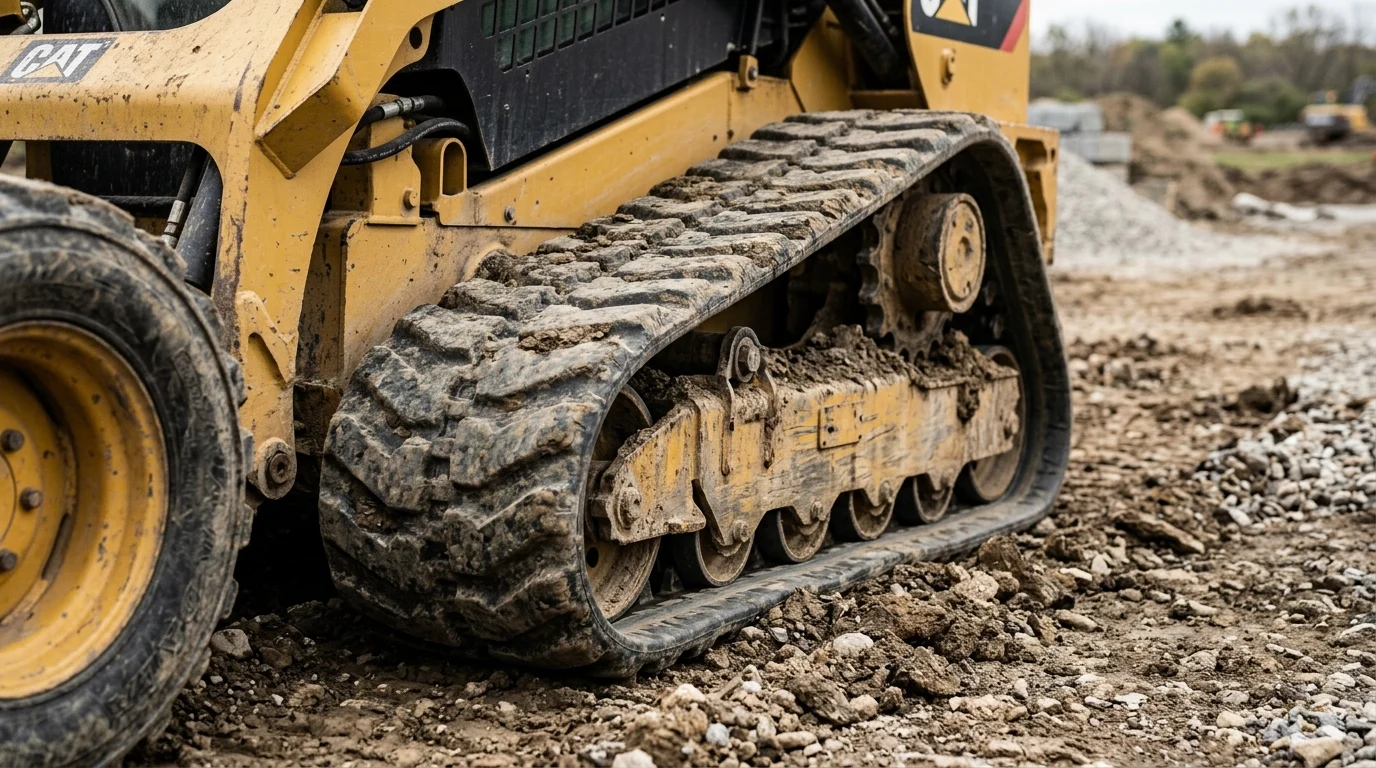
Operational environments dictate the lifespan of heavy equipment undercarriage components. Standard rubber skid steer loader tracks typically require replacement every 1,000 to 1,500 operating hours, depending heavily on terrain abrasiveness and operator behavior. For enterprise-level contractors managing fleets of 50 or more skid steers, synchronized replacement cycles necessitate a robust and predictable inventory.
Relying on ad-hoc purchasing exposes fleets to severe operational risks. Unplanned track failure can incur equipment downtime costs exceeding $500 to $800 per day per machine, making proactive bulk procurement a critical risk mitigation strategy. Maintaining a strategic reserve of tracks ensures continuous project execution, particularly during peak construction seasons when spot-market availability fluctuates and expedited shipping costs erode margins.
Key Buyer Segments in International Markets
The international market for skid steer loader tracks is driven by distinct buyer segments, each with highly specific operational demands. Large civil construction conglomerates prioritize aggressive tread patterns designed for maximum traction in mud and clay, often executing annual procurement contracts for container loads exceeding 100 to 150 units. These bulk orders allow them to standardize maintenance protocols across multinational job sites.
Conversely, agricultural cooperatives and landscaping enterprises focus on turf-friendly tracks that minimize ground disturbance and soil compaction. These buyers require bulk deliveries strictly aligned with seasonal planting and harvest schedules. Furthermore, international equipment rental agencies demand highly durable, multi-surface tracks to accommodate wildly diverse client applications. These agencies typically negotiate long-term supply agreements to secure volume discounts ranging from 15% to 25% off standard wholesale pricing, ensuring their rental fleets remain profitable and continuously deployable.
How to Compare Skid Steer Loader Tracks
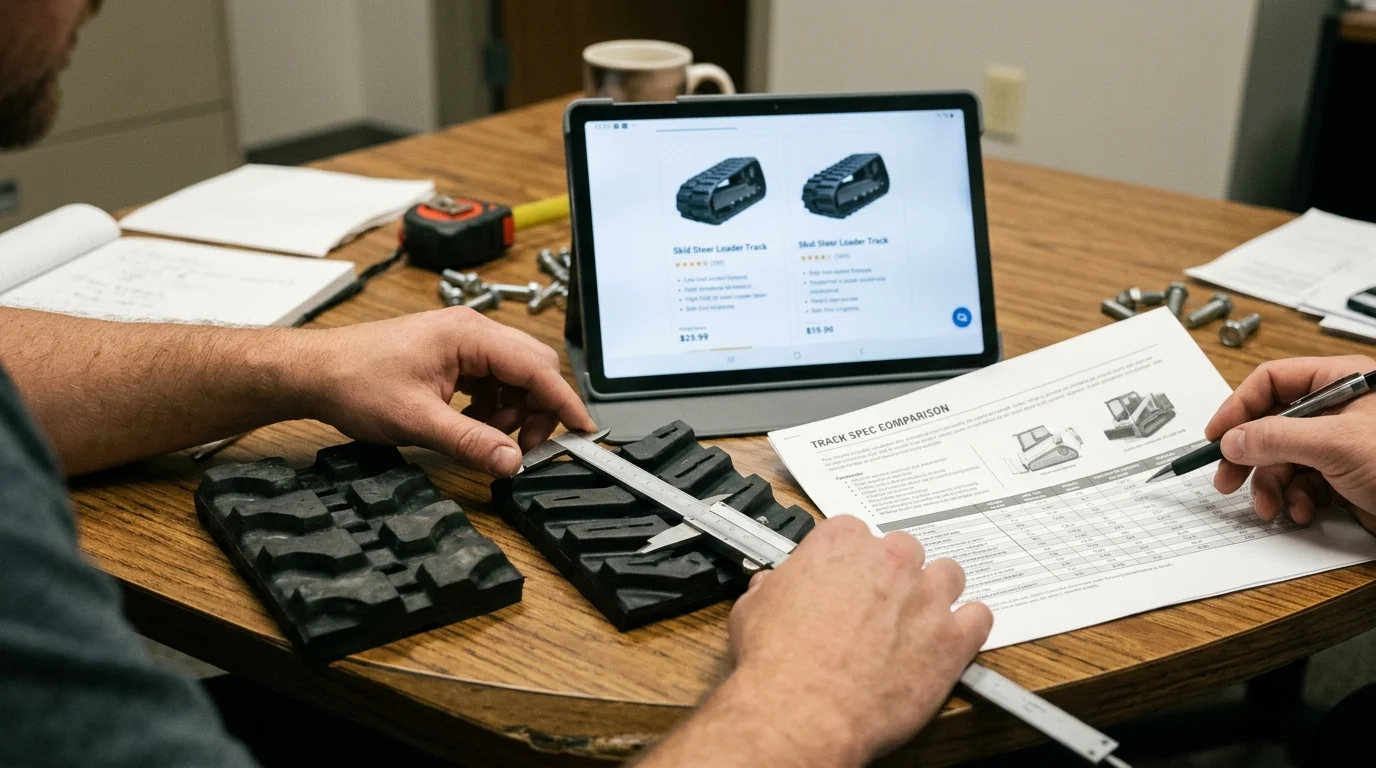
Evaluating skid steer rubber tracks requires a rigorous analysis of dimensional accuracy, tread design, and structural integrity. Procurement specialists must align these technical variables with the specific environmental demands of their fleets to maximize return on investment and minimize total cost of ownership. A thorough cost-benefit analysis between premium and economy tracks often reveals that higher upfront material quality yields significantly lower hourly operating costs.
Core Technical Specifications
The fundamental metric for track compatibility is the precise dimensional formula: Width (mm) × Pitch (mm) × Number of Links. A common specification, such as 320x86x49, must perfectly match the loader’s undercarriage geometry to prevent derailing, tension loss, and excessive sprocket wear. Even a minor deviation in pitch measurement can lead to catastrophic undercarriage failure under heavy loads. Beyond dimensions, tread pattern selection dictates traction, vibration levels, and surface compatibility.
| Tread Pattern | Primary Application | Surface Compatibility | Average Wear Rate |
|---|---|---|---|
| C-Lug | General Construction | Dirt, Mud, Gravel | Moderate |
| Block Pattern | Paved Surfaces | Concrete, Asphalt | Low |
| Zig-Zag | Snow and Ice | Slippery, Wet Terrain | High |
| Turf Friendly | Landscaping | Grass, Soft Soil | Low |
Material Quality, Wear Life, and OEM Compatibility
Premium skid steer loader tracks utilize continuous steel cord technology, entirely eliminating overlapping joints that are notoriously prone to premature failure under high-torque, counter-rotational loads. The rubber compound itself serves as a critical differentiator; top-tier tracks often feature an optimized 70/30 blend of natural to synthetic rubber. This compound is heavily fortified with carbon black and antioxidants to resist chunking, edge cutting, and UV degradation during prolonged outdoor exposure.
When evaluating OEM compatibility, buyers should verify that manufacturing facilities adhere to strict vulcanization temperature controls and ISO 9001 production standards. Tracks engineered with drop-forged steel embeds ensure seamless engagement with OEM sprockets. This precise engineering reduces overall undercarriage vibration by up to 20%, significantly extending the operational lifespan of expensive secondary components such as idlers, tensioners, and bottom rollers.
Procurement, Compliance, and Logistics Best Practices

Executing a global procurement strategy for heavy equipment components involves navigating complex logistics, strict regulatory frameworks, and volatile shipping markets. Establishing standardized best practices for cross-border trade ensures that bulk track orders arrive on schedule, bypass customs delays, and consistently meet stringent quality benchmarks.
Supplier Vetting and Compliance Documentation
Rigorous supplier vetting forms the foundation of a resilient global supply chain. Distributors must demand comprehensive compliance documentation from manufacturing partners, including ISO 9001:2015 for quality management systems and ISO 14001 for environmental standards. In highly regulated European markets, rubber compounds must often comply with REACH regulations concerning the restriction of hazardous substances. Third-party factory audits are highly recommended to verify production capacity and ethical labor practices.
Furthermore, enterprise buyers should negotiate robust warranty terms, typically targeting a minimum coverage of 12 months or 1,000 operating hours, backed by clear, measurable defect rate thresholds. A Tier-1 track supplier should consistently demonstrate a manufacturing defect rate strictly below 0.5%, supported by independent metallurgical analysis of the steel cords and tensile strength testing reports for the rubber matrices.
Pricing, Lead Time, and Inventory Decisions
Optimizing landed costs requires the strategic alignment of pricing tiers, Minimum Order Quantities (MOQs), and international freight logistics. Manufacturers generally impose an MOQ of 20 to 50 units for custom production runs or non-standard sizes. However, consolidating orders into a standard 20-foot or 40-foot High Cube container maximizes freight efficiency, significantly reducing the per-unit shipping cost amid fluctuating spot market freight rates.
Buyers must accurately account for standard manufacturing lead times of 30 to 45 days, plus an additional 25 to 40 days for ocean transit and customs clearance, depending on the origin and destination ports.
Key Takeaways
- The most important conclusions and rationale for Skid Loader Tracks
- Specs, compliance, and risk checks worth validating before you commit
- Practical next steps and caveats readers can apply immediately
Frequently Asked Questions
How do I confirm the right skid steer track size?
Match the exact Width × Pitch × Links format on your old track or machine manual, such as 320x86x49. If unsure, send Gator Track the model and serial details for fitment help.
What bulk order quantity usually gets better pricing?
Pricing typically improves at pallet, container, or annual contract volumes. Request a quote from Gator Track with sizes, quantities, and delivery region to get the most accurate discount.
Which tread pattern is best for my fleet?
Use C-lug for mixed construction, block pattern for pavement, zig-zag for snow, and turf-friendly tracks for landscaping. Choose based on your main surface to balance traction and wear.
How long do skid steer loader tracks usually last?
Most rubber tracks last about 1,000 to 1,500 operating hours. Life depends on terrain, turning habits, load, and maintenance, so monitor tension and replace before severe lug or cable damage.
Can Gator Track support global distributor and OEM replacement needs?
Yes. Gator Track manufactures skid steer loader tracks in many fitment sizes and model codes, helping distributors source consistent replacement tracks with factory-backed supply and one-stop undercarriage support.

Post time: May-25-2026