Introduction
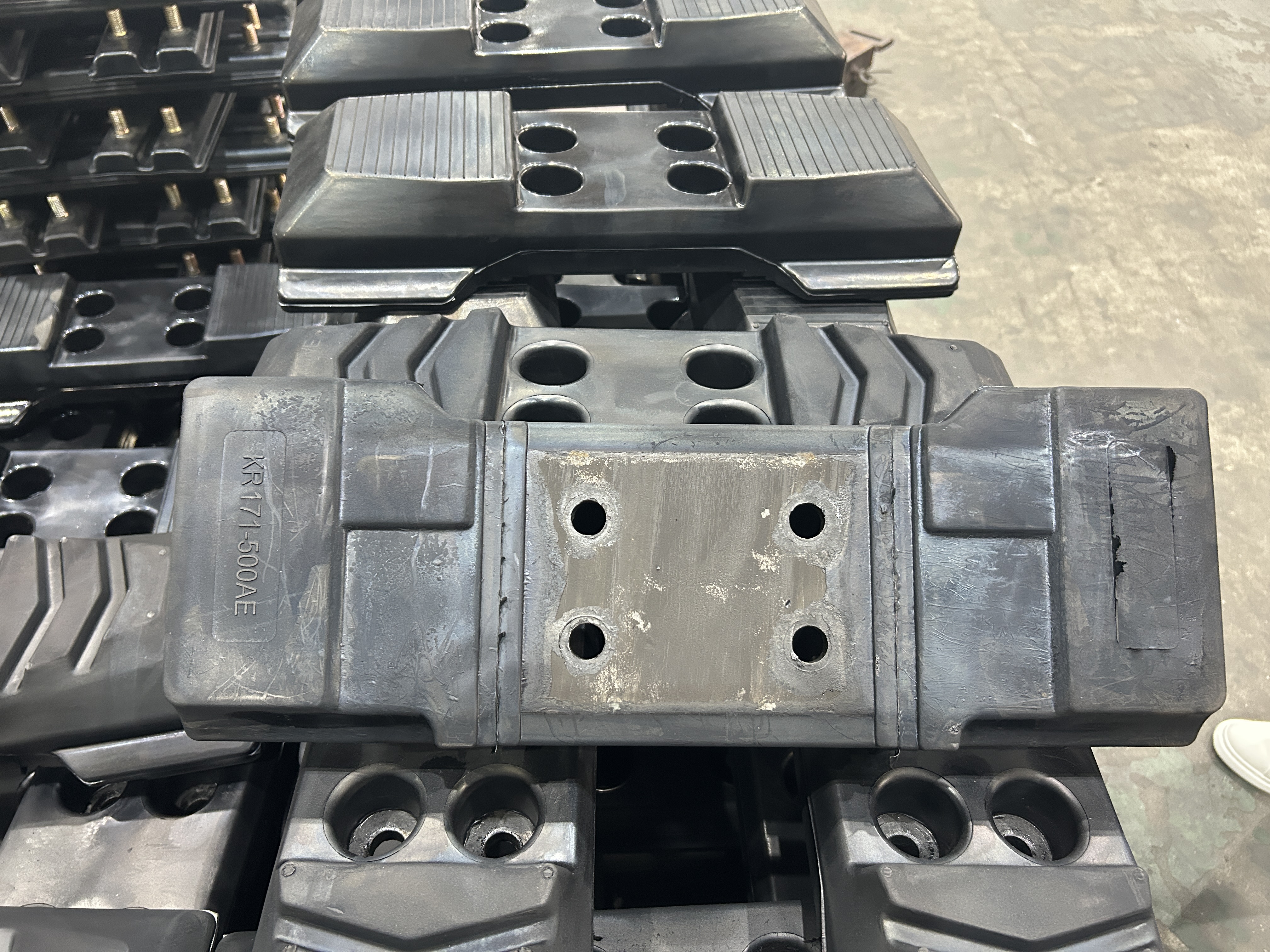
For distributors serving construction, roadwork, and utility fleets, chain-on rubber track pads are no longer a slow-moving accessory; they are a downtime-critical undercarriage component. When excavators operate on asphalt, concrete, or finished urban surfaces, damaged or unavailable pads can delay projects, increase penalties, and weaken customer confidence. This update outlines why immediate global availability matters, which applications are driving demand, and what procurement teams should evaluate when sourcing premium pads for mixed machine fleets. It also sets the stage for reviewing key specifications, fitment terminology, inventory priorities, and supply considerations that help international distributors respond faster and protect contractor productivity.
Specifications and Quality Controls for Chain-On Rubber Track Pads
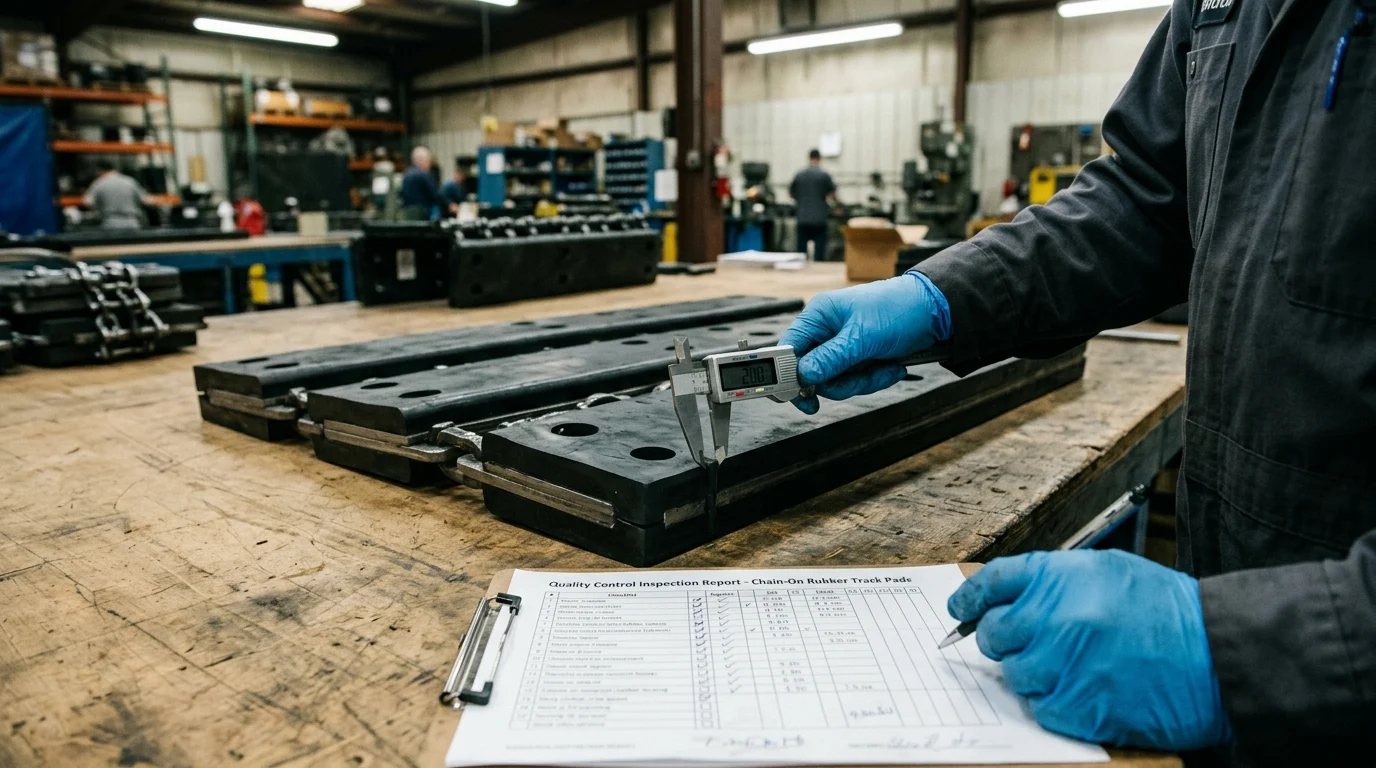
Supplying premium heavy-duty components requires rigorous adherence to engineering tolerances and metallurgical standards. International distributors must verify that their manufacturing partners implement stringent quality control frameworks, typically benchmarked against ISO 9001 standards. In the highly competitive undercarriage market, top-tier manufacturers often target a defect rate below an estimated 0.4%. This low tolerance for failure helps ensure that distributors do not absorb the logistical and reputational costs associated with international Return Merchandise Authorizations (RMAs).
Material, Compound, and Steel Backing Comparison
The operational lifespan of a heavy-duty rubber pad relies heavily on the synergy between its external rubber compound and its internal steel core. Premium chain-on rubber track pads generally utilize a highly engineered blend of natural and synthetic virgin rubber, minimizing the use of recycled crumb rubber that can reduce tear resistance and elasticity.
| Specification | Typical Standard Grade | Typical Premium Grade |
|---|---|---|
| Tensile Strength | < 12 MPa | > 18 MPa |
| Shore Hardness | 65 – 70 Shore A | 75 – 82 Shore A |
| Elongation at Break | ~ 250% | > 400% |
| Steel Core Bonding | Standard Adhesive | Advanced Vulcanization |
Furthermore, the internal steel backing is typically forged from high-carbon steel to withstand high-torsion turning forces generated by modern excavators. The vulcanization process—bonding the rubber matrix directly to the forged steel—determines the pad’s ultimate resistance to delamination under heavy, cyclical loads.
Inspection, Traceability, Packaging, and Compliance
Comprehensive inspection protocols serve as the foundation of reliable quality assurance. Advanced manufacturing facilities utilize non-destructive ultrasonic testing to verify the integrity of the rubber-to-metal bond, ensuring no microscopic air pockets weaken the internal structure. To promote longevity in corrosive environments, the forged steel cores often undergo a minimum of 72-hour salt spray testing prior to vulcanization, though specific requirements vary by operating environment. For lifecycle traceability, each production batch typically receives a unique stamped identifier, allowing distributors to track exact curing temperatures and times if warranty claims ever arise. Packaging also plays a crucial role in international compliance and product integrity; premium pads are generally secured on ISPM-15 certified, heat-treated wooden pallets. A standard pallet accommodates 40 to 50 units, tightly strapped and shrink-wrapped to prevent UV degradation and moisture ingress during prolonged ocean transit.
Sourcing, Shipping, and Pricing for International Distributors
For international distributors, navigating the complexities of global freight requires strategic alignment with suppliers who offer immediate stock dispatch. Traditional sea freight lead times can stretch from 45 to 75 days depending on the routing from manufacturing hubs in Asia to destination ports in Europe or North America. With ocean freight rates historically fluctuating between an estimated $3,000 and $5,000 per TEU container, optimizing shipments is critical. By partnering with suppliers maintaining robust, ready-to-ship inventory, distributors can bypass the typical 30-day manufacturing queue, effectively cutting total procurement lead times in half and optimizing their working capital.
Demand Forecasting and Stock Allocation
Accurate demand forecasting dictates long-term inventory allocation strategies. While standard factory Minimum Order Quantities (MOQs) for custom production runs often demand 200 to 500 units per size, suppliers with immediate availability allow distributors to execute responsive Just-In-Time (JIT) purchasing. This flexibility enables buyers to mix multiple pad sizes—such as combining 400mm, 450mm, and 500mm pitches—within a single consolidated container shipment. Consequently, regional dealers can maintain significantly leaner warehouse footprints, potentially reducing annual inventory holding costs by up to an estimated 15% while simultaneously guaranteeing rapid localized fulfillment for their end-user contractors.
Supplier Reliability and Buying Decisions
Ultimately, international purchasing decisions hinge on the intersection of supplier reliability, landed cost, and total cost of ownership (TCO).
Key Takeaways
- The most important conclusions and rationale for Chain On Rubber Track Pads
- Specs, compliance, and risk checks worth validating before you commit
- Practical next steps and caveats readers can apply immediately
Frequently Asked Questions
What are chain-on rubber track pads used for?
They replace steel shoes on excavator track chains, helping protect asphalt, concrete, and finished surfaces while maintaining traction on urban, road, and utility projects.
Why does immediate availability matter for distributors?
Fast stock access helps distributors reduce customer downtime, avoid project delays, and respond quickly when contractors need urgent replacement pads.
How do chain-on pads differ from bolt-on or clip-on pads?
Chain-on pads bolt directly to the track chain, while bolt-on and clip-on pads attach over existing steel grouser shoes.
What fitment details should buyers confirm before ordering?
Confirm excavator model, chain link pitch, pad width, bolt pattern, and quantity needed to avoid poor fitment, derailment, or premature wear.
Does Gator Track supply chain-on rubber track pads?
Yes. Gator Track manufactures excavator rubber track pads, including chain-on, bolt-on, and clip-on styles, with broad fitment support for heavy-equipment distributors.
References
Post time: Jun-15-2026