Why Durable Skid Steer Loader Tracks Matter
In my experience analyzing heavy equipment procurement for waste management facilities, the operating environment is exceptionally unforgiving. Machines constantly navigate over jagged concrete, scrap metal, and abrasive debris. Consequently, investing in premium skid steer loader tracks is not just a routine maintenance decision; it is a core operational strategy that impacts both environmental compliance and profitability.
Fleet Sustainability Benefits
Modern waste management projects increasingly prioritize environmental, social, and governance (ESG) criteria. When we equip machines with high-durability skid steer loader tracks, we directly reduce the volume of industrial rubber waste generated by our operations. According to the U.S. Environmental Protection Agency (EPA), extending the lifecycle of heavy-duty rubber products significantly minimizes the burden on landfills and lowers the carbon footprint associated with manufacturing and shipping replacement parts. By maximizing the wear life of our components, we support a more sustainable, circular approach to heavy fleet management.
Uptime and Lifecycle Value
The financial impact of track failure goes far beyond the initial replacement cost. In an active sorting facility, a severed track immediately halts operations, causing severe logistical bottlenecks. High-quality skid steer loader tracks manufactured with reinforced continuous steel cables and cut-resistant rubber compounds maximize machine uptime.
To illustrate the lifecycle value, consider this operational comparison based on standard equipment metrics:
| Metric | Standard Tracks | Premium Durable Tracks |
|---|---|---|
| Average Lifespan | 800 – 1,000 hours | 1,500 – 2,000+ hours |
| Puncture Resistance | Low (vulnerable to rebar and glass) | High (reinforced thick rubber carcass) |
| Operational Impact | Frequent downtime for replacements | Consistent throughput and reliability |
Ultimately, upgrading to purpose-built, durable tracks ensures that our loaders remain operational in harsh conditions. This proactive upgrade delivers a measurable return on investment while keeping critical waste processing targets on schedule.
Key Track Specifications to Compare
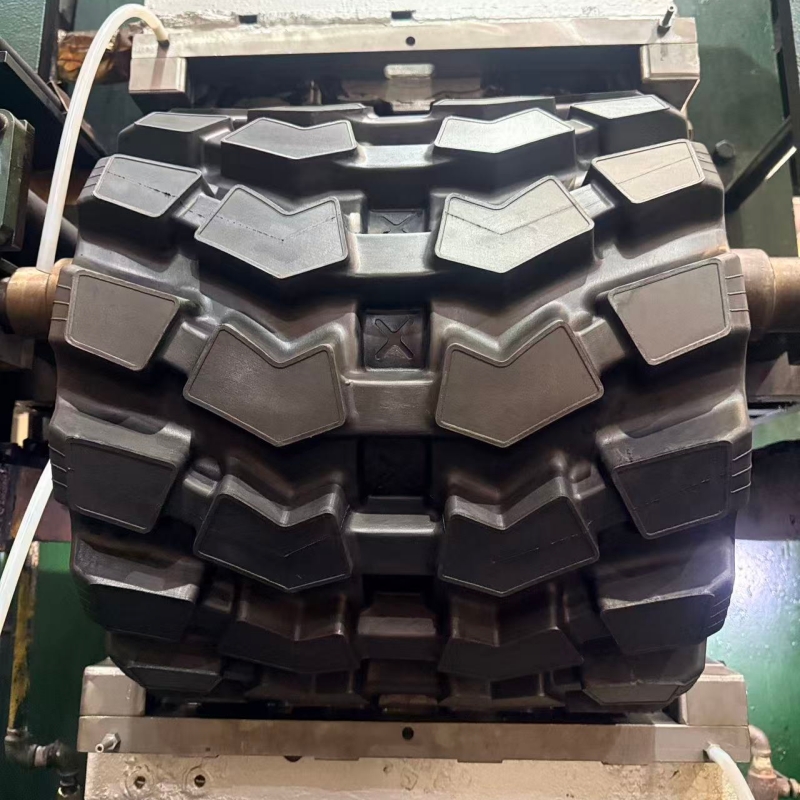
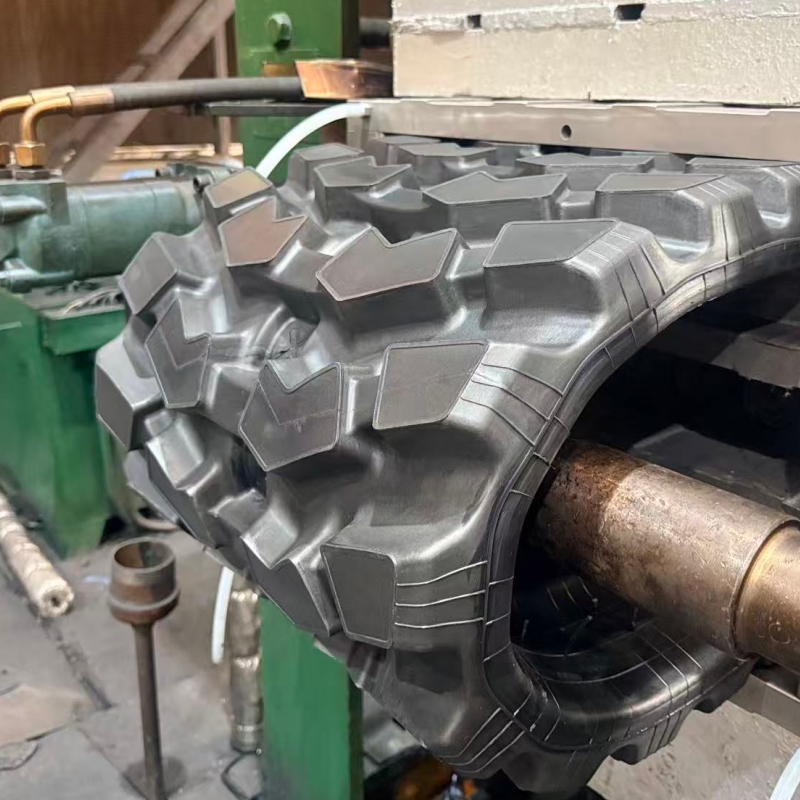
Maximizing return on investment requires a careful analysis of technical specifications during procurement. Not all rubber tracks for skid steer loaders (example vendor link) are built to the same standard. While this article focuses on dedicated rubber tracks, extreme-debris environments may occasionally warrant steel tracks or over-the-tire (OTT) conversions; however, these require specific machine weight and sprocket/idler compatibility checks. Understanding the nuances of track construction is essential for pairing the right product with demanding facility conditions.
Tread Pattern, Rubber Compound, and Carcass Design
The tread pattern directly influences traction, vibration, and surface disruption. For waste management applications, a block or staggered lug pattern is typically recommended, as it provides an optimal balance between aggressive grip on slippery, debris-covered concrete and a smooth ride that reduces operator fatigue. Equally important is the rubber compound; proprietary blends of natural and synthetic rubber offer high resistance to chunking and tearing when rolling over sharp objects like scrap metal or glass.
However, tread pattern and rubber compound recommendations are generalizations. Surface type (e.g., paved transfer stations versus muddy landfill faces), machine weight, and climate significantly affect the optimal track choice, and final selection should always be confirmed with the track manufacturer against the specific machine model.
Beneath the tread lies the carcass design, which is arguably the most critical component for structural integrity. Tracks built with continuous steel cord technology, rather than traditional overlapping cords, eliminate the weak points where spliced joints typically fail. This structural enhancement can potentially improve the track’s overall tensile strength by up to 50% in certain isolated manufacturer test scenarios, preventing track stretching and breaking under heavy lifting loads.
Rubber Track Comparison Criteria
When comparing different rubber tracks, utilizing a strict set of criteria separates cost-effective investments from failure-prone alternatives. Core dimensions, the thickness of the carcass, the type of steel link embedment, and the manufacturer’s warranty terms must all be evaluated. It is also crucial to verify manufacturer claims by requesting independent test data and reviewing the simplicity of their warranty claim processes.
To illustrate this evaluation framework, the following table outlines representative differences between standard aftermarket tracks and premium continuous-cord tracks suited for high-debris environments:
| Feature | Standard Rubber Track | Premium Continuous-Cord Track |
|---|---|---|
| Estimated Lifespan* | ~600 – 800 hours | ~1,200 – 1,500 hours |
| Steel Cord Structure | Overlapping / Spliced | 100% Continuous |
| Puncture Resistance | Moderate (Standard plies) | High (Multi-layer reinforced) |
| Tension Loss Over Time | High (Requires frequent adjustment) | Minimal (Holds true pitch) |
| Hypothetical Cost per Hour* | ~$1.25 | ~$0.85 |
*Illustrative estimates. Actual lifespan and costs vary based on operating conditions, machine weight, region, and maintenance practices.
By quantifying these criteria, the procurement of higher-tier tracks becomes a data-driven decision. The estimated reduction in cost per hour, combined with robust warranty coverage that may span 12 to 18 months depending on specific OEM terms, makes the premium selection a practical choice for rigorous applications.
How to Source, Install, and Maintain Tracks
Effective sourcing involves more than finding the lowest price. Facility managers should vet suppliers based on inventory availability, lead times, and the trade-offs between OEM and aftermarket options. Evaluating the simplicity and transparency of a supplier’s warranty claim process is also a critical sourcing step before finalizing any purchase. Once sourced, executing precise installation procedures and enforcing rigorous maintenance protocols ensure operations extract every hour of promised longevity from the investment.
Machine Compatibility and Installation Steps
Before installation, machine compatibility must be strictly verified by checking the track size stamped on the inside of the old track. This size is typically formatted as Width x Pitch x Links (for example, B400x86x52).
Key Takeaways
- Evaluate skid steer loader tracks as lifecycle assets, not consumables, because frequent replacements increase waste, downtime, and operating cost.
- Choose reinforced, puncture-resistant tracks for recycling centers, landfills, and transfer stations where sharp debris and abrasive surfaces accelerate failures.
- Expect premium tracks to cost about 15% to 20% more upfront, but compare this against reduced downtime and longer replacement intervals.
- Use block or staggered lug tread patterns when loaders need reliable traction on debris-covered concrete without excessive vibration.
- Verify manufacturer claims about recycled content and end-of-life recycling because rubber-steel composite track recyclability varies by product and program.
- Confirm machine weight, sprocket, idler, and undercarriage compatibility before switching to heavy-duty rubber tracks, steel tracks, or over-the-tire conversions.
Frequently Asked Questions
Why are durable rubber tracks important for skid steer loaders in waste management?
Waste facilities expose loaders to abrasive concrete, sharp debris, mud, and repeated turning. Durable rubber tracks help reduce punctures, edge damage, de-tracking, and premature wear, improving uptime and lowering replacement frequency.
Do premium skid steer loader tracks support fleet sustainability goals?
Yes. Longer-lasting tracks can reduce the number of discarded track sets over a fleet lifecycle. Sustainability claims should still be verified, especially regarding recycled materials and end-of-life recycling for rubber-steel composite tracks.
Are premium tracks worth the higher upfront cost?
Often, yes. Premium tracks may cost 15% to 20% more than budget options, but longer service life and fewer unplanned failures can lower total cost of ownership, especially where downtime is expensive.
What tread pattern works best in recycling centers and transfer stations?
Block or staggered lug patterns are commonly suited to waste environments because they balance traction on debris-covered surfaces with manageable vibration and smoother operation for the operator.
How can track choice reduce downtime?
Tracks with reinforced edges, puncture-resistant carcasses, and strong internal cords are less likely to fail catastrophically. This helps prevent stalled sorting lines, delayed loading, and unscheduled maintenance.
Post time: Sep-18-2026