Introduction
For B2B importers, skid steer loader tracks are more than a replacement part—they directly affect equipment uptime, warranty risk, landed cost, and customer satisfaction. Buying from a manufacturer can improve margins, but the real advantage comes from understanding track construction, rubber compounds, steel reinforcement, tread design, and factory quality control before placing volume orders. This article explains what separates high-performance tracks from standard aftermarket options, how direct sourcing changes cost and supply dynamics, and which technical and commercial factors matter most when evaluating suppliers for long-term import programs.
Why High-Performance Skid Steer Loader Tracks Matter
Procuring skid steer loader tracks directly from manufacturers represents a critical cost-reduction strategy for heavy machinery importers and large-scale fleet operators. As global infrastructure and construction sectors expand, the demand for durable undercarriage components has intensified. Relying on domestic distributors often introduces unnecessary margin stacking, which restricts profitability for equipment rental agencies and aftermarket parts wholesalers.
Transitioning to direct B2B sourcing requires an advanced understanding of track engineering and global supply chain dynamics. By securing high-performance tracks straight from the factory, importers can specify exact rubber compounds and tread patterns tailored to their regional market demands, ensuring maximum return on investment while bypassing third-party markups.
Impact on Fleet Uptime
The primary function of high-performance skid steer loader tracks is to maximize fleet uptime in abrasive and high-stress environments. Standard aftermarket tracks typically offer an operational lifespan of 800 to 1,200 hours under moderate conditions. In contrast, premium tracks engineered with continuous steel cords and specialized anti-gouge rubber compounds routinely exceed 1,500 to 2,000 hours of service life.
This extension in track longevity directly mitigates severe operational losses. Unplanned track failures on job sites can incur downtime costs ranging from $150 to $300 per hour in lost productivity and emergency technician dispatch fees. By importing and utilizing superior tracks, fleet managers drastically reduce the frequency of mid-project replacements, thereby maintaining continuous operational readiness and lowering the total cost of ownership per machine.
Best Buyer Profiles for Direct Sourcing
Direct factory sourcing is highly advantageous, but it requires specific procurement profiles to remain economically viable. The most successful direct importers are heavy equipment rental fleets, regional construction conglomerates, and specialized aftermarket distributors. These entities possess the capital and storage infrastructure necessary to handle bulk shipments and capitalize on factory-direct pricing.
To offset international freight costs, manufacturers typically require a strict Minimum Order Quantity (MOQ). A standard 20-foot shipping container generally accommodates between 50 and 80 skid steer tracks, depending on the specific track widths and pitch dimensions. Buyers capable of absorbing these volumes benefit from unit cost reductions of up to 30% to 40% compared to purchasing through localized dealer networks.
How to Evaluate Skid Steer Loader Tracks
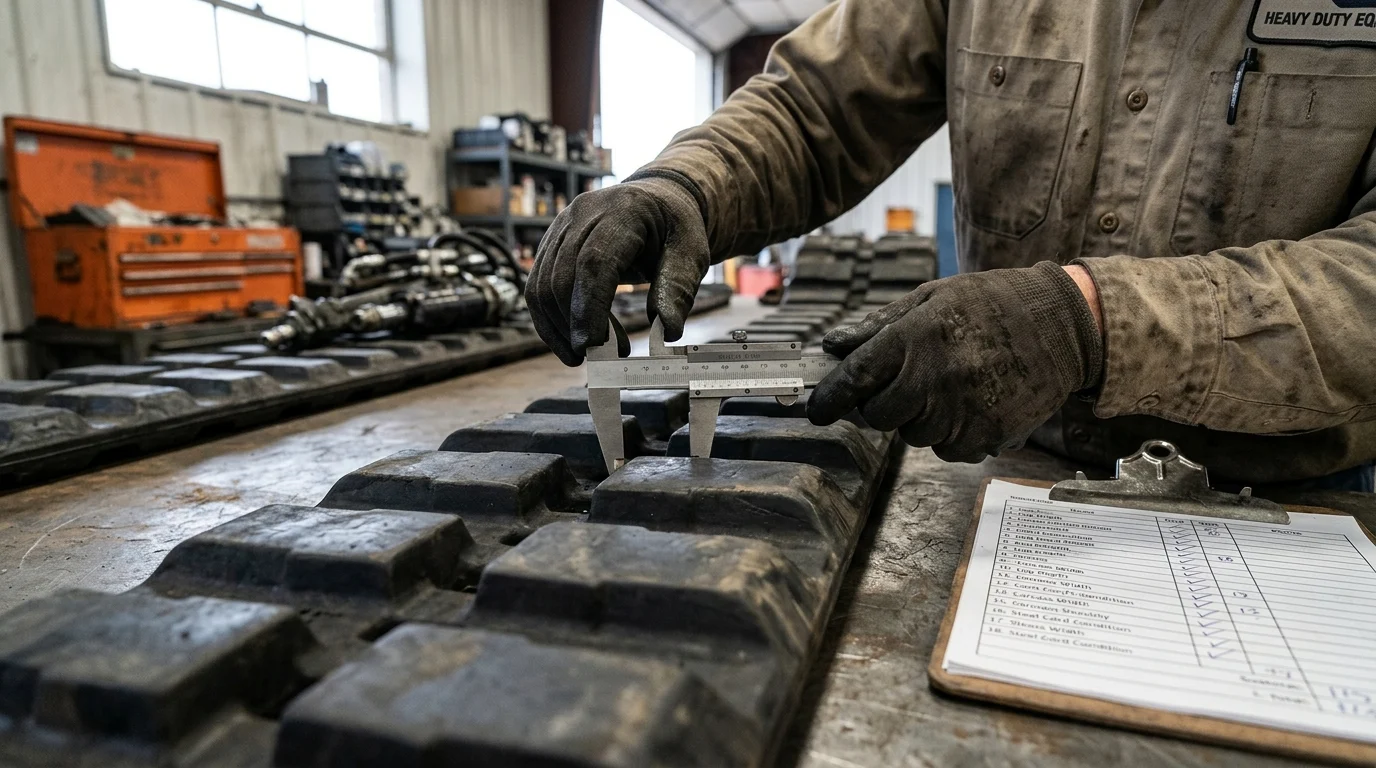
Evaluating skid steer loader tracks prior to bulk importation demands rigorous technical scrutiny. Importers must look beyond external aesthetics and assess the internal architecture, material composition, and dimensional accuracy of the tracks to ensure they meet the rigorous demands of modern construction equipment.
Key Specifications and Compound Options
The structural integrity of a skid steer track is heavily dependent on its internal steel cording and the specific rubber compound utilized. Premium tracks feature continuous, jointless steel cord technology, which prevents the catastrophic snapping often seen in cheaper, overlapping-cord designs. Furthermore, the rubber formulation is critical; top-tier manufacturers utilize a blend containing 60% to 70% virgin natural rubber to maximize tear resistance, supplemented by synthetic polymers to resist UV degradation and chemical exposure.
Importers must also specify the correct dimensional profiles, commonly denoted by width, pitch, and link count (e.g., 320x86x49). Selecting the appropriate tread pattern is equally vital. C-Lug patterns offer superior traction on muddy terrain, while Block or Zig-Zag patterns provide a smoother ride and extended wear on hard, paved surfaces. Accurately matching the compound and tread specification to the end-user’s primary application is essential for market acceptance.
OEM-Equivalent vs Aftermarket Comparison
When assessing procurement options, buyers must weigh the differences between true OEM-equivalent tracks and standard aftermarket alternatives. OEM-equivalent tracks replicate the exact engineering tolerances and material specifications required by original machinery manufacturers, whereas standard aftermarket parts often compromise on rubber quality or steel thickness to achieve a lower price point.
| Track Category | Steel Cord Design | Average Lifespan (Hours) | Natural Rubber % | Relative Cost Index |
|---|---|---|---|---|
| OEM-Equivalent | Continuous / Jointless | 1,500 – 2,000+ | 65% – 70% | 100 (Baseline) |
| Premium Aftermarket | Continuous / Jointless | 1,200 – 1,600 | 50% – 60% | 75 – 85 |
| Standard Aftermarket | Overlapping | 800 – 1,000 | < 45% | 50 – 65 |
As illustrated, while standard aftermarket tracks present the lowest upfront cost, their reduced lifespan and overlapping cord architecture increase the risk of premature failure. B2B importers targeting professional contractors should prioritize OEM-equivalent or premium aftermarket grades to minimize warranty claims and protect their brand reputation.
How Importers Should Source and Land Skid Steer Loader Tracks
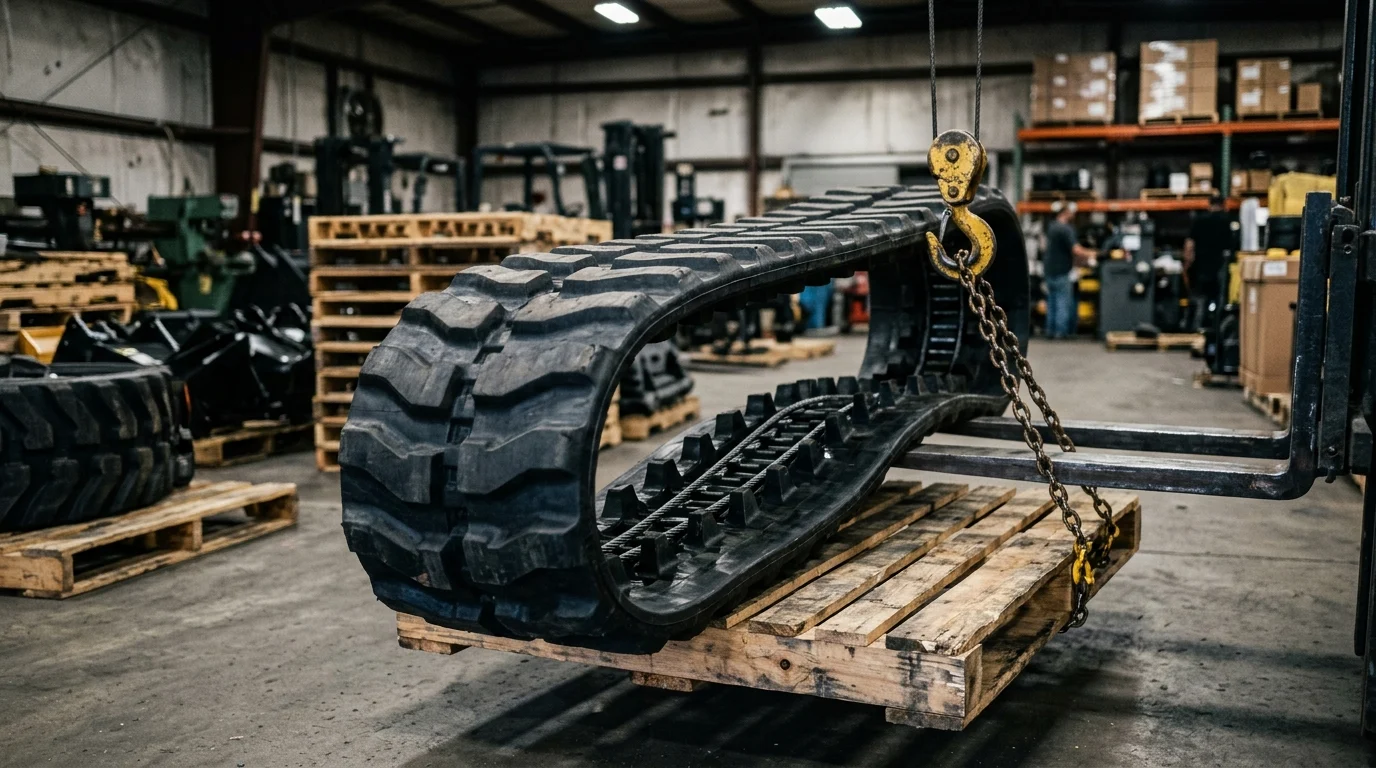
Successfully landing a container of high-performance skid steer loader tracks requires meticulous supplier vetting and precise logistical execution. Importers must establish rigorous quality control frameworks and optimize their shipping terms to maintain steady inventory levels without incurring excessive holding costs.
Supplier Qualification, Quality Control, and Compliance
Supplier qualification should begin with verifying ISO 9001 certifications and requesting detailed factory audit reports. Elite manufacturers implement stringent quality control measures, including ultrasonic testing for steel cord alignment and tensile strength testing that consistently exceeds 25 MPa. Importers should demand batch testing documentation prior to shipment authorization.
Furthermore, maintaining a stringent defect rate threshold is non-negotiable. Importers should mandate a maximum defect rate of under 0.5% in their service level agreements. Conducting third-party pre-shipment inspections (PSI) at the factory ensures that the tracks meet the agreed-upon dimensional tolerances and compound formulations, preventing the costly importation of non-compliant or structurally compromised inventory.
Incoterms, Lead Times, and Inventory Planning
Negotiating the correct Incoterms dictates the allocation of risk and freight costs. Free On Board (FOB) is generally preferred by experienced importers, as it allows them to leverage their own freight forwarding networks to secure competitive ocean freight rates. Conversely, Cost, Insurance, and Freight (CIF) might appeal to newer importers, though it often involves hidden markups embedded in the shipping costs.
Effective inventory planning hinges on accurate lead time forecasting.
Key Takeaways
- The most important conclusions and rationale for Skid Steer Rubber Tracks
- Specs, compliance, and risk checks worth validating before you commit
- Practical next steps and caveats readers can apply immediately
Frequently Asked Questions
Why buy skid steer loader tracks direct from Gator Track?
Factory-direct sourcing can cut dealer markups, improve spec control, and simplify bulk orders. Gator Track manufactures skid steer tracks in-house for B2B buyers needing stable quality and better landed-cost margins.
What track specification should I confirm before ordering?
Check width, pitch, and link count, such as 320x86x49. Also confirm tread pattern, machine model, and jobsite conditions to avoid fitment issues and premature wear.
Which tread pattern works best for my market?
Use C-Lug for muddy, loose, or soft ground. Choose block or zig-zag patterns for paved or mixed surfaces where smoother ride and longer wear matter more.
How many skid steer tracks fit in a 20-foot container?
Typically about 50 to 80 tracks, depending on width and pitch. Ask Gator Track to plan the loading mix by your target sizes before confirming the order.
How can I judge track quality before importing in bulk?
Request details on steel cord design, rubber compound, and expected service life. Prefer continuous jointless steel cords and durable compounds for better uptime and fewer site failures.
Post time: May-08-2026