Introduction
Demand for compact track loaders is rising as 2026 construction activity shifts toward heavier machines, longer duty cycles, and tighter uptime targets. In that environment, skid steer rubber tracks are no longer a routine replacement part but a key operating decision that affects traction, wear life, and total undercarriage cost. This article explains why the DV450x86 specification is gaining relevance for large-frame CTLs, where it fits, and how its dimensions and performance profile align with projected replacement demand. By the end, readers will have a clear baseline for evaluating application fit, inventory planning, and the tradeoffs that matter most in abrasive, high-load jobsite conditions.
DV450x86 Skid Steer Rubber Tracks Overview
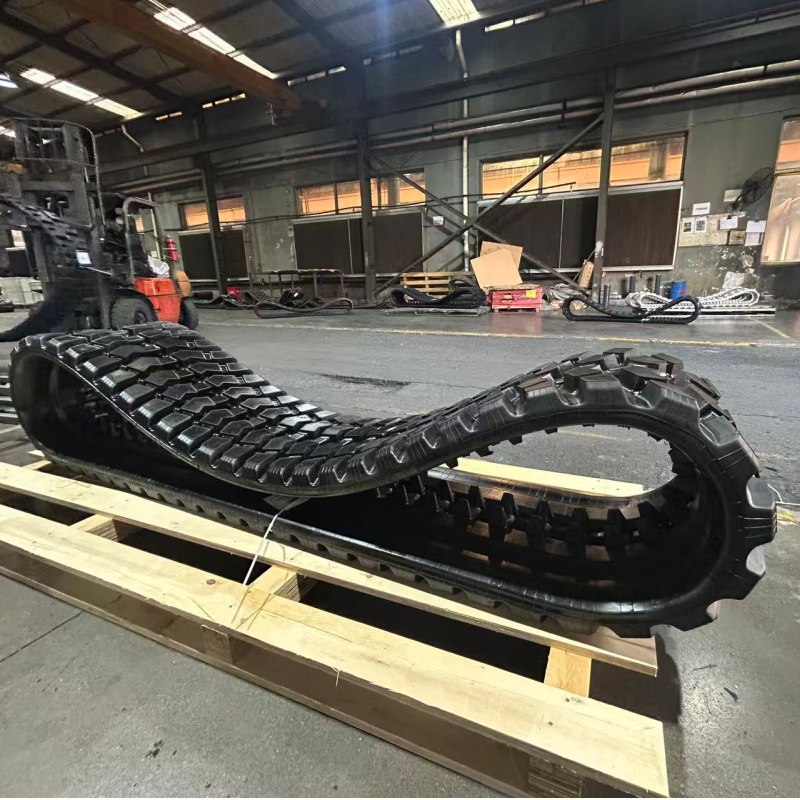
Compact track loaders operating in high-abrasion environments require specialized undercarriage components to maintain traction and stability. Undercarriage maintenance typically accounts for up to 20% of a compact track loader’s total operating costs, making component selection highly strategic. The DV450x86 track specification represents a critical standard for large-frame skid steers, engineered to support significant operating weights and intense breakout forces. As heavy machinery fleets optimize their assets for upcoming construction cycles, understanding the specific application parameters of these tracks becomes essential for operational efficiency.
Market demand in 2026
Projections for 2026 indicate a robust trajectory for heavy-duty compact track loader utilization, driven by concurrent investments in civil infrastructure and commercial development. Regions experiencing heavy suburban expansion and utility grid upgrades will see the highest concentration of this demand. Industry forecasts suggest a 12% to 15% increase in annual replacement track consumption within the 10,000-pound to 13,000-pound machine weight class. This surge in demand necessitates proactive inventory planning, as fleet managers seek to mitigate downtime caused by supply chain bottlenecks. The shift toward higher-capacity machines further accelerates the adoption rate of 450mm wide tracks over narrower alternatives, establishing the DV450x86 configuration as a high-velocity SKU for equipment dealers.
Definition and fitment
The nomenclature of the DV450x86 track designates a precise geometric profile: a 450-millimeter tread width paired with an 86-millimeter link pitch. This configuration typically incorporates between 52 and 60 drive links, depending on the specific undercarriage length of the host machine. Fitment extends across predominant large-frame models, including the Kubota SVL97-2, Bobcat T870, and John Deere 333G. The 450mm width yields a lower ground pressure footprint—often reducing ground bearing pressure to approximately 4.5 to 5.0 PSI—which is critical for maintaining flotation in soft soil conditions while supporting heavy attachments like mulchers or cold planers. Various tread patterns—such as C-lug, block, or multi-bar designs—are available within this size parameter to optimize traction for specific terrains, ranging from aggressive mud clearing to smooth turf protection.
Technical and Commercial Evaluation
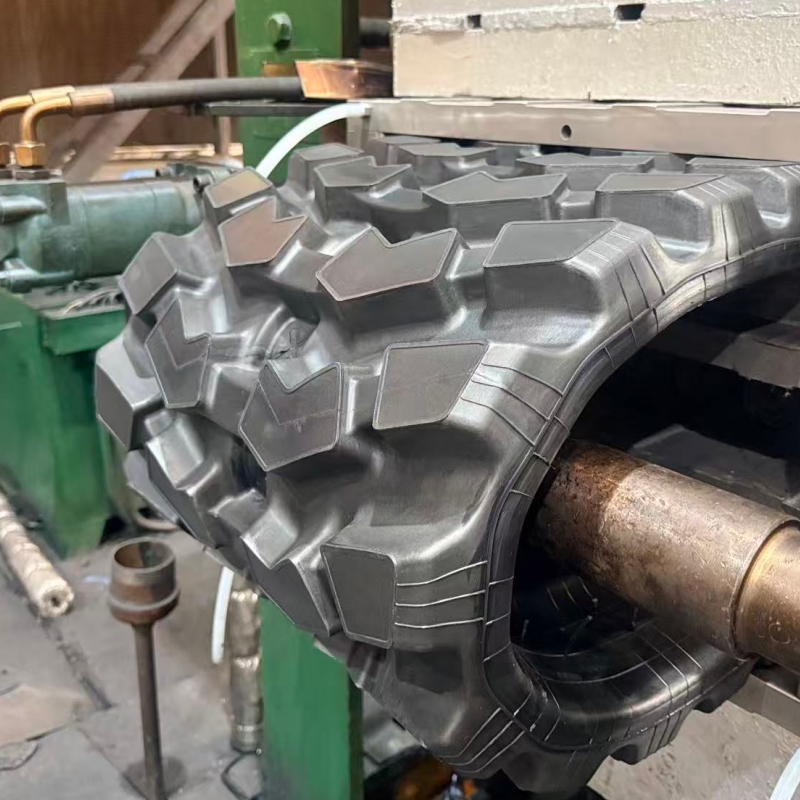
Evaluating replacement rubber tracks requires a rigorous assessment of both metallurgical and elastomeric properties. Buyers must balance upfront capital expenditure against the projected operational lifecycle to achieve an optimal cost-per-hour (CPH) metric. A thorough technical evaluation ensures that the track’s internal architecture can withstand the continuous flexing and high-tension loads characteristic of heavy earthmoving operations.
Specifications, wear indicators, and construction
Modern premium tracks utilize continuous steel cord technology, eliminating overlapping joints that historically served as primary failure points. The integration of drop-forged steel core metal inserts ensures precise engagement with the drive sprocket, minimizing pitch elongation under high-torque loads. High-grade tracks feature tread depths ranging from 25mm to 32mm, often incorporating visual wear indicators molded directly into the lug pattern to facilitate preventative maintenance. The rubber compound itself represents a proprietary blend of natural rubber for tear resistance and synthetic polymers for thermal stability.
| Specification Metric | Standard Aftermarket Tier | Premium OEM-Equivalent Tier |
|---|---|---|
| Steel Cord Construction | Overlapping/Spliced | Continuous/Jointless |
| Tread Depth (New) | 22mm – 25mm | 28mm – 32mm |
| Core Metal Treatment | Cast Iron | Drop-Forged Steel |
| Expected Lifespan | 600 – 800 hours | 1,000 – 1,500 hours |
Comparison criteria and buying factors
Commercial viability hinges on a comprehensive total cost of ownership analysis rather than unit price alone. The market currently exhibits a pricing band for DV450x86 tracks ranging from $1,100 for standard-duty variants to $1,850 for premium, severe-duty configurations. Procurement decisions must factor in the specific application; highly abrasive environments like demolition or asphalt milling justify the premium tier to prevent premature chunking and delamination. Furthermore, warranty provisions serve as a critical commercial differentiator. Industry-leading manufacturers typically support their premium tracks with a non-prorated warranty covering 12 to 18 months, or up to 1,000 operating hours, against manufacturing defects.
Sourcing for Dealers, Fleets, and Contractors
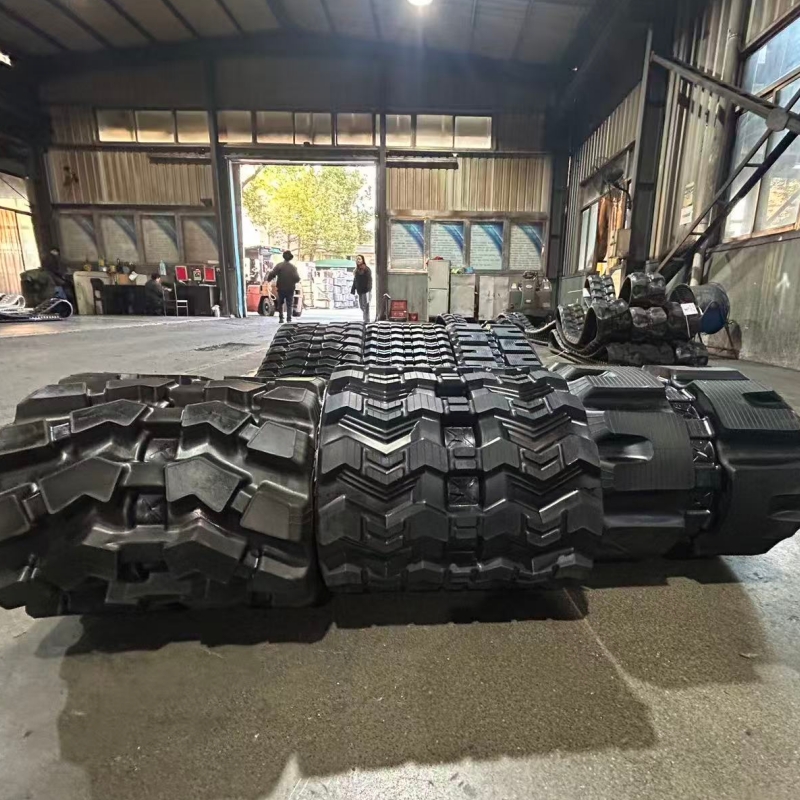
Establishing a resilient supply chain for critical undercarriage components is paramount for large-scale contractors and regional equipment distributors. Effective sourcing strategies mitigate the risk of catastrophic track failure and ensure continuous machine availability during peak construction seasons. Balancing inventory holding costs against the necessity of immediate parts availability requires a sophisticated approach to procurement and supplier relationship management.
Inspection steps to reduce failure risk
Implementing stringent quality control protocols upon receipt of inventory drastically reduces the incidence of field failures. Distributors and fleet technicians should conduct a comprehensive multi-point inspection prior to installation. This includes verifying the 86mm pitch consistency using digital calipers, as deviations exceeding 1.5 millimeters can induce severe sprocket wear and vibration. Additionally, the vulcanization integrity around the drive lugs must be examined for micro-fissures or inadequate bonding. Maintaining a documented defect rate below 1.2% is the benchmark for top-tier manufacturing facilities, ensuring that the tracks deployed to the field will withstand maximum breakout forces without delaminating.
Channels, warranty, and support strategy
Sourcing channels dictate both the logistical lead times and the available profit margins for B2B buyers. Direct-from-manufacturer agreements offer the lowest per-unit cost but typically require a Minimum Order Quantity (MOQ) of a 20-foot shipping container, which accommodates approximately 18 to 22 pairs of the heavy DV450x86 skid steer rubber tracks. Consequently, buyers must factor in ocean freight lead times ranging from 45 to 65 days. Conversely, utilizing domestic wholesale distributors reduces lead times to 3 to 5 business days but introduces a 15% to 25% markup. To optimize operations, high-volume fleets often adopt a hybrid strategy: importing bulk orders for scheduled preventive maintenance while relying on regional distribution networks exclusively for emergency replacement scenarios.
Key Takeaways
- The most important conclusions and rationale for Skid Steer Rubber Tracks
- Specs, compliance, and risk checks worth validating before you commit
- Practical next steps and caveats readers can apply immediately
Frequently Asked Questions
What does DV450x86 mean on a skid steer rubber track?
It typically refers to a 450mm track width and 86mm pitch. On Gator Track, confirm the exact link count and machine model before ordering because fitment can vary by undercarriage length.
Which machines commonly use DV450x86 rubber tracks?
Common large-frame CTLs include models like Kubota SVL97-2, Bobcat T870, and John Deere 333G. Always match width, pitch, and links with your current track or OEM spec before purchase.
Why are DV450x86 tracks expected to see higher demand in 2026?
Growth in infrastructure, utility, and commercial work is pushing more 10,000- to 13,000-pound CTLs into service. That increases replacement demand, so contractors should plan inventory early to avoid downtime.
How can I tell if a DV450x86 track is premium quality?
Look for continuous steel cords, drop-forged steel core inserts, deeper tread around 28-32mm, and clear warranty terms. Gator Track emphasizes high-quality manufacturing and fitment support across heavy-equipment track sizes.
When should I choose a severe-duty DV450x86 track over a standard one?
Choose severe-duty for demolition, asphalt milling, or other high-abrasion jobs. The higher upfront cost is often offset by longer life, fewer failures, and a lower cost per operating hour.
Yvonne
Post time: Apr-28-2026