
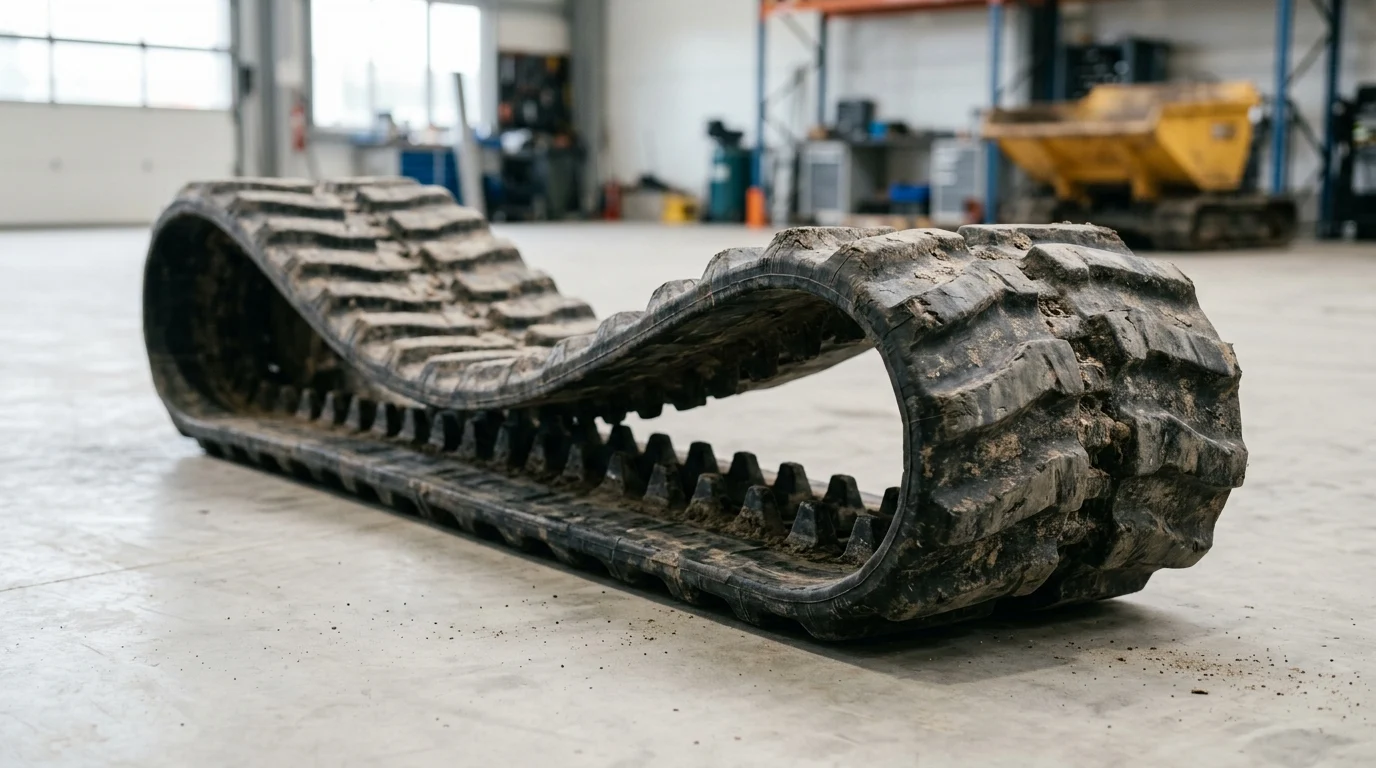
Why Rubber Compounds Matter for Dumper Track Service Life
When we evaluate the operational efficiency of construction and agricultural machinery, the durability of the undercarriage components is paramount. Standard Dumper Tracks typically deliver a service life of 800 to 1,200 operating hours under moderate conditions. However, in our experience, tracks manufactured with premium rubber formulations can push this boundary past 1,500 hours, significantly reducing downtime and replacement costs. Understanding the chemistry and environmental interactions of these materials is the first step toward optimizing fleet performance.
What Defines a Rubber Dumper Track Compound
A high-quality track compound is not simply raw rubber; it is a highly engineered composite material. We look for formulations that blend natural rubber for elasticity with synthetic polymers like Styrene-Butadiene Rubber (SBR) or Polybutadiene Rubber (BR) to enhance weatherability. Manufacturers reinforce this matrix with carbon black, which provides structural rigidity and UV resistance, alongside sulfur curing agents for vulcanization. The precise ratio of these ingredients determines whether the track will remain supple in freezing conditions or become brittle and prone to catastrophic cracking under heavy loads.
Site Conditions That Shorten Dumper Track Life
Even the most advanced compounds face severe degradation when subjected to hostile site environments. Sharp debris, such as crushed concrete or jagged quarry rock, aggressively attacks the track lugs, leading to chunking and slicing. Temperature extremes also play a critical role; operating continuously on asphalt surfaces exceeding 60°C (140°F) accelerates thermal degradation, causing the rubber to soften and wear prematurely. Furthermore, prolonged exposure to direct sunlight and ozone without adequate anti-aging chemical additives breaks down the polymer chains, leading to superficial surface cracking that eventually reaches the internal steel cords.
Key Rubber Compound Properties to Compare
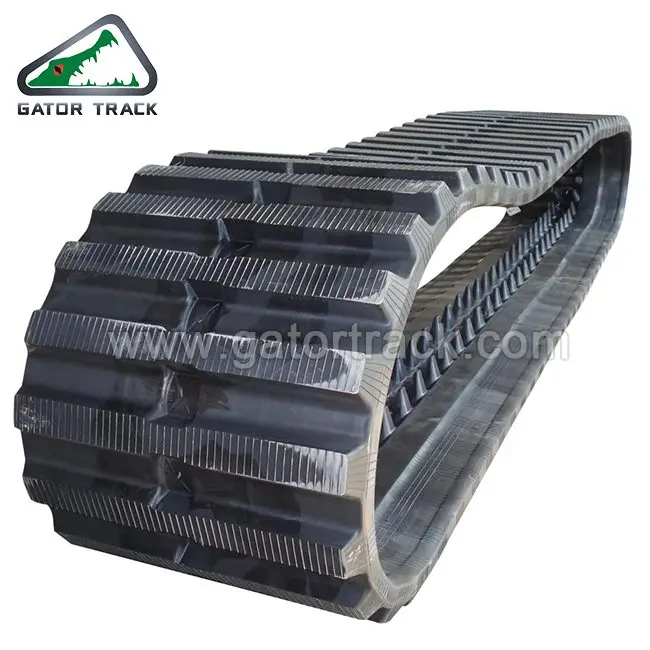
To accurately assess the quality of a track before purchase, we must look beyond visual inspection and evaluate the compound’s measurable physical properties. Industry standards require specific performance metrics to guarantee that the rubber can withstand the immense torque and shearing forces generated by heavy machinery. For instance, an optimal track compound generally maintains a hardness rating between 75 and 85 Shore A, striking the necessary balance between structural rigidity and shock-absorbing flexibility.
Tensile Strength, Tear Resistance, and Abrasion Resistance
Three primary mechanical properties dictate how well the rubber will survive in the field. First, tensile strength measures the maximum stress the rubber can withstand before snapping; premium rubber tracks typically achieve a tensile strength of 15 to 20 MPa. Second, tear resistance, measured in kilonewtons per meter (kN/m), indicates the material’s ability to stop a small cut from expanding into a massive fissure when traversing jagged terrain. Finally, abrasion resistance evaluates volume loss over time. Compounds formulated with specialized anti-abrasive fillers ensure the tread lugs maintain their profile, providing essential traction over hundreds of hours of heavy scraping.
Natural Rubber vs Synthetic Rubber Compounds
The debate between natural and synthetic rubber is central to track engineering. In our assessments, we find that 100% natural rubber offers unmatched tear resistance and flexibility, making it highly resilient against chunking. However, it falls short in chemical and heat resistance. Synthetic rubbers, conversely, excel in high-temperature environments and resist degradation from oils and UV light.
| Property | Natural Rubber | Synthetic Rubber (e.g., SBR) | Optimal Blend Benefit |
|---|---|---|---|
| Tear Resistance | High | Moderate | Prevents lug chunking while maintaining durability |
| Heat Resistance | Moderate | High | Stabilizes performance during continuous high-speed transit |
| Flexibility at Cold Temps | Excellent | Poor to Moderate | Prevents winter cracking without sacrificing summer rigidity |
| Abrasion Resistance | Good | Excellent | Maximizes overall tread life across mixed surfaces |
Most top-tier manufacturers utilize a strategic blend of both materials to leverage their respective strengths, ensuring the track performs reliably across a wide spectrum of climates and applications.
How to Select, Operate, and Source Dumper Tracks
Selecting a superior rubber compound is only part of the equation; how we install, operate, and procure these components ultimately dictates their lifecycle. By combining rigorous maintenance protocols with strategic sourcing, fleet managers can drastically reduce the total cost of ownership. In our industry observations, fleets that adhere to strict operational guidelines and purchase from vetted suppliers routinely see premature failure rates drop below 1.5%, ensuring machinery remains productive rather than sidelined for repairs.
Inspection, Installation, and Tensioning Best Practices
Proper installation and ongoing tension management are critical to protecting the rubber compound from undue stress. We strongly recommend checking track tension every 50 operating hours. A standard rule of thumb for most compact dumpers is maintaining 10mm to 20mm of sag at the center roller when the machine is elevated. Over-tensioning stretches the internal steel cables and exerts excessive pressure on the rubber casing, accelerating wear. Conversely, under-tensioning allows the track to derail, which can tear the drive links directly out of the rubber matrix. Daily undercarriage cleaning to remove packed mud and gravel is also essential to prevent abrasive friction against the inner rubber surfaces.
Choosing Dumper Tracks by Load, Terrain, and Supplier Quality
Matching the track’s tread pattern and compound to the specific terrain is a crucial sourcing decision. We advise specifying staggered block patterns for muddy, low-ground-pressure environments, whereas C-lug or zig-zag patterns are better suited for abrasive hardpan or gravel where vibration reduction is necessary. When evaluating suppliers, we prioritize manufacturers that enforce strict quality control standards, such as ISO 9001 certification. Furthermore, a confident supplier should back their rubber compounds with a robust warranty, typically offering coverage for at least 1,000 hours or 12 months, which serves as a reliable indicator of the compound’s engineered durability.
Key Takeaways
- Standard dumper tracks often last 800 to 1,200 operating hours, while premium rubber formulations can exceed 1,500 hours in suitable conditions.
- Compare rubber compounds by measurable properties such as 75 to 85 Shore A hardness, 15 to 20 MPa tensile strength, tear resistance, and abrasion resistance.
- Avoid prolonged operation on asphalt hotter than 60°C or 140°F because excessive heat accelerates rubber softening and premature tread wear.
- Choose compounds with carbon black, anti-aging additives, and suitable synthetic polymers when tracks will face UV exposure, ozone, or variable weather.
- Inspect track lugs frequently after working on crushed concrete, quarry rock, or demolition debris because small cuts can develop into major failures.
Frequently Asked Questions
How long do standard dumper rubber tracks usually last?
Under moderate operating conditions, standard dumper tracks typically last about 800 to 1,200 operating hours. Premium rubber compounds can extend service life beyond 1,500 hours when paired with proper use and maintenance.
What makes a rubber compound suitable for dumper tracks?
A strong compound blends natural rubber for elasticity with synthetic polymers for durability, plus carbon black for rigidity and UV resistance. The formulation must balance flexibility, strength, abrasion resistance, and weather protection.
Which site conditions damage dumper tracks fastest?
Sharp crushed concrete, jagged quarry rock, hot asphalt, direct sunlight, and ozone exposure can all shorten track life. These conditions promote lug chunking, cuts, thermal wear, surface cracking, and damage to internal steel cords.
What Shore A hardness is best for dumper track rubber?
An effective dumper track compound often falls between 75 and 85 Shore A. This range provides enough rigidity for load support while preserving the flexibility needed to absorb shock and reduce cracking.
Why is tear resistance important in dumper tracks?
Tear resistance helps prevent small cuts from spreading into larger failures when the track runs over rocks, debris, or uneven ground. It is especially important on demolition, quarry, and construction sites.

Post time: Jun-30-2026