
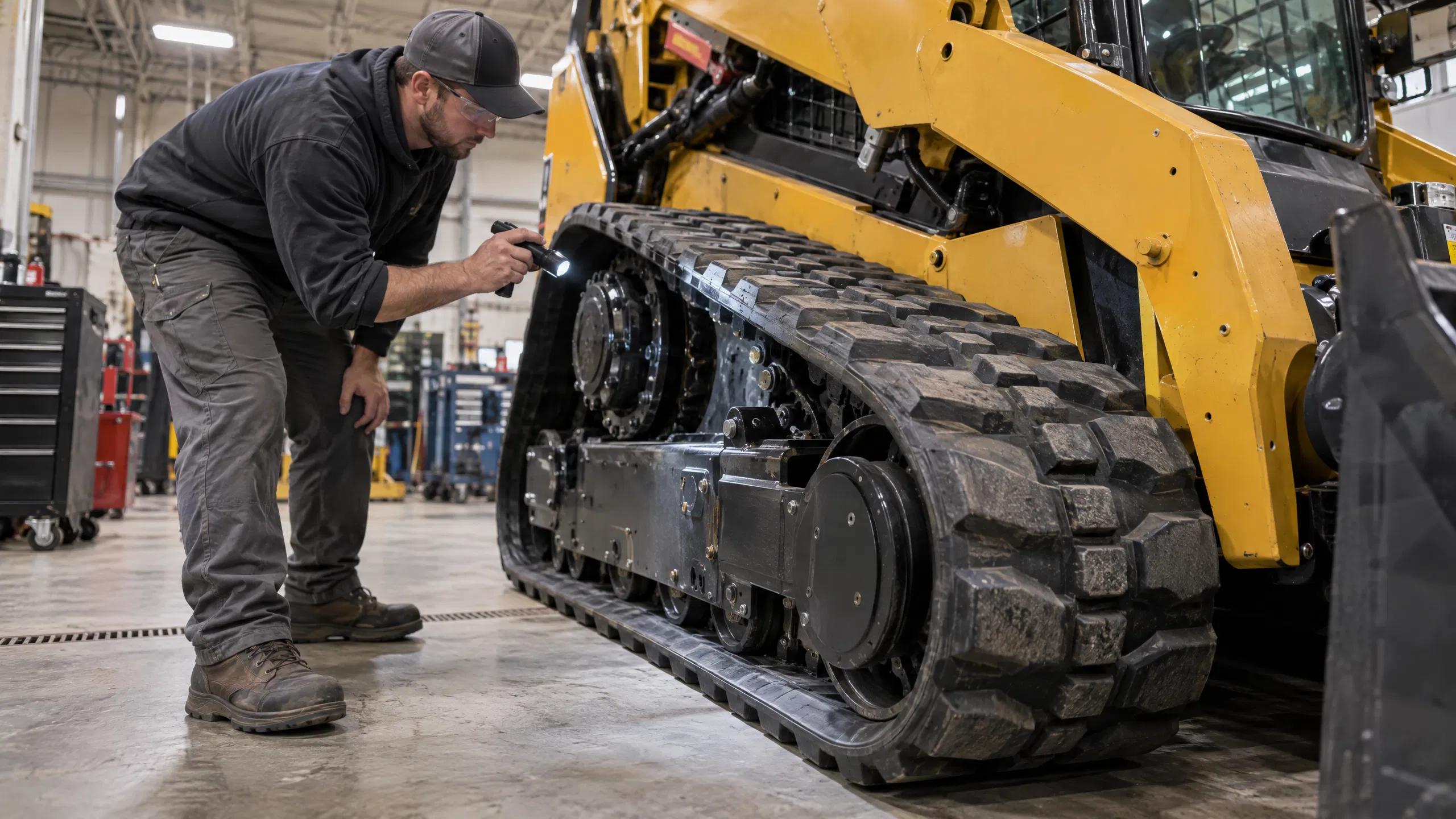
Rubber tracks are more than a continuous band of rubber. Their construction influences how they transfer machine forces to the ground, how they respond to repeated flexing and how reliably they perform in demanding work conditions. For equipment dealers, fleet managers and procurement teams, understanding these construction features helps make track comparisons more meaningful than a simple price or appearance check.
In this article, we explain the main elements of rubber track construction and how they relate to durability and equipment operation. We also outline what buyers should verify with suppliers. Track structures, materials and specifications vary by manufacturer and machine, so we recommend treating product-specific documentation as the authority for fitment, operating limits and maintenance requirements.
What makes up a rubber track?
A rubber track typically combines a molded rubber body with internal reinforcing components. Depending on the product, the structure may include steel cords or other reinforcement, embedded metal components, tread lugs and guiding features that engage with the machine’s undercarriage. These elements work together: a track has to flex around wheels and rollers while carrying load and transmitting drive force.
The outer rubber compound is exposed to abrasion, impact, heat and environmental conditions. The inner construction helps the track maintain its shape and carry forces as it cycles through the undercarriage. Tread geometry provides the ground-contact pattern, while guides help the track remain correctly positioned on compatible equipment. No single component determines performance on its own.
For buyers, the important point is that visually similar tracks may use different designs, materials and manufacturing methods. A comparison should therefore include the exact machine application, product specification and supplier guidance—not just a photograph or a broad description.
Reinforcement and track durability
Reinforcement helps a track withstand the forces generated during operation. Some products are described as steel embedded rubber tracks, but the phrase alone does not provide enough information to assess suitability. Buyers should ask what the reinforcement is intended to do, what machine and applications the track is designed for, and which installation or maintenance requirements apply.
A track’s durability is influenced by the interaction of its rubber body, reinforcement, tread design, manufacturing quality and operating environment. Abrasive surfaces, sharp debris, repeated turning, overloading, poor undercarriage condition and unsuitable track tension may all affect wear or damage. As a result, a reinforced track is not automatically the best option for every machine or duty cycle.
We recommend asking suppliers for clear product specifications and application guidance. Where durability claims are provided, buyers should request the conditions under which the claims apply and compare like with like. A credible decision takes account of the machine model, expected workload, work surface, operator practices and supplier support.
How rubber track design affects operation
Rubber track design influences the track’s interaction with both the machine and the ground. Tread patterns can be intended for particular surfaces or a mix of conditions. The pattern can affect grip, vibration and the degree of ground marking, but its effect depends on factors such as soil, machine weight, track compound and driving technique.
The internal structure also matters during operation. A track must move around the undercarriage components and maintain engagement with the drive system. Incorrect dimensions or incompatible guides can compromise fit, while worn or damaged undercarriage parts can contribute to abnormal wear or tracking problems. That is why we advise assessing the complete track-and-undercarriage system when diagnosing an issue.
Operational needs differ across heavy equipment tracks applications. A compact machine working on landscaped surfaces may prioritize reduced ground disturbance, while equipment on rough or abrasive ground may face different demands. A track selected for one application should not be assumed to perform equally well in another.
Matching construction to the application
Before requesting a quotation, procurement teams should gather the machine make, model, configuration and required track details. It is also useful to describe the typical ground conditions, work cycle, travel distance, turning frequency and any restrictions on surface damage or vibration.
This information helps a supplier recommend a product for the intended application rather than relying on a generic label. Buyers should confirm the specifications, installation direction if applicable, warranty terms, expected maintenance checks and availability of replacement parts. If the machine has experienced premature wear, share photographs and service history where possible. A change in track design may not address the cause if the issue is actually related to tension, alignment, debris or worn undercarriage components.
Where the fleet operates across several different environments, there may be no single ideal track for every unit. Standardizing a suitable specification can simplify procurement and inventory, but only when the machines and operating conditions are sufficiently similar. Fleet managers should balance that convenience against the risk of using one configuration outside its intended application.
Inspection and lifecycle planning
Routine inspections help buyers and operators understand how a track is performing over time. Follow the equipment manufacturer’s instructions and inspect the track and undercarriage at the recommended intervals. Look for unusual wear, cuts, cracks, missing tread material, exposed reinforcement, embedded debris and differences between the two sides of the machine.
Record machine hours, operating conditions and inspection findings. These records help identify recurring issues, support maintenance planning and inform supplier discussions. If a track shows significant damage or abnormal wear, have a qualified technician assess it and follow the relevant manufacturer’s guidance. Avoid relying on a universal tension value or replacement interval, since those can vary by machine and track specification.
For B2B buyers, lifecycle cost includes more than the initial purchase price. Lead time, installation, downtime, warranty support, parts availability and the cost of unplanned equipment interruption all affect the decision. A well-matched product with clear technical support may provide more value than a lower-priced track that is not suited to the machine’s work.
Conclusion
Understanding rubber track construction gives procurement teams a stronger basis for comparing products and asking suppliers useful questions. Reinforcement, rubber materials, tread pattern, fitment and undercarriage compatibility all contribute to how a track performs. The right choice depends on the specific machine and operating conditions, not on one feature or marketing phrase alone.
We recommend confirming specifications before ordering, documenting actual operating conditions and investigating abnormal wear across the whole undercarriage. This disciplined approach supports informed purchasing and more reliable equipment planning.
Frequently Asked Questions
1. What factors most affect the durability of rubber tracks?
Durability depends on track construction, materials, fitment, undercarriage condition, operating surface, workload and maintenance. No single construction feature guarantees a particular service life.
2. Are steel embedded rubber tracks suitable for every application?
Not necessarily. Suitability depends on the machine, track specification and operating conditions. Ask the supplier to confirm the intended application and compatibility for the exact equipment model.
3. Does tread pattern affect equipment operation?
Yes. Tread design can influence ground contact, traction, vibration and surface marking. Its practical effect depends on the terrain, machine and operating technique.
4. How can a buyer compare two similar-looking tracks?
Compare verified specifications, machine fitment, intended applications, warranty terms, support and supplier guidance. Do not rely on visual appearance alone.
5. What should I check if a track wears unevenly?
Inspect the full undercarriage and review alignment, tension, debris buildup and operating conditions according to the manufacturer’s instructions. A qualified technician can help identify the cause before replacement.
Post time: Oct-29-2026