How to Choose Digger Tracks in 2026: Cost, Durability, and ROI
Why Are Digger Tracks a Strategic Cost and ROI Lever in 2026?
As we navigate the 2026 construction equipment market, procuring undercarriage components remains a critical expense. Among these consumables, rubber tracks are high-frequency replacement parts for compact and mid-sized excavators. Optimizing this spend requires procurement teams to shift from transactional purchasing to strategic global sourcing.
By evaluating digger tracks as a primary return on investment (ROI) lever, wholesale buyers and fleet managers can significantly reduce total cost of ownership. Profitability relies on balancing upfront unit costs with long-term durability to minimize machine downtime and maximize distributor margins.
How do procurement, uptime, and margin shape digger track decisions?
Procurement teams increasingly view track selection as a direct driver of fleet uptime and distributor profitability. A field failure immediately halts operations, causing project delays and lost rental revenue. Sourcing decisions must prioritize robust construction that extends wear life, protects margins from warranty claims, and ensures end-user satisfaction.
Which 2026 market factors affect cost, durability, and supply risk?
In 2026, fluctuating natural rubber prices and shifting global freight capacities continue to impact production costs. Manufacturers investing heavily in automated vulcanization and continuous steel cord technology are best positioned to offer consistent durability. Furthermore, geopolitical trade shifts necessitate a diversified supplier base to mitigate supply chain disruptions.
What buying mistakes reduce ROI across wholesale and distributor channels?
A common error is prioritizing the lowest initial purchase price over total landed cost and operational lifespan. Additionally, failing to match track specifications to the target market’s terrain—such as supplying standard turf treads for high-debris demolition environments—accelerates wear and slashes ROI for both wholesalers and end-users.
What Should Procurement Teams Define Before Buying Digger Tracks?
Before engaging international suppliers or issuing a Request for Quotation (RFQ), buyers must establish rigorous technical specifications. The diverse nature of excavation work means a generic approach to undercarriage parts inevitably leads to premature failures and dead inventory.
By clearly defining operational parameters and machine requirements upfront, procurement professionals can efficiently filter out incompatible manufacturers. This proactive phase is essential for sourcing excavator tracks that align with stringent OEM tolerances and regional equipment demands.
Which machine classes, operating conditions, and duty cycles should be mapped first?
Buyers must first categorize the target machinery, differentiating between mini-excavators, compact track loaders (CTLs), and heavier utility machines. Understanding primary operating conditions—whether abrasive asphalt, muddy agriculture, or sharp rocky surfaces—and expected daily duty cycles allows teams to specify the appropriate rubber compound and tread depth.
How should width, pitch, link count, tread pattern, and carcass construction be specified?
Accurate measurement is non-negotiable. Buyers must specify the exact width (in millimeters), pitch (distance between drive lugs), and total link count. Selecting the correct tread pattern (e.g., block, C-lug, or zig-zag) dictates traction capabilities. We strongly emphasize continuous steel cord carcass construction to eliminate weak points inherent in overlapping joint designs.
Which OEM cross-references, interchange data, and performance tolerances should be confirmed?
To guarantee seamless fitment, every SKU must be validated against established OEM cross-reference databases. Suppliers must provide comprehensive interchange data confirming compatibility with major equipment brands. Acceptable performance tolerances for stretch and tension retention must also be documented to ensure tracks maintain proper sprocket engagement.
How Should Buyers Compare Excavator Rubber Tracks on Cost, Durability, and ROI?
Evaluating undercarriage components requires a multifaceted financial approach transcending basic unit pricing. To achieve genuine profitability, buyers must analyze how durability impacts the asset’s entire lifecycle.
A comprehensive financial assessment incorporates the initial capital outlay, expected wear life in hours, and hidden costs of potential mechanical failures. By applying a total cost of ownership (TCO) framework, buyers can accurately compare supplier proposals and identify the true value proposition.
Which metrics matter most: landed cost, wear life, downtime risk, and warranty exposure?
Landed cost provides the financial baseline, incorporating manufacturing, ocean freight, and import duties. This figure must be divided by projected wear life (in hours) to determine the true cost per operating hour. Buyers must also quantify downtime risk—the financial penalty of a snapped track—and evaluate warranty exposure, which can severely erode distributor margins if defect rates climb.
How should OEM-grade, aftermarket premium, and value tracks be compared?
| Tier | Target Application | Price Premium | Expected Lifespan (Hrs) |
|---|---|---|---|
| OEM-Grade | Heavy-duty, continuous use | High | 1,500 – 2,000+ |
| Aftermarket Premium | Mixed-use, rental fleets | Moderate | 1,000 – 1,500 |
| Value/Economy | Light-duty, seasonal work | Low | 500 – 1,000 |
When comparing these tiers, align the track grade directly with the customer segment. Premium aftermarket digger tracks often offer the best balance for rental fleets, providing near-OEM durability at a reduced capital cost, whereas value tracks should be strictly reserved for light, intermittent applications.
How can ROI be calculated for rental fleets, dealers, and regional distributors?
For rental fleets, ROI is calculated by dividing the rental revenue generated during the track’s operational lifespan by the total landed cost plus installation labor. Regional distributors measure ROI through inventory turnover rates and gross margin per SKU, factoring in the reduction of post-sale service costs achieved by stocking higher-durability products.
How Should Buyers Evaluate Digger Track Suppliers and Sourcing Terms?
Partnering with the right manufacturer is just as critical as selecting correct product specifications. The global market is crowded with trading companies and factories of varying capabilities, making rigorous supplier vetting indispensable for B2B buyers.
Buyers must conduct thorough due diligence to verify that potential partners possess the necessary infrastructure, quality control systems, and financial stability. Negotiating favorable sourcing terms further safeguards the supply chain, ensuring consistent availability while optimizing working capital.
Which supplier checks matter most: factory capability, QC systems, and track record?
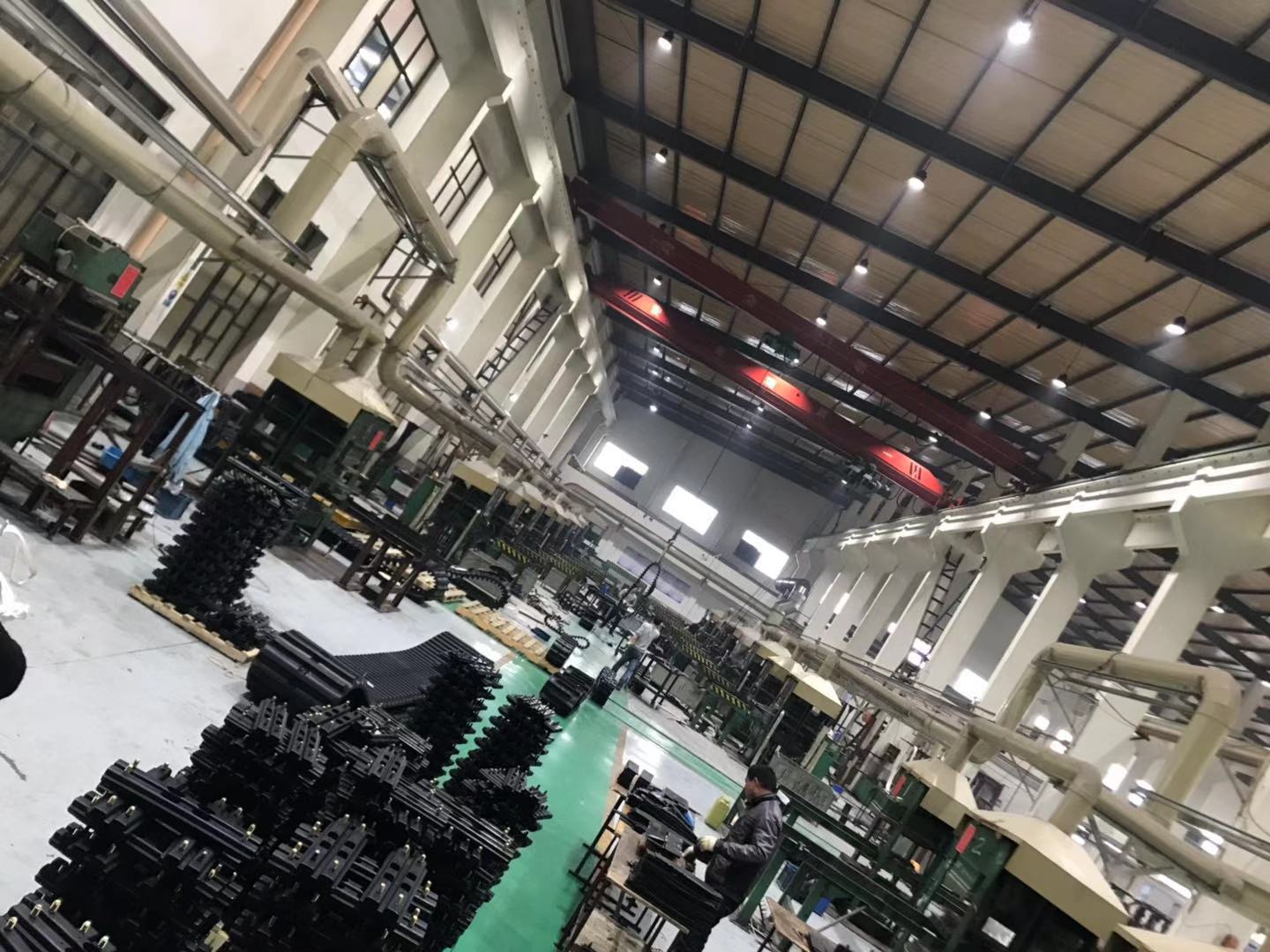
Direct factory audits are paramount to the vetting process. Assess the manufacturer’s vulcanization equipment, steel cord winding machinery, and internal lab testing capabilities. A robust Quality Control (QC) system, ideally ISO 9001 certified, ensures batch-to-batch consistency. Furthermore, a verifiable track record of supplying established distributors serves as a strong indicator of reliability.
How do MOQ, private labeling, packaging, and spare parts support affect profitability?
Minimum Order Quantities (MOQs) dictate inventory carrying costs; flexible MOQs allow for broader SKU diversification without overcapitalizing. Private labeling capabilities enable distributors to build brand equity and command higher retail margins. Additionally, efficient packaging prevents transit damage, while reliable spare parts support allows distributors to offer comprehensive undercarriage solutions.
Which quotation terms should be negotiated: lead time, warranty, payment, and defect handling?
Buyers should aggressively negotiate production lead times to minimize safety stock requirements. Warranty terms must explicitly define coverage periods (typically 12 to 18 months) and the claims procedure. Payment terms (e.g., T/T 30/70 or LC at sight) should align with the cash conversion cycle, and contracts must clearly outline the supplier’s financial responsibility for handling defective batches.
What Quality, Compliance, and Testing Standards Should Rubber Digger Tracks Meet?
Ensuring imported undercarriage components meet rigorous quality standards is a fundamental procurement responsibility. Substandard tracks not only damage expensive machinery but also pose significant safety risks on demanding job sites.
Mandating strict adherence to recognized testing protocols and material specifications mitigates these operational risks. Comprehensive compliance documentation is equally essential to navigate international customs smoothly and provide quality assurances to downstream B2B customers.
Which material and build indicators signal durable tracks for demanding applications?
High-quality digger tracks utilize a proprietary blend of virgin natural and synthetic rubber to balance tear resistance with operational flexibility. Look for drop-forged metal cores treated with special adhesives to prevent delamination. Continuous, rust-resistant steel cords without overlapping joints are the most critical build indicator for preventing catastrophic snap failures.
What factory testing, inspection checkpoints, and batch traceability should be required?
Partner factories should perform tensile strength tests, abrasion resistance evaluations, and accelerated aging tests on rubber compounds. Production inspection checkpoints must closely monitor core alignment and vulcanization temperatures. Furthermore, every track must feature a molded serial number to ensure complete batch traceability, allowing buyers to isolate manufacturing anomalies quickly.
Which import compliance, product documentation, and labeling requirements should be verified?
Importers must verify that tracks comply with destination-specific environmental regulations regarding rubber processing chemicals. Essential product documentation includes detailed Certificates of Analysis (CoA) and commercial invoices with accurate HS codes (typically 4016.99). Proper labeling, including country of origin and dimensional specs, is mandatory for frictionless customs clearance.
How Can Buyers Manage Logistics, Inventory, and Packaging Efficiently?
The sheer weight and bulk of rubber undercarriage components make logistics and warehousing major supply chain cost drivers. Inefficient logistics management can quickly erode margin gains achieved through sharp factory negotiations.
Buyers must implement strategic freight planning and dynamic inventory management to maintain optimal stock levels. Proper packaging and handling protocols further protect the structural integrity of the tracks during international transit and domestic distribution.
How do freight mode, cube efficiency, and packaging format affect landed cost?
Ocean freight (FCL) remains the only viable mode for bulk orders due to extreme product weight. Maximizing cube efficiency—nesting tracks strategically inside the shipping container—drastically reduces freight cost per unit. The packaging format, whether bare-loaded or palletized, directly influences container capacity and labor hours required for unloading at the destination warehouse.
Which inventory strategy works best for fast movers, long-tail SKUs, and safety stock?
A strict ABC inventory classification model works best. Fast movers (common sizes for popular 3-5 ton mini-excavators) require high safety stock levels and continuous replenishment cycles. Long-tail SKUs (tracks for niche or aging machinery) are managed via drop-shipping or low-volume mixed containers. This strategy optimizes working capital while ensuring high order fill rates.
How should container loading, palletization, and warehouse handling reduce damage and delays?
Improper loading can cause heavy tracks to compress and permanently deform. Suppliers should use custom-built fumigated wooden pallets, securely banded to prevent shifting during rough ocean transit. In the warehouse, utilizing specialized forklift attachments, such as carpet poles or dedicated track handlers, prevents structural damage to the steel cords and expedites the receiving process.
What Buying Process Helps Buyers Choose the Right Digger Tracks in 2026?
Establishing a standardized procurement methodology is essential for scaling undercarriage sourcing effectively. Ad hoc purchasing decisions inevitably introduce quality inconsistencies and margin volatility.
By following a phased buying process—from initial supplier shortlisting to rigorous field validation—buyers can confidently transition from sample testing to high-volume container orders. This systematic approach ensures selected tracks consistently deliver on performance promises.
Which supplier shortlist and sample validation process should be followed?
The process begins by evaluating RFI responses from multiple factories, narrowing the list based on ISO certification, production capacity, and reference checks. Buyers then procure sample tracks for detailed physical inspection. This validation involves verifying dimensional accuracy, inspecting the finish for vulcanization defects, and conducting independent metallurgical tests on the steel cores.
How should field trials compare track performance before scaling orders?
Before committing to full FCL orders, deploy sample digger tracks into active field trials through trusted rental partners or key dealer accounts. These trials monitor performance under real-world conditions, tracking hourly wear rates, chunking resistance, and tension stability over a 300-to-500-hour period. Data collected provides the empirical evidence needed to authorize bulk purchasing.
What final decision checklist balances cost, durability, compliance, and ROI?
The final decision checklist requires a holistic, cross-departmental review:
- Cost: Does the final landed cost align with target wholesale margins?
- Durability: Did field trials confirm continuous steel cord integrity and compound wear resistance?
- Compliance: Are all import documents, accurate HS codes, and traceability systems verified?
- ROI: Is the projected cost-per-hour competitive enough to capture market share from incumbent brands?
FAQ and Key Takeaways: How Should Buyers Finalize a Profitable Sourcing Decision?
Finalizing a sourcing strategy requires synthesizing technical specifications, supplier capabilities, and long-term financial projections. The ultimate goal is to build resilient supply chains that deliver predictable profitability.
The following frequently asked questions and key takeaways serve as a final alignment tool for buying teams, summarizing the critical steps necessary to secure high-performance undercarriage components in a competitive global market.
FAQ: What is a practical MOQ and reorder strategy by distributor size?
For emerging distributors, negotiating mixed-container loads with a minimum of 5-10 pieces per SKU allows for inventory breadth without excessive capital tie-up. Large-scale wholesalers typically operate on strict FCL models, ordering 40ft containers of fast-moving SKUs quarterly. Reorder triggers should be automated based on lead times (typically 6-8 weeks) plus a 4-week safety buffer.
FAQ: How can warranty claims and fitment errors be reduced in bulk orders?
Fitment errors are virtually eliminated by enforcing strict adherence to OEM cross-reference databases and requiring suppliers to double-check pitch and link counts prior to mass production. Warranty claims are minimized by insisting on continuous steel cord construction and establishing a clear, documented inspection protocol before the container is sealed at the origin port.
Key Takeaways: Which sourcing priorities drive the best long-term ROI?
To maximize long-term ROI, buyers must prioritize total cost of ownership over unit price. Partnering with factories that offer robust QC, continuous steel cord technology, and transparent warranty terms ensures product reliability. Ultimately, a disciplined procurement process—rooted in precise technical specifications and validated by field trials—remains the most effective strategy for dominating the undercarriage aftermarket.
Key Takeaways
- Wholesale sourcing and supply-chain implications for digger tracks
- Specifications, compliance, and commercial terms buyers should validate
- Actionable recommendations for distributors and procurement teams