Introduction
Choosing excavator rubber tracks is less about matching size alone and more about matching the track to the machine’s actual duty cycle. Hours of use, terrain, load intensity, turning frequency, and surface conditions all affect wear rates, ride quality, traction, and undercarriage costs. A track that performs well in light landscaping may fail early in demolition, trenching, or high-hour rental service. This article explains how different duty cycles influence track compound, tread design, internal construction, and expected service life, so you can make a practical selection that reduces downtime and avoids paying for either underbuilt or over-specified tracks.
Why excavator rubber track selection matters
Selecting the appropriate excavator rubber tracks is a critical operational decision that directly influences machine uptime, operator comfort, and overall undercarriage longevity. For equipment managers overseeing compact and mid-sized fleets, the undercarriage system can represent up to 50% of the total maintenance costs over the lifecycle of a track-type machine. Consequently, deploying the correct track compound and architecture is essential for mitigating premature wear, reducing ground pressure, and preventing catastrophic mid-shift failures that stall project timelines.
Defining duty cycles
Categorizing equipment utilization into distinct duty cycles provides the baseline for track specification. Standard duty cycles typically involve 500 to 800 operating hours annually, primarily in landscaping or light residential construction where the machine operates on relatively forgiving terrain. In contrast, heavy-duty applications exceed 1,000 hours per year and involve constant tracking, aggressive trenching, and high-frequency slewing under maximum payload capacities.
Machines subjected to heavy duty cycles require tracks engineered with continuous steel cords and advanced rubber compounds to resist the extreme tensile stresses generated during pivot turns. Failing to match the track grade to the duty cycle often results in cord snapping or lug delamination well before the expected wear life is achieved. For intensive utilization, manufacturers recommend tracks featuring a higher ratio of natural rubber to synthetic blends to maximize tear resistance.
Operating conditions that affect wear
The physical environment heavily dictates the rate of abrasive wear and the likelihood of chunking. Operating extensively on harsh surfaces such as demolition rubble, recycled concrete, or jagged rock accelerates the degradation of standard rubber compounds. For these environments, tracks with thicker carcass profiles and cut-resistant synthetic blends are mandatory to protect the internal steel components from moisture ingress and subsequent oxidation.
Temperature extremes also play a significant role in track degradation. Ambient temperatures exceeding 40°C (104°F) combined with high-speed tracking on asphalt can elevate internal track temperatures, leading to thermal breakdown of the rubber matrix. Conversely, sub-zero environments reduce rubber flexibility, increasing the risk of stress fractures around the embedded iron cores. Operators in extreme climates must verify the temperature ratings of the rubber compounds prior to procurement.
Matching excavator rubber track specifications
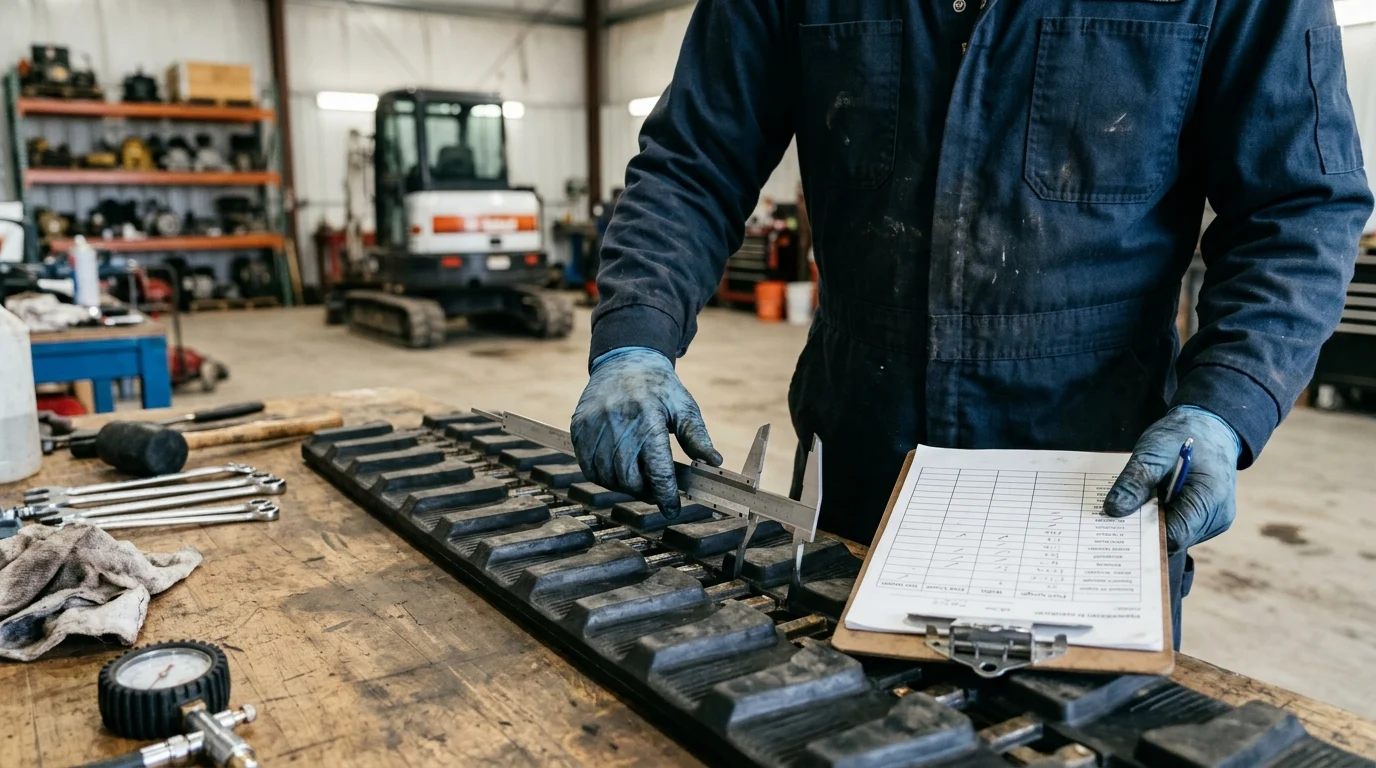
Translating operational requirements into precise technical specifications ensures seamless integration with the machine’s undercarriage components. Procurement specialists must verify exact dimensional compatibility, evaluate internal construction methods, and select tread architectures specifically engineered for the intended terrain.
Dimensions, tread, and construction
Excavator rubber tracks are universally identified by a standardized measurement formula: Width (mm) x Pitch (mm) x Number of Links. For instance, a specification of 300×52.5×84 denotes a 300mm width, a 52.5mm pitch between the embedded iron cores, and 84 total links. Modern premium tracks utilize continuous steel cord construction, which eliminates the overlapping vulcanized joints that historically served as the primary point of failure under high tension. Additionally, drop-forged iron cores are preferred over cast alternatives to prevent core ejection during high-torque operations.
Tread pattern selection is equally critical for maximizing traction and minimizing ground disturbance. The correct lug geometry dictates how effectively the machine displaces debris and transfers power to the ground.
| Tread Pattern | Primary Application | Key Characteristics |
|---|---|---|
| C-Lug / Staggered | General construction, dirt | High durability, balanced traction, reduced edge wear |
| Block Pattern | Paved surfaces, turf | Reduced vibration, minimal surface damage, smooth ride |
| Zig-Zag / Bar | Mud, snow, loose terrain | Aggressive grip, excellent self-cleaning properties |
OEM vs aftermarket comparison
Fleet managers frequently evaluate the cost-benefit ratio between Original Equipment Manufacturer (OEM) tracks and aftermarket alternatives. OEM tracks guarantee exact fitment and are formulated to meet the specific torque and weight distribution of the original machine, but they typically command a 20% to 35% price premium. This premium is often justified in specialized applications where machine tolerance parameters are exceptionally tight.
The premium aftermarket segment has evolved considerably, with top-tier manufacturers utilizing identical continuous steel cord technologies and virgin rubber compounds. While lower-tier aftermarket tracks may offer significant upfront savings, they often suffer from accelerated wear rates or core separation. Quality aftermarket suppliers generally benchmark their warranties against OEM standards, offering guarantees of 12 to 18 months or 1,000 to 1,500 operating hours against manufacturing defects, making them highly viable for cost-conscious fleet operations.
Choosing excavator rubber tracks for fleet use
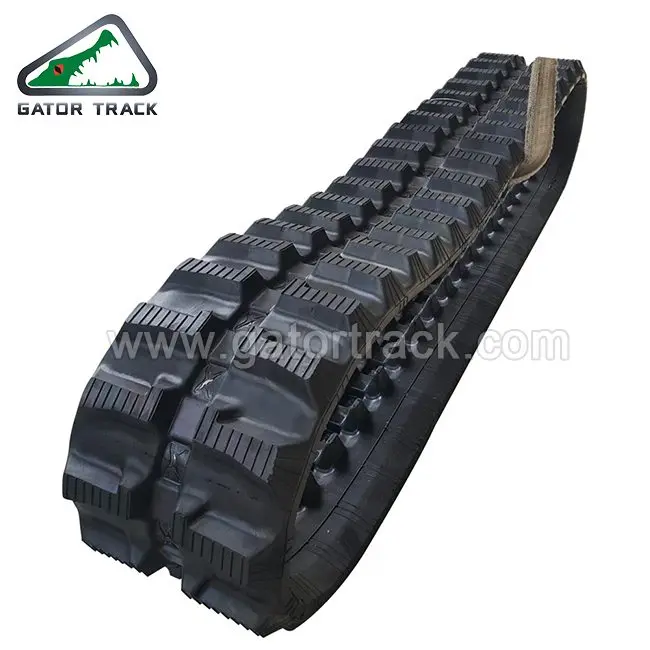
For commercial fleets, standardizing track procurement and maintenance protocols is vital for controlling total cost of ownership (TCO). Effective fleet management requires rigorous inspection routines, precise installation procedures, and a strategic, data-driven approach to component lifecycle management.
Inspection, fitment, and replacement
Routine undercarriage inspections must focus on track tension, as improper tensioning is the leading cause of premature failure. Excavator tracks typically require 1 to 2 inches (25mm to 50mm) of sag between the bottom track roller and the track itself, depending on the machine’s operating weight. Over-tensioning places immense strain on the continuous steel cords and accelerates wear on the idler and drive sprocket bearings, potentially reducing component lifespan by hundreds of hours.
Conversely, under-tensioning increases the risk of de-tracking during pivot turns or when operating on side slopes. Replacement protocols dictate that sprockets should be evaluated concurrently with track replacement. Installing a new rubber track over a severely worn sprocket—identified by sharp, pointed teeth—can reduce the new track’s operational life by up to 30% due to improper engagement with the iron links. Fleet technicians should utilize digital tread depth gauges to monitor wear rates and schedule replacements before catastrophic failures occur.
Procurement, warranty, and lifecycle cost
Optimizing lifecycle costs requires shifting the procurement focus from the initial purchase price to the cost-per-hour of operation. For example, acquiring a standard track for $1,000 that yields 600 hours of service results in a cost of $1.66 per hour. Investing in a heavy-duty variant for $1,500 that delivers 1,200 hours reduces the hourly cost to $1.25, generating significant long-term savings and minimizing expensive machine downtime.
Key Takeaways
- The most important conclusions and rationale for excavator rubber tracks
- Specs, compliance, and risk checks worth validating before you commit
- Practical next steps and caveats readers can apply immediately
Frequently Asked Questions
How do I choose excavator rubber tracks for a heavy-duty cycle?
For 1,000+ hours/year or frequent pivot turns, choose tracks with continuous steel cords, durable iron cores, and a tear-resistant compound built for higher tension and abrasion.
What track size information do I need before ordering?
Match the exact Width x Pitch x Number of Links, such as 300×52.5×84. Also confirm your machine make, model, and current tread style to avoid fitment issues.
Which tread pattern works best for my jobsite?
Use C-lug for general dirt work, block pattern for pavement or turf, and zig-zag/bar tread for mud, snow, or loose ground where self-cleaning grip matters most.
Are aftermarket excavator rubber tracks a good alternative to OEM?
Yes, if you buy from a quality manufacturer. Gator Track offers replacement tracks in many fitment sizes, so you can balance cost, durability, and correct machine compatibility.
Can Gator Track help if I also need excavator rubber pads?
Yes. Gator Track supplies excavator track pads too, including bolt-on, clip-on, chain-on, and replacement pad styles like RP, HXP, and DRP for surface protection.
Post time: Apr-30-2026