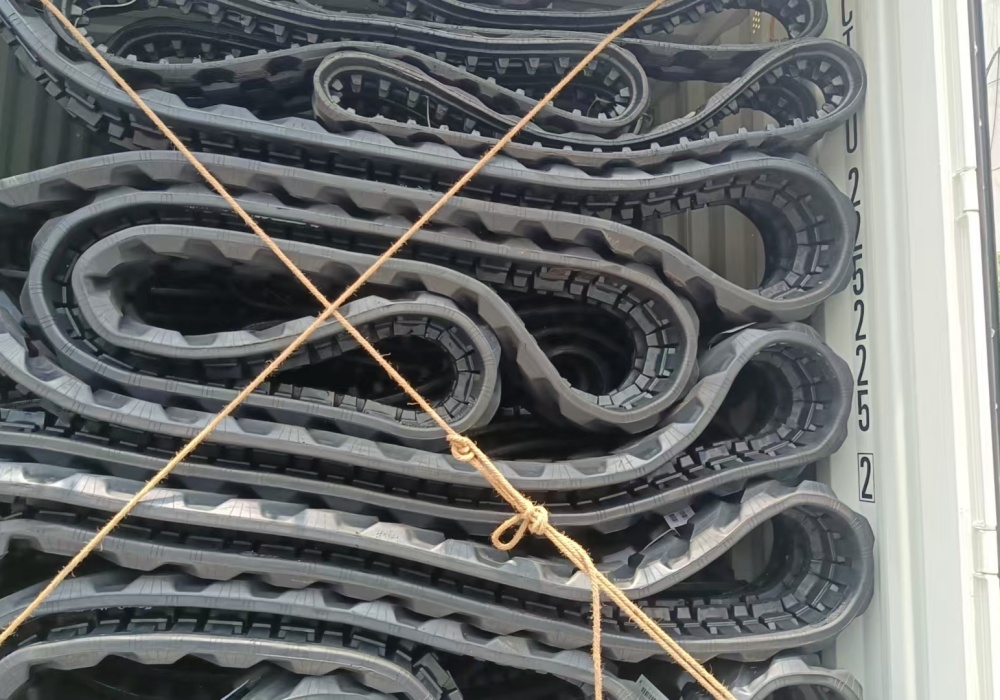
Why Mixed Fleets Need the Right Excavator Rubber Tracks
Managing a diverse equipment portfolio requires strategic component sourcing. For mixed fleets, standardizing on a single type of track often leads to accelerated wear, poor traction, and increased downtime. Selecting the right excavator rubber tracks requires aligning specific track architectures with distinct machine specifications and operational variables.
Define Track Requirements by Machine Type
Different machines exert unique stresses on their undercarriages. A 1.5-ton mini-excavator prioritizes flexibility and vibration reduction, whereas a 6-ton compact excavator demands higher tensile strength to handle increased torque and breakout force.
- Link Pitch and Width: Track dimensions must precisely match Original Equipment Manufacturer (OEM) specifications to prevent roller derailment and sprocket misalignment.
- Internal Core Structure: Machines executing high-frequency pivot turns require tracks reinforced with continuous steel cords. This jointless architecture prevents the stretching and snapping common in overlapping cable designs.
- Weight Distribution: Heavier machines require embedded forged iron cores. These cores must be engineered to withstand the gross vehicle weight (GVW) without bending, ensuring smooth engagement with the drive sprocket.
Match Tracks to Operating Conditions
The physical environment dictates the optimal rubber compound and tread pattern. Utilizing standard turf tracks on demolition sites accelerates chunking, which exposes internal steel cables to moisture and catastrophic oxidation.
- C-Lug Patterns: Ideal for general construction and dirt work, offering a high-performance balance of forward traction and a smooth ride on hard, flat surfaces.
- Zig-Zag Tread: Engineered for maximum traction in deep mud, clay, or snow. The stepped design prevents slippage and mud-packing during heavy excavation tasks.
- Block Patterns: Designed for paved surfaces like asphalt or concrete. These treads minimize ground disturbance and reduce vibration fatigue on the undercarriage components.
Matching the tread design and compound of excavator rubber tracks to the primary job site environment can extend track lifecycle by up to 30%, significantly lowering the total cost of ownership for fleet managers.
How to Specify Excavator Tracks for Each Jobsite
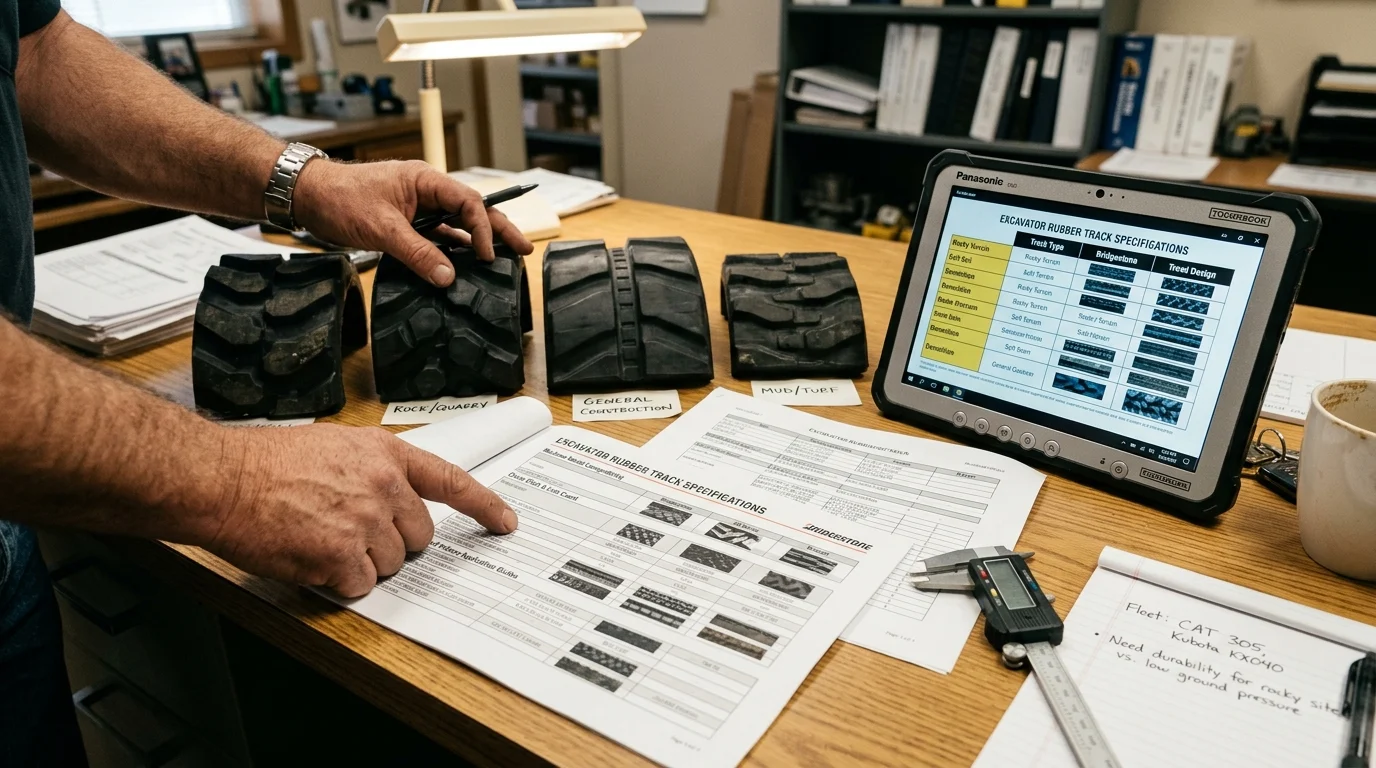
Technical specification goes beyond merely matching dimensional measurements to a machine; it requires evaluating the structural integrity and material science of the track to suit specific jobsite demands. Selecting the right excavator rubber tracks involves analyzing the internal carcass architecture, the external rubber compound, and the appropriate procurement tier to ensure durability under heavy loads.
Verify that tracks can withstand the torsional stress generated by excavators pivoting on uneven terrain before deploying them to demanding locations.
Compare Tread Pattern, Compound, and Carcass Design
Modern premium tracks utilize Continuous Steel Cord (CSC) technology, eliminating overlapping weld joints historically prone to snapping under high tension. Internal steel cables must offer high tensile strength to withstand severe torsion. Additionally, drop-forged metal cores are embedded to provide a rigid structure for sprockets to engage.
The rubber compound—a proprietary blend of natural rubber for tear resistance and synthetic rubber for UV durability—must balance cut resistance with flexibility. Tread patterns directly dictate mechanical performance: C-lug patterns offer superior traction on clay, while block patterns provide a smoother ride on hard surfaces. Staggered tread designs can noticeably reduce machine vibration, lowering operator fatigue.
Use OEM and Aftermarket Track Specifications
Weighing Original Equipment Manufacturer (OEM) tracks against aftermarket alternatives helps optimize maintenance budgets. Premium aftermarket tracks often meet OEM specifications at a reduced price point, while economy tiers suit only light-duty applications. However, always review OEM warranty implications before installing aftermarket tracks on newer machines, as non-standard parts can sometimes void coverage in mixed fleets.
| Track Tier | Illustrative Lifespan (Hours)* | Typical Cost Variance vs OEM | Best Application |
|---|---|---|---|
| OEM | 1,200 – 1,500 | Baseline (0%) | Machines under warranty |
| Premium Aftermarket | 1,000 – 1,400 | -15% to -25% | Mixed fleet heavy civil work |
| Economy Aftermarket | 600 – 800 | -40% to -50% | Light landscaping, low-hour use |
*Note: Track longevity is not guaranteed by tier alone. Operator technique, proper track tension maintenance, undercarriage alignment, and daily cleaning significantly impact actual lifespan.
As the illustrative data shows, premium aftermarket options can yield a 15% to 25% cost reduction while targeting the operational lifespan expected in rigorous civil engineering. Align the track tier with each machine’s specific utilization rate and jobsite severity.
How Procurement Can Reduce Downtime and Total Cost
Strategic purchasing transforms undercarriage maintenance from a reactive expense into a carefully managed lifecycle cost. For mixed fleets, minimizing machine downtime hinges on proactive supply chain management and rigorous financial evaluation of track performance.
Aligning purchasing strategies with fleet utilization data leverages economies of scale and avoids exorbitant emergency sourcing costs.
Prevent Fitment Errors and Sourcing Delays
Fitment errors are a primary driver of unexpected downtime. Ordering incompatible tracks for different OEM systems renders a machine inoperable and incurs expedited freight costs. To mitigate sourcing delays and cross-compatibility issues, maintain centralized databases of undercarriage specifications cross-referenced by serial number and proprietary OEM part numbers.
With dimensional fitment already cataloged, procurement can focus on inventory strategy and lead-time management. Global supply chain volatility can push lead times for specialized excavator rubber tracks to several weeks or even months. Maintaining a strategic buffer inventory—such as two spare tracks per high-utilization machine class—ensures continuous operation during peak seasons. When ordering direct from manufacturers, Minimum Order Quantities (MOQs) often require full shipping containers, incentivizing bulk forecasting.
Choose Tracks Using Total Cost of Ownership
Evaluating tracks strictly on upfront purchase price is a flawed strategy leading to inflated long-term expenses. True financial efficiency is achieved by calculating the Total Cost of Ownership (TCO), expressed as the cost per operating hour.
Key Takeaways
- Group mixed-fleet machines by compatible track families and cross-reference OEM serial numbers before placing replacement orders.
- Record width, pitch, link count, and guide-lug configuration for every excavator to prevent de-tracking and fitment damage.
- Never substitute tracks with different pitch specifications, such as replacing a 109mm-pitch track with a 72mm-pitch track.
- Inspect sprockets, idlers, rollers, and other undercarriage wear parts before installing new rubber tracks.
- Match tread pattern and rubber compound to the dominant jobsite surface, especially on abrasive concrete, asphalt, soft loam, or delicate turf.
- Consider premium carcass designs such as Continuous Steel Cord when machines face high torsional loads on uneven terrain.
Frequently Asked Questions
Why are mixed fleets harder to fit with excavator rubber tracks?
Mixed fleets often include different OEM chassis, guide-lug designs, pitch sizes, and part-number systems. Group machines by compatible track families and verify serial numbers before ordering.
Which measurements matter most when specifying rubber tracks?
Confirm track width, pitch, link count, guide-lug configuration, and machine model or serial number. A mismatch, such as using a 72mm pitch where 109mm is required, can damage the undercarriage.
Should undercarriage parts be inspected before installing new tracks?
Yes. Check drive sprockets, idlers, rollers, and tension systems before installation. New rubber tracks mounted on worn components can fail early and reduce fleet uptime.
How do jobsite conditions affect track selection?
Abrasive concrete, asphalt, mud, turf, heat, and cold all affect tread wear and rubber flexibility. Choose compound and tread designs based on the dominant surface and operating temperature.
What track width range is common for compact and mid-size excavators?
Ultra-compact machines may use tracks around 230mm wide, while mid-size excavators often require 450mm or 500mm widths. Always verify the machine-specific specification before ordering.
Post time: Aug-24-2026