
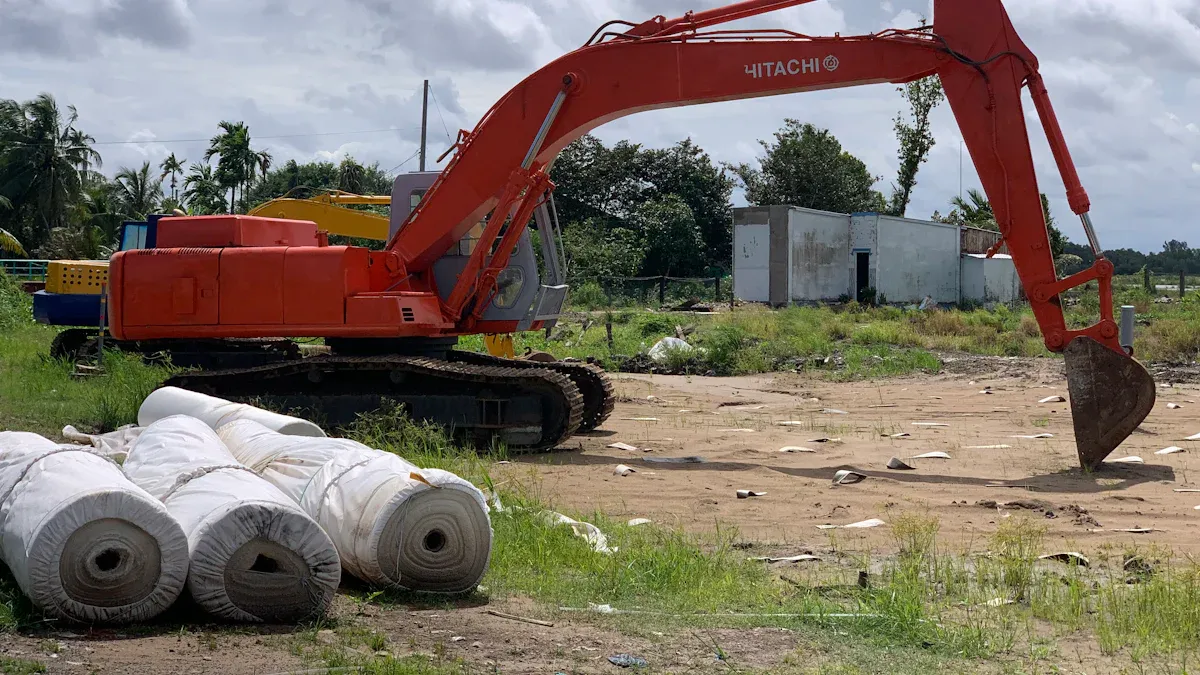
Proper track tension is vital for efficient excavator operation. I recommend checking track tension every 50 hours of machine operation. Many operators find that incorporating this check into their daily routine leads to better performance. Incorrect tension can cause costly mechanical issues, affecting the longevity of excavator tracks.
Key Takeaways
- Check track tension every 50 hours to prevent mechanical issues and enhance performance.
- Proper tension improves fuel efficiency and reduces the risk of breakdowns, saving you money.
- Regular inspections can catch leaks and wear early, extending the lifespan of your excavator tracks.
Understanding Track Tension

What Is Track Tension and Why It Matters
Track tension refers to the optimal tightness of the tracks on an excavator. Proper track tension ensures that the track aligns correctly with the sprockets and rollers. It plays a crucial role in the performance of the undercarriage. I find that maintaining the right tension prevents energy loss and costly downtime.
Here are some key points about track tension:
- Alignment: Proper tension keeps the tracks aligned, which is essential for smooth operation.
- Lifespan: It helps extend the lifespan of undercarriage components by reducing wear.
- Efficiency: Correct tension minimizes energy loss, enhancing overall machine efficiency.
Risks of Incorrect Track Tension
Operating an excavator with incorrect track tension can lead to several mechanical risks. I have seen firsthand how these issues can escalate quickly, resulting in costly repairs and downtime. Here are some of the primary risks associated with improper track tension:
| Risk Type | Description |
|---|---|
| Stability Issues | Loose tracks can lead to instability on uneven terrain, increasing the risk of tipping. |
| Wear and Tear | Tight tracks cause excessive pressure on components, leading to accelerated wear and potential failure. |
| Efficiency Loss | Incorrect tension can result in power loss due to track slippage or increased rolling resistance. |
| Maintenance Costs | Loose tracks may slip or derail, leading to higher maintenance costs and reduced travel efficiency. |
| Mechanical Failure Risk | Tight tracks increase stress on the undercarriage, raising the likelihood of unexpected breakdowns. |
Additionally, the condition of the tracks significantly impacts their lifespan. For instance, loose tracks can slip off drive sprockets, leading to derailment and faster wear on components. On the other hand, tight tracks increase pressure on idlers and rollers, which can cause premature wear and potential damage to the drive motor.
Measuring Excavator rubber Tracks Tension

Simple Steps for Accurate Measurement
Measuring the tension of excavator tracks is crucial for maintaining optimal performance. I follow a systematic approach to ensure accuracy. Here are the steps I recommend:
- Position the Excavator on a Level Surface: I always make sure the ground is flat and clear of obstacles. This setup provides an accurate reading.
- Lift the Track Off the Ground: Using the excavator’s boom, I raise one side of the track. This action creates enough clearance to measure sag effectively.
- Measure Sag: I take a measurement between the lowest point of the track and the upper roller. A slight sag indicates that the track tension is just right.
- Consult the Manual: Each excavator model has specific requirements. I refer to the manufacturer’s specifications for the recommended sag dimension.
- Adjust as Needed: If the measurement indicates that the tension is off, I follow the procedures to tighten or loosen the track accordingly.
To perform these measurements accurately, I rely on a few essential tools:
| Tool | Purpose |
|---|---|
| Grease gun | Used to add or remove grease from the track adjuster cylinder. |
| Torque wrench | Ensures bolts and nuts are tightened to the correct specification. |
| Measuring device | Checks the track sag, which indicates the track tension. |
By following these steps and using the right tools, I can ensure that the digger tracks remain in optimal condition, enhancing performance and longevity.
Signs of Track Tension Issues
Common Situations Requiring Adjustment
I have encountered several signs that indicate track tension issues on excavators. Recognizing these signs early can save time and prevent costly repairs. Here are some common situations that require immediate attention:
- Loose or Sagging Tracks: If I notice the tracks appear slack or sagging, it often means they need adjustment.
- Abnormal Track Wear: Excessive or uneven wear patterns signal that the tension is off. I always inspect the tracks for these signs.
- Track Derailment: Frequent derailment of tracks is a clear indicator that something is wrong. I take this seriously, as it can lead to further damage.
- Noisy Operation: Unusual noises during operation can indicate tension issues. I pay close attention to any sounds that seem out of the ordinary.
- Hydraulic Fluid Leaks: Leaks around the tensioner can suggest that the system is not functioning properly. I check for these leaks regularly.
- Reduced Performance: Difficulty in maneuvering and reduced efficiency often stem from incorrect track tension. I monitor the machine’s performance closely.
- Visual Damage: Signs of damage on the tensioner itself can indicate that adjustments are necessary. I inspect this area frequently.
- Difficulty in Adjusting Track Tension: If I struggle to adjust the tension, it may be a sign of underlying issues.
- Increased Fuel Consumption: Higher fuel usage can result from poor track tension. I keep an eye on fuel efficiency.
- Inconsistent Track Movement: Jerky or inconsistent movement of the tracks often points to tension problems. I address this immediately.
By staying vigilant for these signs, I can ensure that my excavator tracks remain in optimal condition, enhancing both performance and longevity.
Adjusting Track Tension
Preparation Steps for Safe Adjustment
Before I adjust the track tension on my excavator, I take several safety precautions to ensure a smooth and safe process. Here’s what I do:
- Power Off the Machine: I always turn off the engine and relieve any hydraulic pressure. This step prevents any accidental movement during the adjustment.
- Clear the Area: I ensure that the work area is flat and free of obstacles. A clean environment is crucial for accurate adjustments.
- Use Proper Protective Equipment: I wear appropriate safety gear, such as gloves and safety glasses, to protect myself while working with heavy machinery.
By following these preparation steps, I can minimize risks and ensure a safe working environment.
Step-by-Step Guide for Track Tension Adjustment
Once I have prepared the area and ensured safety, I follow these steps to adjust the track tension effectively:
- Power Off the Machine: As mentioned, I always start by turning off the engine and relieving hydraulic pressure.
- Access the Track Adjuster: I remove the undercarriage cover plate to locate the grease fitting and adjuster valve. This access is essential for making the necessary adjustments.
- Release or Add Grease:Check Tension as I Adjust: I move the track slightly to ensure it responds correctly to the adjustments. This step helps me verify that the tension is being set properly.
- To tighten the track, I connect a grease gun to the fitting and pump grease until the track sag reaches the recommended level.
- If the track is too tight, I turn the adjuster valve counter-clockwise to release grease and loosen the track.
- Test and Retest: After making adjustments, I lower the machine and run it for a few meters. I then check the track tension again to confirm that it is within the desired range.
By following this step-by-step guide, I can effectively adjust the tension of the excavator tracks, ensuring optimal performance and longevity. I also keep in mind common mistakes to avoid, such as neglecting to check the tension regularly or failing to inspect for dirt and debris that could affect the seals.
Common Mistakes to Avoid
- Seal Failure: Dirt and debris can enter the cylinder, leading to seal failure. I prevent this by conducting regular inspections and replacing seals promptly.
- Incorrect Tension: I always check the tension against the specifications in the operation and maintenance manual. This practice helps avoid slippage and uneven wear.
By staying vigilant and following these guidelines, I can maintain the integrity of my rubber digger tracks and ensure efficient operation.
Impact of Track Tension on Performance
Undercarriage Wear and Tear
I have observed that proper track tension is crucial for minimizing undercarriage wear. When the tension is not just right, it can lead to significant issues. For instance, I often remind myself that:
- Loose tracks can cause excessive movement, leading to instability.
- Tight tracks increase pressure on components, accelerating wear.
“Running too tight can suck up power on the machine,” Connor says, “while running too loose could lead to a track being thrown when the machine twists and turns in loose materials such as pea rock. That is hard on the track as it puts an enormous force on it that it is not necessarily designed for.”
By maintaining the correct tension, I can extend the lifespan of the undercarriage components and reduce maintenance costs.
Fuel Efficiency and Power Loss
I have noticed a direct correlation between track tension and fuel efficiency. When the tracks are not properly tensioned, fuel consumption can increase significantly. Here are some key points I keep in mind:
- Overtight chains require more energy, causing the engine to exert additional force, which leads to higher fuel consumption.
- Loose tracks can create excessive friction, resulting in increased fuel usage.
- Properly tensioned tracks improve machine stability, enhancing overall fuel efficiency.
In my experience, ensuring the right track tension not only reduces wear on components but also optimizes fuel consumption. This attention to detail helps keep operational costs in check.
Maintenance Tips for Optimal Track Tension
Regular Checks and Adjustments
I prioritize regular checks and adjustments to maintain optimal track tension on my excavator. I recommend checking and adjusting the track tension every 250 hours of operation. This routine helps prevent unexpected equipment failures and ensures that my machinery remains operational. Here are some essential practices I follow:
- Daily Inspections: I conduct daily checks for wear and damage, focusing on track tension.
- Proper Cleaning: After each use, I remove debris to prevent wear and malfunctions.
- Consult the Operator’s Manual: I always refer to the manual for specific tension adjustment guidelines.
By adhering to these practices, I can enhance the reliability of my excavator tracks and minimize wear and tear on the undercarriage.
Long-Term Care for Track Health
Long-term care strategies are crucial for extending the life of my rubber excavator tracks. I focus on preventive maintenance to address potential issues before they escalate. Here are some strategies I implement:
| Strategy | Description |
|---|---|
| Preventive Maintenance | I address potential issues before they escalate into major problems to avoid costly repairs. |
| Regular Inspections | I plan regular checks based on manufacturer recommendations to ensure my equipment is in top shape. |
| Adapting to Worksite Conditions | I adjust operations to changing conditions to enhance efficiency and safety while extending lifespan. |
By following these long-term care strategies, I can ensure that my excavator tracks remain in optimal condition, enhancing performance and reducing maintenance costs.
Regularly checking and adjusting track tension is essential to prevent mechanical issues. I have learned that maintaining proper tension enhances excavator performance and minimizes wear on undercarriage components. Here are some key takeaways:
- Regular inspections can identify leaks and wear, preventing costly repairs.
- Proper tension improves fuel efficiency and reduces breakdown risks.
- Committing to maintenance ensures long-term reliability and efficiency.
By prioritizing these practices, I can extend the lifespan of my excavator and enhance its overall performance.
FAQ
How often should I check track tension on my excavator?
I recommend checking track tension every 50 hours of operation to ensure optimal performance and prevent mechanical issues.
What tools do I need for adjusting track tension?
I typically use a grease gun, torque wrench, and measuring device to adjust track tension effectively.
What are the signs of improper track tension?
Signs include loose tracks, abnormal wear, track derailment, and increased fuel consumption. I monitor these indicators closely to maintain performance.

Post time: Feb-04-2026