In this guide, we outline how to prepare a complete rubber track inquiry for B2B purchasing. We recommend treating the request as a technical and commercial brief: identify the machine, describe the required track specifications, explain the working conditions and state what information you need in the quotation. Requirements vary by machine and undercarriage, so any final fitment should be confirmed with the manufacturer or a qualified supplier—not inferred from a model name or photograph alone.
1. Identify the machine precisely
Begin with the equipment make, full equipment model, production year if available and serial number. Include the machine type and configuration, such as compact track loader, mini excavator or another tracked machine. If the machine has been modified, rebuilt or fitted with non-original undercarriage components, note this in the inquiry.
The model name is a useful starting point, but it may not define every production variation. Serial-number ranges, market versions and optional undercarriage configurations can affect fitment. We advise sending a clear photograph of the identification plate and asking the supplier to confirm which machine configuration the proposed track supports.
If the existing track has a part number or manufacturer marking, include a photograph and transcribe the information where legible. However, do not assume the current track is necessarily correct: it may be worn, previously replaced or incorrectly specified. Compare its details with trusted parts data for the exact machine.
2. Provide verifiable track specifications
The supplier needs enough information to check fitment. Depending on the machine and track type, relevant track specifications may include width, pitch, number of links, guide or center-lug style, drive-lug arrangement and overall configuration. Some systems also require confirmation of directional installation or other design features.
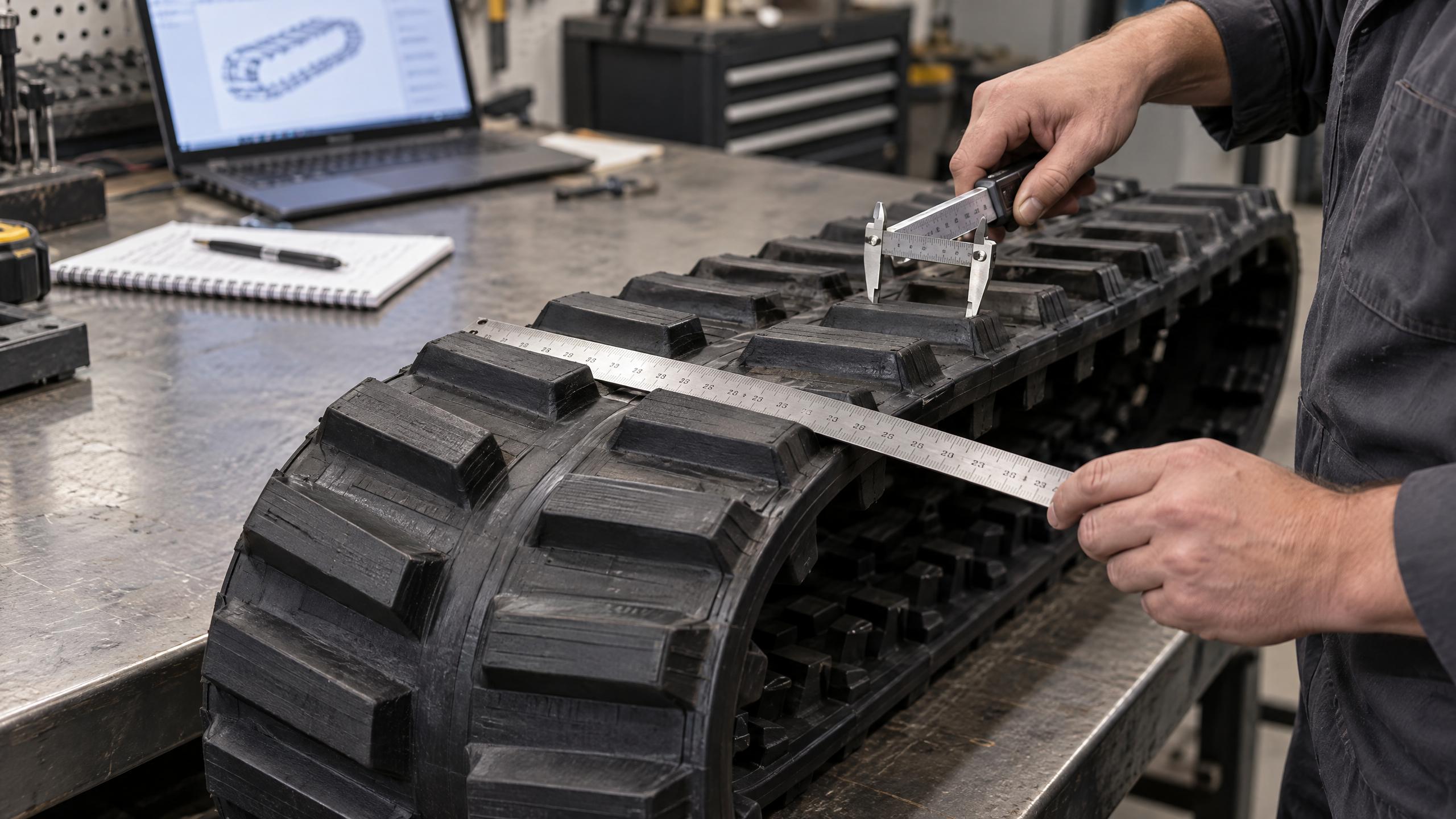
If you already have an OEM part number or a supplier-approved reference, include it. If not, provide measured details only when they have been collected carefully and can be verified. A worn or stretched track may not provide a reliable basis for ordering, and measurement methods can vary. We recommend asking the supplier which dimensions and measurement points are needed before taking measurements.
Photographs can help clarify construction and condition. Useful images generally include the entire track, the inner guide area, the drive engagement area, the machine identification plate and the undercarriage from a safe, stationary position. A ruler or scale in a close-up image may help communicate size, but photos should support—not replace—technical confirmation.
3. Describe the application and operating conditions
A custom requirement is not defined by fitment alone. Explain how the machine is used and what the track is expected to handle. Relevant details may include typical ground conditions, hours of operation, travel distance, turning frequency, load, operating speed and exposure to oil, heat, sharp debris or other demanding conditions.
Also state what matters most to your operation. For example, a buyer may prioritize ground protection, traction, reduced downtime, longer replacement intervals or availability across a fleet. These objectives can involve trade-offs, and no specification should be treated as universally best. We encourage buyers to describe the actual duty cycle rather than simply request a “heavy-duty” track.
Where possible, share operating history for the current track: approximate service period, visible wear, damage and any unusual events. This can help a replacement track supplier understand whether the request is a like-for-like replacement or an opportunity to review a recurring issue. If abnormal wear has occurred, inspect the undercarriage and machine setup as well; a new track may not resolve an underlying problem.
4. Explain what “custom” means
“Custom track” can refer to different requirements. Specify whether you need a non-standard dimension, a particular tread pattern, a compound or reinforcement option, a different marking, packaging, or a product developed for a specific application. If you have a technical drawing, sample, approved reference or written performance requirement, include it and identify the revision or version.
Separate mandatory requirements from preferences. For example, exact machine compatibility may be mandatory, while packaging format or tread preference may be negotiable. This distinction helps suppliers identify feasible options and reduces the chance of comparing quotations that cover different scopes.
Before approving a custom design or tooling, ask how the supplier validates fitment and what evidence is available. Depending on the project, this may include drawing review, sample inspection, trial installation or other agreed checks. Define who approves the final specification and what changes require renewed approval. The appropriate validation process depends on the complexity and risk of the application.
5. Request a comparable rubber track quotation
A useful rubber track quotation should make the commercial scope clear. In your inquiry, ask the supplier to specify the quoted part or configuration, unit price and currency, minimum order quantity if applicable, production lead time, stock availability, shipping terms and quotation validity. For custom orders, request details of any tooling or development charges and clarify how these are handled for repeat orders.
You may also need information on packaging, warranty terms, quality documentation, inspection options and the process for resolving a fitment or quality concern. If you have a required delivery date or destination, state it clearly. Commercial terms and documentation expectations vary between suppliers and markets, so confirm them before placing an order.
When comparing offers, check that each supplier is quoting to the same machine data, specification and application. A lower price is not directly comparable if one offer excludes customization, uses a different configuration or assumes a different delivery scope. We recommend keeping the written fitment confirmation and final quotation with the purchase record.
6. Use a repeatable inquiry checklist
Before sending the request, verify that it includes:
- Machine make, full model, serial number and year or production details.
- Existing part number or trusted reference, if available.
- Required dimensions and undercarriage details, with the measurement method.
- Photos of the machine plate, full track, guide area and drive engagement.
- Application, ground conditions, workload and operating priorities.
- Custom features, drawings, samples and mandatory versus preferred requirements.
- Quantity, destination, target delivery date and requested quotation details.
A standard form helps purchasing teams, service departments and dealers collect information consistently. It also makes future reorders easier because the machine-to-part relationship is documented rather than held only in an email thread or an individual’s memory.
Conclusion
A complete inquiry gives suppliers a clearer basis to verify fitment and quote the product that the buyer actually needs. By identifying the machine accurately, documenting track specifications, explaining the application and defining commercial expectations, procurement teams can reduce avoidable back-and-forth and make supplier offers easier to compare.
We recommend confirming the proposed part against the exact machine configuration before ordering, especially when the request involves customization or uncertain legacy information. Good documentation supports a more reliable purchasing process—from the first inquiry through installation and future replenishment.
Frequently Asked Questions
1. Is the equipment model enough to request a custom track quote?
It is a starting point, but not always sufficient. Provide the full model and serial number, since production variations and undercarriage options may affect fitment.
2. What track measurements should I include?
The supplier may request details such as width, pitch, link count and guide or drive-lug configuration. Ask for its preferred measurement method and verify physical measurements against reliable application data.
3. Can I identify a replacement track from photographs?
Photographs are useful for preliminary review, but they do not replace machine identification and verified specifications. Share photos alongside the model, serial number and any known part references.
4. What should I include if I need a custom design?
Explain which feature is custom, provide drawings or a sample if available, distinguish mandatory requirements from preferences, and ask how fitment and approval will be validated.
5. How can I compare quotations from different suppliers?
Confirm that each offer uses the same machine configuration, track specification, order quantity, delivery destination and commercial scope. Review lead time, warranty and any tooling or development charges as well as unit price.
Post time: Nov-04-2026