
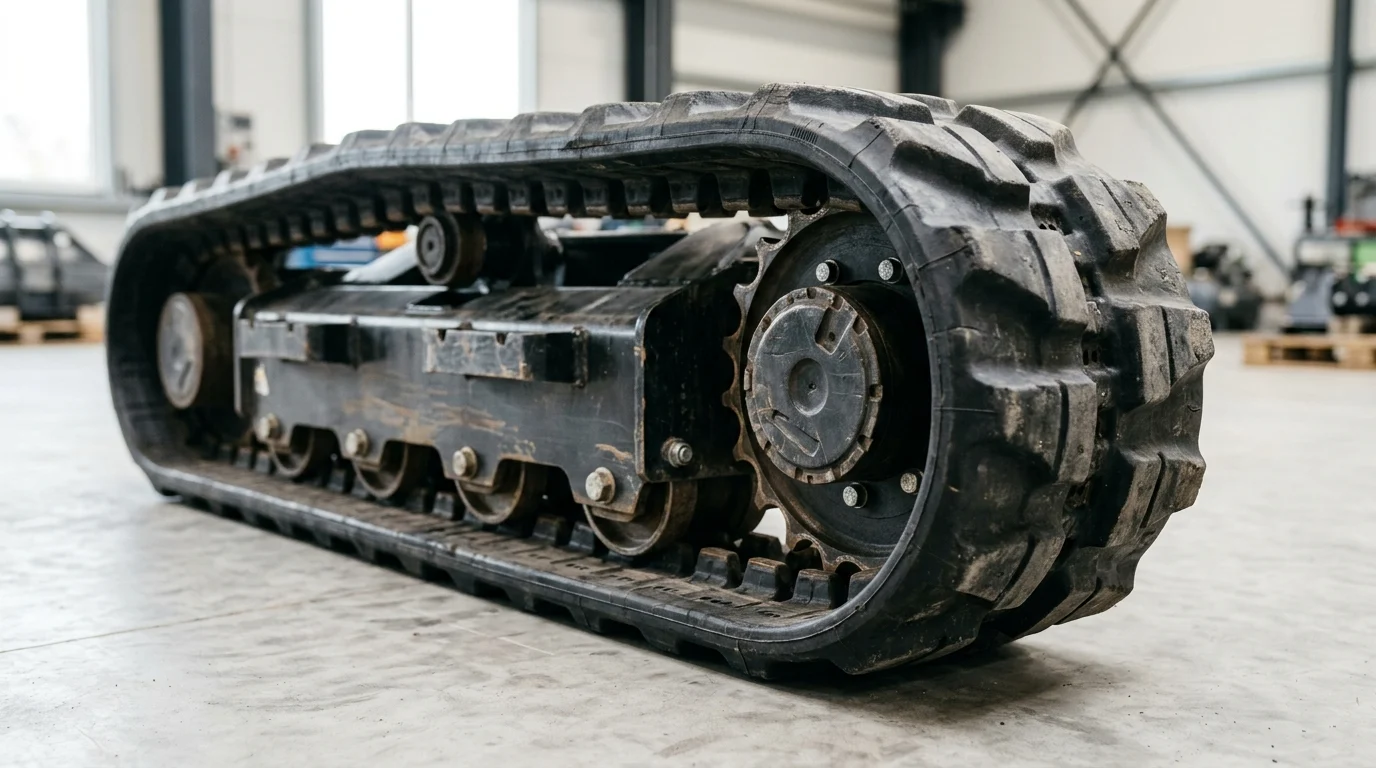
How High Heat Affects Excavator Track Performance
Operating heavy machinery during peak summer months introduces severe thermal stress to undercarriage components. Fleet managers and engineers operating across arid and high-temperature regions consistently observe that high ambient temperatures—often exceeding 95°F (35°C)—can translate to extreme surface temperatures on asphalt or concrete, sometimes surpassing 140°F (60°C). At these extremes, standard rubber formulations degrade rapidly, often reducing overall track lifespan by 20% to 30%. Understanding the underlying thermal dynamics is essential to specify the correct equipment, establish proper tensioning protocols, and prevent costly downtime during critical project phases.
Heat-related failure modes to watch
Heat-related failures rarely happen overnight; they manifest through progressive material breakdown. A frequent issue is chunking, where the rubber loses its elasticity, hardens under UV exposure, and tears away from the core metal. Continuous operation on superheated asphalt can reduce standard rubber lifespan significantly—often dropping typical 1,500–2,000 hour lifespans down to 800–1,200 hours. While the exact reduction varies widely by manufacturer, region, and machine class, the accelerated wear is universally detrimental.
Additionally, thermal expansion affects the internal structure. As the rubber softens and the internal metal components heat up (often exceeding internal core temperatures of 180°F/82°C), the risk of steel cord delamination increases by up to 40%. When operators execute high-torque turns on high-friction surfaces, the softened rubber cannot hold the expanding steel cords, frequently leading to catastrophic cord breaks.
Rubber tracks vs steel tracks vs bolt-on pads
When specifying tracks for summer projects, evaluating the trade-offs between material types is critical. Bare steel tracks easily withstand extreme surface temperatures (up to 300°F/150°C) without structural degradation, but they destroy paved surfaces, impose strict transport and road-legality restrictions, and increase operator fatigue through excessive vibration and noise (often adding 10–15 dB to cabin noise). Furthermore, while structurally immune to surface heat, steel tracks conduct thermal energy directly to rollers, idlers, and seals. During sustained hot-weather operation, this conduction can elevate undercarriage oil and grease temperatures by 15°F to 25°F, accelerating seal wear.
Standard rubber excavator tracks provide excellent traction and surface protection, yet they become highly vulnerable when ground temperatures reach extreme summer peaks.
For mixed-use sites, bolt-on or clip-on rubber pads over steel chains are often recommended. This hybrid approach allows the heavy-duty steel undercarriage to bear the structural and thermal load while the replaceable rubber pads handle surface contact, permitting localized repairs rather than full track replacements. However, procurement teams must account for hardware-loosening risks and link-type compatibility; thermal cycling and abrasive debris can cause bolts to back out, leading to partial pad detachment if operators do not regularly check torque.
| Track Configuration | Heat Tolerance | Pavement Protection | Operational Caveats | Relative Initial Cost |
|---|---|---|---|---|
| Standard Rubber | Moderate (< 140°F / 60°C) | Excellent | Vulnerable to extreme surface heat | Baseline (1.0x) |
| Bare Steel | Extreme (> 300°F / 150°C) | Poor | +10-15 dB noise; road-legality issues | Higher (1.3x – 1.5x) |
| Steel with Rubber Pads | High (Up to 160°F / 71°C) | Good | Requires 50-hr torque checks | Highest (1.6x – 1.8x) |
Key Track Specifications for Hot-Weather Jobs
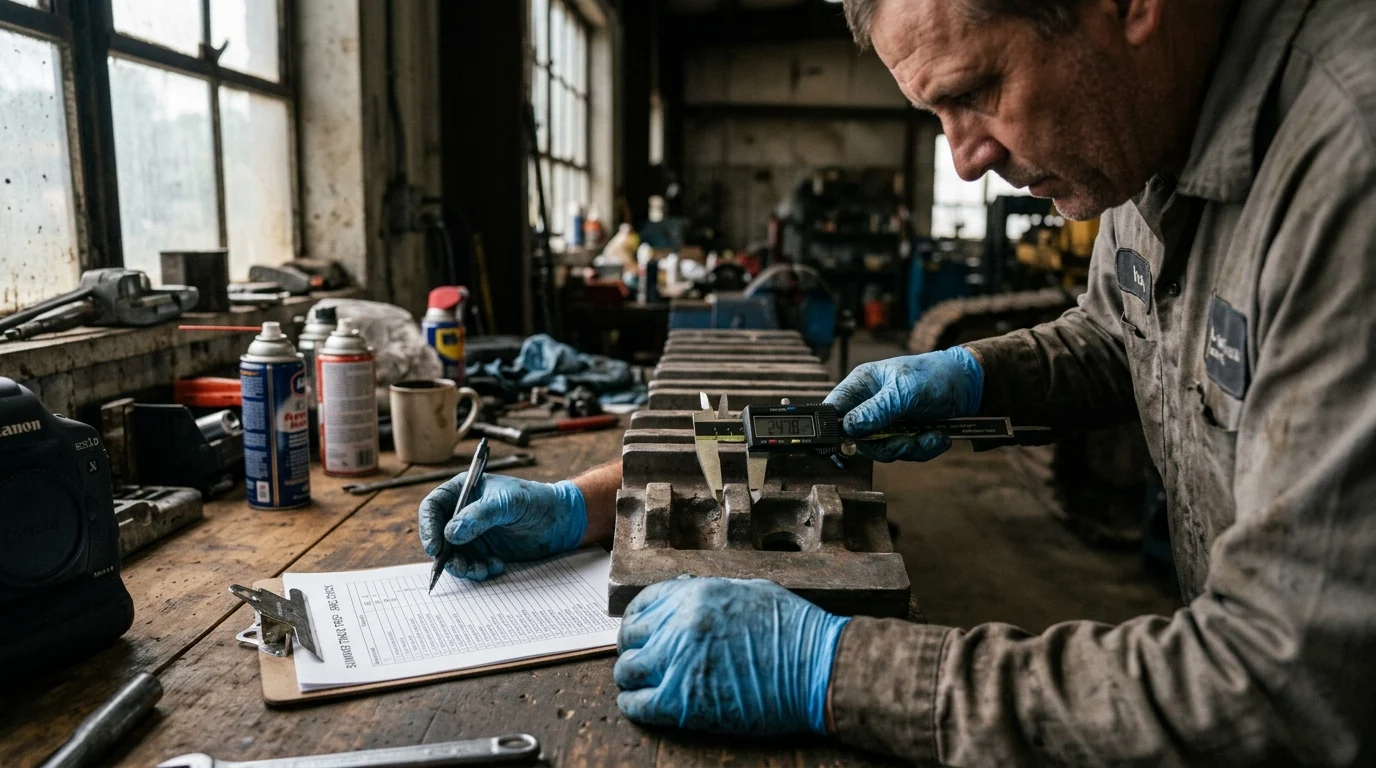
Specifying the correct undercarriage components for hot-weather jobs requires looking beyond basic dimensional fit. Fleet engineers must critically analyze material properties and match them against the machine’s operational demands. A specification sheet that looks adequate for moderate spring conditions will often fail under the relentless thermal load of a July paving project.
Compound formulation and carcass strength
The foundation of high-temperature resilience lies in the compound formulation. Compound selection must carefully balance thermal aging, abrasion resistance, and cut resistance. Rather than relying solely on standard natural rubber, buyers should look for proprietary blends incorporating synthetic elastomers like Styrene-Butadiene Rubber (SBR), chloroprene, or EPDM, which help maintain structural integrity at operating temperatures up to 175°F (80°C) and target tensile strengths of 2,500–3,000 PSI. However, compound selection must match the dominant jobsite failure mode; heat-resistant synthetics can sometimes trade off ultimate abrasion resistance or cold-weather flexibility compared to natural rubber.
Furthermore, continuous, jointless high-tensile steel cords (with diameters typically ranging from 4.5mm to 5.5mm) are a baseline quality expectation in modern premium rubber tracks, not an advanced upgrade. Procurement teams must verify this carcass construction and explicitly reject poorly spliced or jointed cord products that will quickly fail under heat-induced stretching forces. Distinct from the continuous cord carcass, the embedded core metals (the iron links that engage the drive sprocket) should be drop-forged or utilize high-grade, heat-treated castings. This prevents brittle fractures when the track undergoes rapid temperature fluctuations, ensuring reliable compatibility with the undercarriage.
Machine weight, duty cycle, and surface conditions
A machine’s operating weight and duty cycle dictate how much internal heat is generated through friction and flexing. These factors scale differently across weight classes. For instance, smaller mini excavators (1.5 to 3 metric tons) running continuous shifts generate significant internal hysteresis heat through rapid track flexing, while heavier midi excavators (5 to 8 metric tons) exert substantial shear forces on the tracks during turns. Both mechanisms accelerate thermal degradation. To combat this, operators should allow adequate cooling periods (e.g., 15 minutes every 2 to 3 hours of continuous tramming) and minimize unnecessary high-speed travel, as exact thermal thresholds vary by machine size, ambient temperature, and surface type.
Ground bearing pressure (typically 4.0 to 6.5 PSI) also plays a critical role. Machines with higher ground pressure will force the track lugs harder into the superheated ground. Heat-softened rubber is highly susceptible to penetration; sharp gravel and debris embed much easier in hot conditions, necessitating a thicker, more durable lug profile to prevent punctures from reaching the steel cords.
Field Maintenance in High Heat
To bridge the gap between physical equipment specifications and operational reality, site managers must ensure operators implement strict hot-weather field maintenance protocols.
How to Source and Approve Excavator Rubber Tracks
When specifying excavator tracks for extreme summer climates, sourcing requires more than just matching undercarriage dimensions. I always evaluate manufacturers based on their proven technical capacity to deliver heat-resistant polymer blends.
Supplier checks and required documentation
To ensure thermal stability, I require strict technical documentation before approving a new vendor. While an ISO 9001 certification serves as a baseline for factory quality management, I prioritize granular material test reports (MTRs). For high-temperature applications, I ask suppliers for third-party lab results demonstrating the rubber’s tensile strength retention after thermal aging, typically tested per ASTM D573 standards.
When auditing a supplier, I verify the following documentation:
- Material Test Reports: Confirming the optimal ratio of natural rubber to synthetic polymers (like styrene-butadiene rubber, which enhances heat resistance).
- Warranty Agreements: Ensuring explicit coverage for thermal degradation, delamination, and tread chunking.
- Vulcanization Logs: Proof of continuous temperature and pressure monitoring during the curing process.
Balancing upfront cost with service life
Procurement teams often focus on the initial price tag, but I calculate the Total Cost of Ownership (TCO) when selecting excavator tracks for severe summer operations. Standard aftermarket tracks might cost 20% to 30% less upfront. However, continuous operation on abrasive, 45°C (113°F) surfaces rapidly accelerates rubber degradation, frequently reducing the track’s service life by up to 40%.
| Track Classification | Initial Cost Index | Est. Service Life (High-Heat Hours) | Long-Term Value |
|---|---|---|---|
| Standard Compound | 1.0x | 800 – 1,000 | Poor |
| Heat-Resistant Premium | 1.3x | 1,500 – 1,800 | Excellent |
Investing in premium excavator tracks formulated with specialized anti-aging additives prevents premature stretching and steel cord separation. In my experience managing heavy machinery fleets, eliminating just one unscheduled mid-season downtime event easily offsets the higher initial capital expenditure of heat-optimized tracks.
Key Takeaways
- Specify tracks based on actual surface temperature, because asphalt or concrete can exceed 140°F (60°C) when air temperatures are around 95°F (35°C).
- Expect standard rubber track life to drop by 20% to 30% in extreme summer operation unless heat-resistant specifications and maintenance practices are used.
- Avoid high-torque turns on superheated pavement, as softened rubber and expanding steel cords can increase the risk of delamination and cord breaks.
- Use bare steel tracks only when surface damage, added noise, transport restrictions, and heat transfer to seals and rollers are acceptable trade-offs.
- Consider bolt-on or clip-on rubber pads for mixed sites, but schedule frequent hardware torque checks because thermal cycling can loosen bolts.
Frequently Asked Questions
What ground temperature is risky for standard rubber excavator tracks?
Standard rubber tracks become vulnerable when asphalt or concrete surface temperatures approach or exceed 140°F (60°C), even if ambient air is only around 95°F (35°C).
How much can summer heat reduce rubber track life?
Extreme heat can reduce overall rubber track lifespan by 20% to 30%. In severe conditions, typical 1,500–2,000 hour service life may fall to about 800–1,200 hours.
What are the main heat-related track failures to watch for?
Common failure modes include rubber chunking, hardening from UV exposure, steel cord delamination, and cord breaks caused by high-torque turns on hot, high-friction surfaces.
Are steel tracks better than rubber tracks in extreme heat?
Steel tracks tolerate very high surface temperatures, but they can damage pavement, increase cabin noise by 10–15 dB, face road-use restrictions, and transfer heat into rollers, idlers, and seals.
When should I consider bolt-on rubber pads over steel chains?
Bolt-on or clip-on rubber pads are useful for mixed-use sites because steel carries the structural load while replaceable pads protect paved surfaces. They require regular torque checks to prevent loosening.

Post time: Aug-03-2026