Introduction
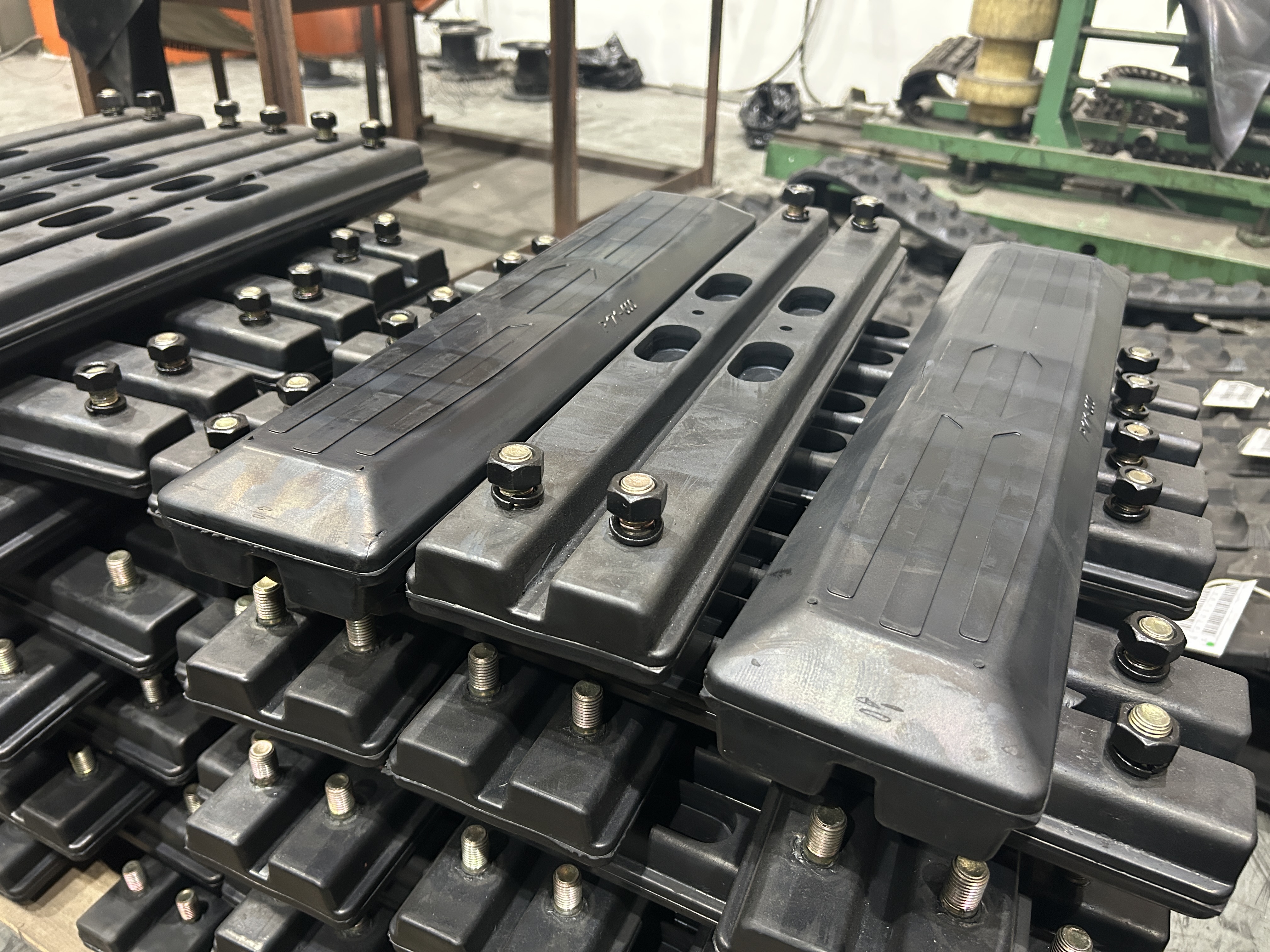
For contractors balancing durability, downtime, and jobsite surface protection, bolt-on rubber track pads have become a practical undercarriage upgrade rather than a niche add-on. They let steel-tracked machines work on pavement, concrete, and other sensitive surfaces while preserving the strength needed for demanding excavation and utility work. This article explains why more fleet owners see them as a cost-efficient investment, from lower lifecycle maintenance and selective pad replacement to faster installation and greater machine versatility. It also sets up the key operating conditions and financial considerations that make bolt-on rubber track pads an increasingly common choice on modern projects.
Why Contractors Are Investing in Bolt-On Rubber Track Pads
Heavy equipment operators face a continuous optimization challenge regarding undercarriage configurations. The transition toward bolt-on rubber track pads represents a strategic investment in fleet versatility. These pads allow steel-tracked excavators and compact track loaders to navigate sensitive surfaces without sacrificing structural integrity.
Cost and productivity benefits
The primary financial driver for adopting bolt-on pads is the dramatic reduction in lifecycle undercarriage costs. Traditional continuous rubber tracks for mid-sized excavators can require complete replacement at intervals of 1,000 to 1,500 operating hours, often incurring costs between $3,500 and $7,000. In contrast, bolt-on systems permit the targeted replacement of individual damaged cleats. This modularity reduces maintenance material expenditures by up to 60% over a machine’s lifecycle.
Furthermore, installation efficiency significantly improves productivity. A two-person crew can typically outfit an entire 15-ton excavator with bolt-on pads in under four hours, minimizing operational downtime and keeping projects on strict schedules. Because the underlying steel tracks remain intact, operators retain the rugged durability required for heavy earthmoving while gaining the surface flexibility of a rubber undercarriage.
Operating conditions driving adoption
Urban infrastructure projects and utility repairs dictate stringent surface protection protocols. Municipalities increasingly levy severe fines—frequently exceeding $2,000 per violation—for asphalt or concrete scarring caused by bare steel grousers. Bolt-on rubber track pads mitigate this risk entirely while providing essential vibration dampening.
For machines operating in the 8-ton to 22-ton weight classes, these pads absorb shock loads that would otherwise transfer to the final drives and the operator cabin. This extends component longevity and reduces operator fatigue during prolonged shifts on hardened surfaces. Additionally, noise pollution is a critical factor in residential zones. Bolt-on pads can reduce ambient track noise by up to 10 decibels (dB), directly aiding compliance with strict local noise ordinances and extending permissible working hours in populated areas.
Key Performance and Specification Factors
Evaluating bolt-on rubber track pads requires a rigorous analysis of material engineering and structural compatibility. Industry-leading pads utilize high-grade vulcanized rubber compounds permanently bonded to an internal steel plate, ensuring the cleat can withstand extreme shear forces without delaminating from the shoe. The vulcanization process requires temperatures exceeding 150°C and pressures above 10 MPa to achieve a cohesive bond that prevents the rubber from peeling under heavy loads.
Performance, wear, and application fit
Wear rates are heavily influenced by the rubber compound’s Shore A durometer hardness, which typically ranges from 65 to 75 for optimal tear resistance and traction. High-performance pads feature reinforced edges to combat curb chunking, a common failure mode in urban applications where machines frequently pivot against concrete barriers.
| Pad Attachment Type | Typical Installation Time (per pad) | Optimal Machine Weight Class | Relative Cost & Maintenance Profile |
|---|---|---|---|
| Bolt-On | 3 – 5 minutes | 5 to 25 tons | Low lifecycle cost, highly secure, modular replacement |
| Clip-On | 1 – 2 minutes | 1.5 to 8 tons | Medium lifecycle cost, moderate shear resistance |
| Chain-On (Roadliner) | Direct to chain | 8 to 30 tons | High initial cost, excellent durability, high labor replacement |
Specifications that matter most
Dimensional accuracy is critical for preventing premature track wear. Specifications must align precisely with the machine’s steel grouser dimensions. Standard pad widths vary from 400mm for compact equipment up to 800mm for heavy excavators. Buyers must verify the bolt hole spacing (pitch) and grouser height clearance to ensure flush mounting and prevent debris accumulation.
Furthermore, top-tier pads boast a rubber tensile strength exceeding 18 MPa and an elongation at break of at least 400%, ensuring the material stretches rather than tears when encountering sharp debris. Torque specifications for the mounting bolts are equally vital. Applying the standard 120 to 150 Nm of torque prevents hardware loosening under high-vibration conditions, securing the mechanical integrity of the entire undercarriage system.
How to Select and Implement Bolt-On Rubber Track Pads
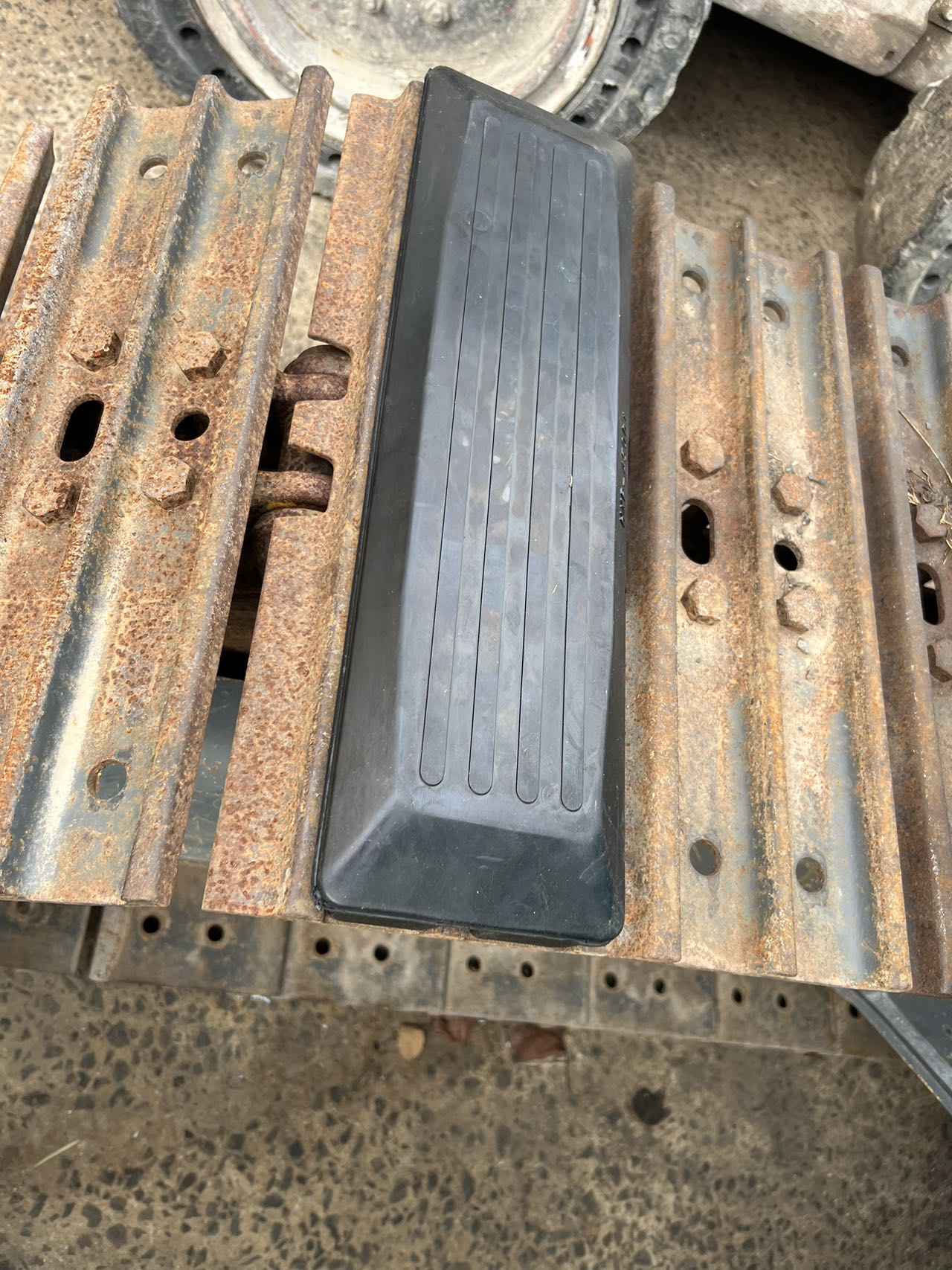
Strategic procurement and systematic implementation of bolt-on rubber track pads demand a structured approach. Fleet managers must look beyond initial acquisition costs to assess long-term operational efficiencies, supplier reliability, and compatibility with existing preventative maintenance programs.
Steps for choosing the right pads
The selection process begins with a comprehensive undercarriage audit. Technicians must measure the exact dimensions of the steel track shoes, including the pre-drilled hole patterns, to ensure seamless integration. When evaluating suppliers, procurement teams should request detailed material data sheets verifying the required tensile strength and durometer ratings.
It is also essential to negotiate logistical parameters. While some premium manufacturers require a Minimum Order Quantity (MOQ) of 50 to 100 units, establishing a phased delivery schedule can optimize inventory carrying costs. Finally, conducting a pilot test on a single high-utilization machine provides empirical data on wear patterns before committing to a fleet-wide rollout. Post-installation, maintenance protocols should mandate a torque re-check after the initial 50 hours of operation, followed by routine inspections every 250 hours to identify and replace individually compromised pads.
Building the business case
Constructing a robust business case relies on comparative lifecycle cost analysis. Consider a contractor operating a 14-ton excavator for 1,200 hours annually on paved surfaces. Operating bare steel tracks incurs estimated surface remediation penalties of $4,000 per year, plus accelerated undercarriage wear costing approximately $2.50 per hour in structural degradation.
Equipping the machine with a complete set of bolt-on rubber track pads—averaging a capital expenditure of $2,800 to $4,200—eliminates surface damage fines entirely and reduces track vibration wear by up to 30%. Under these parameters, the return on investment (ROI) is typically achieved within the first 6 to 8 months of deployment. Documenting these specific cost-avoidance metrics ensures executive buy-in and validates the transition to modular rubber pad systems as a financially sound operational upgrade.
Key Takeaways
- The most important conclusions and rationale for Bolt On Rubber Track Pads
- Specs, compliance, and risk checks worth validating before you commit
- Practical next steps and caveats readers can apply immediately
Frequently Asked Questions
What makes bolt-on rubber track pads more cost-efficient than full rubber tracks?
They let you replace only damaged pads instead of the whole track, cutting material costs and downtime while keeping the steel undercarriage in service.
Which machines are best suited for bolt-on track pads?
They are commonly used on steel-tracked excavators and similar equipment, especially in the 5 to 25 ton range working on asphalt, concrete, or mixed job sites.
What fitment details should I confirm before ordering from Gator Track?
Check pad width, bolt hole spacing, grouser dimensions, and machine model code to ensure proper mounting and avoid uneven wear or debris buildup.
How long does installation usually take?
A full set on a mid-sized excavator can often be installed by a two-person crew in under four hours, depending on pad count and machine condition.
Does Gator Track offer other excavator track pad styles besides bolt-on pads?
Yes. Gator Track also supplies clip-on, chain-on, and replacement pad variants for different undercarriage setups and application needs.
Post time: May-20-2026