
Why Choose Low-Impact Excavator Rubber Tracks
When taking on environmental cleanup—such as contaminated soil remediation, wetland restoration, or landfill capping—or urban renovation projects, minimizing the equipment’s footprint is just as critical as the excavation work itself. Heavy machinery is notorious for leaving deep ruts in sensitive soil, crushing shallow root systems, and scarring expensive asphalt. To mitigate this collateral damage and keep site restoration budgets in check, contractors increasingly rely on low-impact tracking solutions that distribute weight effectively.
What Excavator Rubber Tracks Are
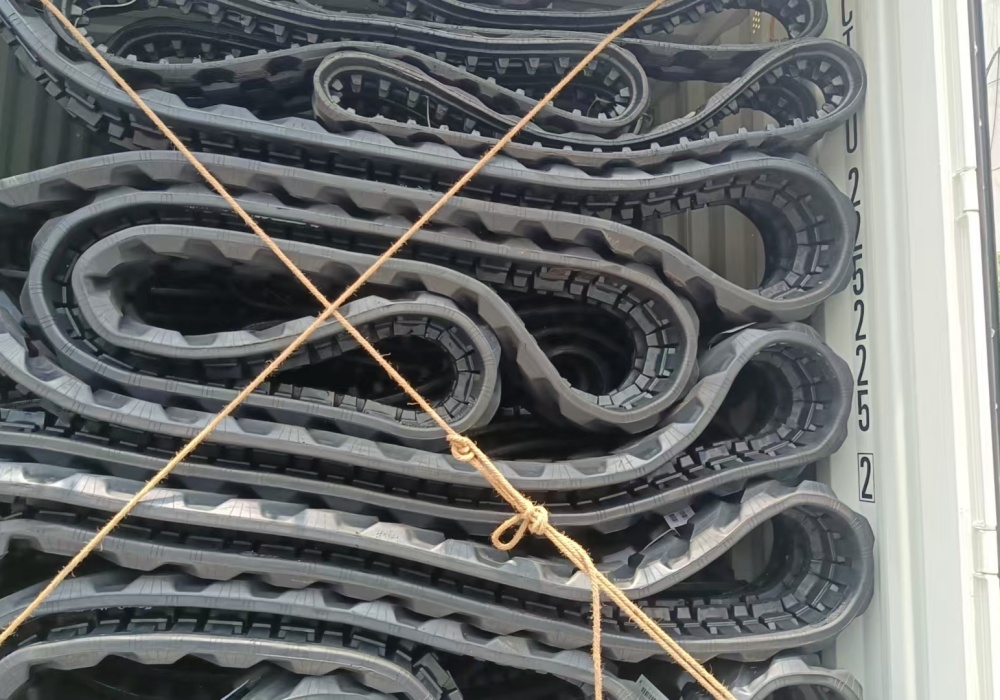
Understanding what excavator rubber tracks are is the first step in optimizing a fleet for sensitive environments. These tracks are engineered with continuous steel cords and forged iron cores, all encased in an advanced, cut-resistant rubber compound. By utilizing continuous steel cords rather than older overlapping joints, modern tracks achieve a measurable increase in tensile strength, preventing stretching over time. This structural integrity virtually eliminates the risk of sudden track breakage under heavy loads or high-torque turns. Furthermore, the specialized rubber casing provides the flexibility needed to traverse uneven terrain without the aggressive, tearing bite of bare metal. However, operators must account for environmental hazards: prolonged exposure to harsh chemicals, oils, or solvents—common in hazmat cleanup work—can degrade rubber compounds prematurely if not properly managed.
How Rubber Tracks Help Protect Roads and Surfaces
The primary mechanism by which these tracks protect roads and surfaces is through superior ground pressure distribution. A standard mini-excavator equipped with low-impact rubber tracks distributes its weight efficiently, exerting ground pressure often as low as 3 to 5 psi (20–35 kPa), compared to traditional steel alternatives that can easily exceed 10 psi. Because the machine’s footprint is so light, it can drive over established turf, decorative concrete, and delicate environmental remediation sites without causing structural cracking or severe soil compaction. This low ground pressure is vital for preserving the delicate hydrology and root networks in ecological cleanup zones.
How to Compare Rubber Tracks with Steel Tracks
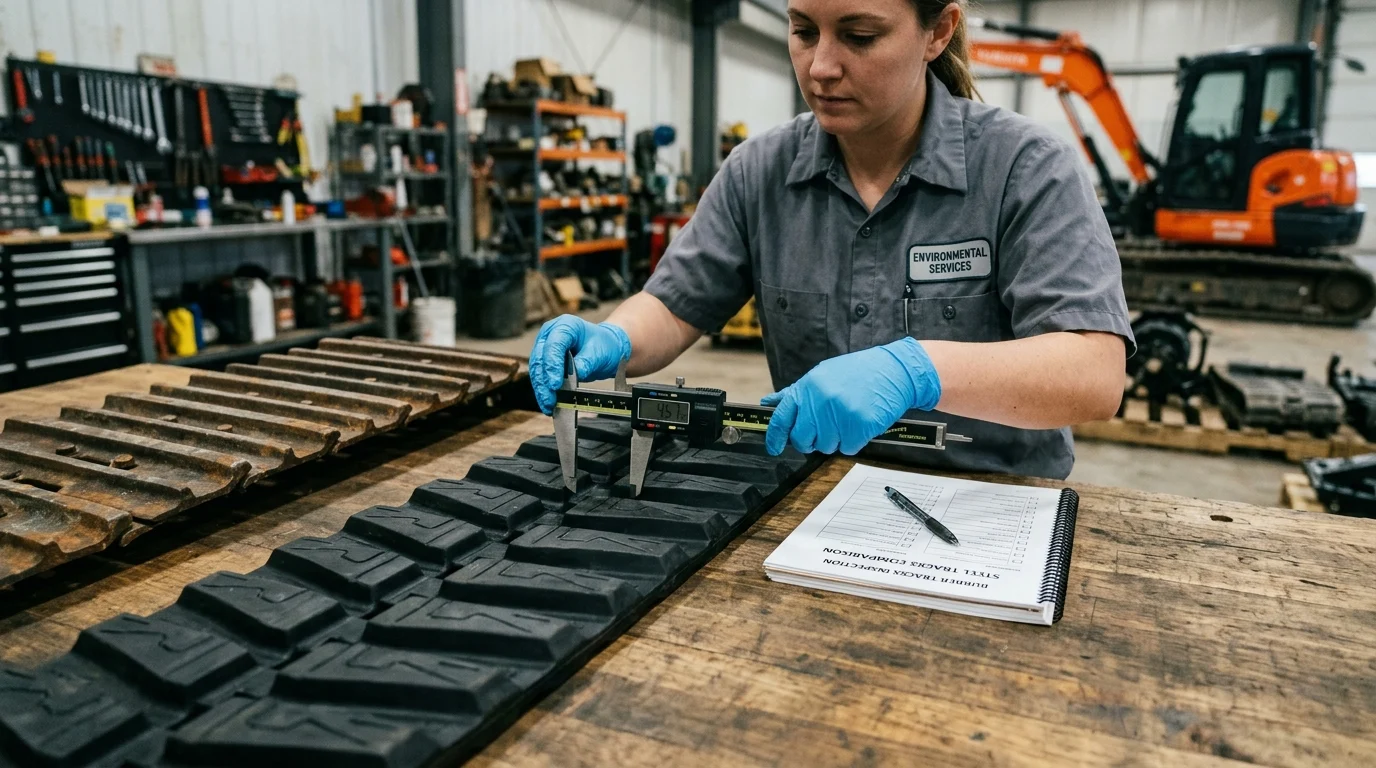
Optimizing equipment requires weighing the benefits of rubber against traditional steel tracks to manage long-term operating costs and meet strict project compliance standards. Understanding the trade-offs between these two materials is essential before deploying machinery to a site.
Key Performance Factors to Compare
When comparing key performance factors, durability, operator comfort, and environmental impact are the primary considerations. Steel tracks boast an impressive lifespan, often exceeding 2,000 to 3,000 operating hours in highly abrasive conditions like demolition rubble or jagged rock. However, rubber tracks excel in noise and vibration reduction. Operators experience noticeably less cabin vibration, minimizing fatigue over a long shift. Additionally, rubber dampens noise emissions significantly—often reducing ambient noise by 10 to 15 dB compared to steel clanking on pavement—a critical compliance factor when operating in residential zones with strict limits.
The primary trade-offs involve lifespan, cost, and vulnerability. Rubber variants typically yield 1,000 to 1,500 hours and often carry a higher upfront price per hour of operational life. Their longevity heavily depends on operator skill, terrain, and temperature, as rubber compounds can be sensitive to extreme heat or cold. Rubber tracks are vulnerable to cuts from sharp debris, rebar, and demolition waste, making them unsuitable for heavy rock or demolition work. They can also run hotter and wear faster on rough terrain, and they are prone to de-tracking on steep side slopes if tension is set incorrectly.
Rubber vs Steel Track Comparison Table
To simplify the decision-making process, a standardized comparison matrix is useful. The table below outlines the primary differences to consider before deploying machinery to a site.
| Feature/Metric | Rubber Tracks | Steel Tracks |
|---|---|---|
| Average Lifespan | 1,000 – 1,500 hours | 2,000 – 3,000+ hours |
| Ground Pressure | Low (approx. 3–5 psi) | High (often >10 psi) |
| Surface Damage | Minimal to None | Severe on hard surfaces |
| Vibration/Noise | Low (reduces noise by ~10-15 dB) | High |
| Upfront Cost | Lower initial cost, higher cost per hour | Higher initial cost, lower cost per hour |
| Maintenance Frequency | High (frequent tension checks needed) | Low |
| De-tracking Risk | Moderate (sensitive to tension & side slopes) | Low |
| Temperature Sensitivity | High (degrades in extreme heat/cold) | Low to None |
| Best Application | Turf, asphalt, wetlands, urban sites | Rocky terrain, demolition, heavy abrasive work |
By consulting this matrix, project managers can quickly determine which undercarriage configuration will yield the highest return on investment for specific project parameters, ensuring a balance between durability and site protection.
How to Choose and Deploy Excavator Tracks
Selecting the right undercarriage components requires actively evaluating physical specifications and material quality to ensure the tracks perform reliably under load. A poor selection can lead to premature de-tracking, accelerated wear on the undercarriage, and costly project delays during tight cleanup schedules.
How to Evaluate Fitment, Tread Pattern, and Rubber Quality
Evaluate fitment using the industry-standard sizing formula: Width x Pitch x Number of Links. For instance, a common compact excavator might require a 300×52.5×84 track. Installing a track with an incorrect pitch will rapidly degrade the drive sprocket. Next, assess the tread pattern based on the environment. A block pattern offers excellent durability and a smooth ride on hard surfaces like asphalt, while a C-lug design provides superior traction and self-cleaning properties in mud, wet clay, or marshy wetland restoration sites.
Finally, rubber quality is non-negotiable. Look for tracks manufactured with a high ratio of natural to synthetic rubber and a substantial factory tread depth to ensure adequate grip throughout the track’s operational life. Beyond purchase criteria, proper maintenance is essential to maximize this lifespan. Operators should regularly adjust track tension, check sprocket alignment, and avoid spinning turns on abrasive surfaces to prevent premature wear and de-tracking.
When Low-Impact Rubber Tracks Are the Best Choice
Low-impact rubber tracks are a highly effective choice when site conditions dictate minimal surface disturbance and the cost of site restoration
Key Takeaways
- Use low-impact rubber tracks on cleanup sites where protecting asphalt, turf, wetlands, root systems, or decorative concrete is a project priority.
- Select rubber tracks when ground pressure matters, since some mini-excavators can operate at about 3 to 5 psi compared with steel tracks that may exceed 10 psi.
- Choose rubber tracks for urban or residential work when reducing noise by roughly 10 to 15 dB can help meet site restrictions.
- Expect rubber tracks to last about 1,000 to 1,500 operating hours, while steel tracks may reach 2,000 to 3,000 hours in abrasive demolition or rocky environments.
- Inspect and clean rubber tracks after hazmat or contaminated-soil work because oils, solvents, and harsh chemicals can shorten rubber compound life.
Frequently Asked Questions
Why are rubber tracks useful during environmental cleanup?
Rubber tracks spread machine weight over a wider contact area, reducing rutting, soil compaction, and surface damage. This helps protect wetlands, turf, asphalt, decorative concrete, and remediation zones where minimizing disturbance is part of the project requirement.
How much ground pressure can low-impact rubber excavator tracks exert?
Many mini-excavators with low-impact rubber tracks can exert about 3 to 5 psi, depending on machine weight and track size. That is often far lower than steel-track setups, which can exceed 10 psi on hard or sensitive surfaces.
Do rubber tracks last as long as steel tracks?
Usually no. Steel tracks may last 2,000 to 3,000 hours in abrasive conditions, while rubber tracks often provide about 1,000 to 1,500 hours. Rubber is often chosen for surface protection, lower noise, and operator comfort rather than maximum lifespan.
Can rubber tracks reduce jobsite noise?
Yes. Rubber tracks can reduce noise by about 10 to 15 dB compared with steel tracks on pavement. This makes them valuable for urban renovation, residential work, schools, hospitals, and cleanup sites with noise restrictions.
What are modern excavator rubber tracks made of?
Modern rubber tracks typically use continuous steel cords and forged iron cores encased in cut-resistant rubber. This construction improves tensile strength, reduces stretching, and helps prevent sudden track failure under heavy loads.

Post time: Sep-21-2026