Why Choose DV450x86 Skid Steer Loader Tracks
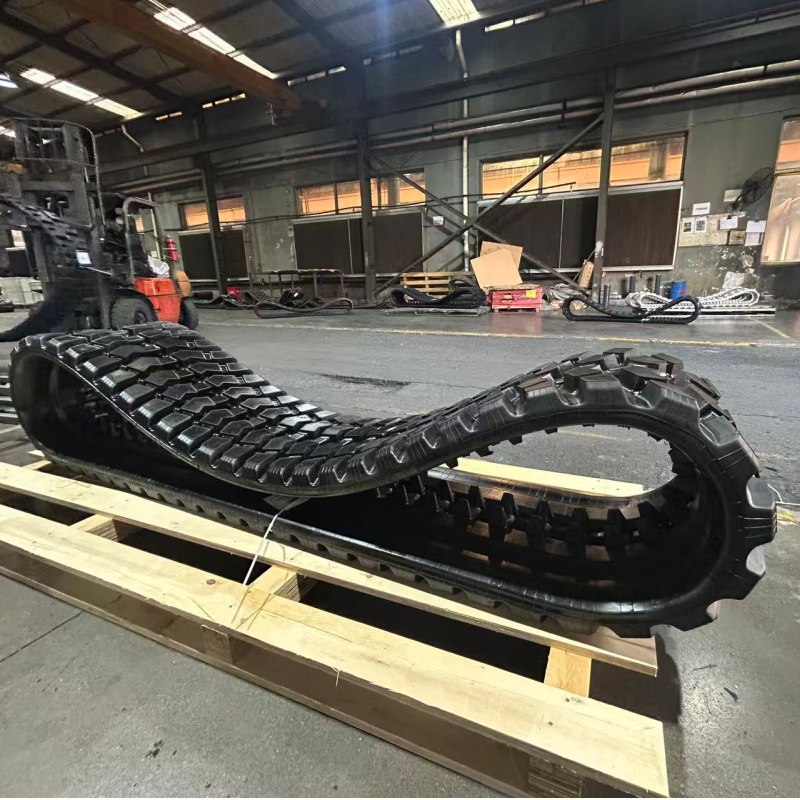
For fleet managers, equipment reliability under severe stress is paramount. Upgrading to specialized Skid Steer Loader Tracks offers a strategic advantage for high-utilization fleets. The DV450x86 profile, engineered for high-horsepower compact track loaders, systematically addresses the primary failure modes observed in standard aftermarket tracks: edge slicing, steel cord snapping, and premature tread wear.
DV450x86 Rubber Track Size and Fit
The “450×86″ nomenclature dictates a precise track geometry that is critical for undercarriage compatibility and load distribution. These tracks are designed for machines requiring a 450 mm (17.7 inches) track width and an 86 mm pitch between the drive links. Depending on the specific skid steer model, the required link counts typically range from 52 to 58. Operators should always verify these specifications against their OEM undercarriage manual before ordering, as these tracks are not universally compatible with all machines.
This exceptionally wide 450 mm footprint distributes the machine’s operating weight efficiently, often dropping the ground pressure down to a typical 4.0 to 4.5 psi range, depending on the machine’s weight. By achieving this low ground pressure profile, operators can prevent severe rutting on soft turf and maximize flotation in deep mud without sacrificing lateral traction. However, operators should note that this wider footprint may increase overall transport width, cause more ground disturbance during tight turns on sensitive surfaces, and is incompatible with machines designed strictly for narrower undercarriages.
Key Durability Features
When evaluating track longevity, it is important to look past the exterior tread and examine the internal construction. DV450x86 tracks utilize continuous wound steel cord technology. This design eliminates the overlapping spliced joints found in standard variants, which act as stress risers under tension and are a primary cause of catastrophic track failures. Furthermore, the tracks integrate drop-forged steel metal cores treated with a specialized bonding adhesive, ensuring the rubber does not delaminate under high-torque, counter-rotation maneuvers.
Instead of relying on a single tensile strength metric, these premium tracks utilize high-tensile steel cabling paired with a specialized 70/30 natural-to-synthetic rubber compound. This specific ratio provides the necessary elasticity to resist chunking and tearing, even when operating on jagged demolition debris or broken concrete.
DV450x86 Tracks vs Standard Skid Steer Tracks
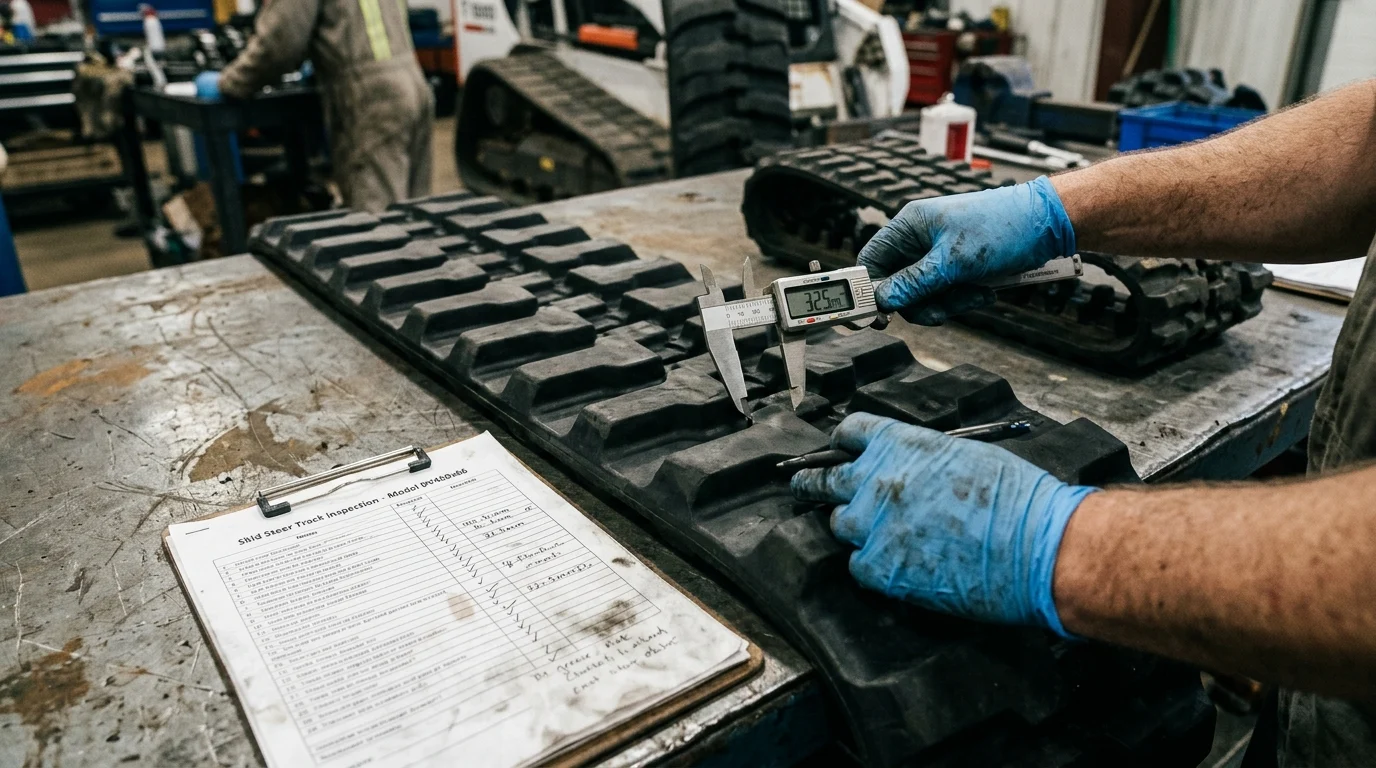
In comprehensive lifecycle cost analyses on earthmoving equipment, the distinction between standard replacement rubber tracks and the advanced DV450x86 profile becomes apparent. Standard tracks vary widely in quality but remain a practical, cost-effective choice for low-utilization, low-abrasion applications where premium features are unnecessary. However, the DV450x86 is intentionally engineered to optimize the total cost of ownership in demanding environments by extending service intervals and preventing mid-shift failures.
Tread Life and Performance Comparison
Standard tracks typically degrade more rapidly under high-abrasion conditions, whereas the DV450x86 profile maintains its tread depth significantly longer due to an optimized vulcanization process and thicker carcass.
To illustrate the financial impact, consider a hypothetical Total Cost of Ownership (TCO) scenario: A standard track might cost $1,500 and last 800 hours, yielding a base cost of $1.87 per hour. A premium DV450x86 track might cost $2,200 but last 1,600 hours, dropping the base cost to $1.37 per hour. When factoring in the avoided costs of mid-shift failures—where unscheduled downtime and emergency installation labor can easily exceed $150 per hour—the return on investment of the premium track becomes clear.
Note: The defect rate and lifespan figures below are manufacturer-provided estimates; actual results will vary widely based on machine weight, specific application, labor rates, and regional jobsite conditions.
| Specification / Metric | Standard Tracks | DV450x86 Tracks |
|---|---|---|
| Typical Lifespan | 800 – 1,000 hours | 1,500 – 1,800 hours |
| Estimated Cost per Hour | $1.85 – $2.10 | $1.20 – $1.45 |
| Steel Cord Construction | Overlapping / Spliced | Continuous Wound |
| Reported Defect Rate | ~4.5% | < 0.8% |
Best Applications and Jobsite Conditions
The DV450x86 configuration is best deployed in environments that aggressively attack undercarriage components. These tracks excel in demolition sites, scrap recycling yards, and forestry applications where the risk of sidewall slashes from exposed rebar or jagged rocks is exceptionally high.
The specialized rubber compound maintains its structural flexibility across a broad thermal operating band, typically performing reliably from -20°C to 50°C (-4°F to 122°F). In contrast, standard tracks are often more suitable for lighter landscaping, snow removal, or loose dirt applications where abrasive elements are minimal and the risk of puncture is lower.
Selection, Installation, and Maintenance Tips
Procuring premium rubber tracks is only the first step in a comprehensive asset management strategy. To ensure fleets extract the maximum potential lifespan from DV450x86 tracks—and to avoid voiding OEM undercarriage warranties—operators must adhere to rigorous installation and proactive maintenance protocols. Installation should be performed by experienced technicians to ensure proper alignment. It is crucial to remember that premium tracks cannot compensate for poor maintenance or mismatched machine sizing; neglecting the undercarriage inevitably leads to accelerated wear, regardless of the track’s baseline durability or premium construction.
Inspection, Tensioning, and Cleaning
Proper track tensioning is one of the most critical maintenance variables to monitor. After installing DV450x86 tracks, operators should run the machine for 30 minutes to allow the rubber to seat properly against the sprockets, and then readjust the idler tension. A typical track sag is between 1.0 and 1.5 inches when the center of the machine is elevated, though this depends heavily on specific OEM guidelines and jobsite conditions.
To maintain optimal performance, implement a routine maintenance checklist:
- Daily: Power-wash mud and debris from the undercarriage. Packed mud or gravel drying overnight in the sprocket teeth effectively increases the sprocket’s operating diameter, leading to severe tension spikes that can exceed the steel cord’s yield strength.
- Weekly: Check track sag and adjust idler tension. Anything tighter causes premature bearing wear on the hydrostatic drive motors, while excessive slack risks de-tracking on steep side slopes.
Key Takeaways
- Verify the 450 mm width, 86 mm pitch, and correct 52 to 58 link count against the OEM manual before ordering DV450x86 tracks.
- Use the 450 mm footprint to reduce ground pressure to roughly 4.0 to 4.5 psi and improve flotation in mud or soft turf.
- Choose continuous wound steel cord construction to reduce splice-related stress points that can lead to sudden track failure.
- Select tracks with drop-forged steel cores and strong rubber bonding when frequent high-torque counter-rotation is part of the job.
- Match premium DV450x86 tracks to high-abrasion, high-utilization work where longer tread life and fewer failures can lower total operating cost.
Frequently Asked Questions
What does the DV450x86 track size mean?
DV450x86 refers to a 450 mm track width and an 86 mm pitch between drive links. Link counts typically range from 52 to 58 depending on the machine, so operators should confirm fitment with the OEM undercarriage manual before ordering.
How do DV450x86 tracks reduce ground pressure?
The wide 450 mm footprint spreads machine weight over a larger contact area, often reducing ground pressure to about 4.0 to 4.5 psi depending on machine weight. This improves flotation in mud and helps reduce rutting on soft ground.
Are DV450x86 tracks compatible with every skid steer loader?
No. These tracks are designed for machines requiring a 450 mm width, 86 mm pitch, and the correct link count. They are not suitable for machines built for narrower undercarriages or different drive-link geometry.
Why is continuous wound steel cord important?
Continuous wound steel cord removes overlapping spliced joints, which can become stress points under tension. This helps reduce the risk of steel cord snapping and catastrophic track failure during demanding work.
What operating conditions are DV450x86 tracks best suited for?
They are best suited for high-horsepower compact track loaders working in abrasive, high-stress environments such as demolition, broken concrete, mud, and severe jobsite conditions where durability and uptime matter.
Post time: Jul-07-2026