Introduction
Choosing the right skid steer rubber tracks affects far more than ride quality: it shapes uptime, operating cost, and how well your fleet performs on abrasive, uneven, or high-torque job sites. This article explains what separates premium tracks from lower-grade options, from steel cord construction to rubber compound quality and tread design. You’ll learn which features most influence traction, durability, and replacement intervals, and how a reliable supplier can help reduce downtime and protect your equipment investment. With that foundation, the rest of the guide breaks down the technical factors and buying considerations that matter most for fleet operators.
How to Compare Skid Steer Rubber Track Suppliers
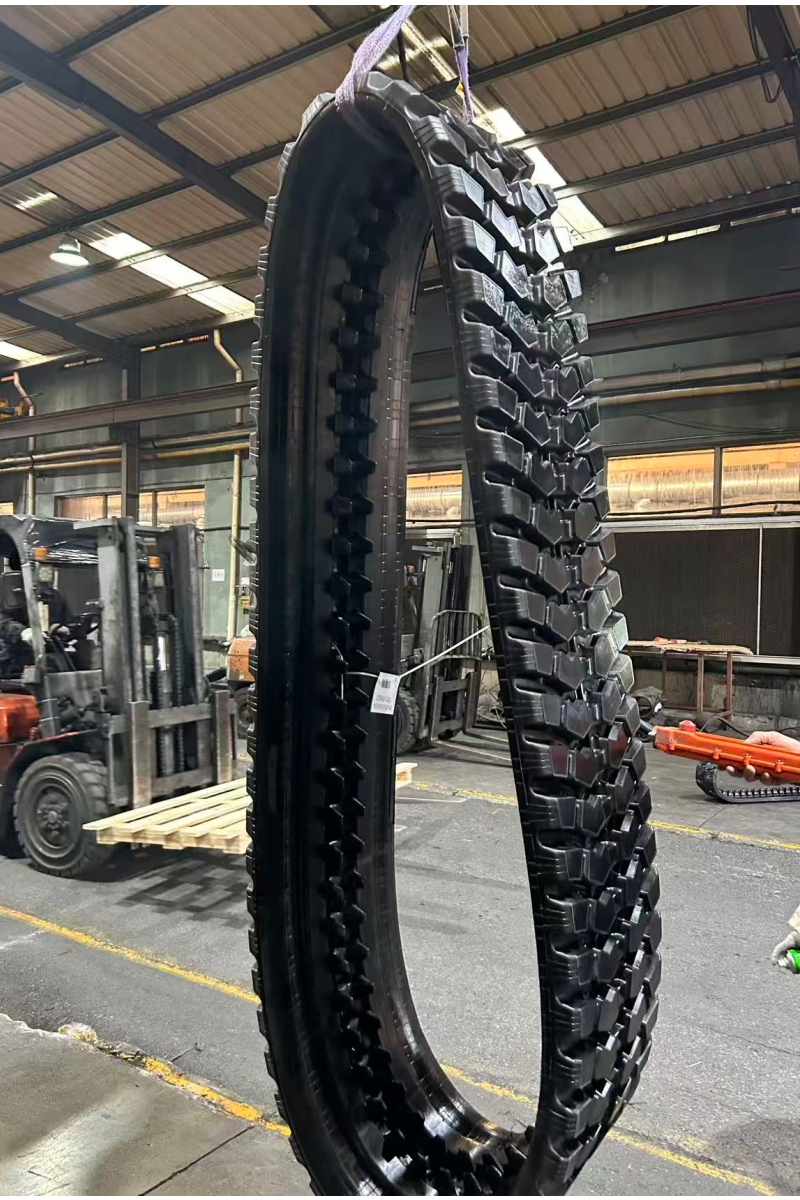
Procuring tracks at scale requires evaluating suppliers not just on unit pricing, but on manufacturing consistency and supply chain robustness. Fleet managers must navigate a global marketplace of original equipment manufacturers (OEMs) and aftermarket producers, distinguishing between top-tier manufacturing facilities and low-quality assembly operations. A rigorous supplier qualification process ensures that replacement parts meet or exceed OEM specifications, safeguarding the fleet’s operational efficiency.
Specification and fit criteria
Proper fitment is non-negotiable and relies on precise measurements of width, pitch, and link count. A supplier must demonstrate strict adherence to dimensional tolerances to prevent premature undercarriage wear. Discrepancies of even a few millimeters in pitch can cause sprocket misalignment, leading to rapid degradation of both the track and the drive system.
Fleet managers must also ensure the supplier offers the correct track width for their specific operational environment. The table below illustrates the standard comparative metrics between narrow and wide track configurations for mid-sized skid steers:
| Specification | Width (mm) | Average Ground Pressure (psi) | Primary Application Environment | Typical Weight per Track (kg) |
|---|---|---|---|---|
| Standard / Narrow | 320mm | 5.0 – 5.5 | Hard surfaces, tight spaces, general construction | 140 – 160 |
| Wide / Flotation | 450mm | 3.5 – 4.0 | Mud, snow, sand, sensitive landscaping | 190 – 220 |
Suppliers must provide comprehensive technical data sheets verifying these specifications to ensure compatibility with the fleet’s existing undercarriage geometry.
Supplier reliability factors
Supply chain metrics are just as critical as product specifications. When evaluating supplier reliability, fleet managers must scrutinize Minimum Order Quantities (MOQs), production lead times, and warranty fulfillment protocols. A reliable industrial supplier should be capable of fulfilling bulk orders—such as a standard 20-foot container holding approximately 100 to 120 tracks—with a lead time not exceeding 30 to 45 days.
Warranty terms serve as a direct proxy for manufacturer confidence. Top-tier suppliers typically offer a 12-to-18-month pro-rated warranty covering manufacturer defects, with clear stipulations regarding operating hours (often capped at 1,000 hours). Furthermore, suppliers should maintain a transparent QA/QC process, ideally backed by ISO 9001 certification, ensuring that every batch undergoes rigorous tensile, abrasion, and dimensional testing before export.
How Fleet Managers Can Choose the Right Tracks
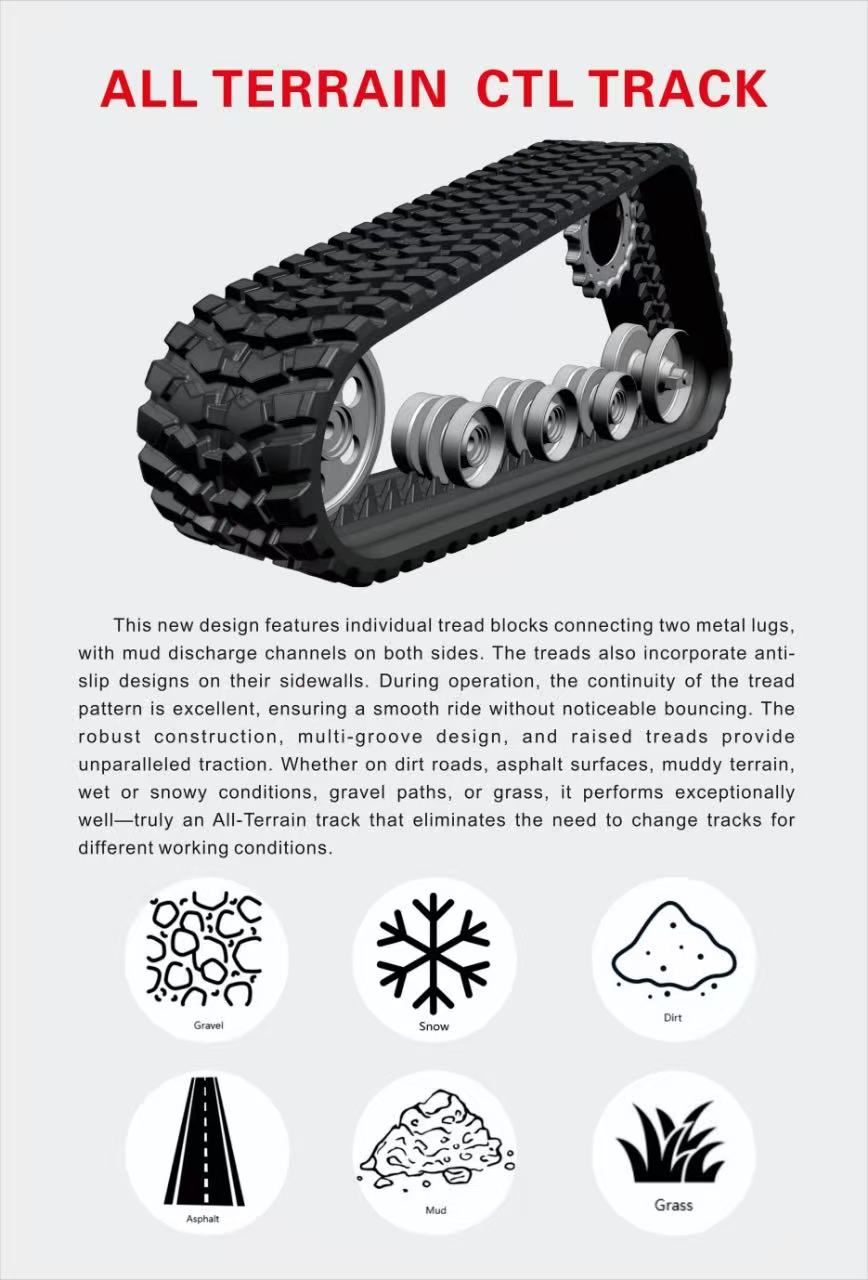
Transitioning from supplier evaluation to active procurement requires a structured methodology to ensure the right skid loader tracks are deployed to the right machines. Fleet managers must synchronize replacement schedules with preventative maintenance programs to avoid catastrophic field failures. Standardizing replacement intervals based on telemetry data and operating hours—typically between 1,000 and 1,500 hours depending on surface abrasiveness—allows for predictable budgeting and inventory management.
Sourcing and replacement steps
The sourcing protocol should begin with a comprehensive audit of the skid steer’s undercarriage components. Installing premium tracks on severely worn sprockets, idlers, or rollers can reduce the lifespan of the new track by up to 50%. Therefore, procurement steps must include assessing the entire undercarriage system and sourcing replacement metal parts concurrently if wear exceeds 15% of original specifications.
Once the technical requirements are established, fleet managers should leverage volume forecasting. By aggregating the annual track consumption across the entire fleet, procurement teams can negotiate favorable terms on bulk shipments. Establishing a staggered delivery schedule with the chosen supplier ensures that regional depots maintain adequate safety stock without tying up excessive working capital in inventory.
Final selection criteria
The ultimate procurement decision must balance upfront capital expenditure against projected lifecycle value.
Key Takeaways
- The most important conclusions and rationale for Skid Steer Rubber Tracks
- Specs, compliance, and risk checks worth validating before you commit
- Practical next steps and caveats readers can apply immediately
Frequently Asked Questions
How do premium skid steer rubber tracks lower fleet costs?
They reduce downtime and replacement frequency by lasting longer under heavy loads. Better compounds and steel reinforcement also help protect sprockets and undercarriage parts.
How do I confirm the right skid steer track size?
Match width, pitch, and link count to your machine model. At Gator Track, you can also provide the model code for fitment support before ordering.
Which track width is better for mud or soft ground?
Wider flotation tracks are usually better. They spread machine weight, lower ground pressure, and improve traction in mud, snow, sand, and sensitive surfaces.
What should I look for in a skid steer track supplier?
Choose a supplier with consistent manufacturing, accurate fitment data, and dependable availability. Gator Track also offers one-stop rubber track support across many sizes and model codes.
What makes Gator Track skid steer loader tracks durable?
Gator Track focuses on quality manufacturing, reinforced track construction, and broad fitment coverage. Its factory-backed approach is designed to deliver dependable traction and longer service life.
Post time: May-13-2026