Rubber Excavator Track Performance Basics
Optimizing undercarriage performance requires a precise balance between raw tractive effort and environmental preservation. Navigating the complex mechanical dynamics of continuous rubber tracks ensures maximum machine uptime without destroying finished surfaces—a challenge that requires a deep understanding of polymer engineering and ground interaction.
Key Terms and Performance Factors
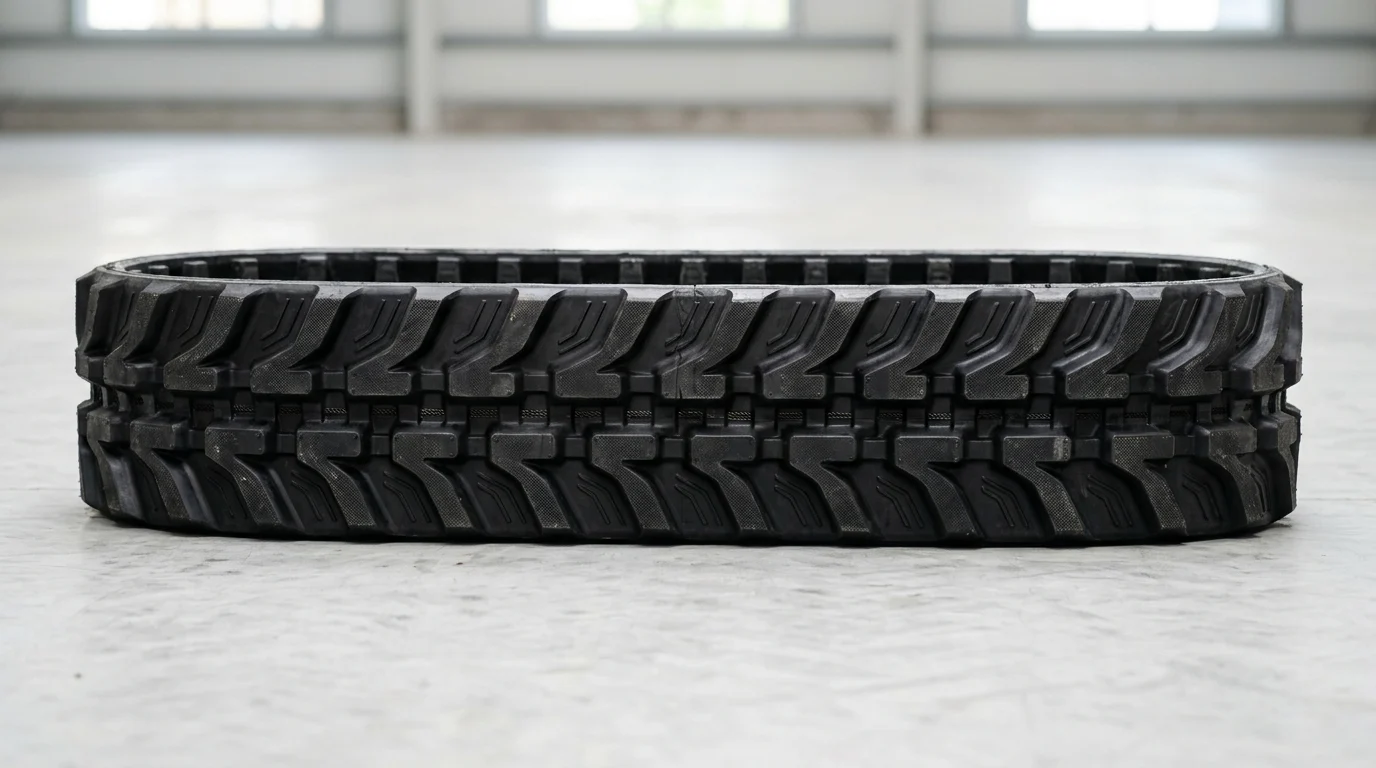
Evaluating track performance begins with dimensional specifications: width, pitch, and the number of links. Pitch—the distance between the centers of two consecutive drive lugs—typically ranges from 48mm for compact units up to 163mm for mid-sized excavators. Tracks engineered with continuous steel cord technology are often prioritized; in practice, eliminating overlapping cord joints can reduce catastrophic track breakage by up to 40% under high-torque applications, though this depends heavily on load and terrain. Furthermore, the rubber compound’s durometer rating, usually sitting between 65 and 70 Shore A, dictates the track’s resistance to chunking while remaining pliable enough to grip uneven surfaces.
Operating Conditions That Affect Traction
Operating environments directly dictate traction outcomes. When machines are deployed on wet clay or deep mud, the coefficient of friction drops significantly, demanding aggressive tread patterns to maintain propulsion. Conversely, on cured concrete or asphalt, smooth operation relies on maximizing the rubber’s contact patch. Rubber tracks excel by distributing the machine’s operating weight across a larger footprint, typically yielding a ground pressure of just 3 to 5 psi for a standard 3.5-ton mini excavator.
However, excavator rubber tracks are not appropriate for all conditions. A clear decision framework should exclude them from abrasive quarry or demolition use, prolonged high-speed travel, extreme heat or cold, steep rocky terrain, and machines above the recommended rubber-track weight class. In these harsh environments, lug degradation accelerates and the track’s structural integrity is quickly compromised.
Rubber Tracks vs Steel Tracks
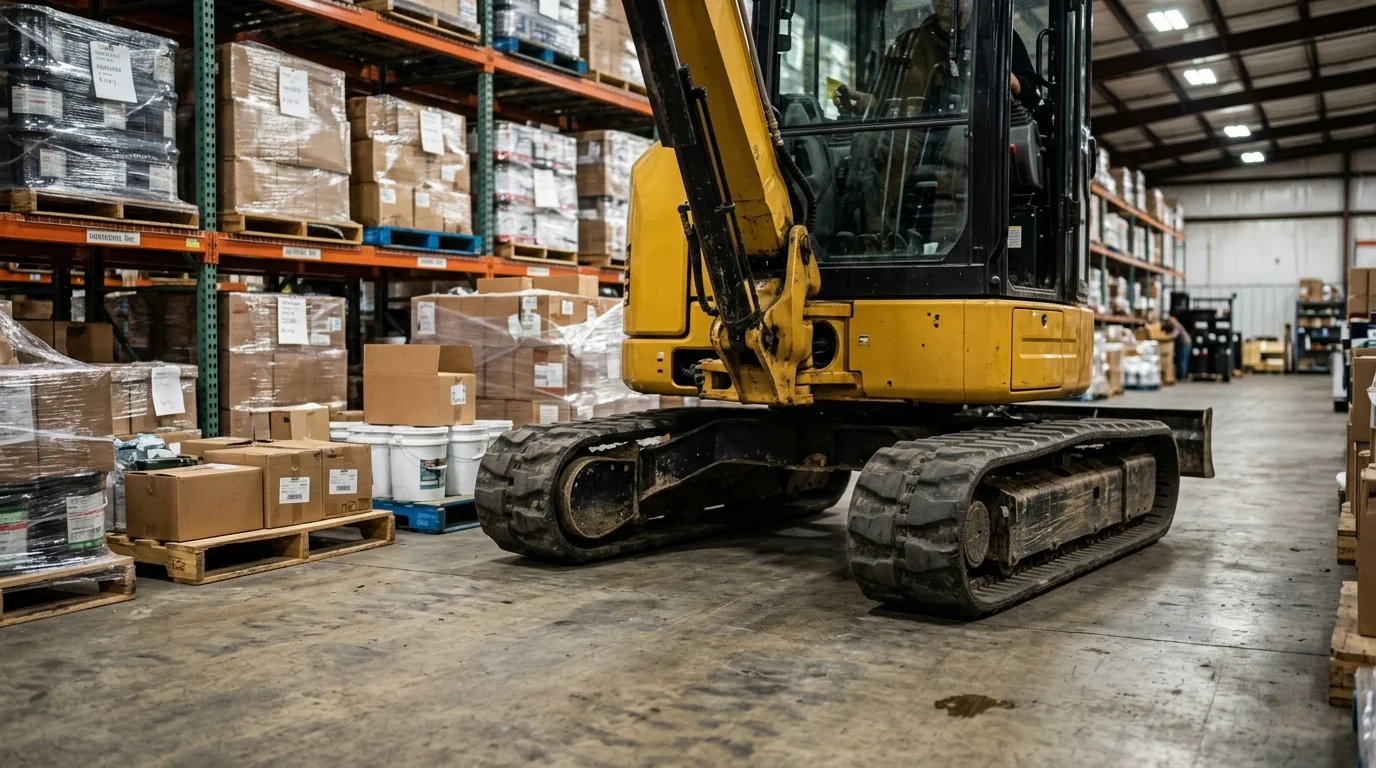
Operators frequently face the operational dilemma of choosing between rubber and steel undercarriages. While steel has historically dominated heavy earthmoving, advances in polymer engineering have positioned rubber as the superior choice for urban, residential, and utility projects where collateral damage must be minimized and environmental regulations are strictly enforced.
Traction, Durability, and Surface Protection
The primary trade-off is durability versus surface protection. Steel tracks offer unmatched longevity in abrasive environments, but they will instantly pulverize a concrete driveway. Rubber tracks absorb shock, which can reduce whole-body vibration for operators by up to 50% at travel speeds of 4 to 5 km/h. This directly translates to reduced operator fatigue and lower noise emissions, often dropping operating noise by 5 to 10 decibels. These performance figures, however, will vary based on machine weight, load, terrain, and maintenance practices.
| Metric | Rubber Tracks | Steel Tracks |
|---|---|---|
| Average Ground Pressure | 3 – 5 psi | 6 – 9 psi |
| Surface Damage Risk | Low (non-marking available) | Extremely High |
| Typical Lifespan | 1,200 – 1,500 hours | 3,000+ hours |
| Vibration Transfer | Low | High |
Machine Specs and Tread Pattern Considerations
Machine specifications heavily influence tread pattern selection. For excavators under 10 metric tons, spec sheets and industry standards often recommend rubber excavator tracks featuring C-lug or block tread designs. The C-lug pattern provides a staggered edge that excels in lateral stability on slopes exceeding 15 degrees, while block patterns maximize the flat contact area to prevent turf tearing during zero-turn maneuvers. For machines approaching the 12 to 15-ton threshold, the internal steel embedment must be substantially thicker to handle increased shear forces. At this weight class, the risk of track derailment increases, requiring strict matching of the track’s internal guide lugs with the specific contour of the machine’s bottom rollers and idler flange.
Selecting, Maintaining, and Replacing Tracks
Lifecycle management of undercarriage components is essential for controlling hourly operating costs. Track selection and maintenance should be treated as a proactive strategy to prevent mid-project equipment failures and expensive emergency downtime.
Sizing and Selection Steps
Procuring replacement rubber tracks relies on a standardized sizing formula: Track Width (mm) × Pitch (mm) × Number of Links. For example, a track stamped with “300 x 52.5 x 80″ indicates a 300mm width, a 52.5mm pitch, and 80 internal steel links. However, operators should always verify OEM undercarriage manuals, sprocket and roller compatibility, and local dealer guidance before relying solely on this formula. These measurements must align perfectly with the OEM sprocket design; even a pitch tolerance deviation of +/- 2mm can cause accelerated sprocket wear and skipping under heavy loads. Additionally, the track’s internal core profile must be evaluated. Narrow-guide or wide-guide iron cores should be specified based strictly on the excavator’s roller configuration and guide-lug geometry, as an improper fit will inevitably lead to recurring detracking incidents on uneven terrain.
When to Repair or Replace Rubber Tracks
Determining when to replace a track requires rigorous visual and mechanical inspections, alongside routine maintenance like tension checks, cleaning packed material from the undercarriage, avoiding oil and grease contamination, and ensuring proper UV/ozone protection during storage. A high-quality rubber track typically delivers between 1,200 and 1,500 operational hours, though this lifespan is highly dependent on maintenance, heat, and terrain.
While tread depth wearing below 10mm serves as a strong inspection indicator tied to OEM minimums, safe limits vary by slope, soil, load, and local safety rules. Operators must also monitor for exposed continuous steel cords or signs of internal cord damage that are easy to miss from the outside. Once moisture penetrates the rubber casing and reaches the steel, oxidation accelerates rapidly, reducing the track’s tensile strength by over 50% within a matter of weeks. Minor surface cuts or superficial dry rot on the outer rubber can sometimes be monitored, but deep horizontal fissures across the track carcass are a definitive signal for replacement.
Key Takeaways
- Use rubber excavator tracks for residential, urban, landscaping, and utility jobs where protecting asphalt, concrete, turf, and finished surfaces is a priority.
- Match the tread pattern to the jobsite, using aggressive lugs for wet clay or mud and broader contact patterns for hard paved surfaces.
- Verify track width, pitch, and link count before replacement, because pitch can range from about 48mm on compact machines to 163mm on mid-sized excavators.
- Avoid rubber tracks in abrasive quarry, demolition, steep rocky, extreme-temperature, or overweight applications where lug wear and structural damage accelerate.
- Maintain correct track tension and operating habits to help rubber tracks reach their typical 1,200- to 1,500-hour service life.
- Choose rubber tracks when lower vibration and noise matter, as they can reduce vibration significantly and cut operating noise by roughly 5 to 10 decibels.
Frequently Asked Questions
When should I choose rubber excavator tracks instead of steel tracks?
Choose rubber tracks for urban, residential, landscaping, utility, and road-adjacent work where surface protection, lower noise, and reduced vibration matter. Steel tracks are better for abrasive quarry, demolition, rocky slopes, and other severe-duty environments.
How much ground pressure do rubber tracks typically create?
A standard 3.5-ton mini excavator on rubber tracks commonly produces about 3 to 5 psi of ground pressure, helping protect lawns, asphalt, concrete, and finished surfaces compared with steel tracks.
Do rubber excavator tracks provide enough traction in mud?
Yes, if the tread pattern matches the conditions. Wet clay and deep mud reduce friction, so aggressive tread designs are preferred. On hard surfaces, a larger contact patch and smoother tread can improve stability and surface protection.
How long do rubber excavator tracks usually last? Rubber tracks commonly last around 1,200 to 1,500 operating hours, depending on terrain, machine weight, operator habits, track tension, and maintenance. Steel tracks can exceed 3,000 hours in abrasive heavy-duty work.
What track specifications should I check before buying?
Confirm track width, pitch, and link count against your excavator model. Pitch is the distance between drive lugs and can range from about 48mm on compact machines to 163mm on mid-sized excavators.

Post time: Sep-15-2026