
Rubber Pads for Concrete and Asphalt Work
Tracked excavators and other steel-track machines are often required to travel or work on finished surfaces. On concrete and asphalt, steel track shoes can scratch, chip or mark the pavement, particularly during turning and repositioning. Properly selected rubber pads can help reduce direct steel-to-surface contact while allowing tracked equipment to operate in applications where ground protection matters.
For equipment dealers, fleet managers and contractors, choosing pads involves more than checking whether they fit over the steel shoes. In this guide, we explain common pad configurations, the information to verify before ordering, and operating practices that may help protect paved surfaces. Results depend on the pad, machine, pavement condition and jobsite practices; no pad can guarantee that a surface will remain mark-free in every situation.
What rubber pads do
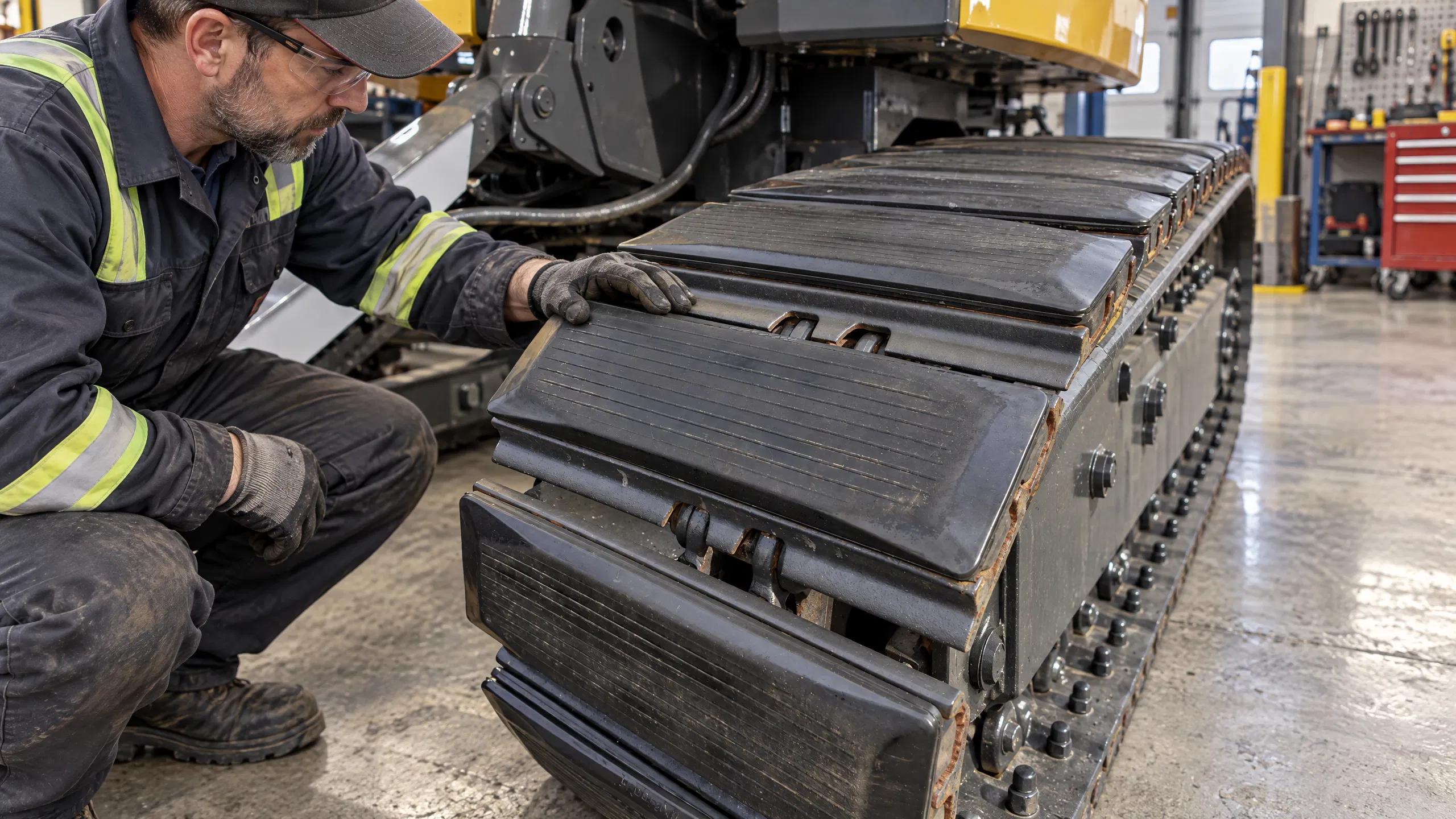
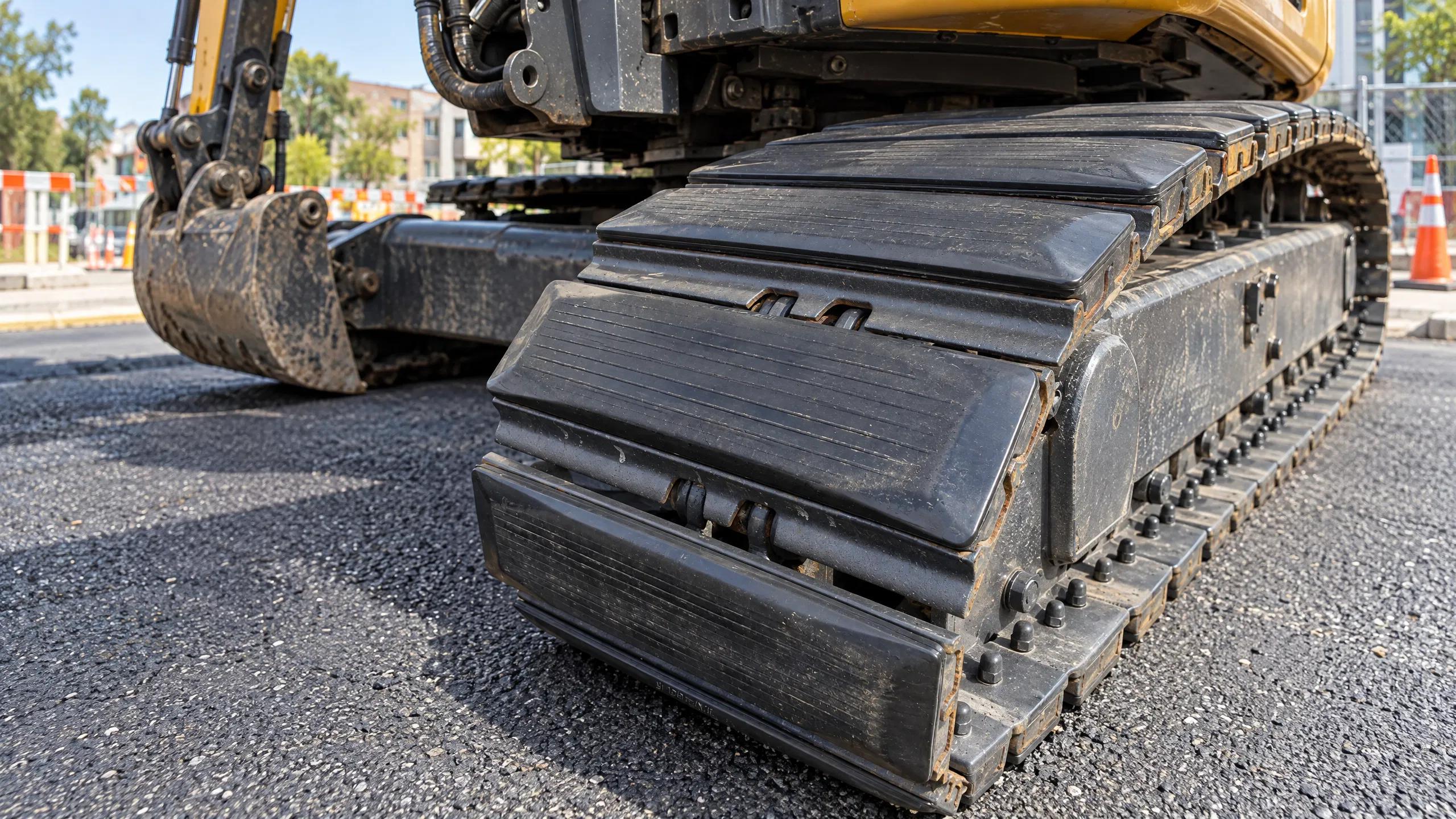
Rubber pads are fitted to the steel track shoes of compatible equipment. Depending on the design, they may attach using bolts, clips or a chain-on arrangement. They provide a rubber contact surface between the steel shoe and the ground. This can help reduce direct metal contact and may be appropriate for work on concrete, asphalt, interlocking pavers and other surfaces where marking is a concern.
These products are different from continuous rubber tracks. With pad systems, the machine retains its steel track chain and individual shoes, while a separate pad is attached to each shoe or to the track assembly according to the system design. Buyers should identify which arrangement the machine uses before comparing products.
Concrete work pads may be considered for equipment that must travel across finished slabs or operate near completed structures. On asphalt, pad selection and operating technique are similarly important: pavement condition, temperature, load and turning behavior can affect the risk of scuffing or damage. Contractors should verify site-specific requirements with the equipment and pad suppliers.
Choose a pad type that fits the machine
Common pad systems include bolt-on, clip-on and chain-on designs. Each has different attachment methods, installation requirements and potential service considerations. A pad intended for one shoe or chain configuration should not be assumed to fit another simply because its width appears similar.
Before sourcing excavator rubber pads, record the machine make and model, serial number, track shoe width and the relevant attachment details. Depending on the system, suppliers may also need the shoe shape, hole pattern, bolt spacing, chain configuration or existing pad part number. Take clear photos of the full undercarriage, the individual steel shoe and any existing attachment points. Photos can help a supplier understand the setup, but they should support—not replace—a fitment check against reliable equipment or manufacturer information.
We recommend confirming pad compatibility in writing before placing an order. Ask the supplier to identify the compatible machine or shoe configuration and provide installation guidance. If the machine has non-standard shoes or has been modified, disclose that information; the original model specification may no longer describe the current setup.
Match pads to the surface and task
The right product depends on the surface, work cycle and machine application. A machine that travels briefly across a finished concrete floor has different requirements from one that repeatedly turns on a hot asphalt surface. Buyers should explain how the equipment will be used, including travel distance, operating load, turning frequency and whether it will move between paved and unpaved areas.
For an asphalt work excavator, particular attention should be paid to temperature, pavement condition and turning practices. Softened or recently laid asphalt may respond differently from cool, mature pavement. Tight turns, counter-rotation or pivoting under load can increase surface stress, even when rubber pads are installed. Where practical and consistent with safe operation, smoother turns and minimizing unnecessary pivoting may help reduce scuffing.
Rubber pads are a tool for surface protection, not a substitute for assessing the work area. Dirt, gravel or sharp debris trapped between the pad and pavement can still scratch or mark a surface. Before moving onto finished pavement, inspect and clean the track area as appropriate, and follow the pad manufacturer’s care instructions. For sensitive or newly finished surfaces, contractors should consider a site-specific protection plan and verify acceptable equipment and travel methods with the project team.
Check the whole track system
Pad performance depends on the condition and compatibility of the entire track system. Inspect steel shoes, fasteners, chain components and the rest of the undercarriage before installation. Damaged shoes, worn attachment points or loose fasteners can compromise fit and may create operational or surface risks.
Use the equipment and pad manufacturers’ instructions for installation, fastener requirements, inspection intervals and any retightening procedure. Do not rely on a generic torque value or maintenance schedule, because requirements vary by machine and pad design. After installation, check that pads are secure and correctly positioned before returning the machine to work. Stop and investigate any loose, displaced or damaged pad rather than continuing operation.
Consider total cost and replacement planning
The lowest unit price is not always the best measure of value for B2B buyers. Compare the pad system’s initial cost, installation time, expected maintenance, replacement availability and the downtime involved in servicing it. Ask suppliers about warranty coverage, lead times, packaging and the availability of individual replacement pads or fasteners.
Dealers and fleet managers can improve purchasing consistency by keeping records of machine configuration, approved pad references, installation dates and inspection findings. For fleets with several machine models, do not assume a single pad specification will work across all units. Standardization can simplify inventory only when compatibility has been confirmed.
A practical purchasing checklist
Before ordering, confirm the exact machine and track-shoe configuration; identify the attachment type; provide dimensions, photos and part references; describe the pavement and duty cycle; and request written fitment confirmation. Also ask for installation and inspection instructions, warranty details and replacement-part availability.
We recommend involving maintenance staff as well as procurement in the selection process. Maintenance teams can provide information about the current undercarriage and operating conditions, while buyers can compare the commercial terms and support offered by suppliers. This gives the supplier a clearer application profile and helps the purchasing team evaluate quotations on a consistent basis.
Conclusion
Rubber pads can help tracked equipment work on paved surfaces by providing a rubber contact layer over compatible steel shoes. Their suitability depends on accurate fitment, pad design, equipment condition and how the machine is operated. We advise buyers to verify the machine configuration, follow manufacturer instructions and treat surface protection as a combination of suitable pads, clean tracks and careful site practices—not as a guarantee against all marking or damage.
Frequently Asked Questions
1. Do rubber pads prevent all damage to concrete or asphalt?
No. They can reduce direct steel-to-surface contact, but debris, pavement condition, machine load and turning behavior can still cause marks or damage.
2. Are bolt-on, clip-on and chain-on pads interchangeable?
Not necessarily. Attachment systems and shoe configurations vary. Confirm compatibility with the machine and pad supplier before ordering.
3. What information should I provide when sourcing excavator rubber pads?
Provide the machine make, model and serial number, track shoe dimensions, attachment details, photos and any existing part numbers. Ask the supplier to verify fitment.
4. Can I use the same pads on concrete and asphalt?
The appropriate pad depends on the specific design, machine and work conditions. Ask the supplier whether the product is approved or recommended for both surfaces and describe the intended duty cycle.
5. What should operators check before working on finished pavement?
Inspect the pads, attachments and track area; remove trapped debris as appropriate; and follow the manufacturer’s operating guidance. Use site-specific precautions for sensitive or recently laid surfaces.

Post time: Nov-05-2026