Rubber tracks are working components, not fit-and-forget parts. Their condition affects machine availability, operating costs and the surfaces equipment can work on. For equipment dealers and fleet managers, a consistent inspection and maintenance process can help identify developing issues before they become unplanned downtime.
In this guide, we outline practical rubber track maintenance steps for mixed equipment fleets. We focus on routine checks, operating conditions, replacement planning and communication with suppliers. Because track construction and machine requirements vary, we recommend using the machine and track manufacturers’ instructions as the primary reference for specifications, adjustment procedures and service limits.
Build a repeatable inspection routine
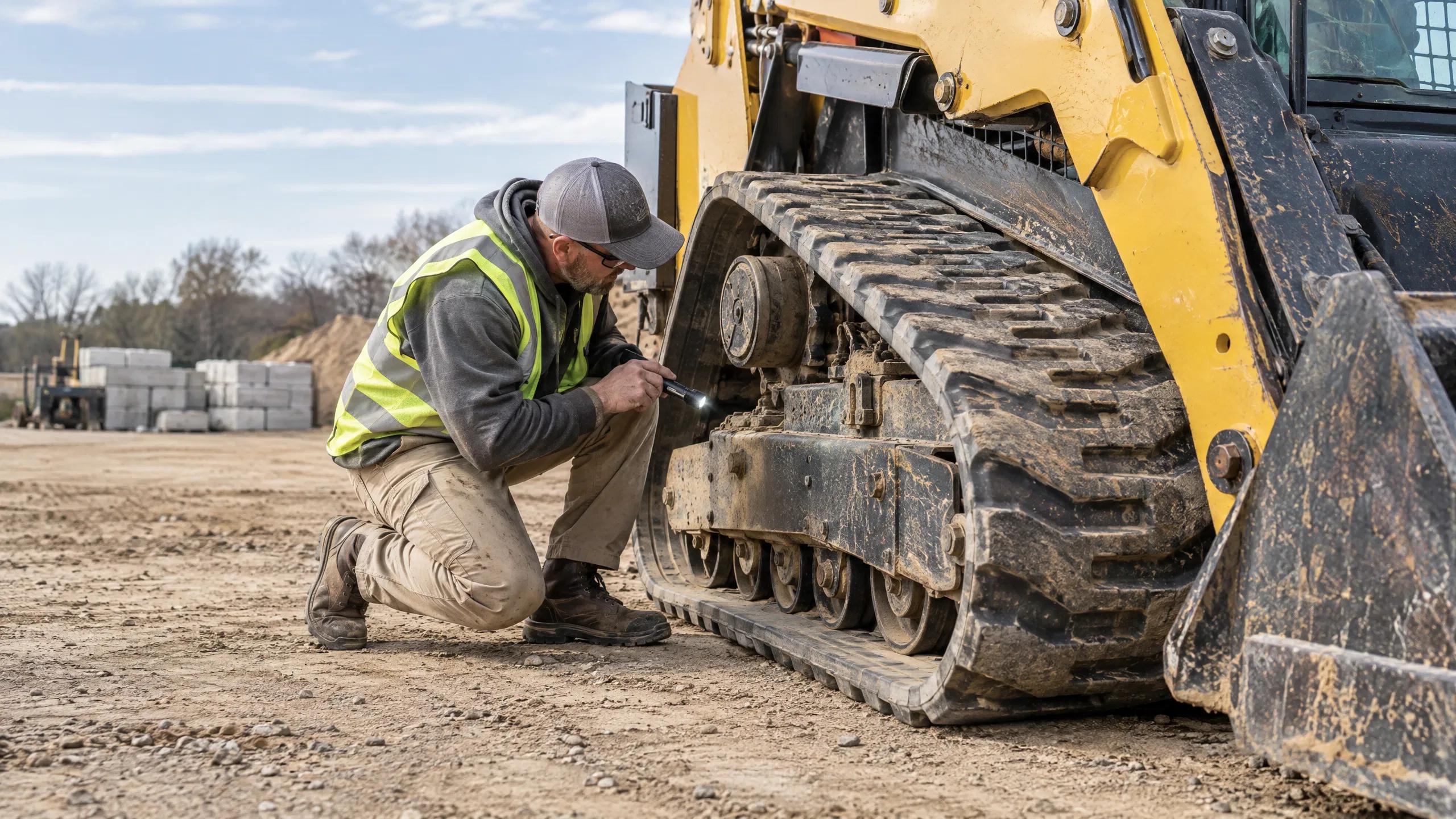
A useful inspection begins with a clear, consistent process. We recommend checking tracks at planned intervals and whenever a machine has worked in unusually abrasive, muddy or debris-heavy conditions. The machine should be parked safely, shut down and secured according to the manufacturer’s instructions before inspection. Staff should never reach near moving components or attempt adjustments without the required training and equipment.
During a visual check, look for cuts, cracks, exposed reinforcement, missing or damaged tread blocks, unusual wear and embedded debris. Examine both sides of the track where accessible, and note any difference between left and right tracks. A single photograph of a concern, recorded alongside the machine ID and operating hours, can help maintenance teams compare changes over time and communicate clearly with a dealer or supplier.
Inspection findings should be recorded consistently. A short checklist might include date, machine hours, working conditions, visible damage, undercarriage observations and any action taken. This creates a maintenance history that can inform replacement planning and support warranty discussions, subject to the supplier’s terms.
Check the full undercarriage, not just the track
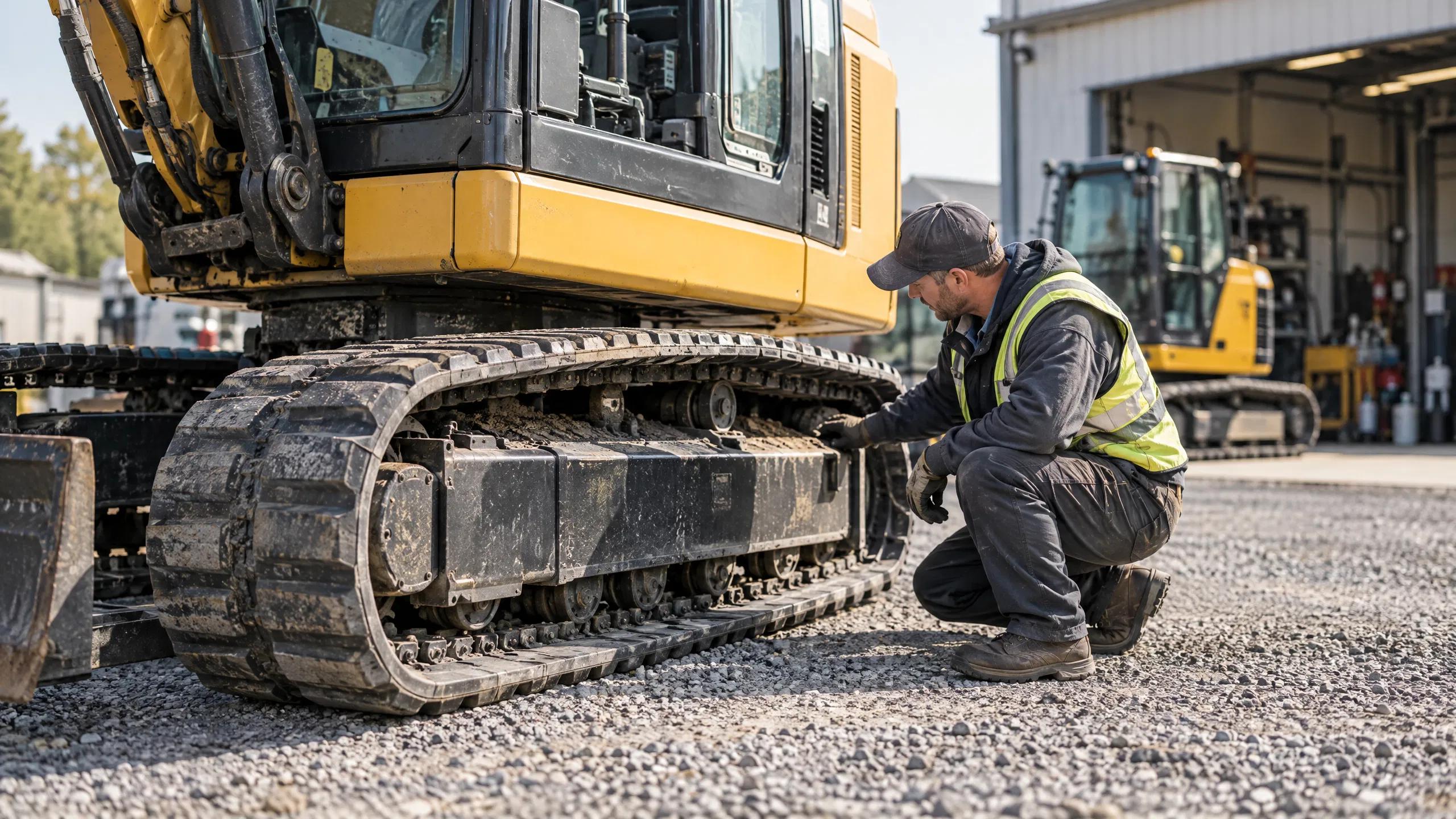
Track wear does not always originate in the rubber itself. Rollers, idlers, sprockets, guides and other undercarriage components influence how the track runs. Worn or damaged components, debris buildup, incorrect alignment or an adjustment outside the manufacturer’s specified range may contribute to abnormal wear or tracking problems.
For that reason, we advise inspecting the complete undercarriage when a track concern appears. Follow the machine manual for tension or adjustment checks; do not rely on a universal measurement or rule of thumb, because procedures and limits differ by model. If a track repeatedly comes off, wears unevenly or shows damage that is difficult to explain, have a qualified technician assess the machine before simply replacing the track.
This is particularly important when maintaining excavator rubber tracks, which may encounter different ground conditions as an excavator travels, repositions and works around a site. Similarly, skid steer tracks can face frequent turns and changes in direction, depending on the application. The actual work cycle matters: machine type alone does not tell the full story.
Adapt maintenance to operating conditions
Ground conditions influence how frequently a track may need attention. Abrasive surfaces, sharp debris, repeated travel over hard ground and frequent turning can create different wear patterns from operation on softer soil. Mud and other material can also collect around undercarriage components. Cleaning should follow the manufacturer’s guidance and should not involve methods that could damage rubber or components.
Operator practices matter as well. Where the work allows, smooth turns, avoiding unnecessary counter-rotation and reducing travel over sharp obstacles can help limit avoidable stress. These practices should never override jobsite safety or operating requirements, but they can be included in operator training and daily equipment briefings.
When a machine moves between applications, record the change in duty. A track that performed acceptably in one operating environment may require closer monitoring in another. Dealers can help customers review the application, machine specifications and observed wear before recommending a replacement.
Plan replacement before it becomes urgent
Track replacement planning should use inspection records, operating conditions, supplier guidance and machine availability requirements—not appearance alone. A visible defect may require prompt professional assessment, while normal wear should be evaluated against the manufacturer’s service criteria. Do not assume that a track has a fixed service life: rubber track service life varies with the track design, machine setup, workload, ground conditions, maintenance and operator practices.
For fleet managers, the cost of a replacement includes more than the purchase price. Consider lead time, installation scheduling, machine downtime, freight and the operational impact of taking equipment out of service. Tracking expected replacement needs can help procurement teams avoid emergency orders and coordinate maintenance windows.
Dealers can support customers by confirming the exact machine make and model, track dimensions and fitment details before quoting. They should also clarify warranty coverage, installation guidance, availability and any application limitations. Procurement teams benefit from supplying these details early, along with photographs and a description of the machine’s typical working conditions.
Organize fleet maintenance parts
A structured inventory approach can reduce delays without tying up unnecessary capital. Review equipment schedules, historical replacement patterns, supplier lead times and the criticality of each machine when deciding which fleet maintenance parts to stock. Not every fleet needs the same inventory level: a high-utilization rental fleet may plan differently from a dealer supporting a smaller customer base.
Keep part references, approved alternatives and supplier contacts accessible to the maintenance and procurement teams. Before ordering, verify compatibility against the specific machine configuration and confirm that a proposed alternative meets the required specification. Avoid relying on visual similarity alone.
A practical approach for dealers and fleet managers
Effective maintenance is a system: inspect regularly, record what is found, investigate abnormal wear, follow model-specific service instructions and plan replacement around operational needs. We recommend treating each track concern as useful information about the machine and its work environment—not just as a purchasing event.
By combining clear inspection records with undercarriage checks and realistic parts planning, dealers and fleet managers can make more informed decisions, reduce avoidable surprises and manage equipment availability more confidently.
Frequently Asked Questions
1. How often should rubber tracks be inspected?
Use the intervals in the machine manufacturer’s maintenance schedule, and consider additional checks after work in abrasive or debris-heavy conditions or when operators report unusual tracking or wear.
2. What are common signs that a rubber track needs professional attention?
Look for significant cuts, cracks, exposed reinforcement, missing tread sections, unusual wear, repeated derailment or other visible damage. A qualified technician should assess concerns against the manufacturer’s guidance.
3. Can undercarriage problems shorten rubber track service life?
They may contribute to abnormal wear or tracking issues. When a track wears unevenly or fails earlier than expected, inspect related undercarriage components and machine setup as well as the track.
4. Are maintenance procedures the same for excavator rubber tracks and skid steer tracks?
The general inspection principles are similar, but machine designs, adjustment procedures and specifications vary. Follow the relevant manual and confirm requirements for the exact model.
5. What information should I provide when ordering replacement tracks?
Provide the machine make, model and configuration, relevant track specifications, operating conditions, and photos of the existing track or undercarriage if available. Ask the supplier to confirm fitment before purchase.

Post time: Oct-28-2026