How to Frame the Choice Between Rubber Pad Types
When I evaluate undercarriage configurations for specialized H2 construction sites, selecting the right rubber track pads goes beyond simple equipment fitment. It requires balancing operational flexibility, labor efficiency, and long-term cost controls to ensure project profitability.
Key Commercial Risks to Consider First
Before diving into technical specifications, we must evaluate the commercial liabilities tied to track pad selection. Equipment downtime on high-compliance H2 sites can incur severe financial penalties. If an inadequate pad fails or detaches, the exposed steel tracks can instantly destroy finished asphalt or concrete, leading to expensive surface remediation and project delays.
Furthermore, labor costs for installation and replacement vary significantly between pad types. Choosing a labor-intensive installation method for a short-term urban project rapidly drains margins. According to maintenance frameworks from the Association of Equipment Manufacturers (AEM), proactive undercarriage management and selecting the correct track components can reduce overall heavy equipment maintenance costs by up to 50%.
Definitions of Bolt On, Clip On, and Chain On Pads
To make an informed sourcing decision, I categorize these components by their specific mounting mechanisms and intended applications:
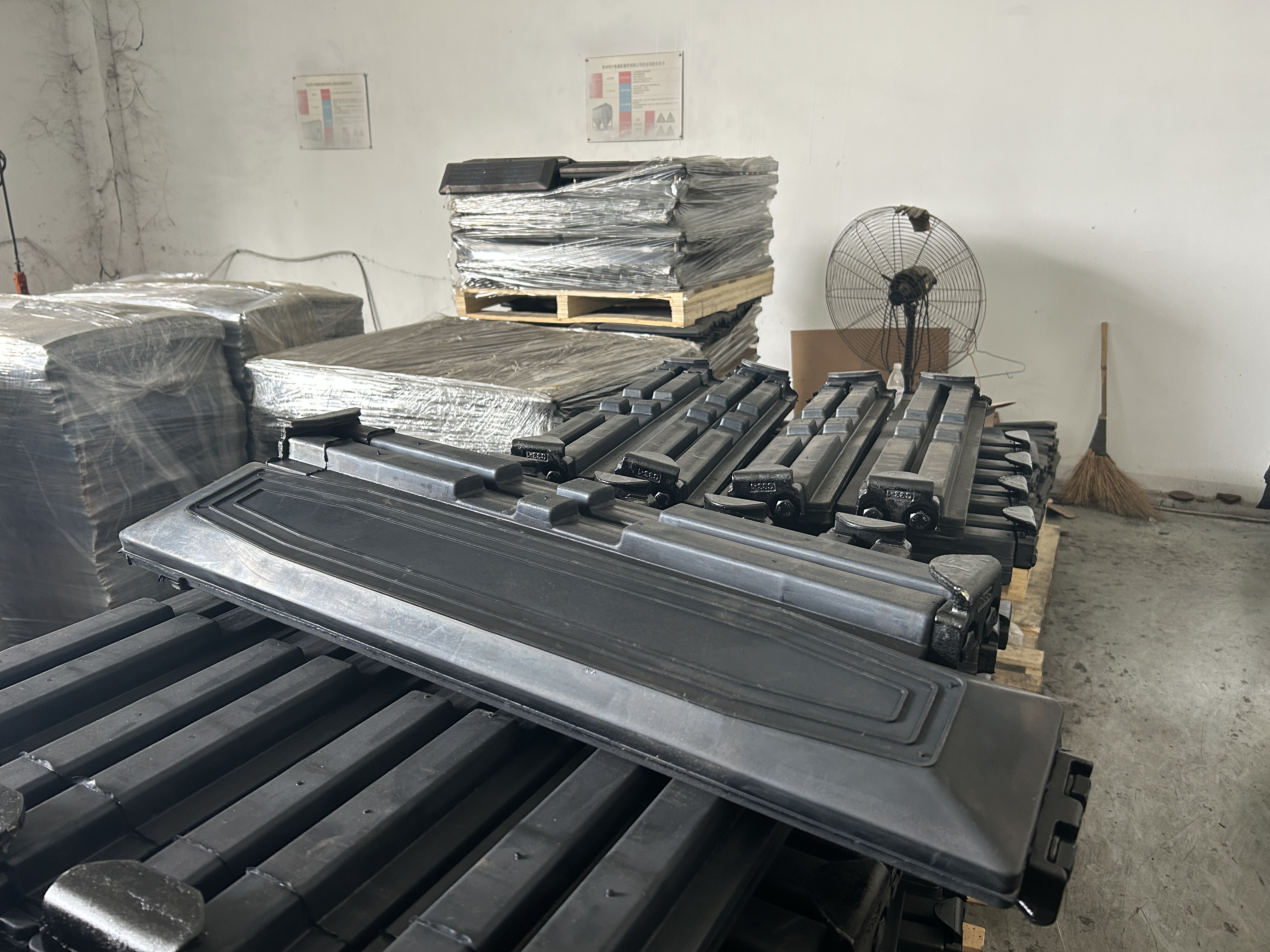
- Bolt On Rubber Track Pads: These pads bolt directly through pre-drilled holes in the existing steel grouser shoe. They offer the most secure fit for heavy-duty and continuous operations, eliminating lateral movement, though they require more labor hours to install.
- Clip On Excavator Track Pads: Designed for rapid deployment, these attach directly to the outer edges of standard steel shoes using a wrap-around bracket and a bolt. They are ideal for temporary surface protection where excavators frequently transition between aggressive dirt terrain and finished pavement.
- Chain On Rubber Track Pads: Often referred to as roadliners, these bolt directly to the track chain links, completely replacing the steel shoe. They provide the lowest profile and highest operational stability, making them the preferred choice for machines dedicated exclusively to paved or sensitive surfaces.
Specifications to Compare Before Selecting Bolt On Rubber Pads
Moving beyond basic definitions, it is necessary to rigorously analyze the technical specifications and operational metrics of each pad style. While procurement often begins by evaluating bolt-on options, comparing the specifications across all three configurations ensures the right fit for your fleet. Selecting the appropriate protective track system requires balancing installation efficiency against long-term durability (ranging from 1,000 to 3,500+ operating hours) and procurement budgets.
By comparing detailed fitment data and lifecycle costs, equipment investments can be aligned with the project requirements of upcoming sensitive site contracts.
Fitment, Installation Time, Durability, and Cost
The comparative specifications of these three pad types reveal distinct operational profiles that directly impact project budgeting. Instead of relying on vague ratings, fleet managers should evaluate concrete procurement factors. Additionally, environmental factors such as extreme temperatures (outside the -10°C to 45°C optimal range) can significantly affect rubber compound wear rates. The following table illustrates key technical benchmarks observed in the field:
| Pad Configuration | Weight-Class Thresholds | Typical Installation Time | Estimated Lifespan (Hours) | Relative Cost Premium | Defect Rate (Industry Avg) |
|---|---|---|---|---|---|
| Bolt On | 5 to 30+ metric tons | 1-2 hours per track | 1,500 – 2,500 | Baseline | < 2% |
| Clip On | 1 to 15 metric tons | < 1 hour per track | 1,000 – 1,500 | +10% to 15% | 3-5% (bracket slip) |
| Chain On | 5 to 25+ metric tons | 4+ hours per track | 2,000 – 3,500+ | +20% to 30% | < 1% |
While clip-on variants offer the fastest initial installation for rapid deployment, chain-on pads provide a superior lifespan. This makes chain-on configurations a highly cost-effective solution for extended urban deployments, successfully offsetting their 20% to 30% higher initial procurement cost and longer installation times.
Site Conditions That Should Drive Pad Selection
The physical environment and topography of the H2 site must heavily influence final specification choices. For projects involving heavy debris or demolition rubble mixed with high-hardness pavement classes (e.g., 4,000-5,000 PSI concrete), bolt-on pads provide the secure, rigid attachment necessary to prevent the pad from being torn off during aggressive maneuvering.
Conversely, operating on steep or uneven terrain requires careful consideration. While chain-on pads offer a slightly lower profile, overall slope stability (especially on grades exceeding 15%) ultimately depends on track chain condition and machine geometry rather than the pad type alone. Clip-on pads remain a preferred choice for flat, temporary urban work where machines frequently transition between dirt and asphalt, and where rapid pad removal is required at the end of a short-term (e.g., 2- to 5-day) operational phase.
How to Make the Final Pad Selection
Arriving at the optimal equipment decision requires a systematic approach to measurement and application matching. Relying on guesswork or historical assumptions when ordering track pads is risky; the structural integrity of the excavator’s undercarriage depends on precise, verifiable fitment.
Standardizing measurement protocols and defining clear use-case scenarios for each pad type ensures that a fleet remains versatile, compliant with H2 site regulations, and rigorously protected against premature wear.
Key Takeaways
- Use rubber track pads on H2 sites to protect finished surfaces, reduce liability exposure, and support compliance with municipal noise and access requirements.
- Confirm bolt-on pad fit by matching the excavator’s bolt pattern and spacing precisely, not just by checking for pre-drilled holes.
- Select clip-on rubber pads for lighter or mid-sized machines only after verifying the steel shoe edge profile and expected reversing intensity.
- Choose chain-on rubber track pads for long-duration paved work where maximum durability justifies removing the original steel grousers.
- Factor downtime into procurement decisions because a failed pad can stop work for 2 to 6 hours and cost $150 to $300 per hour in lost productivity.
- Expect quality rubber pads to reduce noise by 10 to 15 dB(A), dampen vibration by 30% to 50%, and help extend undercarriage component life.
Frequently Asked Questions
What are H2 sites in excavator track pad selection?
H2 sites are restricted or sensitive surface zones such as finished streets, historical districts, and commercial paving areas where surface protection, lower noise, and controlled vibration are required.
When should I choose bolt on rubber track pads?
Choose bolt on pads when the excavator’s steel shoes have compatible bolt holes and the bolt pattern matches precisely, typically within about +/- 1mm.
Are clip on excavator track pads suitable for all machines?
No. Clip on pads are generally best for lighter and mid-sized machines, often in the 1 to 15 metric ton range, and must match the steel shoe edge profile.
Why use chain on rubber track pads?
Chain on pads, or roadliners, are ideal for continuous paved work because they replace the steel shoe and bolt directly to the track chain for higher durability.
How much can rubber track pads reduce noise?
Rubber track pads can reduce operational noise by about 10 to 15 dB(A), helping crews meet common urban H2 site limits of roughly 70 to 85 dB(A).
Post time: Aug-12-2026