
Introduction
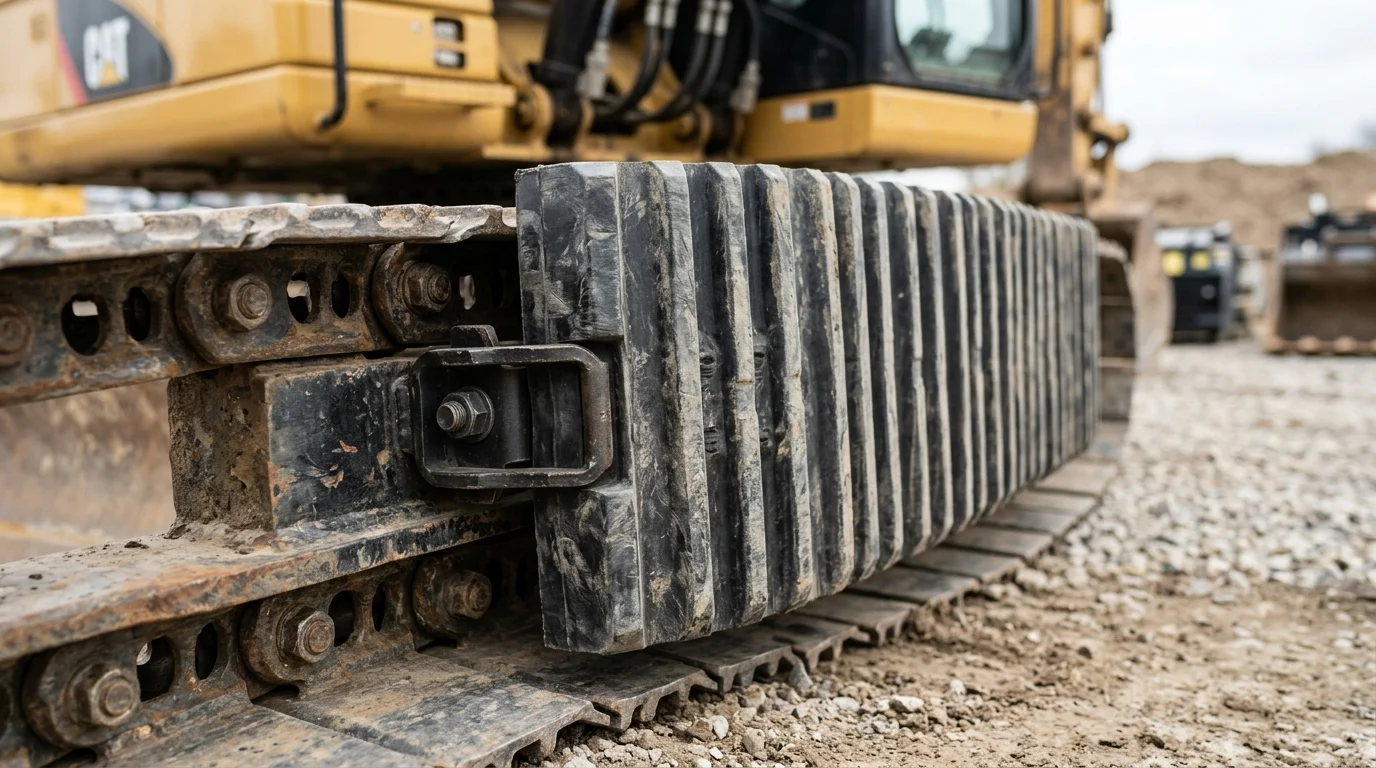
For contractors, rental fleets, and procurement teams, ready access to clip on track pads can make the difference between keeping equipment productive and losing time to delays, surface damage, or compliance issues on paved job sites. This article explains why immediate bulk availability matters, which operations benefit most from stocking these pads in volume, and what practical advantages buyers can expect in cost control, deployment speed, and project continuity. It also sets up the key considerations for evaluating supply readiness and aligning pad purchases with demanding field conditions.
Immediate Availability of Clip-On Excavator Track Pads
The global supply chain for heavy machinery attachments has experienced significant volatility, making the immediate availability of clip-on excavator track pads a critical operational advantage for procurement professionals. Securing ready-to-ship inventory bypasses traditional manufacturing bottlenecks, enabling contractors to maintain project momentum without waiting for standard production cycles.
Why buyers need immediate stock
Equipment downtime remains one of the most expensive variables in heavy construction, with idle excavators costing operators between $500 and $1,500 per hour in lost productivity and fixed overhead. When steel-tracked machines must traverse paved surfaces, the absence of protective pads can result in severe infrastructural damage and subsequent financial penalties from municipal authorities.
Buyers require immediate stock to resolve sudden equipment reallocations or to replace unexpectedly degraded pads mid-project. Having immediate access to inventory eliminates the conventional four- to eight-week manufacturing lead time, ensuring that machines remain compliant with urban operational mandates and are instantly ready for deployment on sensitive terrains.
Which buyer segments benefit most from bulk orders
Bulk procurement strategies deliver the highest return on investment for large-scale urban construction firms, municipal utility contractors, and heavy equipment rental fleets. Rental fleets, in particular, must frequently transition their 5-ton to 15-ton excavator classes between raw dirt environments and finished asphalt, demanding a high volume of reliable track pads on hand.
By executing bulk orders of 200 units or more, these organizations can leverage economies of scale, typically reducing per-unit freight and handling costs by 15% to 20%. Furthermore, maintaining a centralized, readily available stockpile allows multi-site operators to distribute replacement pads across various regional projects precisely when required, effectively isolating their operations from localized supply shortages.
How to Evaluate Clip-On Excavator Track Pads
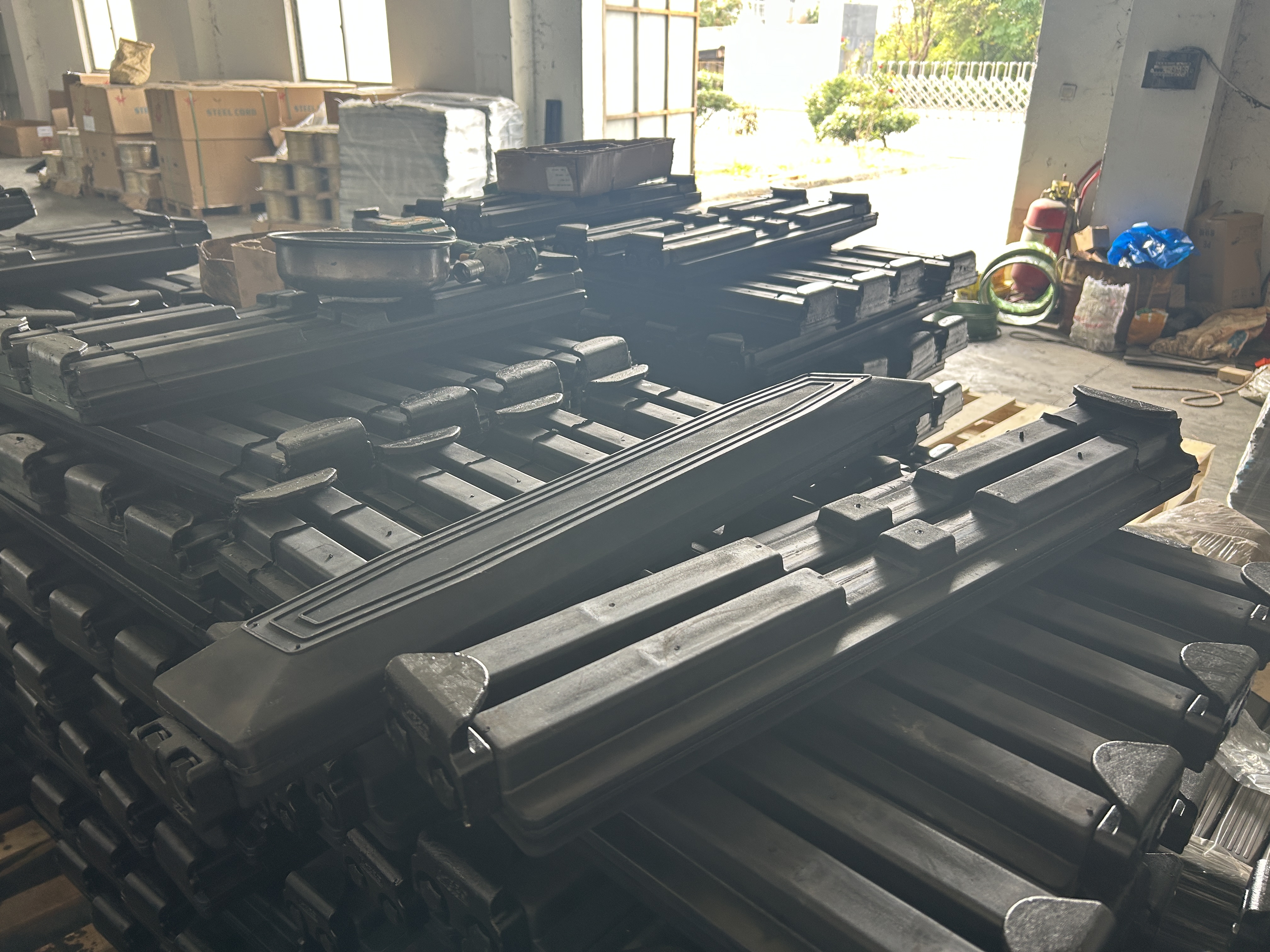
Strategic procurement of undercarriage components necessitates a rigorous technical and commercial evaluation. Sourcing managers must look beyond initial acquisition costs to analyze the material integrity and structural design of the excavator pads, ensuring they meet the demanding tolerances of continuous heavy-duty operation.
Key specifications, materials, and attachment design
The structural durability of a clip-on pad relies heavily on its elastomer composition and the strength of its steel mounting brackets. Premium pads utilize heavy-duty, heat-treated steel clips that resist deformation under high lateral loads. The rubber matrix should exhibit a Shore A hardness between 75 and 85, providing the optimal balance of traction and tear resistance, alongside a minimum tensile strength of 15 MPa. Polyurethane alternatives offer distinct advantages in highly abrasive environments, albeit at a higher initial cost.
| Material Type | Hardness (Shore A) | Tensile Strength | Expected Lifespan (Hours) | Relative Cost |
|---|---|---|---|---|
| Standard Natural Rubber | 75 – 80 | > 15 MPa | 800 – 1,200 | Baseline |
| Premium Polyurethane | 80 – 85 | > 25 MPa | 1,500 – 2,000 | + 35% to 50% |
Selecting the correct material profile based on these specifications directly impacts the total cost of ownership by extending replacement intervals and minimizing maintenance labor.
Commercial criteria for supplier comparison
Commercial evaluations must prioritize comprehensive warranty frameworks and transparent volume-pricing structures. Industry-leading suppliers typically offer a defect guarantee spanning 12 to 18 months, or 1,000 to 1,500 operational hours, which serves as a reliable indicator of manufacturing confidence and material stability.
Procurement teams should also negotiate tiered volume discounts, aiming for thresholds such as a 5% reduction at 100 units and up to a 12% discount for orders exceeding 500 units. Assessing the total landed cost—including tariffs, maritime insurance, and domestic freight—is essential for accurate supplier comparison and long-term budgetary planning.
Supplier Qualification and Bulk Order Management
Executing high-volume international orders introduces inherent logistical and quality assurance variables. Establishing a robust supplier qualification framework is essential to mitigate purchasing risks, ensuring that bulk deliveries meet exact dimensional tolerances and metallurgical standards upon arrival.
How to verify manufacturing quality
Verifying manufacturing quality begins with auditing a supplier’s quality management systems, strictly requiring ISO 9001:2015 certification as a baseline. Procurement officers should mandate the provision of batch testing records, specifically vulcanization reports and steel tensile test certificates, to confirm material consistency across large runs.
A highly controlled manufacturing environment should yield a defect rate strictly below 0.5%. To further safeguard bulk investments, buyers must stipulate independent third-party inspections—through agencies such as SGS or Bureau Veritas—prior to container loading. This pre-shipment verification guarantees that the physical dimensions, such as exact pitch measurements of 400mm or 450mm, align perfectly with the fleet’s existing steel track specifications.
How to manage logistics, lead times, and purchasing risk
Effective logistics management requires precise coordination of freight terms and container optimization. A standard 20-foot shipping container can accommodate approximately 1,500 to 2,000 clip-on pads, depending on the specific track width and palletized packaging configuration. Maximizing container utilization significantly drives down the per-unit shipping burden.
Buyers should carefully evaluate International Commercial Terms (Incoterms), often opting for FOB (Free On Board) for better freight control or DDP (Delivered Duty Paid) to simplify customs clearance. Structuring payment terms—such as a 30% advance with the remaining 70% payable against the Bill of Lading—optimizes organizational cash flow while securing the necessary inventory. Implementing buffer stock agreements with the supplier can also proactively shield the buyer from future maritime transit delays.
Key Takeaways
- The most important conclusions and rationale for Clip On Rubber Track Pads
- Specs, compliance, and risk checks worth validating before you commit
- Practical next steps and caveats readers can apply immediately
Frequently Asked Questions
What are clip-on excavator track pads used for?
They protect asphalt, concrete, and finished surfaces while giving steel-tracked excavators added traction. They are ideal when machines move between dirt jobsites and paved urban areas.
Can Gator Track supply clip-on excavator track pads for immediate bulk orders?
Yes. Gator Track manufactures excavator track pads and supports bulk supply for fast project deployment. Contact the team with your machine model, pad size, and quantity for stock confirmation.
How do I choose the right clip-on track pad size?
Match the pad to your excavator model, chain dimensions, and shoe width. Sending your machine make, model, and existing pad measurements helps Gator Track confirm fitment quickly.
What should I check before placing a bulk order?
Verify material quality, steel clip strength, compatibility, warranty terms, and total landed cost. For large orders, also request batch test records and clear lead-time or ready-stock details.
Are clip-on pads better than bolt-on or chain-on pads?
Clip-on pads are convenient for fast installation and surface protection. Bolt-on pads or chain-on pads options may suit other undercarriage setups, and Gator Track offers multiple pad styles to match your application.
Post time: Jun-01-2026