How Skid Steer Tracks Improve Street Cleaning
When evaluating equipment for municipal maintenance, the choice of undercarriage is critical. Key distinction: Buyers must differentiate between dedicated compact track loaders (CTLs) with integrated track frames and wheeled skid steers equipped with over-the-tire (OTT) rubber tracks. Both configurations require careful verification of frame clearance, transport width permitting, and OEM approval.
Key Benefits for Municipal Fleets
The primary advantage of tracked machines is the dramatic reduction in ground pressure. Equipping a machine with purpose-built skid steer tracks distributes its 8,000 to 12,000-pound operating weight over a significantly larger surface area. While a standard wheeled loader might exert up to 45 psi on the pavement, tracks can drop this ground pressure to roughly 5 psi (though exact values vary by OEM). This prevents rutting on hot summer asphalt and safely protects delicate city hardscapes, sidewalks, and fragile utility covers often found in downtown districts. Furthermore, the extended track base offers superior lifting stability, allowing operators to safely manage heavy sweeper attachments or lift dense, water-logged municipal waste without the risk of tipping.
Best Street Cleaning and Waste Tasks
Tracked loaders excel in high-torque, low-speed applications inherent to city maintenance. Operating specialized street sweeping attachments requires verifying the machine’s hydraulic flow capabilities to ensure consistent brush speeds, typically governed between 4 and 7 mph. Tracks eliminate the bouncing effect common with pneumatic tires, ensuring the sweeper brush maintains constant, even contact with the curb for a cleaner sweep. Additionally, during post-storm debris cleanup or waste transfer station pushing, tracks provide superior pushing force. They offer substantial traction gains over wheels in wet or muddy conditions, enabling operators to clear heavy branches or compact dense refuse without spinning out and damaging the underlying surface. Operators must adapt their technique, however, as aggressive pivot turns with OTT systems carry higher derailment risks compared to dedicated CTLs.
Skid Steer Track Specifications to Compare
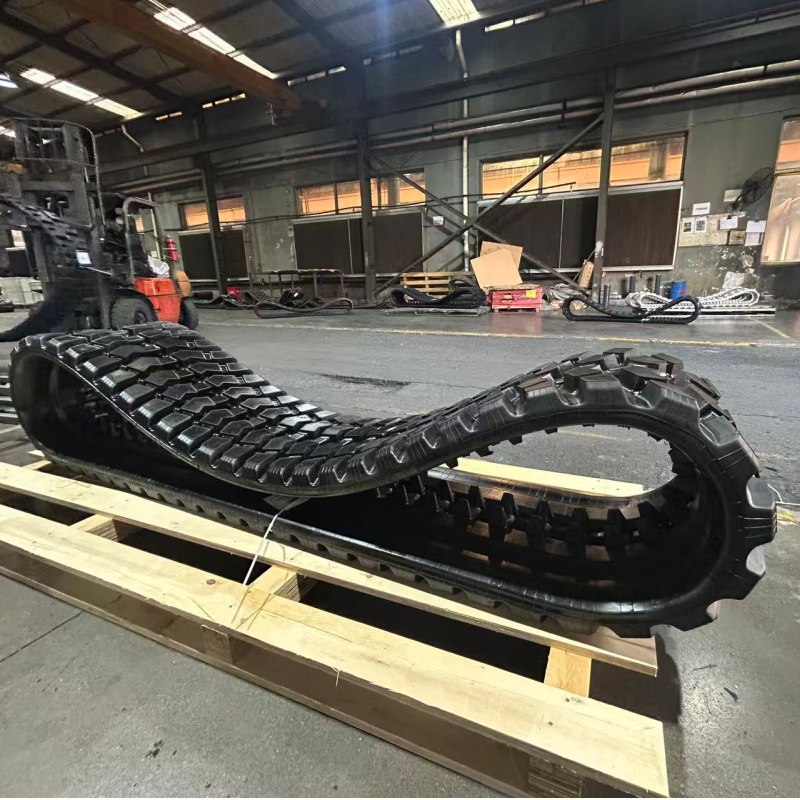
Selecting the right undercarriage requires a careful evaluation of specific technical parameters. In street cleaning and waste management, the operating environment is highly abrasive and unforgiving. This demands a practical balance between maximum traction, pavement protection, and resistance to punctures from street debris. Buyers must also verify compatibility, ensuring the tracks align with machine weight, horsepower, sprocket engagement, and frame clearance.
Rubber vs Steel Tracks
The fundamental choice for fleet managers lies between rubber and steel tracks. For municipal street cleaning, rubber tracks are generally mandated by local regulations to prevent damage to public roads, and they help fleets comply with strict noise limits near residential areas during early-morning shifts. Steel tracks are typically prohibited on municipal pavement, but in enclosed waste transfer stations where machines continuously drive over jagged metal, concrete rubble, and glass, they are sometimes evaluated for their durability. Where steel’s durability is needed but noise, vibration, and surface damage must be mitigated, hybrid or rubber-pad options offer a practical compromise. Standard rubber tracks typically offer a lifespan of 1,000 to 1,500 operating hours on concrete or asphalt, provided operators avoid aggressive pivot turns and extreme hot or cold pavement conditions.
| Specification | Rubber Tracks | Steel Tracks (incl. Hybrid/Pads) |
|---|---|---|
| Pavement Damage | Minimal to None | Severe; reduced with pads |
| Typical Lifespan* | 1,000 – 1,500 hours | 2,000+ hours |
| Vibration / Noise* | Low | High |
| Average Cost per Set* | $1,500 – $3,500 | $4,000 – $6,000 |
*Note: Values are illustrative ranges dependent on OEM specifications, operator technique, and surface conditions.
Tread Pattern, Width, and Traction
Tread pattern and track width directly dictate performance on municipal surfaces. Common track widths range between 320 mm (12.5 inches) and 450 mm (17.7 inches). Fleet managers must verify how track width interacts with overall transport width and over-width permitting for street sweepers moving between job sites. Conversely, a narrower 320 mm track can improve traction on icy or slick, oil-covered streets.
For tread patterns, local surface-protection ordinances often dictate the choice. Block patterns are typically the only street-legal option because they put significantly more rubber on the ground, minimizing pavement damage and reducing machine vibration. Staggered C-lug designs offer a balance of traction and a smooth ride, but may be restricted on delicate hardscapes compared to dedicated block treads. Both are vastly preferred over aggressive bar treads meant for deep mud, as block patterns extend wear life on highly abrasive concrete surfaces, ensuring a smoother ride for operators during long shifts.
How to Choose Tracks for Skid Steer Fleets
Integrating tracked loaders into a municipal waste management fleet requires a structured approach to procurement. Before purchasing, fleets should review a compatibility checklist:
- Machine Weight & Hydraulic Flow: Ensure the loader can handle the tracks and maintain consistent attachment speeds.
- Transport Width: Verify that the equipped machine meets local over-width permitting rules.
- Warranty Terms: Check how installing over-the-tire (OTT) tracks affects the OEM warranty.
- Local Ordinances: Confirm that the chosen tread pattern complies with surface-protection regulations.
Adopting strict operational guidelines and proper storage away from direct sunlight and extreme temperatures maximizes the return on undercarriage investments and minimizes unexpected downtime.
Inspection, Installation, and Cleaning Tips
Daily Maintenance Routine: Proper tensioning and daily cleaning are essential steps in harsh waste management environments. Operators should check track sag daily, keeping in mind that tension checks and derailment risks differ significantly between OTT bolt-on systems and dedicated CTL undercarriages. While ideal tension varies by manufacturer, specifications often recommend 1 to 1.5 inches of sag between the bottom center roller and the track. Over-tensioning accelerates roller and idler wear, while loose tracks risk costly derailment when repeatedly crossing curbs. Furthermore, waste management sites expose machines to wire, rebar, and dense debris. Operators must physically inspect and clear the undercarriage every 8 to 10 hours of operation, as wire wrap can destroy seals. Debris packed into the sprocket area can stretch the rubber and snap the internal continuous steel cords, causing severe track failure.
**Installation
Key Takeaways
- Verify frame clearance, OEM approval, transport width, and sprocket or tire compatibility before fitting a skid steer with tracks.
- Use rubber tracks for most municipal street cleaning because they protect pavement, reduce noise, and maintain steadier sweeper brush contact.
- Tracks can reduce ground pressure from about 45 psi on some wheeled loaders to roughly 5 psi, helping prevent rutting and hardscape damage.
- Match the loader’s hydraulic flow to the sweeper attachment so brush speed remains consistent at typical working speeds of 4 to 7 mph.
- Avoid aggressive pivot turns with over-the-tire track systems to reduce derailment risk and extend track service life.
- Consider steel, hybrid, or rubber-pad track options only in harsh waste environments where puncture resistance must be balanced against surface damage and noise.
Frequently Asked Questions
Are skid steer tracks better than tires for street cleaning?
Often, yes. Tracks reduce bouncing, keep sweeper brushes in steadier contact with curbs, and improve traction during low-speed municipal work. They also distribute machine weight more evenly, helping protect asphalt, sidewalks, and utility covers.
What is the difference between a compact track loader and OTT tracks?
A compact track loader has a dedicated integrated track undercarriage. Over-the-tire tracks fit around the tires of a wheeled skid steer. Fleet buyers should verify OEM approval, frame clearance, sprocket fit, and transport width before choosing either option.
How much can tracks reduce ground pressure?
Exact values vary by machine and OEM, but tracked setups can reduce ground pressure from around 45 psi on some wheeled loaders to roughly 5 psi. This helps prevent rutting on hot asphalt and damage to fragile hardscapes.
Are rubber tracks suitable for municipal pavement?
Yes. Rubber tracks are usually preferred, and often required, for public streets because they reduce pavement damage, noise, and vibration compared with steel tracks. They are well suited for sweeping, debris collection, and general city maintenance.
When should steel tracks be considered?
Steel tracks may be considered in enclosed waste transfer stations where machines encounter jagged metal, glass, rubble, and other puncture hazards. They are generally unsuitable for public pavement unless paired with pads or hybrid systems.

Post time: Sep-17-2026