
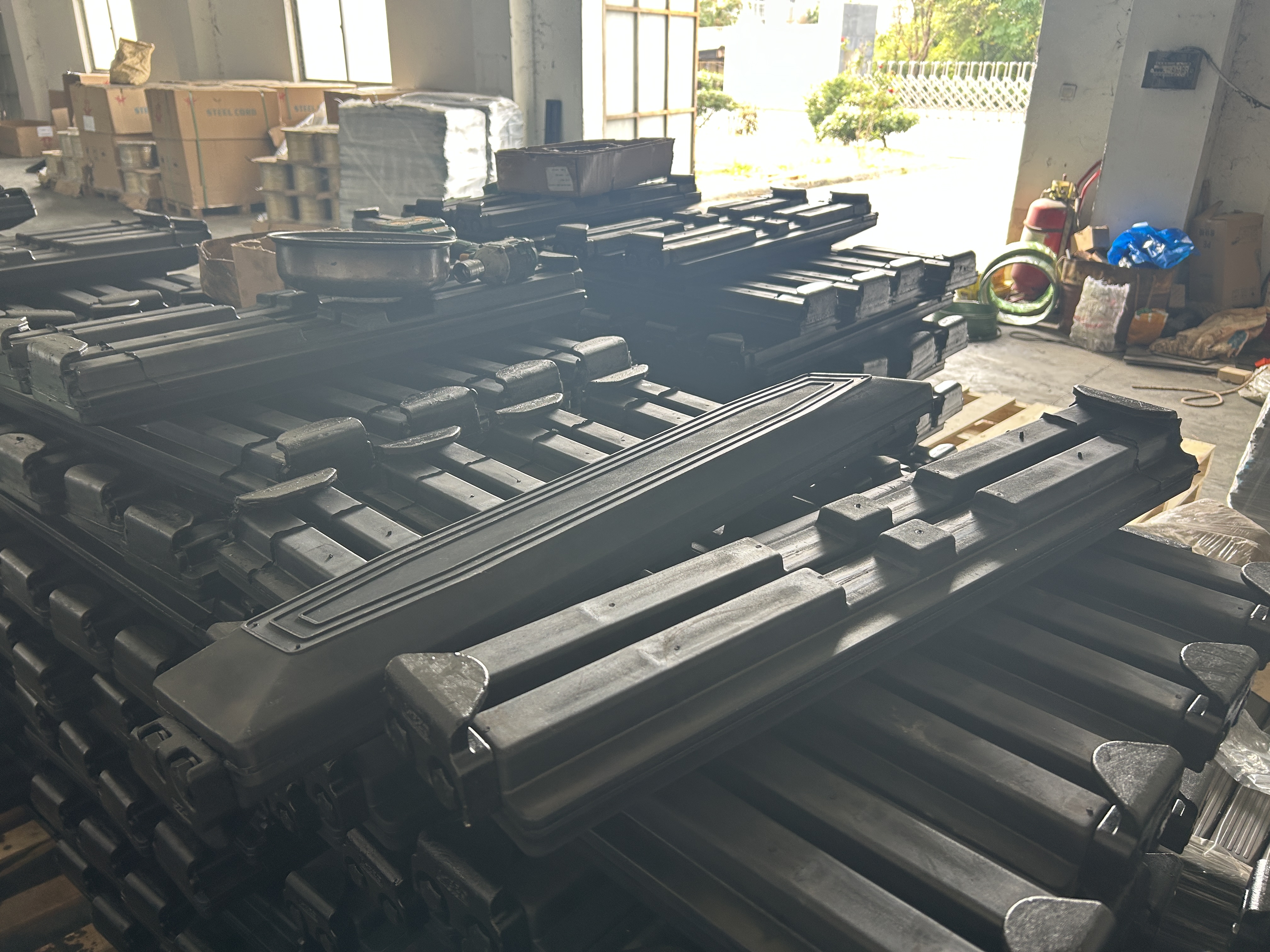
Why 700mm Excavator Rubber Pads Matter for 2026 Urban Projects
As fleets prepare for 2026 urban projects, adapting to emerging municipal ordinances is paramount. While there is no single overarching federal law, local jurisdictions across major metropolitan areas are tightening noise limits and pavement protection standards. Operating 20- to 35-ton excavators in populated zones now requires specialized undercarriage configurations to reduce spall repair costs and lower jobsite noise levels. Upgrading track systems aligns equipment with these practical outcomes, mitigating ground damage to prevent costly project delays.
What 700mm Excavator Rubber Pads Are
To meet these demands, the industry relies on heavy-duty track modifications. Specifically, 700mm Excavator Rubber Pads are engineered to fit over or replace standard steel track shoes. Note that 700mm (approximately 28 inches) is a specific shoe width designed for upper mid-size and large excavators, not a universal size, so compatibility depends on the machine’s existing undercarriage. This broad footprint distributes machine weight efficiently, lowering ground bearing pressure. However, operators must account for critical operational caveats: rubber compounds face heat-degradation thresholds on hot asphalt (which vary by manufacturer but can accelerate wear in extreme heat) and cold-weather brittleness risks in freezing conditions. Additionally, these wide pads add significant total weight to the track group, can reduce off-pavement traction in mud, and alter the machine’s center of gravity and stability compared to standard shoes. Furthermore, confirm that a 700mm configuration does not violate OEM transport-width limits or jobsite gate-access constraints, as the increased broadening may affect load-out compliance and require special hauling permits outside the immediate jobsite.
Key 2026 Urban Construction Requirements
Specific RFP language in major metropolitan public works for 2026 often demands documented proof of machinery that prevents asphalt spalling. Rather than risking fines for surface damage, utilizing a low-impact interface is increasingly favored as a municipal best practice. It is important to note that 700mm bolt-on or clip-on pads are not the only viable compliance path; contractors should also evaluate alternative undercarriage solutions such as polyurethane street pads or full rubber tracks depending on the machine size and project scope. By proactively adopting these surface-protection capabilities, fleets can operate efficiently within sensitive residential and commercial zones without requiring repetitive site remediation.
How to Compare 700mm Excavator Rubber Pads by Specification
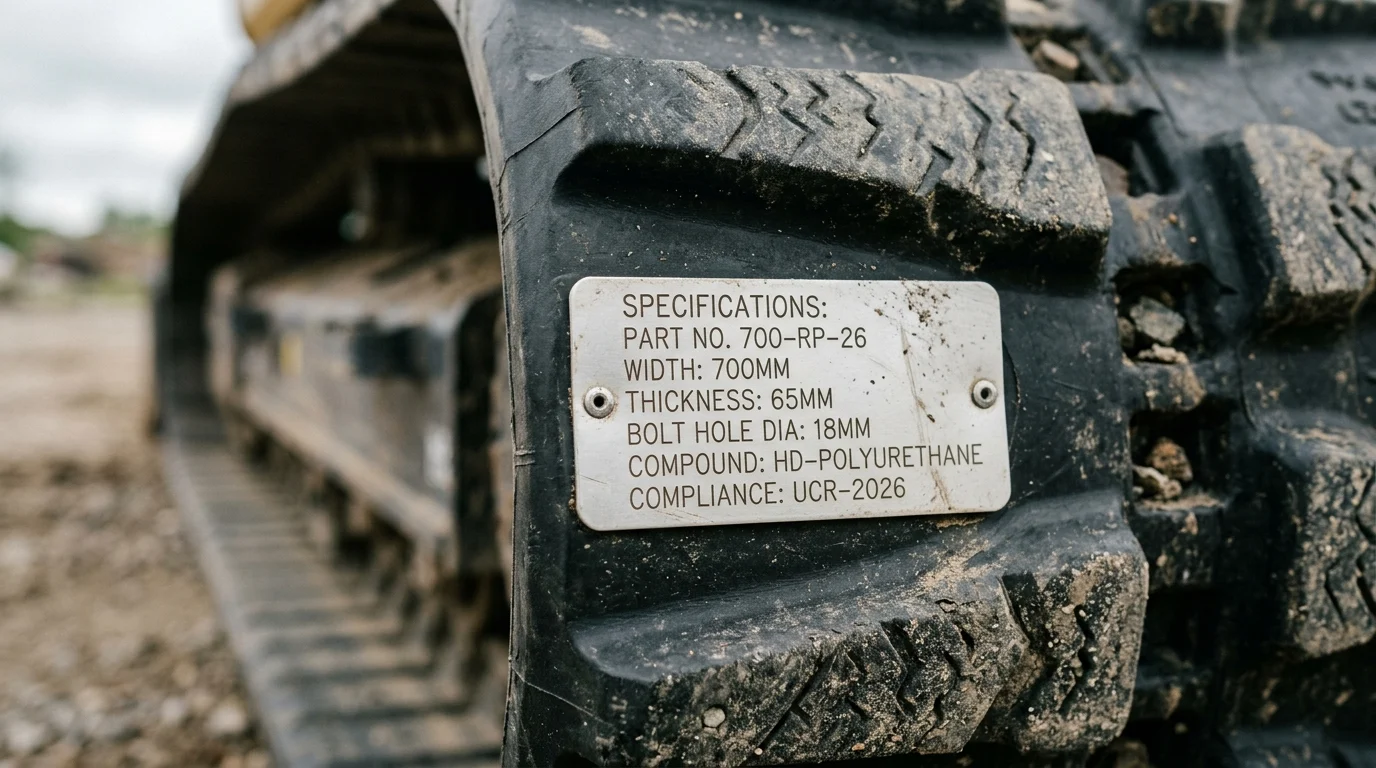
When evaluating track pads, analyze technical specifications to ensure the components withstand the high-shear forces generated by a 20- to 35-ton machine pivoting on abrasive tarmac. Ignoring these mechanical variables or mounting-system compatibility limits leads to premature wear, exposing underlying steel and risking pavement damage.
Core Specification Points to Check
A primary focus should be the physical properties of the rubber compound. Verify the Shore-A hardness rating to ensure a critical balance between surface flexibility and chunking resistance. Additionally, tensile strength must be sufficient to prevent tearing during aggressive counter-rotation maneuvers. Beneath the rubber, the embedded heavy-duty steel plates must be thick enough to prevent bowing under extreme load, and the rubber-to-metal vulcanization bonding strength must be robust enough to prevent premature separation.
Bolt-On vs Clip-On vs Chain-On Pads
Selecting the right mounting system is critical for operational efficiency. Choose between three distinct attachment methodologies based on machine configuration and overall project duration. Note that installation timing is highly dependent on mechanical experience and available equipment.
| Pad Type | Attachment Method | Torque / Hardware Needs | Ground Clearance Impact | Practical Trade-Offs | Ideal Application |
|---|---|---|---|---|---|
| Bolt-On | Bolts directly through pre-drilled steel shoes | Requires specific bolt torque sequences; must re-torque per manufacturer intervals | Minimal reduction | Adds weight per track; highly rigid but requires hardware kits | Permanent urban fleet deployment |
| Clip-On | Wraps around the edges of standard steel shoes | Standard hand tools / impact wrench | Moderate reduction | Susceptible to mud packing; can detach under heavy lateral loads | Mixed-use machines (dirt and asphalt) |
| Chain-On | Bolts directly to the track chain | High-torque pneumatic tools | Maximum reduction | Complex initial setup; may require hydraulic press | Dedicated pavement-only excavators |
Understanding these mechanical distinctions optimizes machine performance. Clip-on pads offer rapid deployment for unexpected repairs, whereas bolt-on systems provide unmatched rigidity for long-term reconstruction phases.
How to Source, Install, and Select 700mm Excavator Rubber Pads
Procuring and mounting these pads requires careful logistical planning. The financial outlay for a complete set of 700mm pads is substantial, making precise fitment and lifecycle ROI a priority. Follow strict mechanical guidelines during installation: clean track chains thoroughly before mounting, apply recommended bolt torque sequences to prevent loosening under vibration, and utilize hydraulic presses when fitting chain-on variants. Miscalculating inventory needs or ignoring OEM installation procedures can result in costly downtime.
Practical Supplier and Fit Verification Steps
Before finalizing any purchase order, meticulously verify the exact pitch and link width of the specific undercarriage by cross-referencing OEM part numbers. A minor discrepancy in bolt-hole spacing will render an entire batch of pads useless. Instead of relying solely on vague supplier claims or batch reports, prioritize physical trial fitment and confirm delivery lead times. Ordering a single pad for a trial fitment before authorizing a bulk order or full machine set significantly mitigates risk, especially since full container shipments are irrelevant for most single-machine buyers. Secure explicit, written warranty periods covering delamination.
When to Choose Premium, Mid-Range, or Budget Pads
Budget allocation dictates tier selection, but it should align with forecasted project demands. Premium pads, featuring high ratios of virgin natural rubber, routinely offer extended operating lifespans (often exceeding 2,000 service hours), higher abrasion resistance ratings, and multi-year warranty terms, making them the standard for long-term urban developments. Mid-range options, blending natural and synthetic polymers, offer a respectable lifespan (typically 1,000 to 1,500 hours) suitable for seasonal contracts. Conversely, budget pads, which may rely heavily on recycled crumb rubber, frequently suffer premature delamination under heavy use and typically carry minimal warranties.
Key Takeaways
- Verify that 700mm rubber pads match the excavator’s existing steel shoe width, mounting system, and OEM undercarriage limits before purchasing.
- Use rubber pads on urban pavement to reduce asphalt spalling, track noise, and costly surface remediation in residential and commercial zones.
- Check Shore-A hardness and tensile strength because 20- to 35-ton excavators create high shear forces during turns on abrasive tarmac.
- Account for added pad weight, reduced mud traction, transport-width limits, and potential stability changes before deploying wide rubber pads.
- Review local 2026 bid documents and municipal requirements because pavement-protection expectations vary by jurisdiction rather than following one federal rule.
- Inspect rubber pads more frequently in extreme heat or freezing conditions because temperature can accelerate wear, chunking, or brittleness.
Frequently Asked Questions
Are 700mm excavator rubber pads required by 2026 urban construction rules?
Not universally. There is no single federal mandate, but many city RFPs and ordinances increasingly require pavement protection and lower site impact. 700mm rubber pads can help meet those expectations when they fit the machine and project conditions.
What size excavators typically use 700mm rubber pads?
700mm pads are commonly associated with upper mid-size and large excavators, often in the 20- to 35-ton range. Compatibility depends on the excavator’s existing steel shoes, undercarriage design, and OEM limits.
Do 700mm rubber track pads reduce pavement damage?
Yes, when properly matched and maintained, rubber pads create a lower-impact interface than steel shoes. They help reduce asphalt spalling, surface scarring, and remediation costs on streets, sidewalks, and finished urban work zones.
Can 700mm rubber pads reduce jobsite noise?
They can reduce track-related noise compared with steel shoes on hard pavement. This is useful in residential, commercial, and municipal work zones where contractors must manage noise complaints or comply with local sound limits.
What specifications should buyers check before ordering?
Confirm shoe width, mounting type, bolt or clip compatibility, Shore-A hardness, tensile strength, pad thickness, and OEM transport-width limits. Also verify whether the added track weight affects hauling, gate access, or machine stability.
Post time: Jul-24-2026