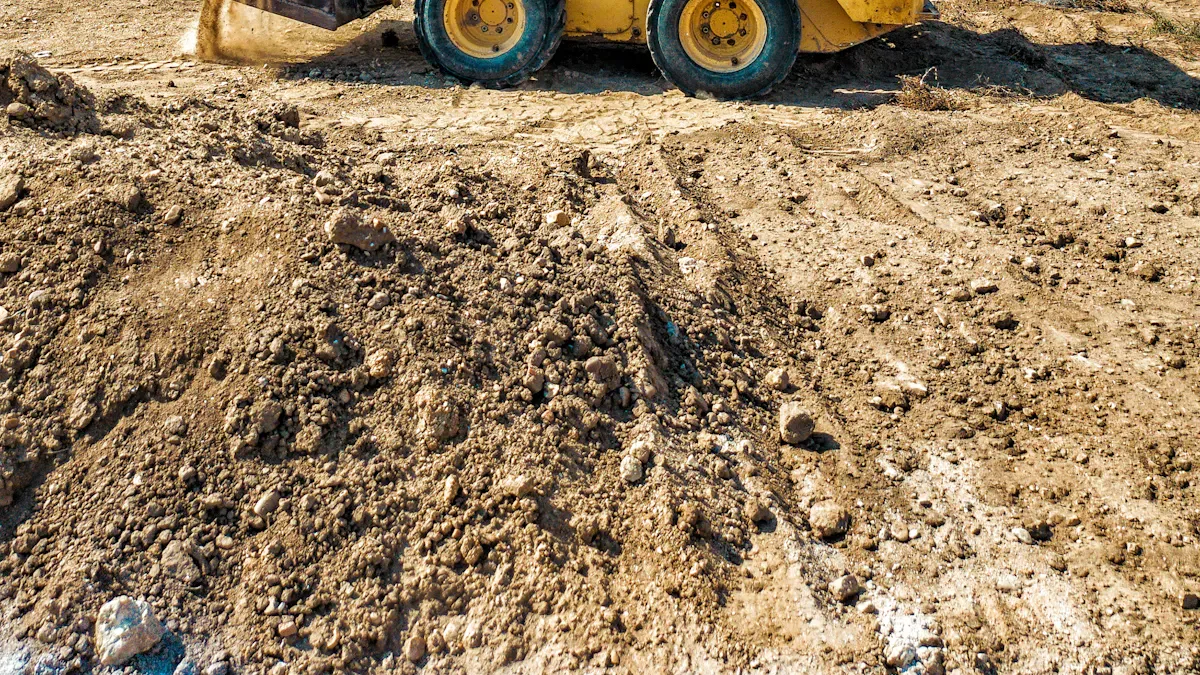
Choosing the right skid steer loader tracks is crucial for tackling muddy, snowy, and rough terrains. I’ve seen firsthand how the wrong tracks can lead to issues like weight distribution problems, causing loaders to sink in mud. Properly selected tracks enhance traction and stability, ensuring better performance in challenging conditions.
Key Takeaways
- Choose skid steer loader tracks with a zig-zag tread design for superior traction in mud and snow. This design enhances grip and self-cleaning capabilities.
- Opt for tracks made from high-grade rubber or synthetic blends. These materials offer excellent durability and resistance to wear, ensuring long-lasting performance.
- Wider tracks improve flotation on soft terrain, while narrower tracks enhance maneuverability in tight spaces. Select the right width based on your working conditions.
Key Features of Skid Steer Loader Tracks
When selecting skid steer rubber tracks, understanding their key features is essential for optimal performance in challenging conditions.
Tread Design
The tread design significantly impacts traction and stability. I often recommend tracks with a zig-zag pattern. This design excels in mud and snow, offering strong traction and self-cleaning capabilities. The multi-bar pattern provides balanced grip across various surfaces, ensuring comfort and control. Here are some benefits of effective tread designs:
- Designed for challenging conditions, zig-zag tracks maximize gripping edges.
- They enhance stability on slopes with multi-angled lugs.
- Self-cleaning capabilities keep the tread effective in worsening conditions.
Material Composition
The materials used in skid steer loader tracks play a crucial role in their durability. I prefer tracks made from high-grade rubber and synthetic blends. These materials offer excellent wear resistance and tensile strength. Here’s a quick overview of common materials:
| Material Type | Key Features | Impact on Durability |
|---|---|---|
| High-grade Rubber | Tensile strength, abrasion resistance, heat resistance | Provides durability for extended use in demanding environments. |
| Synthetic Rubber (EPDM) | Excellent wear and weather resistance, extreme temperature tolerance | Suitable for various landscapes, enhancing longevity. |
| Steel Cords | Embedded for structural integrity and stretch-resistance | Enhances tensile strength, preventing elongation under heavy loads. |
Track Width and Length
Track width and length also affect performance. Wider tracks provide excellent flotation on soft terrain, reducing ground damage. They distribute the weight of the skid steer loader evenly, which is beneficial in mud or sand. Conversely, narrower tracks enhance maneuverability in tight spaces. Here are some key points:
- Wider tracks increase flotation, while narrower tracks improve traction on hard surfaces.
- The overall footprint of the machine changes with track width, impacting stability and performance.
Choosing the right combination of these features ensures that your skid loader tracks perform optimally in mud, snow, and rough terrain.
Performance of Skid Steer Loader Tracks in Mud

When it comes to working in muddy conditions, the performance of skid steer loader tracks is paramount. I have found that the right tracks can make all the difference in how effectively a machine operates in such challenging environments.
Traction Capabilities
Traction capabilities are crucial for navigating through mud. Different skid steer loader tracks exhibit varying traction capabilities in muddy conditions. I often recommend rubber tracks, especially those with an optimized tread pattern. These tracks excel at handling mud due to their design. Over the Tire (OTT) tracks, whether rubber or steel, enhance traction and stability on slippery terrain. They increase the contact area, which helps distribute the load and improve flotation. This design leads to better maneuverability and control, making them ideal for agricultural tasks in muddy or loose soil.
Self-Cleaning Features
Self-cleaning features are another essential aspect of skid steer loader tracks. In muddy conditions, tracks can quickly become caked with mud, which reduces their effectiveness. I prefer tracks designed with self-cleaning capabilities. These tracks feature strategically placed lugs and channels that allow mud to be expelled as the machine moves. This design not only maintains traction but also prevents the buildup of debris that can hinder performance.
Stability on Slippery Surfaces
Stability on slippery surfaces is vital for safety and efficiency. Rubber tracks provide excellent grip on these surfaces due to their unique tread patterns. This design enhances traction and reduces slippage, which I have personally experienced during various projects. Additionally, the design of rubber tracks contributes to a lower center of gravity. This improvement enhances stability and reduces the risk of tipping on uneven terrain. I have noticed that rubber tracks are resistant to tipping, making them ideal for navigating challenging landscapes.
Performance of Skid Steer Loader Tracks in Snow
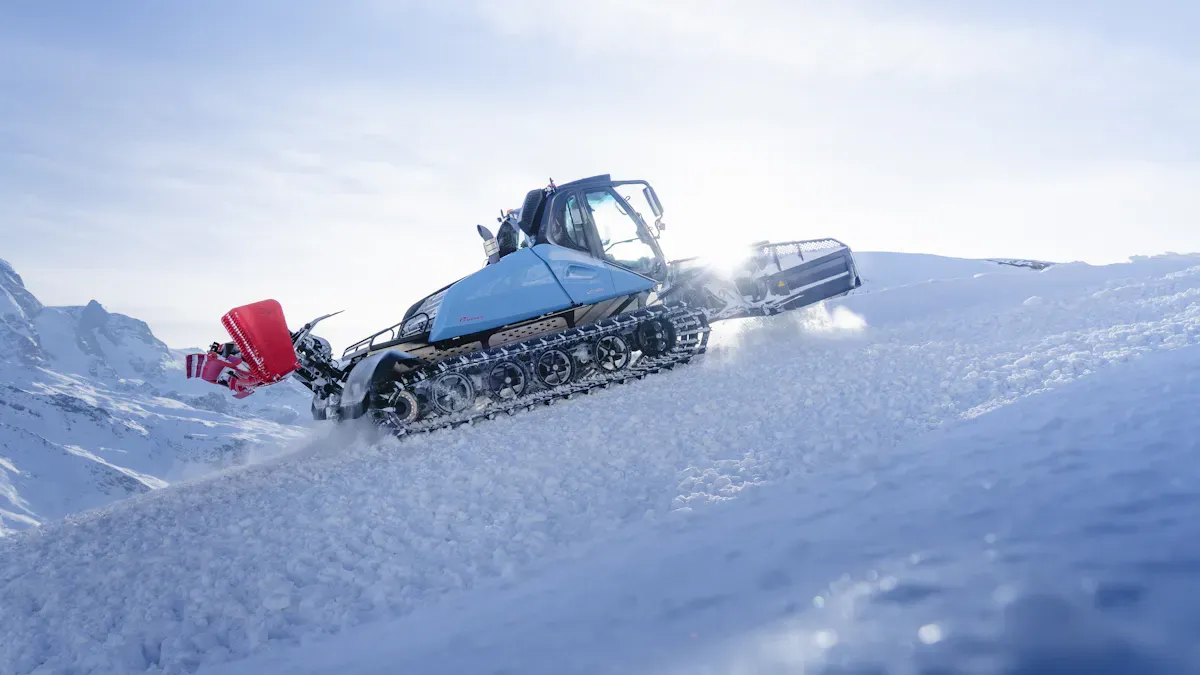
When working in snowy conditions, the performance of skid steer loader tracks becomes critical. I have found that the right tracks can significantly enhance grip, control, flotation, and resistance to snow packing.
Grip and Control
Grip and control are essential for effective operation in snow. I often choose tracks designed for challenging conditions, such as those with a zig-zag tread pattern. These tracks excel in snow, mud, and slush, providing superior directional traction. Users frequently report that these tracks offer a “death grip” on the ground, which enhances stability and reduces slippage on icy surfaces. The larger ground contact area of these tracks allows for better load handling and stability during snow clearing operations.
- Key Benefits:
- Reduced slippage on ice.
- Increased forward drive power.
- Enhanced stability on slopes for controlled turns.
Floatation and Weight Distribution
Floatation and weight distribution play a vital role in how effectively tracks for skid steer perform in snow. Wider tracks distribute weight evenly, reducing ground pressure and preventing sinking into soft snow. This design leads to more effective pushing and clearing in deeper snow drifts. I have noticed that tracks with a high lug-to-void ratio increase the contact patch, which improves traction on various surfaces.
- Important Points:
- Wider tracks enhance flotation and reduce ground pressure.
- A stable platform is provided for heavy-duty attachments, improving efficiency.
- Narrow tracks are better suited for hard ground, while wide tracks excel in loose terrain like snow.
Resistance to Snow Packing
Resistance to snow packing is another critical factor when selecting skid steer loader tracks for winter conditions. Tracks designed with bar-style treads are particularly effective for snow work. They maximize ground contact, which improves traction in slippery conditions. I have seen that keeping the undercarriage clear of ice and mud is crucial to prevent buildup that can hinder performance.
- Technological Features:
- ASV’s tracks utilize an all-season bar-style tread pattern.
- The specially formulated exterior tread maximizes traction in various conditions.
- This design enhances performance and reduces the risk of derailment.
In my experience, choosing the right skid steer loader tracks for snow can make a significant difference in productivity and safety. The combination of grip, flotation, and resistance to snow packing ensures that operators can work efficiently, even in the harshest winter conditions.
Performance of Skid Steer Loader Tracks in Rough Terrain
When navigating rough terrain, the performance of skid steer loader tracks becomes essential. I have learned that durability, shock absorption, and versatility are critical factors that determine how well these tracks perform in challenging environments.
Durability and Wear Resistance
Durability is a top priority when selecting skid steer loader tracks for rocky or uneven surfaces. I often recommend tracks that feature advanced materials and construction techniques. For instance, brands like McLaren and Camso utilize innovative technologies to enhance durability. Here’s a quick overview of some leading options:
| Brand | Series | Key Features |
|---|---|---|
| McLaren | NextGen, Maximizer | SpoolRite Belting Technology, advanced rubber compounds for flexibility and UV protection. |
| Camso | CTL HXD | Single-cure technology, optimized tread profile, Trackguard technology for improved durability. |
| Summit Supply | Premium | Continuous Steel Cording, high-quality rubber blend for flexibility and abrasion resistance. |
In my experience, tracks with a robust construction hold up well against the wear and tear of rocky surfaces. For example, steel tracks are often preferred for heavy-duty work. They provide superior traction and resilience in harsh terrains, making them ideal for construction and landscaping tasks.
Shock Absorption
Shock absorption is another crucial aspect of skid steer loader tracks, especially on rough terrain. The design of these tracks plays a significant role in how well they absorb shocks. Solid tires can transmit every bump to the operator, leading to discomfort and potential damage to the machine. I have found that tracks with aperture holes in their design significantly enhance shock absorption.
| Feature | Description |
|---|---|
| Shock Absorption | Increases shock absorption for your machine over rough terrain |
| Operator Comfort | More comfortable for the operator |
| Flexibility | Provides flex for increased grip |
| Material | Sidewalls are made from a flexible elasticized rubber compound |
| Strength | Steel reinforcing bands near the wheel provide strength and rigidity |
| Machine Wear | Reduces machine wear; sidewall aperture holes absorb shock |
| Comfort | Increased shock absorption for comfort |
These features not only improve operator comfort but also extend the lifespan of the skid steer loader. I have noticed that tracks designed with these considerations in mind perform significantly better in rough conditions.
Versatility Across Different Surfaces
Versatility is vital for skid steer loader tracks, especially when working across various rough surfaces. I have observed that compact track loaders excel in uneven terrains due to their larger ground contact area. This design minimizes ground pressure, reducing damage to sensitive surfaces like lawns.
- Compact track loaders are more effective on rough and uneven terrains.
- They have lower ground pressure, which minimizes damage to sensitive surfaces like lawns.
- Skid steer loaders with tires are better for hard, flat surfaces, offering higher speeds and maneuverability.
The adaptability of skid steer loader tracks is influenced by the type of surface they operate on. For instance, rubber tracks are ideal for hard surfaces like concrete, allowing for faster movement without damaging the ground. In contrast, tracks provide greater traction and prevent sinking in muddy or uneven terrains.
Top Recommendations for Skid Steer Loader Tracks
Brand A Tracks
I highly recommend ASV skid steer loader tracks for their exceptional performance in challenging conditions. These tracks feature an all-terrain design that provides superior traction and stability. I appreciate how they minimize soil compaction, making them ideal for agricultural and landscaping applications. Their unique track system allows for effective operation in muddy, snowy, and uneven terrains.
Brand B Tracks
Brand B tracks stand out due to their strength and durability. Made from high-grade materials, they resist wear and extend service life in extreme conditions. I find their optimized tread patterns enhance grip and stability on challenging surfaces like mud and snow. Additionally, these tracks require low maintenance, thanks to features like sealed joints that reduce servicing needs. This efficiency saves both time and labor costs.
| Advantage | Description |
|---|---|
| Strength and Durability | High-grade materials resist wear, extending service life. |
| Superior Traction and Stability | Optimized tread patterns enhance grip on challenging surfaces. |
| Low Maintenance Requirements | Sealed joints reduce the need for frequent servicing. |
| Customization Options | Tracks can be tailored to specific equipment for improved efficiency. |
Brand C Tracks
For operators seeking versatility, Brand C tracks are a top choice. Their Z tread pattern excels in wet or muddy conditions, providing increased traction. I have noticed that the CTL SD track is particularly effective in swampy applications, snow, and soft mixed soil. The high-strength fiber-reinforced design improves surface contact, which is essential for operating in challenging terrains.
- The Z tread pattern offers superior grip in slippery conditions.
- The CTL SD track is ideal for muddy and snowy applications.
- A flexible track design enhances traction and performance.
Selecting the right skid loader tracks is essential for optimal performance in various conditions. I recommend considering factors like tread design and material composition. For instance, wide tracks with a straight-bar tread excel in muddy terrain, while narrow tracks with a multi-bar tread perform well in snow. Always assess your specific needs to choose the best tracks for your work environment.
FAQ
What type of tracks are best for muddy conditions?
I recommend rubber tracks with a zig-zag tread pattern. They provide excellent traction and self-cleaning features, making them ideal for muddy environments.
How do I know if my tracks are worn out?
Check for visible cracks, tears, or significant tread wear. If the tracks no longer grip well, it’s time to consider replacement.
Can I use the same tracks for snow and rough terrain?
While some tracks perform well in both conditions, I suggest choosing specialized tracks for optimal performance. Each environment has unique demands that specific tracks can address.

Post time: Mar-16-2026