Evaluate Rubber Track Pad Options
When evaluating the operational efficiency of tracked heavy machinery, protecting delicate jobsite surfaces while maintaining optimal traction is a primary concern. Equipping excavators with the appropriate rubber track pads transforms a destructive steel-tracked machine into a versatile asset capable of crossing finished concrete, asphalt, and landscaped areas without causing costly damage. Beyond surface protection, these pads offer significant noise and vibration dampening benefits that frequently influence total cost-of-ownership (TCO) and purchasing decisions.
Bolt-On vs Clip-On Pads
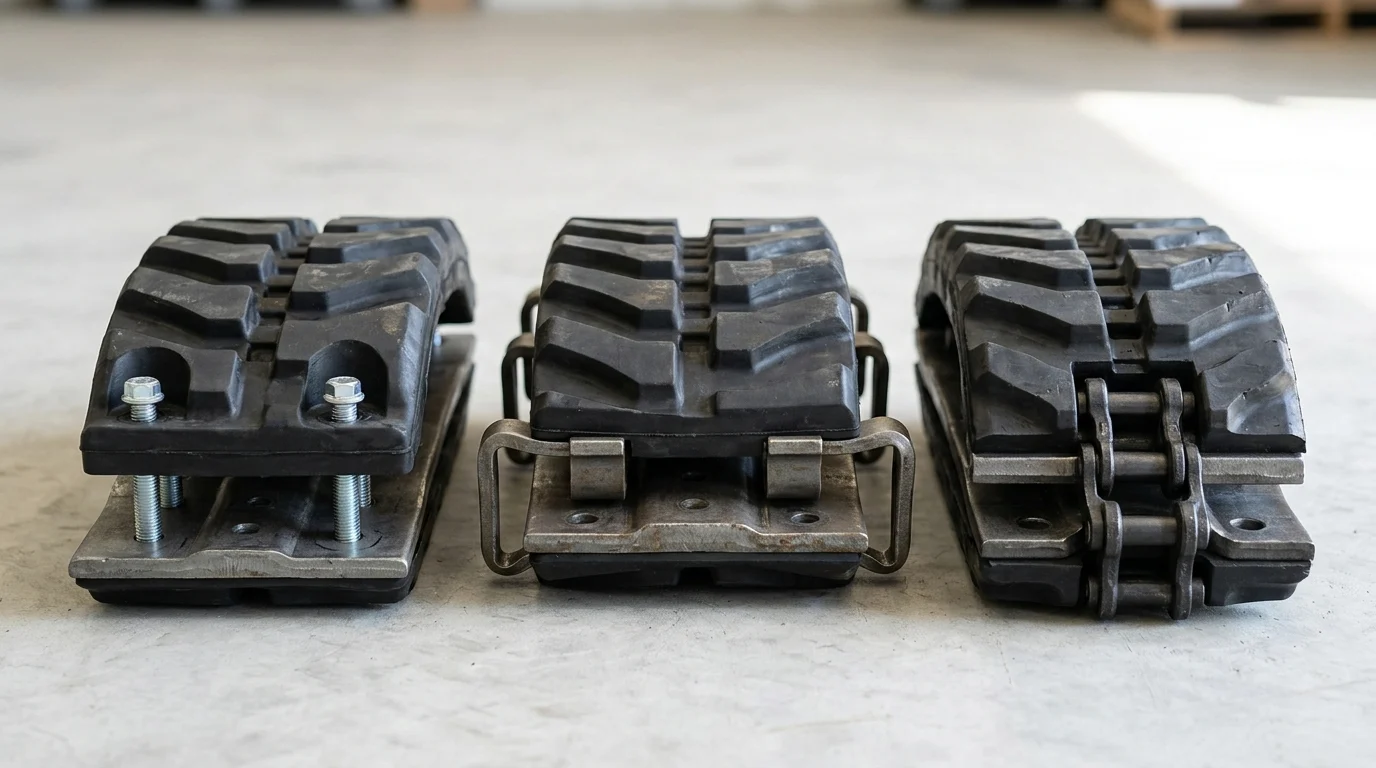
To select the ideal system, operators must understand the fundamental differences between mounting styles. Bolt On Rubber Track Pads require steel track shoes with pre-drilled holes, securing the rubber pad using bolts that pass vertically through the shoe for a highly stable fit. In contrast, Clip On Excavator Track Pads utilize heavy-duty metal brackets to wrap around the edges of a standard steel shoe. While clip-on pads add overall weight to the machine, they avoid the need for pre-drilled shoes.
Both styles work with existing steel shoes, but their installation demands differ. Outfitting a track with clip-on pads is generally faster than installing bolt-on variants, which demand precision alignment and individual bolting. However, both processes require dedicated crew time—often taking several hours of planned downtime for a full track conversion—to ensure proper seating and safety.
Common Operating Problems
Despite their durability, rubber track pads are susceptible to specific operational failures if improperly managed. Delamination—where the rubber separates from its internal steel core—is a frequent issue caused by excessive lateral stress during low-speed pivoting, rotation, or sharp directional changes on abrasive surfaces. Chunking or cutting often occurs when tracking over sharp demolition debris. Additionally, clip-on pads carry a risk of bracket detachment when operating in rocky terrain or during frequent reverse travel.
Furthermore, uneven wear often results from improper installation torque. Operators must consult specific manufacturer guidelines for exact torque values based on bolt diameter and pad design, rather than relying on generic estimates. Under-tightening leads to pad vibration and shear stress on the hardware, while over-tightening can permanently fracture the internal mounting plate.
Compare Specifications and Jobsite Fit
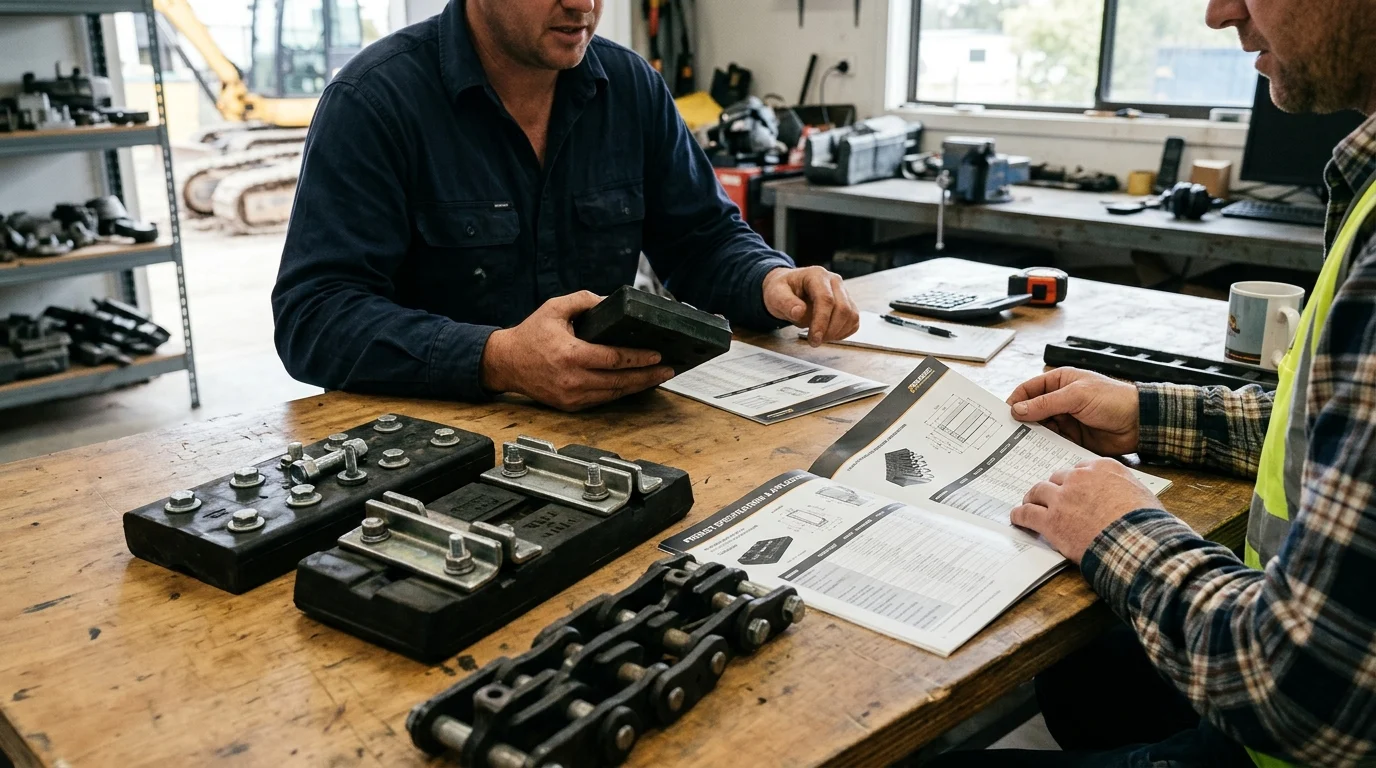
Matching physical specifications to the specific demands of a jobsite is a critical step in the procurement process. Beyond standard bolt-on and clip-on styles, operators frequently utilize Chain On Rubber Track Pads, commonly referred to as roadliner pads. These bolt directly onto the track chain, entirely replacing the steel shoe. This replacement reduces overall machine weight compared to clip-on setups and lowers the machine’s center of gravity. However, it is critical to note that chain-on pads alter the OEM undercarriage shoe geometry and track gauge, which may impact equipment warranties, though this varies significantly by OEM, machine model, and region. Operators are strongly advised to verify compatibility with the original machine manufacturer before converting.
Key Pad Specifications
To facilitate a clear comparison, the following table compiles general specifications for the three dominant track pad configurations. Understanding these baseline metrics ensures that the selected pad can withstand the operational weight and stress of the machinery.
| Pad Type | Installation Method | Typical Width Range | General Machine Compatibility* |
|---|---|---|---|
| Bolt-On | Bolts through pre-drilled steel shoe | 300mm – 600mm | Light to Medium Equipment |
| Clip-On | Wraps around standard steel shoe | 230mm – 500mm | Compact to Light Equipment |
| Chain-On | Bolts directly to track chain | 300mm – 800mm | Medium to Heavy Equipment |
*Note: Safe operating weight depends heavily on specific shoe size, bracket design, and brand rather than generic tonnage ranges. Always consult manufacturer specifications.
These structural limits dictate the viability of each design. Exceeding the recommended machine weight, particularly with clip-on pads, dramatically increases the risk of bracket deformation and track failure.
Best Mounting Type by Jobsite
The environment in which the excavator operates heavily influences the recommended mounting type. For urban utility projects requiring transitions between dirt trenches and finished asphalt, clip-on rubber pads offer necessary flexibility. Operators can remove them when aggressive steel traction is needed in the mud. While this removal requires planned downtime, the trade-off is highly justified when shifting between long project phases, and some modern quick-swap bracket designs can help mitigate the labor involved.
Conversely, for heavy demolition sites or long-term operations on paved surfaces, chain-on and bolt-on rubber pads are often superior. Their rigid mounting prevents lateral shifting when the excavator is lifting heavy loads or rotating on uneven terrain, ensuring maximum stability and safety throughout the duration of the project.
Choose and Source the Right Pads
Once the pad style and specifications are aligned with jobsite requirements, the process moves to sourcing and procurement. Ordering the correct rubber track pads requires meticulous attention to the dimensions of the existing undercarriage to avoid costly delays and incompatible parts.
Pre-Order Checklist
Before finalizing any purchase order, it is best practice to adhere to a comprehensive measurement checklist tailored to the specific pad type. For bolt-on pads, verifying the exact bolt pattern is essential. Clip-on pads require precise measurements of the existing steel shoe width, as even a 5mm discrepancy can render the pad unusable or cause severe mounting bracket fatigue. For chain-on rubber pads, buyers must confirm the track pitch, link count, and OEM undercarriage geometry.
When coordinating with manufacturers, buyers must also factor in production schedules and Minimum Order Quantities (MOQs). MOQs vary significantly depending on the pad size and manufacturer. Additionally, while standard sizes might be stocked locally for immediate shipping, specialized custom molds can substantially extend lead times, requiring proactive procurement planning.
Final Selection Criteria
Final selection relies heavily on the metallurgical and chemical properties of the pads. Procurement should prioritize suppliers who utilize a high-quality blend of natural and synthetic rubber. While formulations vary, manufacturers target specific hardness levels that provide an optimal balance between tear resistance and shock absorption, which should be verified via product data sheets.
It is also vital to scrutinize warranty terms.
Key Takeaways
- Choose rubber track pads when steel tracks must cross finished concrete, asphalt, landscaping, or other surfaces where damage control matters.
- Use bolt-on pads only with pre-drilled steel shoes, and plan for precise alignment plus manufacturer-specified torque during installation.
- Select clip-on pads when faster mounting on standard steel shoes is important, but account for added machine weight and possible bracket detachment in rocky conditions.
- Consider chain-on roadliner pads when replacing steel shoes is acceptable, but verify OEM compatibility because they alter undercarriage geometry and track gauge.
- Reduce pad failures by avoiding aggressive low-speed pivoting, sharp turns on abrasive surfaces, demolition debris, and frequent reverse travel where possible.
- Schedule several hours of planned downtime for a full track pad conversion so crews can seat, secure, and inspect every pad safely.
Frequently Asked Questions
What is the main purpose of rubber track pads?
Rubber track pads help steel-tracked excavators travel over concrete, asphalt, landscaped areas, and finished surfaces with less damage while also reducing noise and vibration.
When should I choose bolt-on rubber track pads?
Choose bolt-on pads when your steel shoes have pre-drilled holes and you need a stable, secure fit. They require careful alignment and proper bolt torque during installation.
Are clip-on excavator track pads faster to install?
Yes. Clip-on pads typically install faster because brackets wrap around standard steel shoes without requiring pre-drilled holes, though a full conversion still needs planned downtime.
What are chain-on rubber track pads?
Chain-on pads, also called roadliner pads, replace the steel shoe and bolt directly to the track chain. They can reduce machine weight compared with clip-on systems.
Can rubber track pads fail during operation?
Yes. Common failures include delamination from excessive side stress, chunking from sharp debris, uneven wear from improper torque, and clip bracket detachment in rocky or reverse-heavy work.
Post time: Jul-29-2026