Introduction
Excavator track pads do more than protect asphalt and concrete from steel grousers; they also remove a common source of delays in urban and finished-surface work. Choosing the right pad type helps fleets move machines between nearby job sites without relying as heavily on trailers, while reducing surface damage, noise, and wear-related interruptions. This article explains how track pads affect downtime, where they deliver the most operational value, and what to consider when comparing clip-on, bolt-on, and chain-on options for different fleet demands.
Why Excavator Track Pads Matter for Fleet Downtime
Excavator track pads are critical interface components designed to shield paved surfaces from the aggressive steel grousers of heavy machinery. By acting as a resilient buffer between the undercarriage and the ground, these pads prevent severe infrastructure damage while significantly expanding the operational versatility of tracked fleets in municipal and commercial environments. Without these protective elements, heavy machinery is strictly confined to unpaved dirt or gravel sites.
For fleet managers, the strategic deployment of track pads directly correlates with a measurable reduction in equipment downtime. Transitioning machines across urban environments, finished concrete, or delicate historical districts typically requires deploying flatbed trailers to avoid surface destruction. Each flatbed deployment can cost between $300 and $500 per move and introduces hours of logistical delays. Track pads eliminate this logistical bottleneck entirely, allowing machinery to be driven directly between adjacent work zones without waiting for transport vehicles.
Operating contexts and key definitions
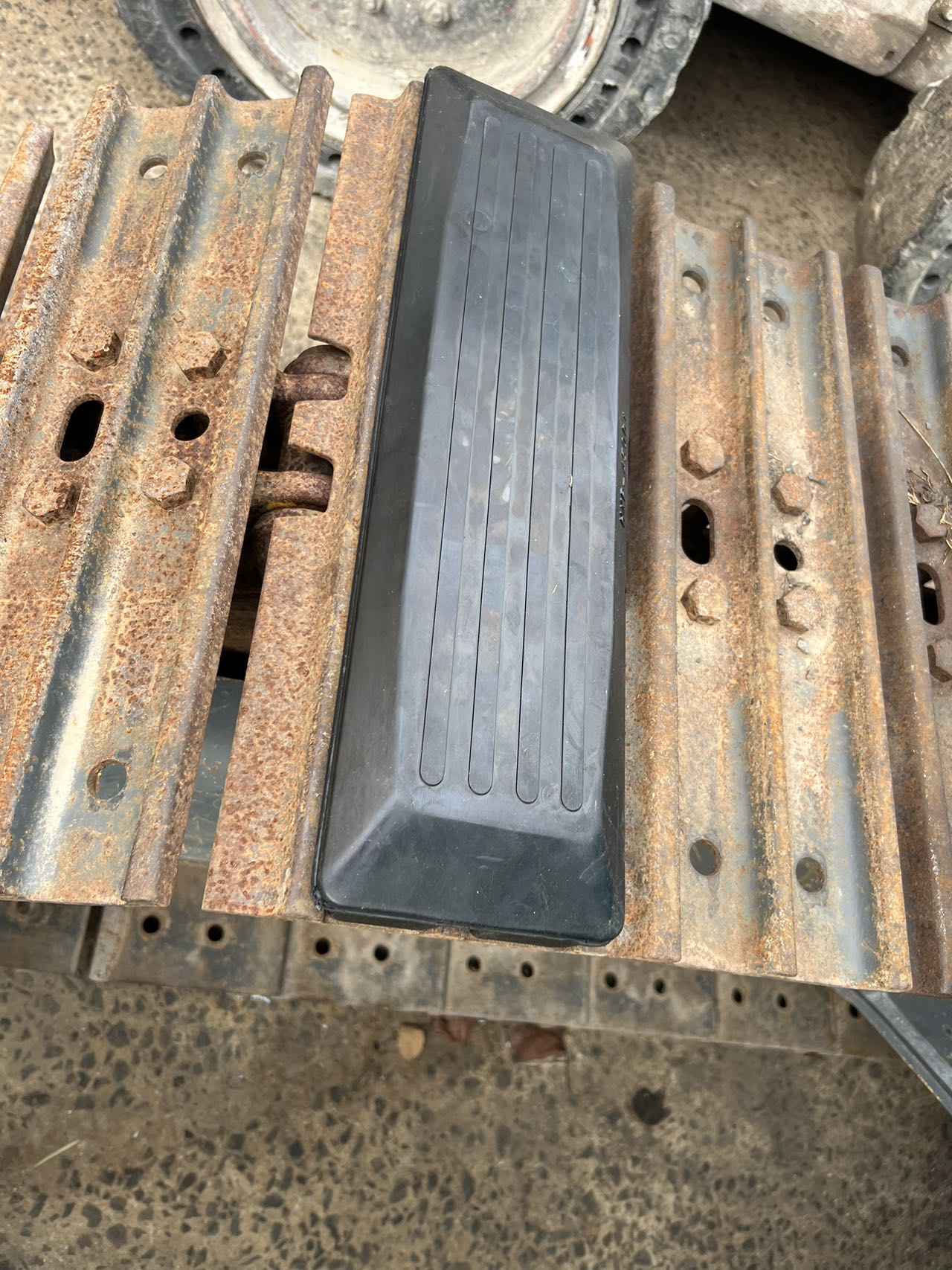
The heavy equipment industry categorizes track pads into three primary configurations: clip-on, bolt-on, and chain-on pads. Clip-on variants attach directly to the side of the steel shoe using a specialized bracket, making them ideal for temporary deployment. Bolt-on pads are secured through pre-drilled holes in the steel grouser, offering a more permanent and rigid solution. Chain-on pads replace the steel shoe entirely, bolting directly to the track chain for maximum durability in dedicated urban applications.
Beyond surface protection, these components fundamentally alter the machine’s operating dynamics. High-quality rubber pads can reduce cabin noise by 10 to 15 decibels and dampen high-frequency vibrations by up to 40%. This dampening effect minimizes structural fatigue on the excavator’s boom, stick, and sensitive hydraulic components, directly extending the mean time between failures (MTBF) for the entire machine.
How track pads reduce downtime
Downtime is frequently driven by secondary logistical delays, such as waiting for heavy transport vehicles or executing mandatory site remediations. When a 15-ton excavator damages a public roadway, contractors face immediate project halts, regulatory fines, and asphalt repair costs that can easily exceed $150 to $200 per square meter. Properly specified track pads neutralize this financial and operational risk, ensuring continuous project flow.
Furthermore, rubber and polyurethane pads improve overall traction on smooth surfaces like wet concrete, interlocking pavers, or asphalt. This enhanced grip prevents track slippage, which otherwise accelerates frictional wear on drive sprockets, rollers, and idlers. By stabilizing the undercarriage kinematics and reducing shock loads, track pads keep machines working efficiently in the field rather than idling in the maintenance bay for premature undercarriage overhauls.
How to Compare Excavator Track Pads
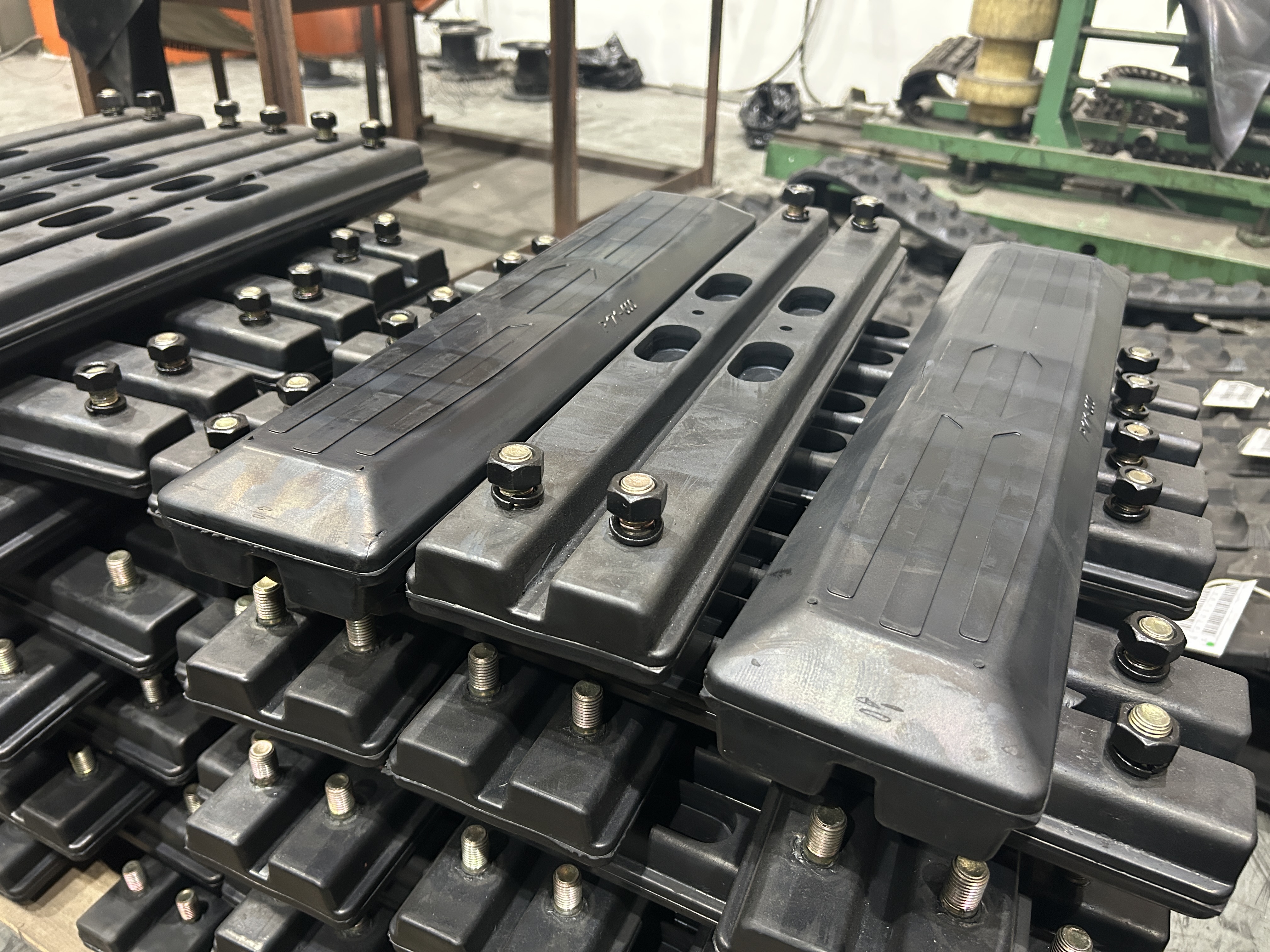
Evaluating track pad specifications requires analyzing the complex interplay between material science, machine weight classes, and the intended operating environment. Selecting an incompatible pad configuration can lead to rapid chunking, core delamination, and sudden component failure, thereby negating any anticipated downtime reductions.
Material and fitment criteria
Material composition serves as the primary differentiator in track pad longevity and performance. Standard pads utilize advanced natural and synthetic rubber blends engineered for optimal abrasion resistance and elasticity. Premium rubber track pads typically exhibit a durometer rating of 75 to 85 Shore A and a tensile strength exceeding 15 MPa. These specific metrics ensure the pad can withstand high localized pressure without tearing when traversing curbs or debris.
For highly abrasive environments, such as demolition sites or recycling facilities, polyurethane track pads offer a superior, albeit costlier, alternative. While commanding a higher initial procurement cost, polyurethane variants deliver up to three times the wear life of standard rubber and offer exceptional resistance to chemical degradation. Fitment accuracy is equally critical; the pad’s pitch must perfectly match the steel shoe’s dimensions. A deviation of even 2 millimeters in bolt-hole alignment can cause severe shear stress on the mounting hardware during high-torque turning maneuvers.
Machine class, duty cycle, and terrain
Machine class strictly dictates the structural requirements of the pad. Mini excavators in the 1-to-5 metric ton range can operate effectively with standard clip-on rubber pads due to lower ground-bearing pressures. However, mid-size and heavy excavators ranging from 15 to 25 metric tons require heavy-duty bolt-on or chain-on configurations featuring reinforced internal steel cores. These cores prevent the pad from bending or snapping under extreme torsional loads.
Terrain assessment is equally vital when matching the machine to the pad. Operating a 20-ton excavator on jagged demolition debris requires vastly different track pad specifications than operating the same machine on smooth asphalt. Fleet managers must evaluate the duty cycle—whether the machine will spend 80% of its time on pavement or transition frequently between mud and concrete—to determine the optimal balance of traction and tear resistance.
| Pad Configuration | Ideal Machine Weight | Installation Speed | Primary Use Case |
|---|---|---|---|
| Clip-on | 1 to 8 metric tons | Fast (< 2 hours/set) | Temporary urban utility work |
| Bolt-on | 5 to 20 metric tons | Moderate (3-5 hours/set) | Mixed-terrain construction |
| Chain-on | 10 to 25+ metric tons | Slow (requires track split) | Permanent paved surface operation |
Procurement, Installation, and Maintenance Best Practices
Effective lifecycle management of excavator track pads hinges on rigorous procurement standards and highly disciplined maintenance schedules. Treating these components as strategic fleet assets rather than disposable commodities maximizes return on investment and minimizes unexpected field failures that lead to costly downtime.
Sourcing, quality control, and compliance checks
When sourcing track pads, fleet managers should verify that manufacturers adhere to ISO 9001 quality management standards. High-quality suppliers will provide transparent engineering specifications regarding the rubber-to-metal bonding process, which represents the most common point of structural failure. A reliable track pad must feature a chemically bonded steel core rather than relying solely on mechanical adhesion or low-grade industrial glues.
Procurement strategies must also account for Minimum Order Quantities (MOQs), global shipping lead times, and warranty terms.
Key Takeaways
- The most important conclusions and rationale for Excavator Track Pads
- Specs, compliance, and risk checks worth validating before you commit
- Practical next steps and caveats readers can apply immediately
Frequently Asked Questions
Which excavator track pad type is best for paved job sites?
Chain-on pads are usually best for dedicated road or urban work because they replace steel shoes for maximum durability and surface protection.
How do track pads help reduce fleet downtime?
They let excavators move across asphalt or concrete without waiting for a flatbed and help reduce slip, vibration, and undercarriage wear.
What should I check before ordering replacement excavator track pads from Gator Track?
Confirm machine model, shoe width, pitch, bolt-hole pattern, and preferred style such as bolt-on, clip-on, chain-on, RP, HXP, or DRP.
When should I choose polyurethane instead of rubber track pads?
Choose polyurethane for demolition, recycling, or chemically harsh sites where higher abrasion resistance and longer wear life justify the added cost.
Can worn or mismatched track pads damage the undercarriage?
Yes. Poor fitment or worn pads can cause shear stress, slippage, and extra shock loads that speed wear on sprockets, rollers, and idlers.
Post time: Jun-11-2026