Introduction
Excavator track pads do far more than protect pavement: their material formulation, bonding method, and dimensional accuracy directly influence traction, vibration, wear life, and undercarriage cost. For contractors working on asphalt, concrete, and other finished surfaces, small differences in pad design can affect machine stability, surface damage risk, and replacement intervals. This article explains how precision molding improves pad consistency and field performance, what technical factors matter most when selecting pads, and how those choices translate into lower maintenance, better ground protection, and more predictable operating results.
Why Excavator Track Pads Matter for Performance and Cost
Excavator track pads serve as the vital interface between heavy crawler machinery and sensitive ground surfaces. As urban infrastructure maintenance and utility upgrades increase, the demand for non-destructive excavation solutions has surged. By converting steel-tracked equipment into versatile machines capable of traversing finished concrete, asphalt, and landscaped terrain, these pads prevent costly surface degradation while stabilizing the undercarriage during operation.
What excavator track pads are and where they are used
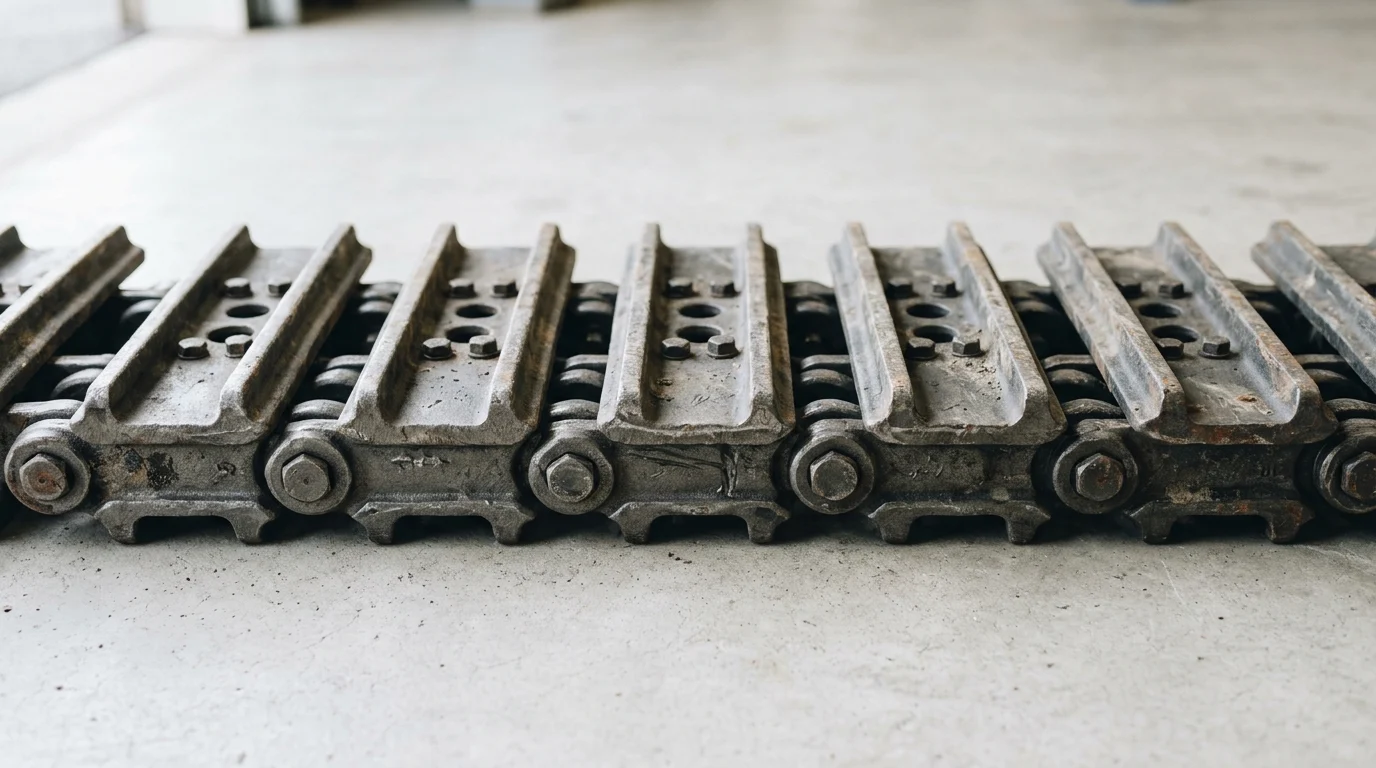
Comprising highly engineered elastomeric compounds—typically heavy-duty vulcanized rubber or specialized polyurethane—bonded to high-strength steel plates, excavator track pads are indispensable for municipal construction and utility applications. Standard bare steel tracks exert immense, concentrated point loads that can instantly fracture fresh asphalt and shear finished concrete surfaces during pivot maneuvers. Installing track pads distributes the machine’s operating weight across a broader footprint, significantly reducing localized ground pressure. Depending on the machine class, this pressure is often reduced to below 60 kPa (8.7 psi). This load distribution allows 5-ton to 25-ton excavators to operate seamlessly in residential zones, road repair sites, and historical districts without leaving destructive track marks or requiring secondary surface remediation.
Which performance factors affect wear, traction, and operating cost
Wear life, traction coefficients, and overall operating costs are heavily dictated by the physical properties of the pad material and the harshness of the operating environment. High tear strength and abrasion resistance are paramount; premium rubber track pads typically feature a durometer hardness of 75 to 85 Shore A, balancing the flexibility required for adequate traction with the rigidity needed for heavy load-bearing. Operating costs are directly impacted by pad durability. A proven 15% to 20% reduction in undercarriage vibration translates directly to decreased fatigue and wear on rollers, idlers, and final drives. Furthermore, the financial equation heavily favors high-quality pads: avoiding a single penalty for municipal asphalt damage can instantly offset the $1,500 to $3,500 capital investment required for a complete set of premium track pads.
How Precision Molding Improves Excavator Track Pad Quality
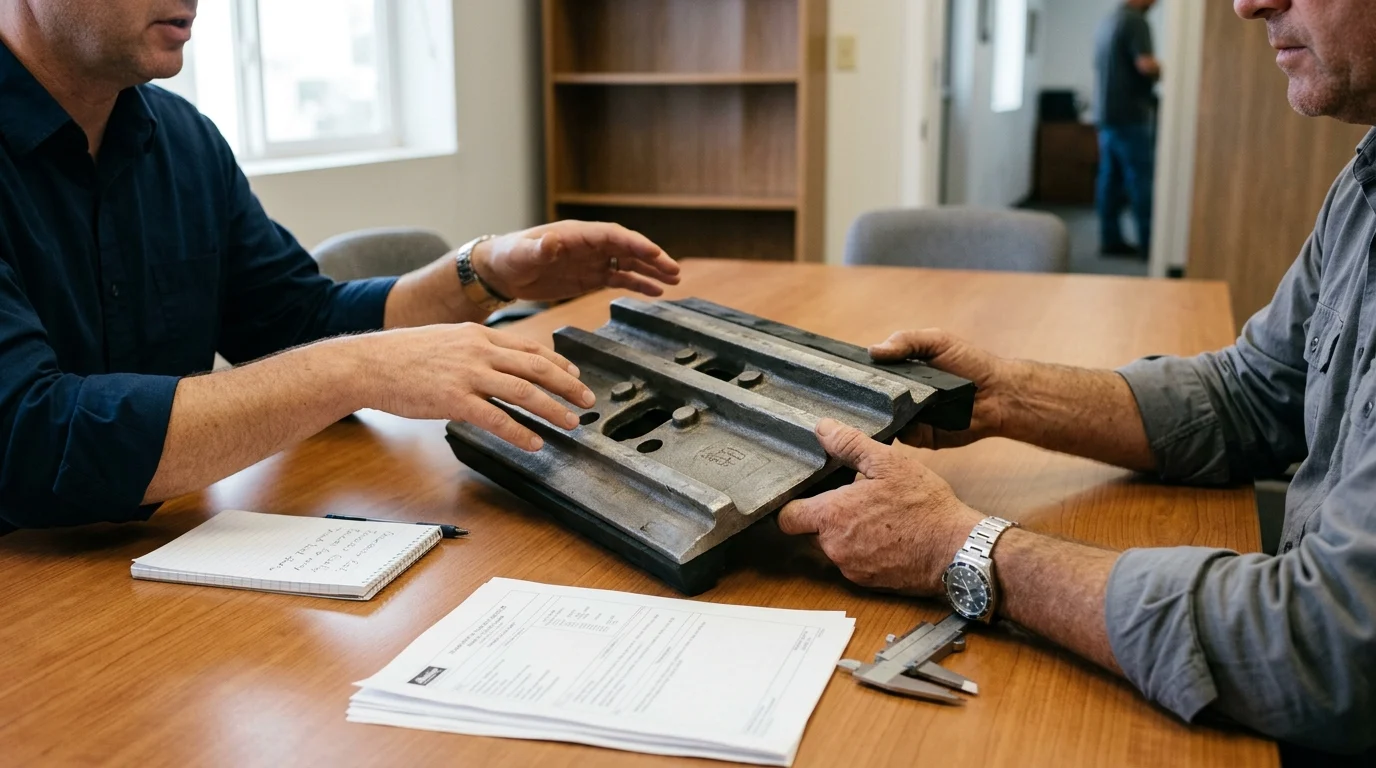
The manufacturing methodology behind elastomeric track components dictates their field reliability and resistance to catastrophic delamination. Precision molding elevates track pad production from simple open casting to highly controlled, pressurized vulcanization, ensuring that the critical chemical bond between the steel core and the polymer matrix exceeds the extreme mechanical shear stresses of heavy excavation.
Which material, tooling, and dimensional control factors matter most
Superior track pad quality relies heavily on stringent material science, advanced tooling methodologies, and rigorous dimensional control. The vulcanization process requires precise thermal regulation, typically maintaining mold temperatures between 150°C and 170°C under hydraulic press pressures exceeding 2,000 PSI. This high-pressure environment ensures optimal cross-linking of the polymer chains, maximizing the elastomer’s tensile strength and cut resistance. Tooling accuracy is equally critical to field performance; molds machined to strict tolerances of ±0.5 mm guarantee that the internal steel plates and mounting holes perfectly align with the excavator’s steel track shoes, eliminating installation binding and bolt stress. Furthermore, the steel-to-rubber bonding phase utilizes advanced multi-coat primer and adhesive systems, achieving peel adhesion strengths greater than 15 kN/m to prevent premature pad delamination during high-torque turning maneuvers on abrasive surfaces.
How bolt-on and clip-on track pads compare
The physical method of pad attachment significantly influences both installation efficiency and operational stability. Buyers must evaluate the structural differences between primary pad configurations based on their specific fleet requirements and terrain transition frequency.
| Attachment Type | Installation Time (per pad) | Stability & Shear Resistance | Typical Application | Relative Cost Index |
|---|---|---|---|---|
| Bolt-On | 5 to 8 minutes | Very High (Bolted directly through pre-drilled steel shoe) | Heavy-duty, long-term urban projects | Baseline (1.0x) |
| Clip-On | 2 to 4 minutes | Moderate to High (Wraps around standard bare steel shoe) | Frequent transitions between dirt and paved roads | 1.10x to 1.15x |
| Chain-On (Roadliner) | N/A (Replaces the steel shoe entirely) | Maximum (Bolts directly to the track chain link) | Dedicated urban machines, continuous paved use | 1.25x to 1.40x |
Bolt-on pads offer maximum shear resistance for heavier machines, though they require pre-drilled steel shoes. Clip-on pads provide rapid deployment flexibility for mixed-terrain operations, relying on high-tensile steel side-brackets to secure the elastomer pad to a standard track shoe without requiring drilling or permanent modification.
How Buyers Should Specify and Select Excavator Track Pads
Selecting the correct track pad goes far beyond simply matching a part number to an excavator model. Procurement and fleet maintenance professionals must approach sourcing strategically, focusing on Total Cost of Ownership (TCO), supplier manufacturing capabilities, and precise machine specifications to avoid costly field downtime and premature component failure.
What procurement and maintenance teams should verify before purchase
Before finalizing a purchase order, maintenance teams must verify exact dimensional parameters to ensure flawless compatibility and safe operation. The critical measurements include the track chain pitch, the precise width of the steel shoe (commonly ranging from 400 mm for compact municipal excavators up to 600 mm or more for mid-size machines), and the specific bolt-hole spacing patterns. Mismatched bolt patterns can lead to severe bolt shear under operational loads. Procurement should also mandate clear technical documentation regarding the elastomer compound; specifying a minimum tensile strength of 18 MPa ensures the material can withstand sharp debris without catastrophic tearing. Additionally, verifying the thickness of the internal steel insert or external mounting bracket guarantees that the pad will not deform or yield under the machine’s maximum operating weight during aggressive, high-friction pivot turns.
Which quality, compliance, and delivery criteria to assess
Evaluating supplier quality frameworks and logistical capabilities is essential for mitigating supply chain risk and ensuring consistent fleet availability.
Key Takeaways
- The most important conclusions and rationale for Excavator Pads
- Specs, compliance, and risk checks worth validating before you commit
- Practical next steps and caveats readers can apply immediately
Frequently Asked Questions
What do excavator track pads do?
They protect asphalt, concrete, and landscaped areas while improving traction and reducing undercarriage vibration on steel-tracked excavators.
Which track pad type should I choose for my excavator?
Use bolt-on for heavy-duty long-term paved work, clip-on for frequent on/off-road transitions, and chain-on for machines dedicated to continuous urban pavement use.
Why does precision molding matter for track pad performance?
It improves steel-to-rubber bonding, hole alignment, and wear consistency, helping prevent delamination, bolt stress, and premature pad failure.
How can Gator Track help with replacement excavator track pads?
Gator Track supplies bolt-on, clip-on, and chain-on rubber pads in many fitment sizes and model codes for excavators and other crawler equipment.
When is it worth investing in premium excavator track pads?
Choose premium pads when you work on finished surfaces, municipal roads, or high-vibration jobs, where avoiding damage and reducing wear can quickly offset the cost.
Post time: Jun-09-2026