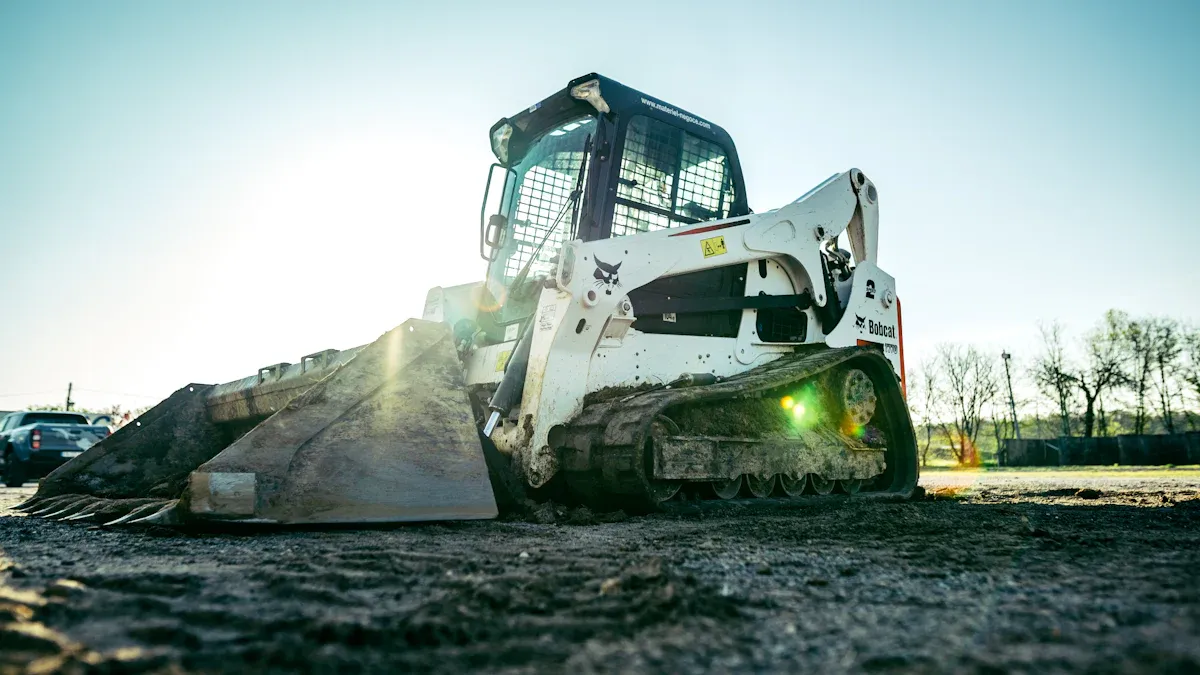
Skid loader tracks play a vital role in handling tough terrains and ensuring smooth operation. They provide stability, resist slipping, and perform reliably on muddy or soft soil. Operators can extend track life and reduce downtime by following essential practices like avoiding sharp turns and maintaining proper track tension. Routine inspections and cleaning help prevent debris buildup, boosting efficiency during operations.
Key Takeaways
- Good skid loader tracks help with performance and balance on rough ground. They stop slipping and grip better, especially in mud or soft dirt.
- Taking care of tracks by checking and cleaning them makes them last longer. Operators should look for damage and tighten them to avoid expensive fixes.
- Picking the right tracks for the job is very important. Think about the ground, how much weight it will carry, and if it fits with tools to work better.
Key Features of High-Quality Skid Loader Tracks
Durability and Material Composition
Durability is one of the most critical aspects of skid loader tracks. High-quality tracks are built to withstand tough conditions and heavy use. Manufacturers often use specially formulated rubber compounds that resist cutting and tearing. These materials ensure the tracks can handle sharp debris, rocky surfaces, and other challenging environments without wearing out quickly.
Another key feature is the use of steel chain links. These links are drop-forged and coated with a strong adhesive, creating a robust bond that enhances the track’s strength. This design not only improves durability but also ensures smooth operation by preventing slippage or misalignment during use.
Tip: Regular cleaning and inspections can further extend the lifespan of your tracks by preventing debris buildup and identifying early signs of wear.
Traction and Performance in Various Terrains
Skid loader tracks excel in providing superior traction, especially in challenging terrains like muddy, soft, or uneven ground. Their optimized tread patterns reduce ground pressure, which minimizes soil compaction and protects the terrain’s health. This feature is particularly beneficial for landscaping and agricultural applications where preserving the ground is essential.
Here are some performance benefits of premium skid loader tracks:
- Lower ground pressure reduces damage to delicate surfaces.
- Enhanced traction improves stability and control on slippery or uneven terrain.
- Reduced wear and tear lead to lower maintenance costs and longer equipment life.
- Greater efficiency allows operators to complete tasks faster and with less effort.
Since the mid-1960s, advancements in traction designs have significantly improved the performance of skid loader tracks. Modern tracks are engineered to deliver consistent results across various surfaces, making them a reliable choice for diverse applications.
Compatibility with Different Skid Steer Models
Compatibility is another crucial factor when selecting skid loader tracks. Tracks must fit the specific dimensions and requirements of the skid steer model to ensure optimal performance. Key compatibility factors include:
| Dimension | Description |
|---|---|
| Width | Measured across the flat surface of the track, typically ranging from 9 to 18 inches. |
| Pitch | Distance between pivot centers on consecutive links, must match the machine’s drive sprocket. |
| Link Count | Total number of links forming the complete track circuit, must match the machine’s undercarriage. |
Choosing tracks that align with these specifications ensures a secure fit and smooth operation. It also prevents unnecessary wear on both the tracks and the machine, saving time and money in the long run.
Note: Always consult your skid steer’s manual or a trusted supplier to confirm compatibility before purchasing new tracks.
Top Skid Loader Tracks for Maximum Performance
Features of High-Performance Tracks
High-performance skid loader tracks stand out due to their advanced design and material quality. These tracks often feature specially formulated rubber compounds that resist cuts and tears, ensuring durability in harsh conditions. Steel chain links, drop-forged for strength, provide a secure fit and smooth operation. This combination of materials enhances the track’s ability to handle heavy loads and rough terrains without compromising performance.
Another key feature is the optimized tread pattern. Tracks with well-designed treads offer superior traction, even on slippery or uneven surfaces. This makes them ideal for applications like construction, landscaping, and agriculture. Operators also benefit from reduced ground pressure, which minimizes soil damage and improves stability during operation.
Tip: Investing in tracks with high-quality materials and thoughtful design can significantly reduce maintenance costs over time.
Pros and Cons of Different Track Types
Choosing the right track type depends on the specific needs of the operator. Here’s a quick comparison:
| Track Type | Pros | Cons |
|---|---|---|
| Rubber Tracks | Lightweight, quieter operation, and less damage to surfaces. | Less durable on rocky terrain. |
| Steel Tracks | Extremely durable and ideal for heavy-duty applications. | Heavier and noisier. |
| Hybrid Tracks | Combines the benefits of rubber and steel for versatility. | Higher upfront cost. |
Rubber tracks are perfect for soft or delicate surfaces, while steel tracks excel in rugged environments. Hybrid tracks offer a balance, making them suitable for operators who need versatility.
Expert Insights on Track Selection
Experts recommend considering factors like hydraulic flow, lift orientation, and job requirements when selecting skid loader tracks. For instance, high-flow hydraulic systems work best for tasks requiring high-performance tools. Vertical-lift machines are preferred for load-and-carry applications due to their higher capacity.
Here’s a breakdown of expert insights:
| Factor | Insight |
|---|---|
| Hydraulic Flow | High-flow systems enhance versatility for demanding tasks. |
| Lift Orientation | Vertical-lift machines handle heavier loads effectively. |
| Attachment Versatility | Attachments dictate the required hydraulic flow and pressure. |
| Job Requirements | Operators should choose between radial-lift and vertical-lift based on their tasks. |
By aligning track selection with these factors, operators can maximize the performance and efficiency of their skid loader tracks.
How to Choose the Right Skid Loader Tracks
Assessing Your Application Requirements
Choosing the right tracks starts with understanding how the skid loader will be used. Different applications demand specific features. For example, landscaping projects often require tracks that minimize ground damage, while construction sites need tracks that can handle heavy loads and rough surfaces.
Here are some key questions to consider:
- What type of terrain will the skid loader operate on?
- Will the machine carry heavy loads or perform light-duty tasks?
- Are there specific attachments that require certain track features?
Operators working in muddy or soft soil should prioritize tracks with excellent traction and reduced ground pressure. On the other hand, those in rocky environments may need tracks with enhanced durability to resist cuts and tears.
Tip: Always match the track type to the job requirements. This ensures better performance and reduces wear and tear on the equipment.
Budget Considerations and Value for Money
Budget plays a significant role in selecting skid loader tracks. While it might be tempting to go for the cheapest option, investing in high-quality tracks often saves money in the long run. Durable tracks reduce maintenance costs and last longer, providing better value over time.
Here’s a simple breakdown of cost considerations:
| Factor | Impact on Budget |
|---|---|
| Initial Cost | High-quality tracks may cost more upfront but offer better durability. |
| Maintenance Expenses | Cheaper tracks often require frequent repairs, increasing long-term costs. |
| Longevity | Tracks made with premium materials last longer, reducing replacement frequency. |
Operators should also consider the total cost of ownership. Tracks that perform well in specific applications can improve efficiency, saving time and labor costs.
Note: Look for tracks that balance affordability with durability. This ensures you get the best value for your investment.
Maintenance and Longevity Tips
Proper maintenance extends the life of skid loader tracks and ensures consistent performance. Regular inspections help identify wear and tear early, preventing costly repairs. Cleaning the tracks after each use removes debris that could damage the rubber or steel components.
Follow these maintenance tips to maximize track longevity:
- Inspect Regularly: Check for cracks, cuts, or loose links.
- Clean Thoroughly: Remove mud, rocks, and other debris after every operation.
- Adjust Tension: Ensure the tracks are neither too tight nor too loose.
- Store Properly: Keep the machine in a dry, covered area to protect the tracks from weather damage.
Pro Tip: Avoid sharp turns and excessive spinning. These actions can cause unnecessary stress on the tracks, leading to faster wear.
By following these steps, operators can ensure their skid loader tracks remain in top condition, reducing downtime and improving overall efficiency.
Investing in high-quality skid loader tracks ensures better performance and stability across various terrains. Urban Development Partners saw track life increase from 500 to over 1,200 hours after switching to premium tracks. Emergency repairs dropped by 85%, and total expenses fell by 32%. For expert advice, contact:
- Email: sales@gatortrack.com
- Wechat: 15657852500
- LinkedIn: Changzhou Hutai Rubber Track Co., Ltd.
Post time: May-15-2025