
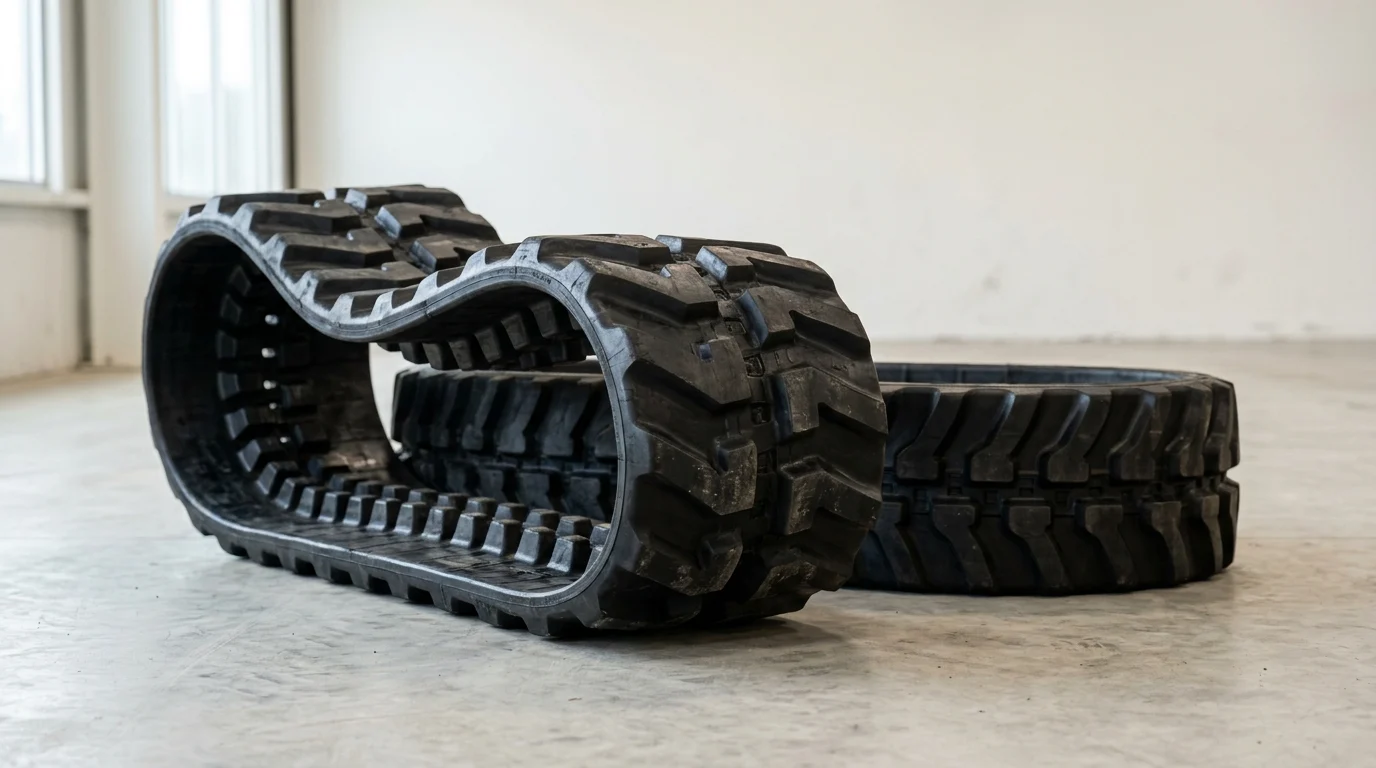
Why Rubber Excavator Tracks Matter in Urban Projects
Navigating the delicate balance between heavy machinery operation and infrastructure preservation is a daily challenge. When deploying equipment in densely populated urban areas, contractors face strict noise ordinances and zero-tolerance policies for pavement damage.
There is a distinct shift toward utilizing rubber tracks to mitigate the destructive footprint of 3-to-10-ton mini and midi excavators. Unlike their steel counterparts, these tracks absorb shock, reducing the structural stress transferred to both the machine undercarriage and the surrounding concrete or asphalt.
What Makes Rubber Excavator Tracks Advanced
Modern iterations of these tracks are far removed from the basic rubber belts of the past. In this context, “advanced” refers specifically to heavy-duty rubber tracks that feature continuous steel cord (CSC) technology, distinguishing them from standard-duty alternatives. By eliminating overlapping joints—historically the primary point of failure—CSC construction significantly increases tensile strength.
Furthermore, manufacturers now integrate forged iron cores and specialized anti-gouge rubber compounds engineered with optimized shore hardness ratings. This heavy-duty resilience provides the durability required to withstand sharp urban debris like rebar, as well as rough terrain challenges including jagged rocks, deep mud, and uneven slopes, without chunking or tearing under normal conditions.
Which Efficiency Metrics Improve Most
When evaluating jobsite efficiency, the most closely monitored metrics are transit speed and vibration-induced fatigue. While top speeds are ultimately machine-dependent, advanced heavy-duty rubber configurations allow excavators to travel faster on finished surfaces. They do not raise the excavator’s mechanical top speed; rather, they remove the operator-imposed speed restrictions necessary to protect pavement with steel tracks, allowing the machine to safely reach the higher end of its mechanical capabilities.
Additionally, the shock-absorbing nature of rubber noticeably reduces operator exposure to vibration. Lower vibration directly correlates with reduced operator fatigue, allowing for more consistent and focused machine operation throughout a shift.
How to Compare Rubber and Steel Excavator Tracks
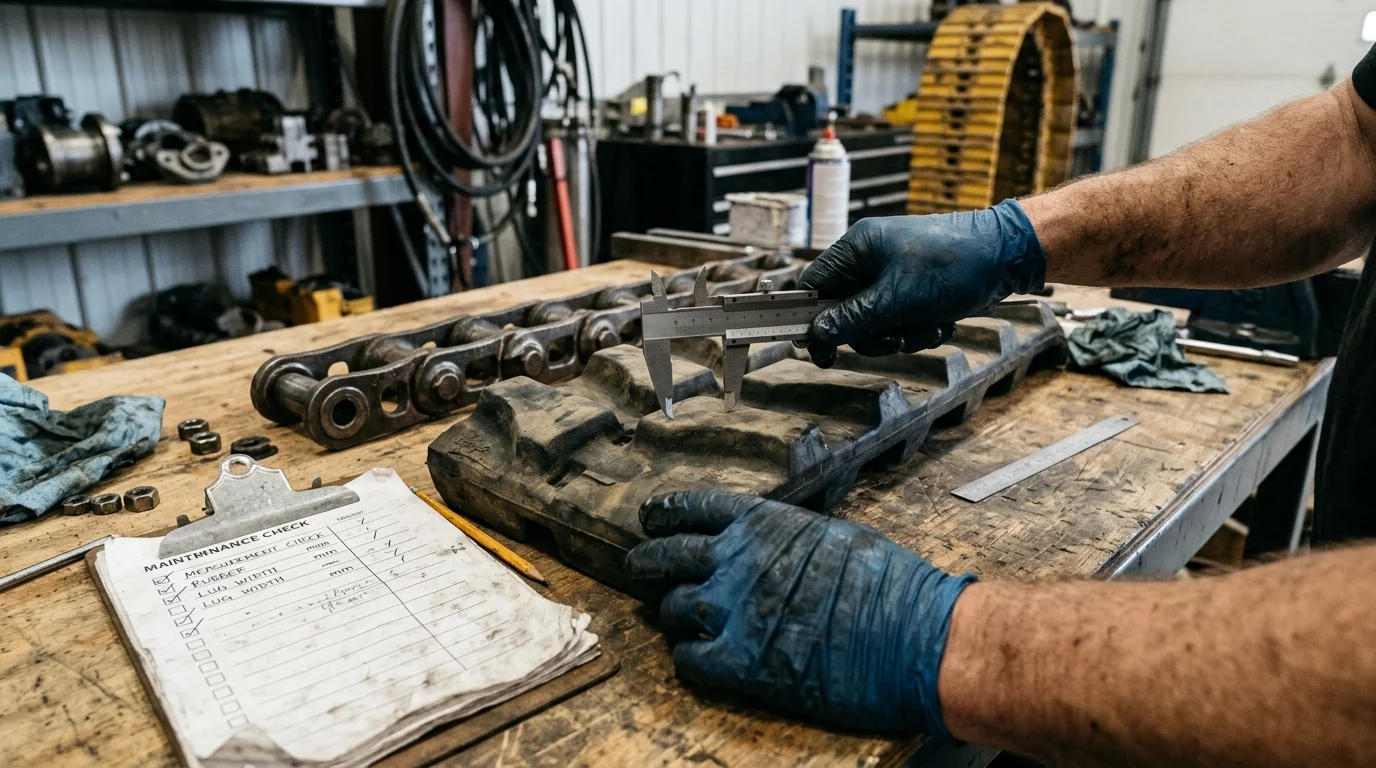
Deciding between rubber and steel undercarriages requires a rigorous analysis of the project’s primary terrain, load requirements, and transport logistics. Improper track selection can lead to premature undercarriage failure, higher operating costs, and compliance issues with local transport regulations.
A comprehensive total cost of ownership (TCO) assessment is essential. This must factor in the upfront price premium of heavy-duty CSC rubber tracks compared to standard rubber and steel, alongside replacement labor and the implications of OEM versus aftermarket warranties. While steel remains the standard choice for demolition and abrasive quarry work, rubber variants are highly preferred in urban, landscaping, and mixed-surface applications where versatility across both city streets and rough terrain is paramount.
However, rubber tracks have distinct rough-terrain limitations that must be weighed in this comparison. They offer reduced side-slope stability compared to steel, can overheat during prolonged high-speed road travel, and suffer accelerated wear from sharp demolition debris. Operators must also remain aware that rubber compounds are vulnerable to UV degradation, petroleum exposure, extreme heat buildup, and cold-weather cracking. Proper storage protocols—such as keeping tracks in climate-controlled, shaded environments when not in use—and careful jobsite management are critical to maximizing their lifespan. For contractors splitting time between urban pavement and rough terrain, bolt-on rubber pads for steel tracks serve as a practical hybrid alternative, offering the core strength of steel with the surface protection of rubber.
Key Factors: Traction, Ground Pressure, and Durability
The evaluation comes down to three critical variables: traction, ground pressure, and operational durability. Steel tracks bite aggressively into loose dirt and mud, but they heavily scar finished surfaces, exerting ground pressures often exceeding 7.0 psi on mid-sized machines.
Conversely, rubber tracks distribute the machine’s weight more evenly, typically resulting in a broad estimated ground pressure between 3.5 and 5.5 psi, depending heavily on the specific machine class, tread pattern, and operating weight. This reduction prevents costly post-project pavement resurfacing, saving thousands of dollars per urban block. However, this surface protection comes with a durability trade-off. While a high-quality steel track might endure 3,000 to 4,000 operating hours in harsh conditions, premium rubber tracks generally offer a machine-class-specific lifespan of roughly 1,500 to 2,000 hours before replacement becomes necessary. These figures are not universal material standards; they depend heavily on operator habits and application. Sharp pivoting on abrasive rocks or debris, for instance, will rapidly accelerate rubber wear.
Comparison Table for Heavy-Duty Rubber Tracks
To streamline procurement decisions, standard matrices help benchmark these performance characteristics. The table below illustrates the general operational parameters separating heavy-duty rubber, standard rubber, and traditional steel tracks. Note: Maximum travel speed and noise levels are primarily machine-dependent. Rubber tracks enable faster, quieter travel on finished surfaces only because operators voluntarily limit steel track speeds to avoid surface damage, not because rubber alters the excavator’s mechanical limits.
| Track Type | Avg. Ground Pressure (psi) | Expected Lifespan (Hours) | Max Travel Speed | Noise Level (dB) |
|---|---|---|---|---|
| Standard Rubber | 3.5 – 4.5 | 1,000 – 1,500 | Surface-dependent (Fastest on hard terrain) | Lower |
| Heavy-Duty Rubber | 4.0 – 5.5 | 1,500 – 2,000 | Surface-dependent (Slightly reduced due to weight) | Lower |
| Traditional Steel | 7.0 – 9.0+ | 3,000 – 4,000+ | Surface-dependent (Slowest to prevent damage) | Higher |
By analyzing this data alongside TCO considerations, contractors can accurately forecast lifecycle costs, manage jobsite noise compliance, and match the undercarriage specification to the exact demands of deployment schedules.
How to Select, Source, and Maintain Rubber Excavator Tracks
Sourcing the optimal undercarriage components—such as high-quality Rubber Excavator Tracks—and maintaining them effectively is just as critical as the initial selection. Implementing a strict procurement and maintenance protocol consistently lowers per-hour operating costs.
Navigating the aftermarket requires an understanding of dimensional specifications, lead times, and a strict commitment to routine undercarriage hygiene to maximize the return on investment.
Practical Steps for Choosing the Right Tracks
Selecting the correct replacement begins with decoding the track’s dimensional formula: Width × Pitch × Links. For compact excavators, standard widths typically range from 230mm to 450mm.
It is highly
Key Takeaways
- Use heavy-duty rubber tracks on 3-to-10-ton mini and midi excavators when urban pavement protection, lower noise, and reduced vibration are project priorities.
- Choose continuous steel cord rubber tracks when tensile strength matters, because eliminating overlapping joints reduces a common failure point.
- Evaluate total cost of ownership by comparing purchase price, replacement labor, downtime risk, undercarriage wear, and OEM versus aftermarket warranty coverage.
- Select steel tracks for demolition, quarry work, and highly abrasive debris where rubber compounds are more likely to cut, chunk, or wear prematurely.
- Protect rubber track service life by avoiding petroleum exposure, prolonged high-speed travel, extreme heat buildup, UV damage, and cold-weather cracking.
- Match track choice to terrain, since rubber improves versatility on urban and mixed surfaces but provides less side-slope stability than steel.
Frequently Asked Questions
Why are rubber excavator tracks preferred for urban projects?
Rubber tracks help protect asphalt, concrete, curbs, and finished surfaces while reducing vibration and noise compared with steel tracks. That makes them useful where contractors must meet pavement-protection expectations and noise restrictions.
What makes advanced rubber excavator tracks different from standard rubber tracks?
Advanced heavy-duty rubber tracks often use continuous steel cord construction, forged iron cores, and anti-gouge rubber compounds. These features improve tensile strength and reduce common failure points such as overlapping joints.
Do rubber tracks make an excavator faster?
They do not increase the machine’s mechanical top speed. However, on finished surfaces, operators can often travel closer to the machine’s safe operating capability because rubber tracks reduce the risk of pavement damage.
Are rubber excavator tracks suitable for rough terrain?
Yes, heavy-duty rubber tracks can handle mixed terrain such as mud, uneven ground, and some rocky conditions. However, they are not ideal for severe demolition debris, abrasive quarry work, or prolonged sharp-rock exposure.
When should steel tracks be chosen instead of rubber tracks?
Steel tracks are usually better for demolition, quarry work, and highly abrasive or sharp debris environments. They also provide stronger side-slope stability in demanding ground conditions.

Post time: Sep-07-2026