Why Bauma 2026 Matters for Gator Track
Gator Track is preparing for a significant milestone at the upcoming bauma exhibition in Munich, scheduled for April 2026. Participating in this premier industry event provides an opportunity to connect directly with operators and fleet managers, demonstrating our manufacturing capabilities and presenting our latest rubber tracks through live product demonstrations and interactive technical showcases at our booth.
We aim to engage with the professionals who rely on our products every day. This event offers the ideal platform to highlight the evolution of our manufacturing processes, debut our 2026 product lineup, and outline our strategic direction for the future of heavy equipment components.
Rubber Tracks for Excavators
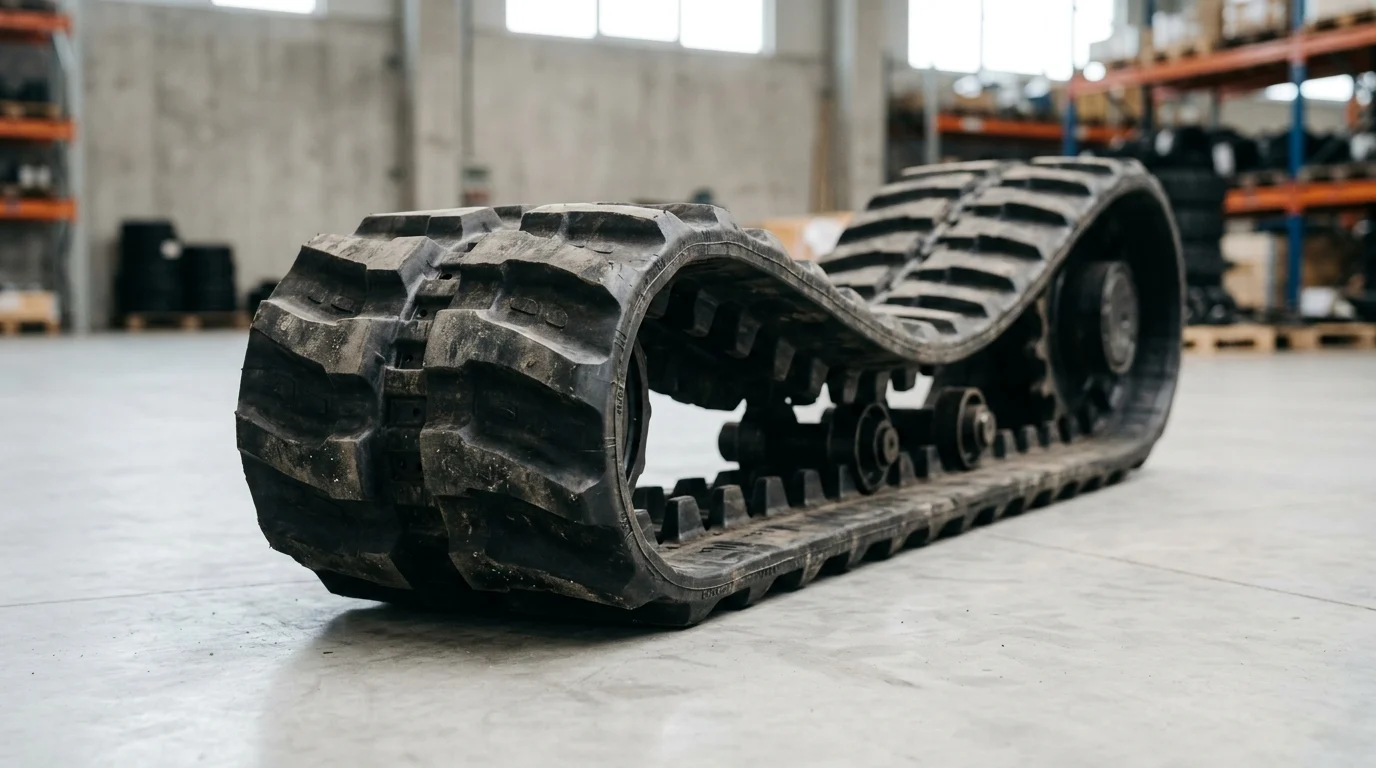
When selecting excavator rubber tracks, operators require optimal traction, durability, and vibration reduction. At bauma 2026, Gator Track will highlight heavy-duty treads designed specifically for the rigorous demands of modern construction machinery.
These tracks are engineered for machines ranging from 1.5-ton micro-diggers to 15-ton mid-sized excavators. Whether equipment is operating in muddy residential lots or navigating abrasive demolition debris, our specialized rubber compounds are formulated to resist chunking and cutting under these specific weight classes. However, it is important to note that rubber tracks have inherent limitations; exposure to extreme heat, excessive sharp debris, and improper undercarriage maintenance can accelerate material degradation.
Growth and Factory Investment Highlights
To maintain strict dimensional tolerances for consistent and reliable fitment, Gator Track has invested heavily in new tooling across the majority of its excavator, loader, dumper, and ASV (All-Surface Vehicle) compact track loader sizes. Rather than relying on legacy machinery, the facility utilizes automated vulcanization processes and ISO 9001-certified testing protocols to ensure product integrity.
Furthermore, recent facility expansions have broadened our production capabilities. These updates aim to substantially increase overall manufacturing capacity, ensuring a robust supply chain. This continuous investment establishes the facility as a state-of-the-art production hub capable of meeting growing international demand and supporting large-scale fleet upgrades.
Rubber Track Specs and Selection Criteria
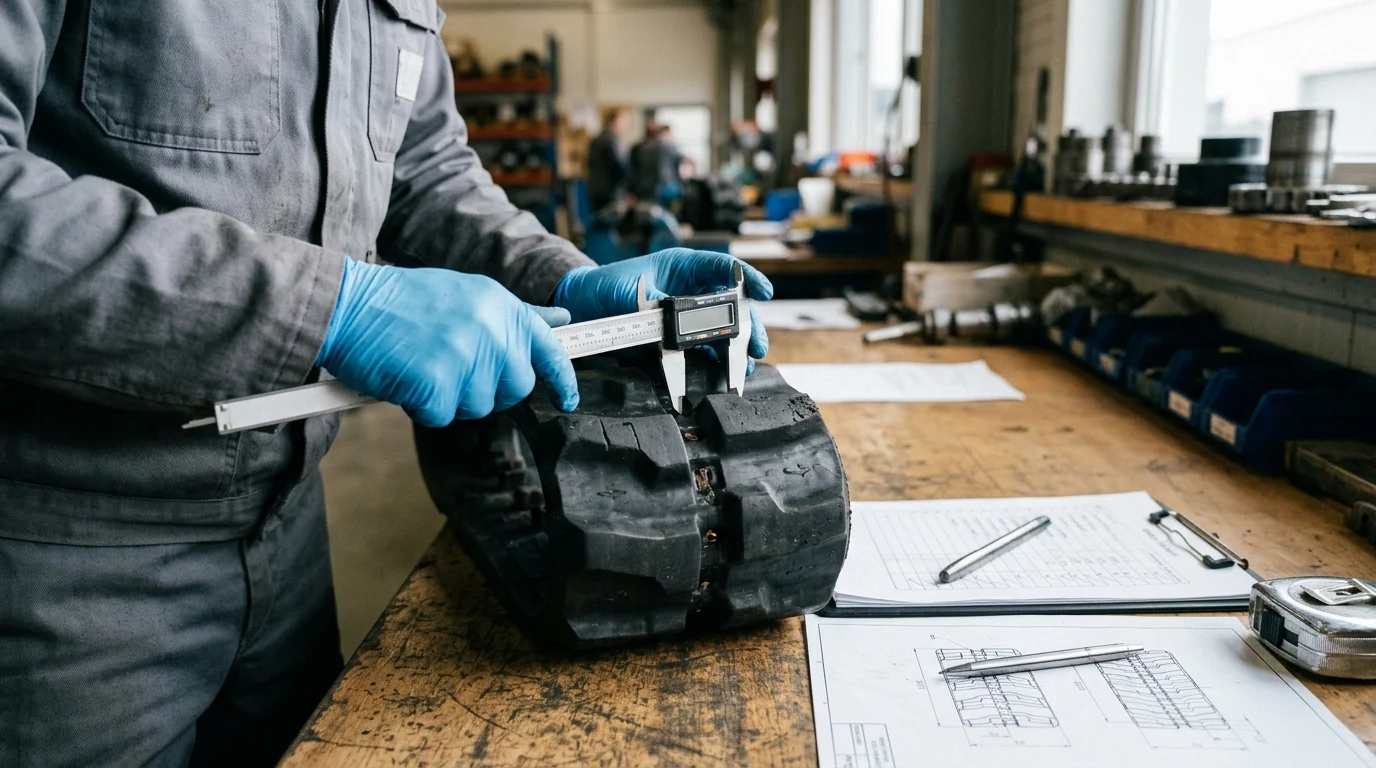
Selecting the appropriate track requires an understanding of the geometry and material science that keeps a fleet operating efficiently. Evaluating specific rubber track specifications is a critical step before finalizing any bulk procurement or fleet upgrade.
Construction and Fitment Basics
The core components of track fitment are width, pitch, and the number of links. Incorrect specifications can lead to derailed machines, premature wear, and damaged drive sprockets. To prevent fitment errors, operators must explicitly cross-check OEM part numbers, machine serial data, and existing undercarriage wear before ordering.
For standard mini excavators, widths typically range from 180mm to 450mm. The pitch—the distance between the center of one metal core to the next—is equally critical, with common measurements of 72mm, 96mm, or 109mm depending on the undercarriage configuration.
Gator Track utilizes continuous steel cord technology, which eliminates the overlapping joints found in traditional track designs. At bauma 2026, attendees can inspect cross-sections of this technology to see firsthand how this structural upgrade significantly increases overall tensile strength, reducing the risk of track failure under high-torque conditions, such as navigating deep trenches. However, it is worth noting that continuous steel cord tracks can present higher initial replacement costs and may be more difficult to repair in the field compared to traditional jointed tracks.
Comparison Table for Rubber Track Options
To illustrate how different applications dictate track specifications, the following table provides a breakdown of typical parameters across various machine classes.
| Machine Type | Typical Width Range (mm) | Common Pitch (mm) | Expected Service Life | Core Technology |
|---|---|---|---|---|
| Compact Excavator | 230 – 400 | 72, 96 | Standard | Continuous Steel Cord |
| ASV / CTL | 320 – 450 | 86, 101.6 | Variable | Kevlar / Steel Reinforced |
| Tracked Dumper | 320 – 700 | 100, 150 | Extended (Heavy-Duty) | Heavy-Duty Iron Core |
*Note: Expected service life serves only as a baseline for evaluating options. “Heavy-Duty” classifications indicate a thicker carcass construction and higher iron core density specifically designed for high-impact environments. Actual track longevity varies dramatically based on maintenance routines, terrain abrasiveness, undercarriage wear, and operator skill.
Rubber Track Sourcing and Quality Control
Optimal specifications must be supported by rigorous manufacturing discipline to prevent field failures. Sourcing reliable replacement parts requires evaluating a manufacturer’s quality control framework and holding suppliers accountable to production standards.
Supplier Qualification Steps
At Gator Track, supplier qualification and internal production rely on a rigorous, documented process. This involves operating under an ISO 9001-certified quality management system, which standardizes procedures across the production line—from raw material inspection and supplier vetting to final product delivery.
From the moment raw natural and synthetic rubber is received through to the final vulcanization process, technicians monitor temperatures, curing times, and material blending. The facility’s internal quality guidelines target industry-leading low defect thresholds through continuous quality audits. If a batch of raw material fails to meet tensile and elongation standards during initial laboratory testing, it is rejected before reaching the processing floor.
When Gator Track Is the Right Supplier
Partnering with a dedicated manufacturer minimizes equipment downtime and streamlines fleet maintenance. By prioritizing advanced track engineering and strict procurement standards, Gator Track ensures that replacement parts meet demanding performance criteria upon installation.
Rather than relying on passive supply chains, fleet managers require proactive partners who understand the daily rigors of construction environments. At bauma 2026, industry professionals are invited to visit our booth to book one-on-one technical consultations, review these manufacturing advancements firsthand, and establish dedicated post-show support channels to reduce operational downtime and improve overall fleet efficiency.
Key Takeaways
- Visit Gator Track at bauma 2026 in Munich to see live demonstrations of its latest rubber track lineup for construction machinery.
- Select excavator rubber tracks by confirming width, pitch, link count, OEM part numbers, serial data, and undercarriage wear before ordering.
- Gator Track’s excavator tracks are designed for machines from 1.5-ton micro-diggers to 15-ton mid-sized excavators.
- Common mini excavator track widths range from 180mm to 450mm, with pitch options often including 72mm, 96mm, or 109mm.
- Use proper undercarriage maintenance and avoid extreme heat or excessive sharp debris to reduce premature rubber track degradation.
- Gator Track’s investments in new tooling, automated vulcanization, and ISO 9001-certified testing support more reliable fitment and scalable production.
Frequently Asked Questions
When is bauma 2026 scheduled to take place?
Bauma 2026 is scheduled for April 2026 in Munich, where Gator Track plans to present its latest rubber track solutions for construction equipment.
What rubber tracks will Gator Track highlight at bauma 2026?
Gator Track will showcase excavator rubber tracks designed for machines from 1.5-ton micro-diggers to 15-ton mid-sized excavators, with tread designs focused on traction, durability, and vibration reduction.
What should operators check before ordering excavator rubber tracks?
Operators should verify track width, pitch, link count, OEM part numbers, machine serial data, and undercarriage condition to avoid poor fitment, derailment, and premature wear.
What track sizes are common for mini excavators?
Mini excavator rubber track widths commonly range from 180mm to 450mm, while typical pitch measurements include 72mm, 96mm, and 109mm depending on the machine’s undercarriage.
How is Gator Track improving rubber track manufacturing?
Gator Track has invested in new tooling, automated vulcanization processes, expanded production capacity, and ISO 9001-certified testing protocols to support consistent fitment and product integrity.

Post time: Sep-24-2026