
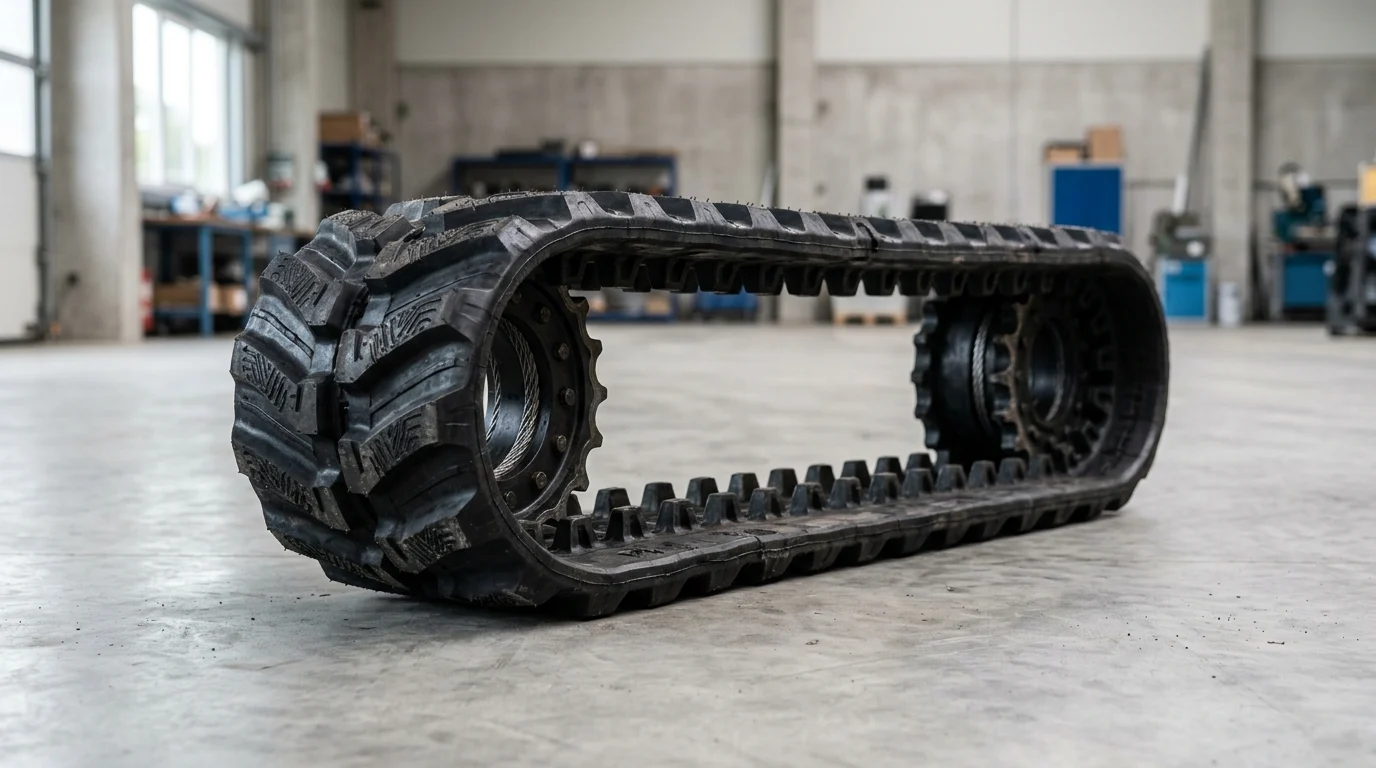
How Dumper Rubber Tracks Affect Cost per Hour
Optimizing the total cost of ownership for compact and mid-sized track dumpers heavily depends on undercarriage component selection. Dumper rubber tracks directly influence the operating cost per hour (CPH) through variations in fuel consumption, maintenance frequency, and equipment availability. Managing these variables requires a precise understanding of how track design impacts the broader mechanical ecosystem of heavy machinery.
Key cost drivers to include
Calculating an accurate CPH requires analyzing initial capital expenditure against ongoing operational expenses, including fuel, maintenance labor, and replacement parts. A standard CPH calculation divides the total cost of the tracks by their total hours of life. For example, a $3,000 track yielding 2,000 hours results in a track CPH of $1.50, but failing prematurely at 1,000 hours immediately doubles that cost.
Premium rubber tracks often present a 15% to 25% higher upfront cost compared to standard aftermarket alternatives, but they mitigate this initial premium through reduced rolling resistance. Lower rolling resistance can decrease fuel consumption by approximately 5% to 8% under high-load conditions. Furthermore, continuous rubber tracks minimize vibration transmission to the chassis. By absorbing shock loads before they reach the frame, these tracks reduce fatigue-related failures on sensitive hydraulic lines, electronic sensors, and engine mounts, effectively lowering the secondary maintenance costs associated with rough-terrain operation.
Track life, downtime, and replacement planning
The operational lifespan of dumper rubber tracks typically ranges between 1,500 and 2,500 hours. This variance is heavily dictated by operator behavior, turning techniques (such as avoiding stationary pivot turns), and substrate abrasiveness. Unplanned undercarriage failures routinely incur downtime costs exceeding $200 to $300 per hour in lost project productivity, completely exclusive of replacement parts, emergency shipping, and on-site labor.
Strategic replacement planning relies on tracking hours of operation against measurable tread depth. Implementing a predictive replacement schedule at 85% tread depletion prevents catastrophic field failures. This proactive approach ensures the machine remains operational during peak project phases, stabilizing the aggregated CPH and protecting project margins from unexpected mechanical delays.
Where Dumper Rubber Tracks Outperform Steel Tracks or Tires
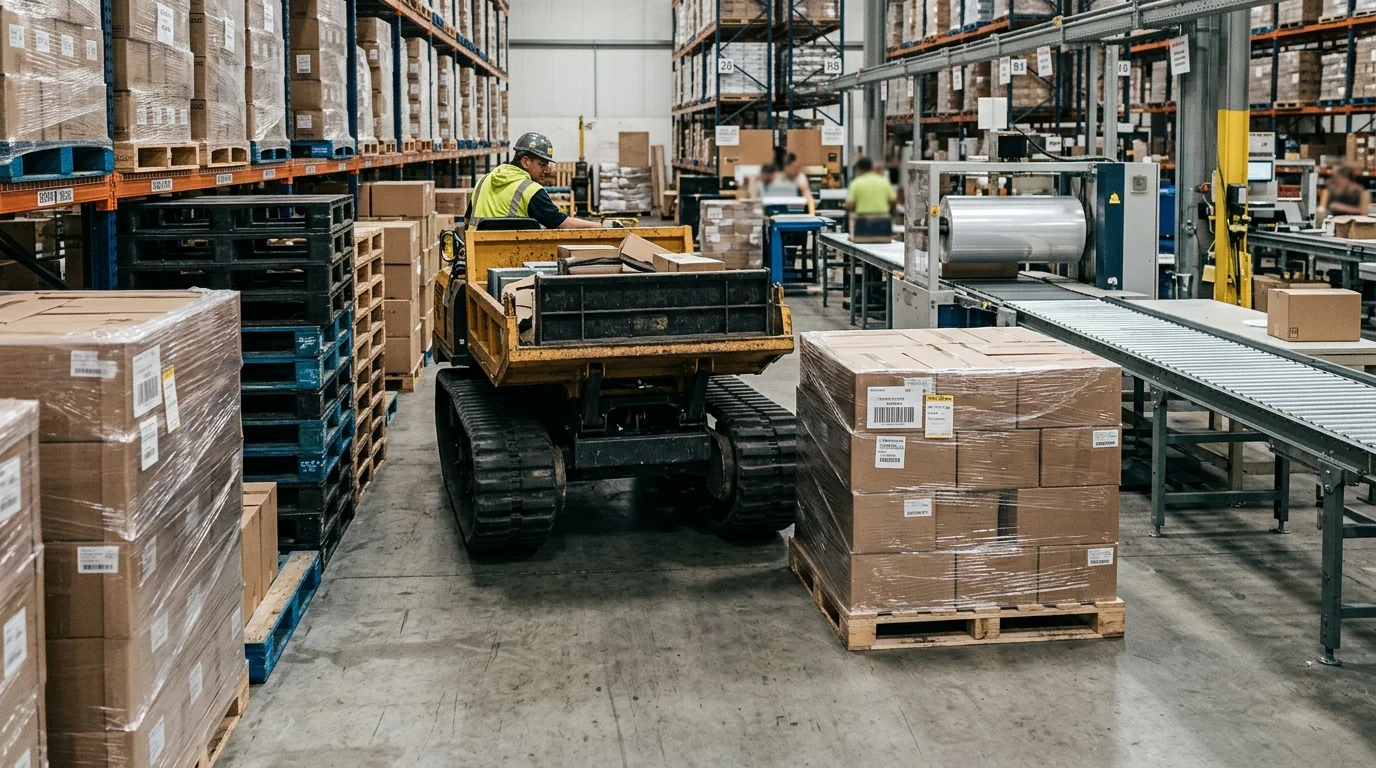
Selecting the optimal traction interface dictates machine efficiency across varied topographies. Dumper rubber tracks occupy a highly specialized niche, bridging the gap between the high-speed mobility of pneumatic tires and the extreme durability of steel track systems. Understanding these operational envelopes ensures fleet managers deploy the right equipment for specific site conditions.
Performance comparison points
Evaluating traction systems requires a multi-variable analysis of speed, surface disruption, and payload capacity. Rubber tracks excel in environments where surface preservation is paramount, such as finished turf, golf course construction, or paved urban infrastructure. They effectively eliminate the severe gouging and infrastructure damage associated with steel grousers, which often require costly post-project remediation.
| Metric | Rubber Tracks | Steel Tracks | Pneumatic Tires |
|---|---|---|---|
| Average Ground Pressure | 2.5 – 4.5 psi | 5.0 – 8.0 psi | 30.0 – 45.0 psi |
| Max Travel Speed | 6 – 9 mph | 3 – 5 mph | 15 – 25 mph |
| Pavement Damage Risk | Low | Very High | Low |
| Wet/Mud Traction | Excellent | Excellent | Poor |
Additionally, rubber tracks operate at decibel levels significantly lower than steel tracks, making them compliant with strict municipal noise ordinances (often capped at 75-80 dB) for residential or nighttime utility work.
Terrain, payload, travel distance, and ground pressure
The defining mechanical advantage of dumper rubber tracks lies in their exceptional load distribution. By spreading the gross vehicle weight over a continuously engaged contact area, these tracks achieve ground bearing pressures as low as 2.5 to 4.5 psi. This allows dumpers with payloads exceeding 10,000 pounds to navigate saturated clay, deep mud, and loose sand without bogging down—conditions where wheeled dumpers would immediately lose traction and sink.
Furthermore, for moderate travel distances of 500 to 2,000 feet per cycle, rubber tracks offer a superior balance. They traverse uneven terrain up to twice as fast as steel-tracked counterparts while absorbing shock loads, maximizing cycle times and overall material throughput without inducing operator fatigue.
How to Specify, Install, and Monitor Dumper Rubber Tracks
Maximizing the return on investment for dumper rubber tracks requires rigorous adherence to technical specifications during procurement and systematic maintenance throughout the operational lifecycle. Improper sizing, incorrect tread patterns, or neglected tensioning rapidly accelerates degradation, negating anticipated cost savings and artificially inflating the hourly operating cost.
Specification and fitment steps
Specifying replacement rubber tracks requires exact dimensional matching based on three critical metrics: track width, pitch (the distance between the centers of two adjacent drive lugs), and the total number of links. A standard specification format, such as 320x90x56, denotes a 320 mm width, a 90 mm pitch, and 56 internal metal links. Utilizing an incorrect pitch can result in sprocket mismatch, leading to catastrophic drive lug shearing within the first 100 hours of operation.
Procurement specialists must also evaluate internal construction, prioritizing tracks reinforced with continuous steel cords rather than overlapping cables. Continuous cord technology exhibits up to 40% higher tensile strength, significantly reducing the risk of track snapping under heavy torque during steep inclines or maximum payload operations.
Maintenance, inspection, and wear tracking
Post-installation, rigorous monitoring protocols dictate the track’s longevity. The most critical maintenance variable is track tension. Operators must verify tension every 50 to 100 operating hours; optimal tension typically allows for 1.0 to 1.5 inches of sag between the bottom track roller and the track itself when the machine is elevated. Over-tensioning stresses the idler bearings, track rollers, and hydraulic planetary drives, while under-tensioning risks de-tracking on side slopes exceeding a 15-degree gradient.
Routine inspections must also mandate daily undercarriage cleaning to remove abrasive debris like crushed stone or frozen mud, which acts as a grinding compound against the rubber.
Key Takeaways
- Calculate dumper track cost per hour by dividing the track purchase cost by total service hours, because a $3,000 track lasting 2,000 hours costs $1.50 per hour.
- Avoid premature failure because the same $3,000 track failing at 1,000 hours doubles track cost per hour to $3.00 before downtime and labor are counted.
- Consider premium rubber tracks when high-load fuel use matters, since lower rolling resistance can reduce fuel consumption by about 5% to 8%.
- Plan track replacement at roughly 85% tread depletion to prevent field failures that can cost more than $200 to $300 per hour in lost productivity.
- Train operators to avoid stationary pivot turns and aggressive maneuvers, because operating behavior strongly affects whether tracks reach the typical 1,500 to 2,500 hour lifespan.
- Use dumper rubber tracks on sensitive surfaces such as turf, pavement, and urban sites to reduce ground damage and avoid costly post-project remediation.
Frequently Asked Questions
How do dumper rubber tracks lower cost per hour?
They can reduce fuel use, vibration-related wear, surface damage, and unplanned downtime. The biggest savings usually come from longer service life and fewer failures during active projects.
How is track cost per hour calculated?
Divide the total track cost by the hours it delivers. For example, a $3,000 track lasting 2,000 hours costs $1.50 per hour, while failure at 1,000 hours doubles that to $3.00 per hour.
Are premium dumper rubber tracks worth the higher upfront price?
Often, yes. Premium rubber tracks may cost 15% to 25% more upfront, but better durability, lower rolling resistance, and reduced maintenance can lower total operating cost over the track’s life.
How long do dumper rubber tracks typically last?
A typical service life is about 1,500 to 2,500 hours, depending on load, terrain, operator habits, turning technique, and maintenance quality.
When should dumper rubber tracks be replaced?
Plan replacement around 85% tread depletion rather than waiting for failure. This helps prevent costly downtime, emergency freight, and field repair labor.

Post time: Jun-26-2026