
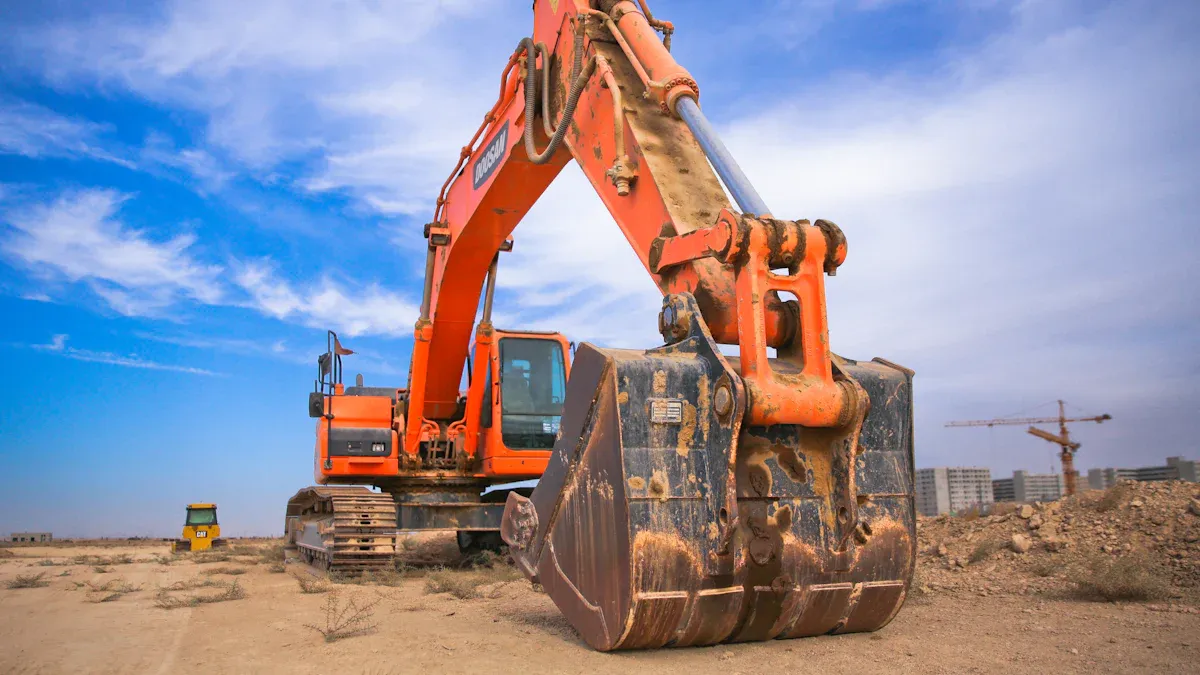
Excavator rubber pads are crucial for jobsite compliance in 2025. They prevent surface damage, enhance stability, and reduce noise. We find these rubber pads for excavator equipment directly address stringent regulations across the US and Canada. Utilizing excavator rubber track pads ensures adherence to protective standards.
Key Takeaways
- Excavator rubber pads protect surfaces like roads and grass. They stop damage and help avoid expensive repairs and fines.
- Rubber pads make jobsites safer. They give excavators better grip, reduce noise, and protect workers from sharp steel tracks.
- Using rubber pads helps meet new environmental rules. This saves money and makes projects more successful.
Excavator Rubber Pads for Surface Protection and Regulatory Compliance

Preventing Damage to Paved Surfaces and Infrastructure with Excavator Rubber Pads
When I consider jobsite compliance, protecting existing infrastructure is a top priority. Steel tracks, while robust, can cause significant damage to paved surfaces like asphalt and concrete. This damage leads to costly repairs and potential project delays. I find that using excavator rubber pads directly addresses this concern. They offer a crucial advantage, especially on urban or residential sites where preserving surfaces is essential.
Rubber tracks, due to their softer material, cause less damage to sensitive surfaces like concrete and asphalt.
This means we can operate our machinery without fear of leaving deep gouges or cracks. I often compare the impact of different track types:
| Track Type | Surface Impact |
|---|---|
| Rubber Tracks | Minimal damage to delicate surfaces |
| Steel Tracks | Can damage asphalt or concrete |
This table clearly illustrates why I advocate for excavator rubber pads. They allow us to work efficiently while maintaining the integrity of roads, sidewalks, and other paved areas, ultimately avoiding expensive restoration work.
Protecting Sensitive Ground and Landscaping with Excavator Rubber Pads
Beyond paved surfaces, I also focus on protecting sensitive ground and landscaping. Excavator operations without proper precautions can have significant environmental impacts. I have seen how excavation roughens the ground around a dig site. The dug-up material often moves elsewhere as waste. Managing this excavation waste significantly impacts the environment. Excavation commonly leads to the creation of pens, runoff and drainage systems, sedimentation structures, and holding ponds. These can introduce various pollutants, such as dust, particles, and hazardous materials, into the air, soil, and water.
I recognize the broader environmental consequences:
- Ecosystem Disruption: Excavation disrupts existing ecosystems. It clears vegetation, alters landforms, and dislodges soil. This displaces wildlife and destroys habitats. Soil compaction can also hinder root systems and regrowth.
- Air Pollution: Machinery releases carbon dioxide and other greenhouse gases. Dust emissions degrade local air quality.
- Water Contamination: Excavation can disrupt underground water systems. This leads to contamination of groundwater and surface water.
- Erosion and Soil Degradation: Stripping land of vegetation exposes soil to erosion. This reduces soil fertility.
- Noise Pollution: Excavation equipment generates significant noise. This can harm workers’ hearing and disturb wildlife.
Using these protective pads helps us minimize these issues. They distribute the machine’s weight more evenly. This reduces soil compaction and prevents deep ruts. We protect delicate root systems and preserve the natural landscape. This proactive approach ensures we meet environmental regulations and maintain a positive community relationship.
Reducing Repair Costs and Avoiding Fines with Excavator Rubber Pads
Ultimately, my goal is to operate efficiently and cost-effectively while remaining compliant. The preventative measures offered by these specialized pads directly translate into significant financial savings. When we prevent damage to paved surfaces, we avoid the high costs associated with repair and resurfacing. Similarly, by protecting sensitive ground and minimizing environmental disruption, we mitigate the risk of costly fines and penalties from regulatory bodies. These fines can be substantial, impacting project budgets and company reputation. I find that investing in excavator rubber pads is a smart economic decision. It ensures we adhere to regulations and avoid unforeseen expenses. This proactive compliance strategy safeguards our projects and our bottom line.
Enhancing Jobsite Safety and Stability with Excavator Rubber Pads
Improving Traction and Stability on Various Terrains with Excavator Rubber Pads
I know that jobsite safety starts with stable equipment. When I operate an excavator, I need confidence in its grip, especially on challenging ground. The flexibility of rubber tracks allows for better grip and handling on slippery or uneven surfaces. This significantly improves traction. I find that rubber tracks provide superior traction on slippery surfaces, enhancing grip and reducing slippage. Their unique tread patterns enhance traction, allowing machinery to navigate challenging conditions with ease. The larger contact area between rubber tracks and the ground significantly improves grip, reducing the likelihood of slippage. Rubber tracks outperform other materials in terms of traction on soft soils and mud. They minimize slippage, which allows for more efficient use of engine power. Modern rubber tracks feature specialized tread patterns that provide excellent grip on mud, snow, sand, and gravel. This flexibility allows rubber tracks to adapt to uneven surfaces, improving stability and reducing slippage.
Excavator operational efficiency varies significantly with terrain and soil conditions. In environments with soft soil or high humidity, equipment stability is compromised due to issues like mud or sinking. This directly affects operating efficiency, underscoring the importance of stability for optimal performance in such challenging environments. Crawler excavators are designed for situations where stability and balance are crucial. Their track system evenly distributes weight, reducing ground pressure and making them highly effective for tasks on uneven terrain or when performing heavy lifts. This inherent stability directly contributes to improved operational efficiency in challenging conditions like mining or large-scale construction. I see that using excavator rubber pads directly enhances this stability, making operations safer and more productive.
Minimizing Vibration and Noise Pollution with Excavator Rubber Track Pads
Noise and vibration are major concerns on any jobsite, both for compliance and worker well-being. I understand that regulations strictly control noise levels, especially in urban areas. For example, I often refer to specific city guidelines:
| City | Time Period | Sound Source District | Receiving Property District | Max Noise Level (dBA) |
|---|---|---|---|---|
| Seattle | Daytime (7 am – 10 pm) | Residential | Residential | 55 |
| Seattle | Daytime (7 am – 10 pm) | Commercial | Residential | 57 |
| Portland, OR | 7 am – 6 pm (Mon-Sat) | N/A | N/A | 85 (at 50 ft) |
I also know that Toronto prohibits construction noise from 7 p.m. to 7 a.m. the next day (except until 9 a.m. on Saturdays), and all day on Sundays and statutory holidays. These strict limits mean I must actively seek ways to reduce noise. Rubber pads absorb much of the impact and friction that steel tracks generate. This significantly dampens the noise an excavator produces.
Beyond noise, vibration poses a serious health risk to operators. I am aware that long-term exposure to Whole-Body Vibration (WBV) from operating vehicles like excavators can lead to lower back pain. It can also cause spinal damage and result in musculoskeletal disorders. WBV is a primary cause of lower back pain among employees, particularly machine operators. It is a significant occupational risk factor contributing to lumbar pathologies and pain. Exposure to WBV in construction workers increases the risk of hospitalization for lumbar disc herniation. Workers exposed to WBV have an approximately doubled risk of both low back pain and sciatica compared to non-exposed groups. By absorbing shocks and vibrations, rubber pads create a smoother ride for the operator. This directly reduces their exposure to harmful WBV, protecting their long-term health.
Protecting Workers from Track-Related Hazards with Excavator Rubber Pads
Worker safety is paramount on my jobsites. Steel tracks present several inherent dangers. Their sharp edges and the pinch points between individual track links can cause severe injuries during maintenance or if a worker accidentally comes into contact with them. I always prioritize eliminating these hazards. Rubber pads, by their very nature, do not have these sharp edges or dangerous pinch points. This makes the area around the excavator much safer for workers who are on the ground or performing routine checks. The improved traction I discussed earlier also contributes to worker safety. It reduces the risk of the machine slipping unexpectedly, which could endanger anyone nearby. I believe that by choosing rubber pads, I am actively creating a safer working environment for my team.
Types of Excavator Rubber Pads and Future Compliance
Bolt-on, Clip-on, and Chain-on Excavator Rubber Pads for Diverse Needs
I understand that different jobs require specific solutions. That is why I appreciate the variety of excavator rubber pads available. Each type offers unique installation and application benefits.
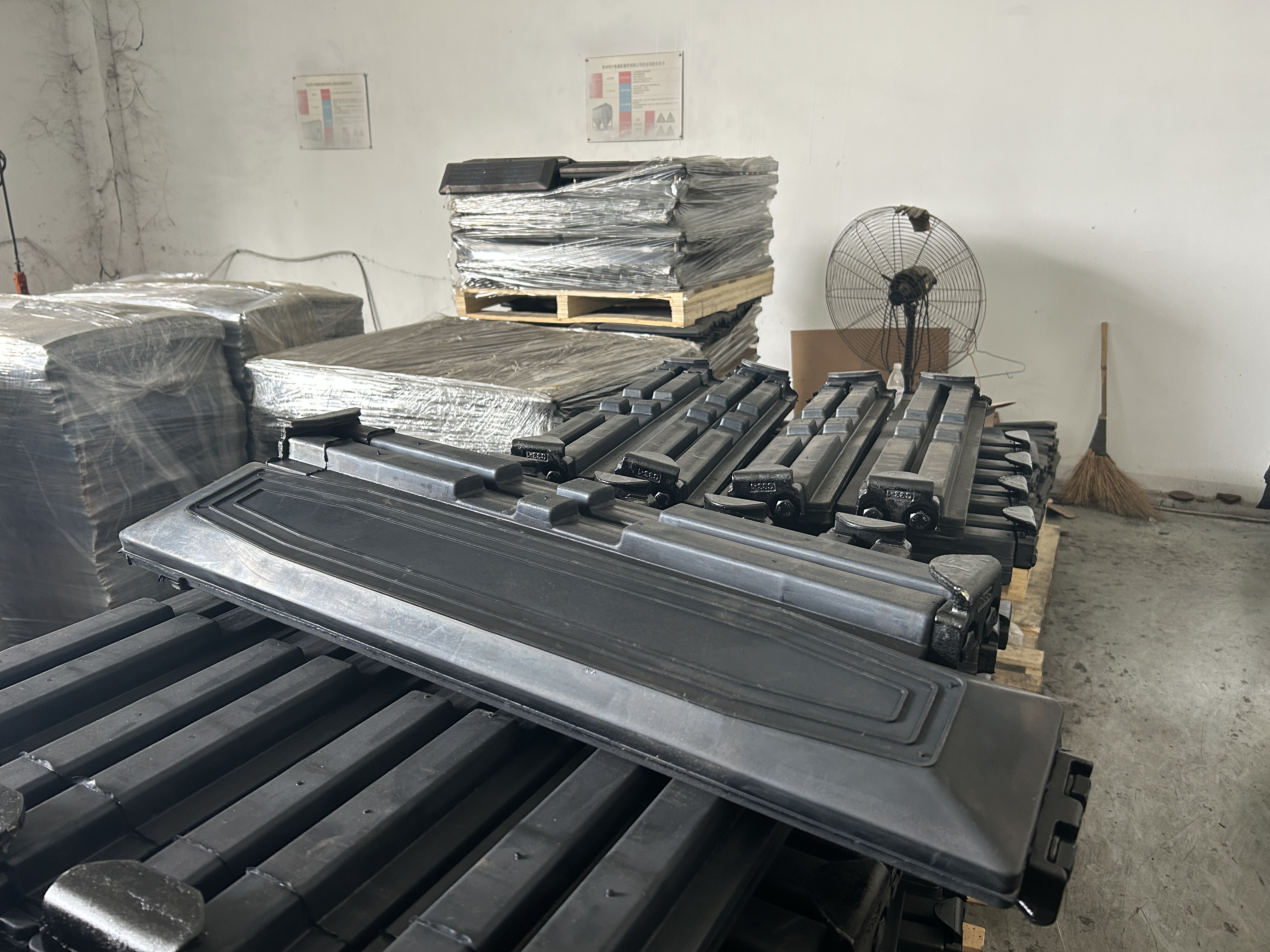
| Pad Type | Installation | Application |
|---|---|---|
| Bolt-On | Attaches directly to the track shoe with bolts; requires pre-drilled holes or drilling if none exist. | Suitable for a wide range of heavy equipment (asphalt milling machines, excavators, bulldozers, pavers) requiring extra stability and a solid connection. |
| Side-Mount (Clip-On) | Designed for triple grouser steel tracks (with or without pre-drilled holes); special hardened mounts fit the pad from the side, making installation easy. | Provides longer service life than bolt-on pads due to more rubber and steel, reducing wear and delamination. |
| Chain-Mount | Bolts directly to the steel chain of the undercarriage. | Commonly found on Komatsu and some newer US machines; can replace other chain-type pads; completely encloses the steel portion of tracks for side protection (e.g., against curbs); mimics continuous rubber tracks while maintaining steel undercarriage durability. |
These pads are not just simple rubber pieces. They are crafted from vulcanized rubber bonded to a strong internal metal core. This design ensures they withstand heavy machinery demands. They also provide excellent traction and protection. The internal steel core is specially treated for bonding strength. It is fully encased in rubber to prevent surface damage. The rubber compound resists abrasion and chunking, offering exceptional durability.
Adapting to Evolving Environmental and Safety Standards with Excavator Rubber Pads
I see a clear trend towards stricter environmental regulations by 2025. Governments globally will implement more stringent emissions legislation. This includes Europe’s tightening carbon benchmarks and North America’s evolving EPA standards. Heavy equipment must meet increasingly rigorous environmental criteria. Manufacturers are responding by investing in advanced technologies. These technologies exceed compliance, offering both ecological and economic benefits. Many government-backed and large-scale private construction projects will require machinery that meets green certification standards. This leads manufacturers to prioritize compliance with Tier 4 Final and Stage V emission standards. They also promote low-carbon construction practices.
I believe excavator rubber pads contribute significantly to meeting these sustainability goals.
- Adopting eco-friendly and long-lasting products aligns with environmental policies.
- The use of sustainable and lightweight composites enhances durability.
- Wider track pads help distribute weight more evenly. This decreases soil compaction and preserves the integrity of the surrounding ecosystem.
- Many modern models are designed with fuel efficiency in mind. This reduces ongoing operational costs and supports sustainable building practices.
Economic Advantages of Proactive Compliance with Excavator Rubber Pads
I find that proactive compliance offers significant economic advantages. Investing in the right rubber pads for excavator helps us avoid costly fines and penalties. It also reduces repair expenses for damaged surfaces. By meeting environmental and safety standards early, we position our projects for success. We also gain a competitive edge in a market that increasingly values sustainability. This approach safeguards our budget and enhances our reputation.
I find excavator rubber pads are indispensable tools for achieving jobsite compliance in the US and Canada for 2025. They effectively address regulations for surface protection, safety, and environmental impact. I see them as a cost-effective, reliable solution for responsible, efficient operations.
FAQ
How do excavator rubber pads help with jobsite compliance?
I find excavator rubber pads prevent surface damage. They also enhance safety and reduce noise. This directly helps meet strict regulations for 2025.
What types of excavator rubber pads can I choose from?
I use bolt-on, clip-on, and chain-on pads. Each type offers specific installation and application benefits. They suit diverse jobsite needs.
Do excavator rubber pads offer economic advantages?
Yes, I see significant savings. They help avoid costly fines and reduce repair expenses. This proactive approach safeguards my budget and reputation.

Post time: Nov-21-2025