Why Secure Skid Steer Loader Tracks Before Peak Season
Procuring skid steer loader tracks well ahead of peak season is critical for fleet managers aiming to reduce supply risk. To build an actionable pre-season procurement timeline, fleet managers should conduct an inventory audit 12 weeks out and place orders at least 8 weeks before peak demand. However, tracks procured this early must be stored correctly; warehouse exposure to excessive UV light, heat, or humidity can degrade the rubber compound before the season even begins. Global logistics bottlenecks can extend typical industry lead times from a few weeks to several months during the spring and summer construction rush. Early procurement ensures inventory availability, stabilizes costs, and avoids premium expedited shipping fees, which can significantly inflate total order values. By forecasting demand and securing stock early, fleet owners eliminate the risk of parking revenue-generating assets due to backordered replacement parts.
How Tracks Affect Uptime and Jobsite Productivity
Track integrity directly dictates machine uptime, fuel efficiency, and overall jobsite productivity during the busiest months of the year. Degraded tracks compromise the machine’s ability to distribute weight effectively. This can elevate ground bearing pressure beyond the optimal ranges required for sensitive turf or muddy terrain, though exact psi ratings vary widely by OEM and machine size. When tracks slip or fail to grip, machine operators experience reduced pushing force and an increase in fuel consumption as the equipment struggles for traction. Furthermore, an unexpected track failure on an active summer jobsite can incur severe downtime costs—often representing hundreds of dollars per hour depending on the application—in lost productivity, idle labor, and emergency service fees. This underscores the necessity of scheduling rigorous pre-season track inspections to identify degradation and order replacements long before peak operations begin.
Key Track Types and Use Cases
Selecting the correct track profile ahead of the busy season depends heavily on anticipating your primary operating environments. Manufacturers offer several distinct tread patterns, each engineered for specific ground conditions and load requirements. Note that the traction and turf friendliness ratings below are relative, qualitative comparisons rather than standardized metrics. Additionally, surface abrasiveness, extreme summer heat or winter cold, and specific rubber compound ratings can override these general recommendations.
| Track Type | Primary Use Case | Traction Rating | Turf Friendliness |
|---|---|---|---|
| Block / Staggered Pad | Hard surfaces, asphalt, concrete | Medium | High |
| C-Lug | Dirt, mud, clay, versatile terrain | High | Low |
| Zig-Zag | Snow, ice, extreme mud | Very High | Low |
| Multi-Bar | Soft soils, sensitive landscaping | Medium | Very High |
Fleet managers must match the tread pattern to anticipated peak-season jobsite conditions to optimize track lifecycles. Utilizing aggressive C-Lug tracks on highly abrasive asphalt or concrete, for instance, can significantly accelerate tread wear—often drastically reducing lifespan depending on machine operator technique—and cause excessive vibration. Conversely, deploying smooth multi-bar tracks in deep spring mud results in severe traction loss, rendering the skid steer highly inefficient when demand is highest.
How to Compare Skid Steer Loader Track Specifications
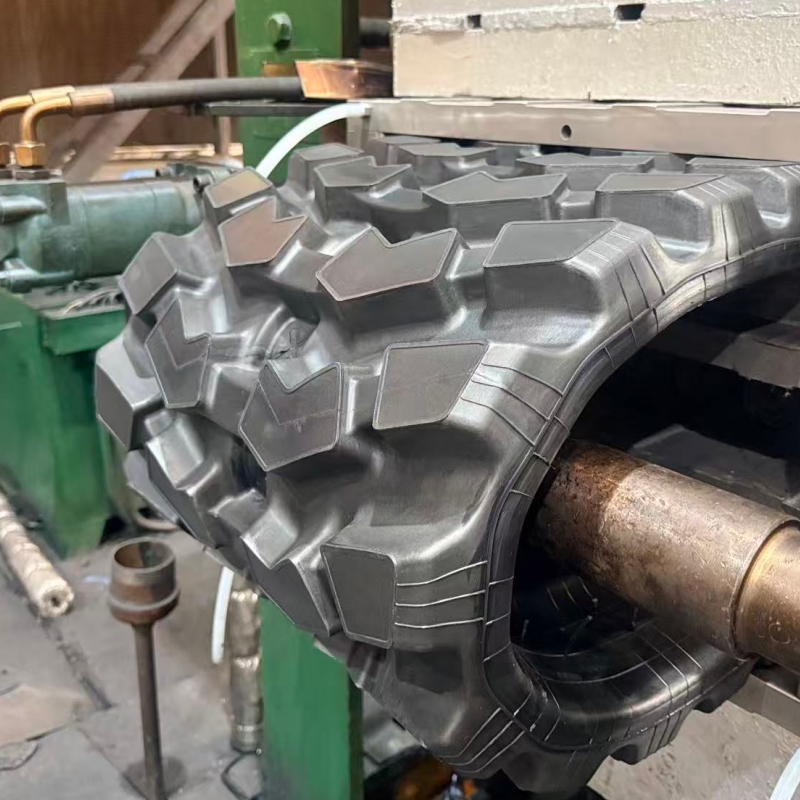
Evaluating skid steer loader tracks ahead of the spring and summer rush requires an analysis of technical specifications rather than relying solely on brand reputation or initial purchase price. High-quality rubber tracks are engineered as complex composite structures designed to withstand immense torsional stress and continuous abrasive wear. Fleet managers must scrutinize the internal architecture and material composition during pre-season procurement to ensure replacement tracks can handle maximum operational loads and the heavy radial stresses generated by mid-sized compact track loaders.
Tread Pattern, Rubber Compound, and Carcass Construction
The durability of a track is fundamentally determined by its rubber compound formulation and internal carcass construction. When comparing specs during pre-season procurement, fleet managers should look for the following structural features:
- Premium Rubber Compounds: High-quality tracks utilize a specialized blend of natural and synthetic virgin rubber to balance tear resistance with flexibility. Avoid recycled crumb rubber, which degrades rapidly under continuous UV exposure and heavy flexion.
- Continuous Steel Cord (CSC) Technology: This internal architecture is a common industry benchmark. It eliminates overlapping weak joint seams that are prone to snapping under heavy loads, wrapping embedded steel cords continuously before vulcanizing them to forged steel links.
- Heavy-Duty Iron Core Links: The integration of these forged links prevents de-tracking by ensuring precise, continuous engagement with the undercarriage drive sprocket.
Inspection Measurements and Tension Checks
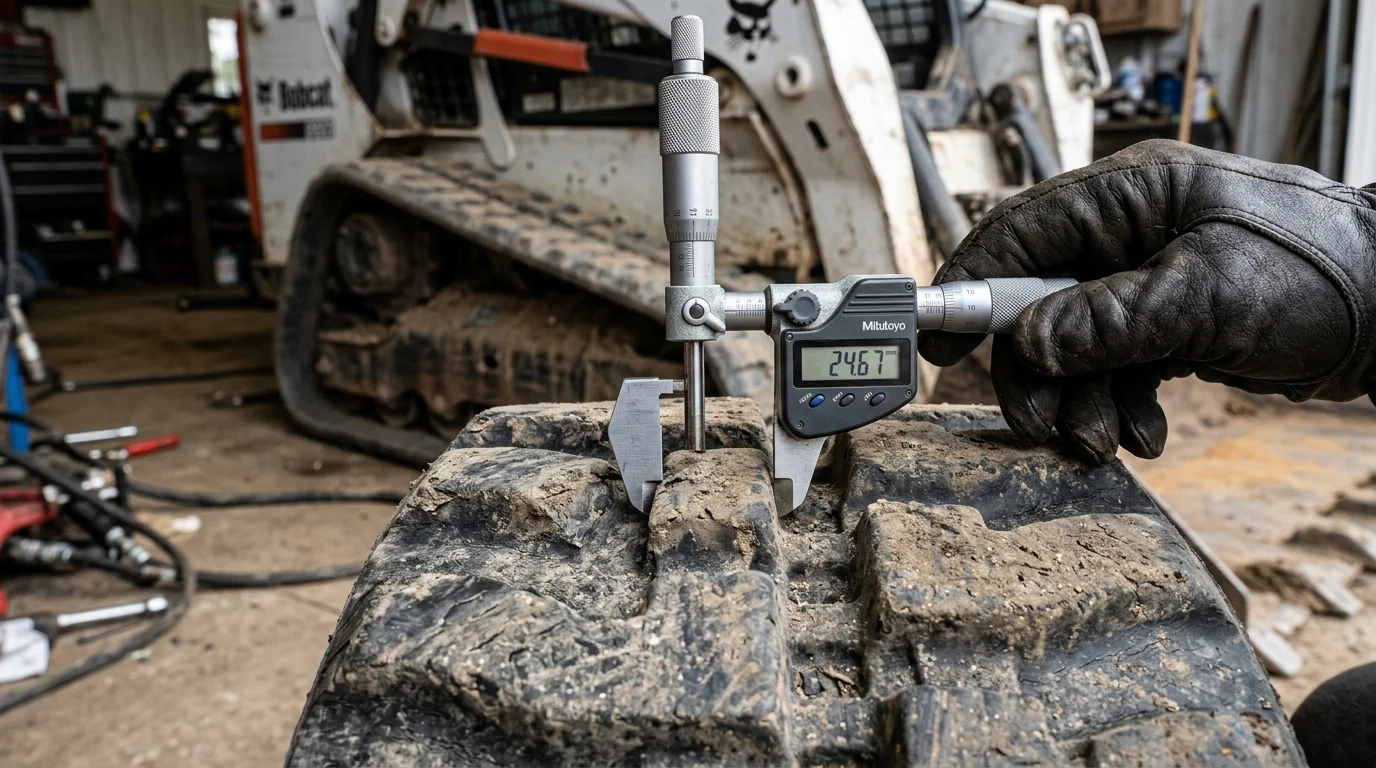
Accurate sizing and tensioning are paramount for component longevity and safe operation throughout the busy season. Track dimensions are standardized globally using a three-part metric formula: Width (mm) x Pitch (mm) x Link Count (for example, a common size is 320x86x49). Deviating from exact OEM dimensional specifications can cause immediate and severe undercarriage damage. Once pre-season installation is complete, track tension must be calibrated according to the machine’s service manual. A standard diagnostic check involves elevating the machine frame and measuring the vertical sag between the middle track roller and the inside face of the track. While optimal track sag often falls between 15mm and 25mm (approximately 0.6 to 1.0 inches), exact tolerances are OEM-specific. Operating with excessive tension accelerates roller, idler, and hydrostatic motor bearing wear, while insufficient tension risks de-tracking on side-hill maneuvers.
How to Source, Install, and Maintain Tracks
Effective lifecycle management of skid steer loader tracks encompasses strategic procurement, precise installation, and regular maintenance. By formalizing these operational processes, fleet managers can maximize the return on their investment and work toward an operational lifespan of 1,000 to 1,500 hours for premium rubber tracks, though actual longevity depends heavily on application, undercarriage condition, and machine operator technique. Sourcing tracks early also allows fleet buyers to negotiate volume discounts and establish reliable supply redundancies before peak demand strains inventory levels.
Procurement Steps and Supplier Qualifications
Sourcing industrial tracks ahead of the spring rush demands clear supplier qualification to reduce the risk of premature component failure during peak operations.
Key Takeaways
- Audit skid steer track inventory 12 weeks before peak season so you can identify worn, mismatched, or missing replacements before demand spikes.
- Place replacement track orders at least 8 weeks before the busy season to reduce exposure to backorders, longer lead times, and premium freight charges.
- Store procured rubber tracks in a cool, dry, shaded location because UV light, heat, and humidity can degrade rubber before installation.
- Match tread patterns to the jobsite, using block tracks for hard surfaces, C-Lug for mud and clay, zig-zag for snow or extreme mud, and multi-bar for sensitive turf.
- Schedule pre-season inspections to catch cracks, tread loss, and traction issues before failures create downtime that can cost hundreds of dollars per hour.
Frequently Asked Questions
When should fleet managers order skid steer loader tracks for peak season?
Conduct an inventory audit about 12 weeks before peak demand and place orders at least 8 weeks ahead to reduce backorder, freight, and downtime risk.
How should replacement rubber tracks be stored before installation?
Store tracks in a cool, dry, shaded area away from excessive UV light, heat, humidity, chemicals, and sharp edges that can degrade rubber compounds.
What track pattern is best for asphalt or concrete?
Block or staggered pad tracks are typically better for hard surfaces because they offer balanced traction, lower vibration, and better turf friendliness than aggressive patterns.
Which skid steer track works best in mud, clay, or loose dirt?
C-Lug tracks generally provide high traction in dirt, mud, and clay, but they may wear faster on abrasive surfaces like concrete or asphalt.
Why does early procurement help control track costs?
Ordering early helps avoid seasonal logistics delays, expedited shipping fees, emergency purchases, and the revenue loss that comes from parking equipment without replacement tracks.

Yvonne
Post time: Aug-05-2026