Why Excavator Rubber Track Pads Matter for B2B Buyers
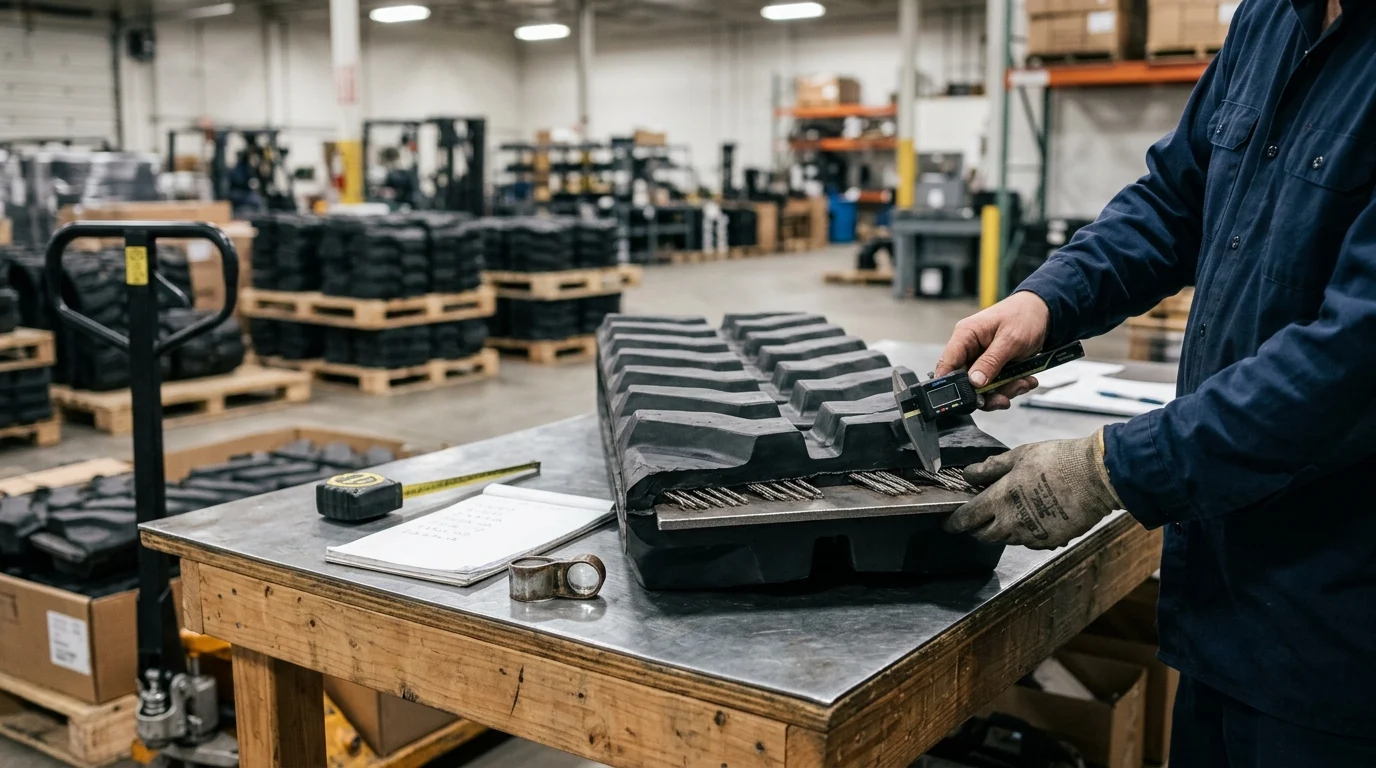 As procurement professionals in the heavy machinery aftermarket, we constantly monitor shifts in equipment utilization and urban construction regulations. Strict municipal guidelines regarding pavement preservation have driven a massive surge in demand for non-destructive undercarriage solutions. For wholesale distributors, stocking reliable Excavator Rubber Track Pads is no longer a niche strategy; it is a baseline requirement to effectively service urban contractors and rental fleets.
Integrating high-quality Excavator Track Pads into our supply chain provides a critical competitive advantage. Unlike continuous rubber tracks that require complete replacement when damaged, individual rubber pads allow end-users to replace only compromised sections. This modularity appeals to fleet managers optimizing maintenance budgets, creating a high-turnover, recurring revenue stream for B2B importers.
Key value drivers: margin, uptime, and surface protection
The primary value drivers for stocking these components are robust profit margins and enhanced equipment uptime. By offering durable rubber pads, we enable clients to transition steel-tracked excavators onto finished asphalt or concrete without causing structural damage. This surface protection prevents costly municipal fines for contractors, making the investment in premium pads highly justifiable and allowing distributors to maintain healthy markups.
Priority buyer segments and use cases
Target buyer segments include heavy equipment rental houses, municipal public works departments, and civil engineering contractors. Rental fleets are high-volume consumers because they frequently lease 5-to-15-ton excavators for residential and urban utility projects. These buyers prioritize universal fitment and rapid installation to minimize turnaround times between rental contracts.
Market risks and growth opportunities
The main market risk involves fluctuating raw material costs, particularly the volatility of natural rubber and steel index prices. Additionally, sourcing substandard pads with poor rubber-to-steel bonding can lead to catastrophic delamination in the field, resulting in costly warranty claims. However, the growth opportunity remains vast. As infrastructure projects increasingly intersect with developed urban grids, demand for versatile, road-friendly heavy machinery will continue its upward trajectory.
Core Specifications to Check Before Sourcing
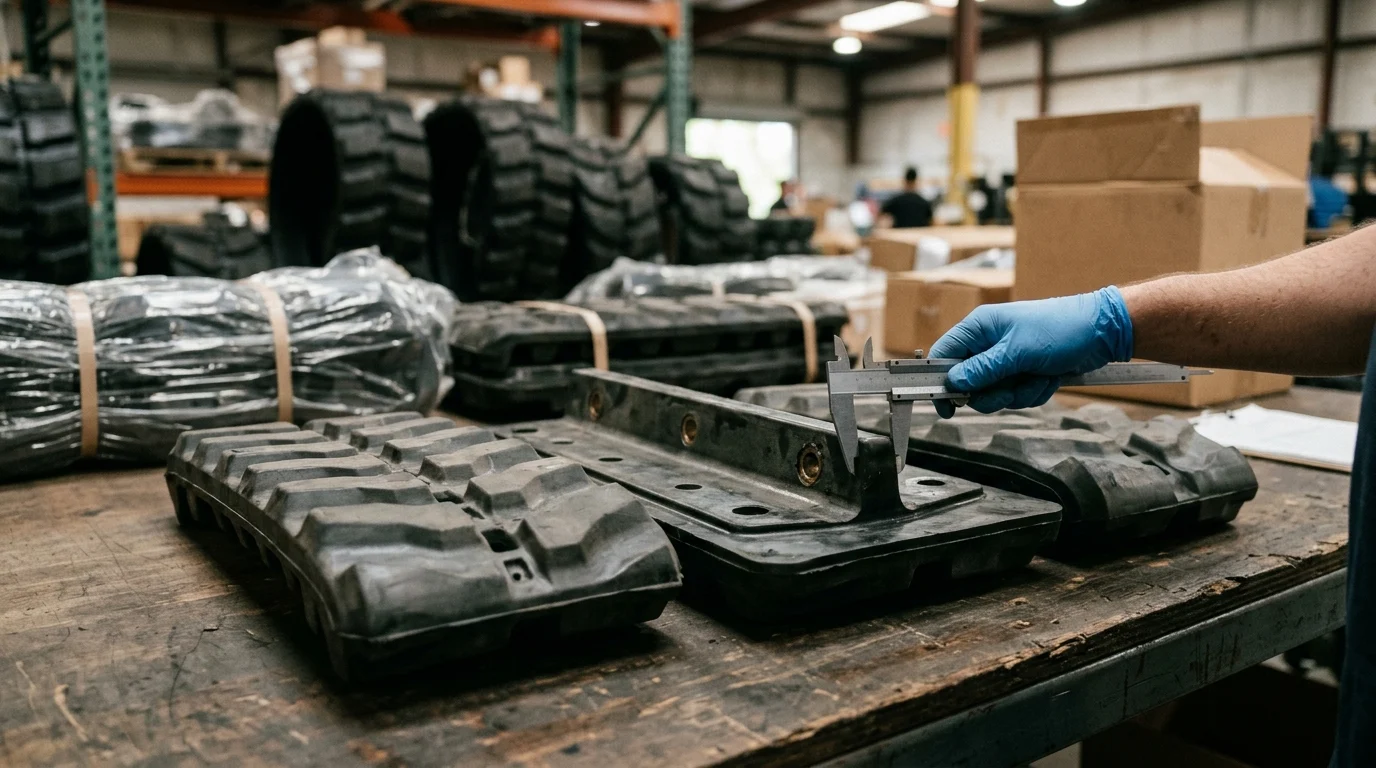
When sourcing undercarriage parts, technical precision is non-negotiable. Procuring the wrong specifications can result in inventory that sits idle or fails upon installation. We must deeply understand the dimensional and metallurgical requirements of our clients’ machinery to ensure seamless compatibility.
Furthermore, the manufacturing process of Excavator Rubber Pads involves vulcanizing rubber to a steel core. If the steel core is inadequately treated or dimensional tolerances are off by even a few millimeters, the pad will not seat properly on the steel grouser shoe. This leads to excessive vibration, rapid wear, and eventual detachment during operation.
Pad types: clip-on, bolt-on, and chain-on
Understanding the three primary configurations is essential for building a relevant catalog. Clip-on pads attach directly to the steel shoe using a bracket and bolt, ideal for machines lacking pre-drilled holes. Bolt-on pads bolt directly through pre-drilled steel grousers, offering the most secure fit for heavy-duty applications. Chain-on pads (or roadliners) bolt directly to the track chain, completely replacing the steel shoe for a lighter, dedicated rubber track setup.
| Pad Type | Installation Method | Best Application | Securement Rating |
|---|---|---|---|
| Clip-on | Side brackets & bolts | Temporary urban work | Moderate |
| Bolt-on | Bolts through shoe | Long-term paved use | High |
| Chain-on | Bolts directly to chain | Dedicated urban fleets | Very High |
Fitment factors: bolt pattern, width, pitch, and tonnage range
Fitment relies on strict adherence to bolt patterns, shoe width (commonly 300mm to 600mm), and track pitch. We must map these dimensions against the specific tonnage range of the excavators—typically 4-to-25-ton machines. Stocking a one-size-fits-all solution is a myth; distributors must cross-reference OEM part numbers to guarantee pitch and bolt spacing align perfectly.
Performance factors: wear life, vibration, and retention strength
Performance is dictated by the rubber compound’s shore hardness and its resistance to chunking or tearing. A premium pad utilizes a blend of natural and synthetic rubber to balance wear life with vibration dampening. Retention strength—how well the pad stays attached under high-torque turning—is equally vital, requiring high-tensile steel hardware that resists shearing under load.
How to Evaluate Suppliers and Factory Capability
Identifying a reliable overseas manufacturing partner requires looking beyond a polished storefront or well-designed catalog. Separating true manufacturers from trading companies is the first critical step. We need partners who control the vulcanization process in-house and possess a comprehensive library of molds for various OEM fitments.
A thorough evaluation involves assessing the supplier’s engineering capabilities and quality management systems. We must verify the factory has the capacity to scale production during peak construction seasons without compromising rubber curing time. Rushing the vulcanization process is a common shortcut that leads to premature pad failure, a risk we cannot afford to pass on to B2B buyers.
Supplier screening criteria and factory audits
When conducting factory audits, we prioritize ISO 9001 certification, the age and maintenance of hydraulic vulcanizing presses, and raw material sourcing. We request video walkthroughs or utilize third-party auditors to verify the presence of on-site steel surface treatment facilities, such as shot blasting, which is crucial for maximizing rubber-to-metal adhesion.
MOQ, samples, lead times, and customization
Minimum Order Quantities (MOQs) typically range from 100 to 500 pieces per size, often dictated by the need to fill a pallet. We negotiate for paid sample shipments before committing to a bulk order to physically test fitment and durometer hardness. Standard lead times hover around 30 to 45 days, though we must also evaluate the supplier’s willingness to create custom molds for niche or newly released excavator models.
How to compare price, warranty, and responsiveness
Comparing suppliers based solely on FOB price is a flawed strategy. We calculate total value by weighing unit cost against the comprehensiveness of their warranty (typically 1000 hours or 12 months) and responsiveness to technical queries. A supplier who quickly provides detailed CAD drawings and transparently discusses their warranty claim process is far more valuable than one offering a rock-bottom price with poor communication.
Quality Control, Testing, and Compliance
Implementing a rigorous Quality Control (QC) framework is our primary defense against importing defective heavy machinery parts. Because Rubber Pads for Excavator are incredibly dense and heavy, the cost of returning defective goods to an overseas origin is prohibitively expensive. Therefore, all quality assurance must be finalized before the container is sealed.
We mandate that suppliers adhere strictly to internationally recognized testing standards for rubber and steel components. By setting clear AQL (Acceptable Quality Limit) standards in purchase agreements, we establish legal and operational boundaries that protect our investment and ensure customers receive field-ready products.
Incoming and pre-shipment inspection checkpoints
Pre-shipment inspections must verify dimensional accuracy using digital calipers against approved engineering drawings. Inspectors check for excessive rubber flash, uniform thickness, and the integrity of embedded steel plates. Furthermore, we require a visual inspection of mounting hardware to ensure threads are clean and properly coated against rust.
Test data to request for durability and fit
We routinely request factory test reports covering tensile strength, elongation at break, and abrasion resistance (often tested under DIN standards). Additionally, we ask for peel adhesion test results to quantify the bond strength between the rubber and the steel core. Without this empirical data, claims of “high durability” are merely marketing fluff.
Trade compliance and documentation requirements
Importing heavy rubber goods requires precise customs documentation to avoid port delays and unexpected tariffs. We ensure accurate HS code classification—typically falling under vulcanized rubber articles (e.g., 4016.99) or specific machinery parts. Additionally, we secure Certificates of Origin and verify compliance with regional environmental regulations, such as REACH in the European Union, regarding the chemical composition of the rubber.
Pricing, Packaging, and Logistics Planning
The sheer mass of undercarriage components dictates that logistics and freight will consume a massive percentage of our total landed cost. A single pallet of rubber pads can weigh well over a ton, fundamentally altering how we approach international shipping compared to lighter consumer goods. Strategic logistics planning is essential to maintain gross margins.
We must meticulously plan container loads to avoid “weighing out” before we “cube out.” Exceeding road weight limits at the destination port can result in severe fines or the need for expensive heavy-haul chassis. Therefore, optimizing packaging and balancing the product mix within the container is a daily priority for procurement teams.
How to calculate landed cost by Incoterm
Calculating landed cost requires moving past the factory FOB price and factoring in ocean freight, insurance, destination port handling charges, customs duties, and final inland drayage. When negotiating under CIF or DDP Incoterms, we remain vigilant about hidden destination fees, preferring FOB or FCA where we can leverage our own freight forwarders to control routing and costs.
Packaging standards for heavy aftermarket parts
Heavy aftermarket parts demand industrial-grade packaging. We stipulate that suppliers use ISPM-15 compliant fumigated wooden pallets, heavily reinforced with steel or heavy-duty PET strapping. The pads must be tightly nested and shrink-wrapped to prevent shifting during ocean transit, as loose heavy metal parts can easily destroy a shipping container from the inside out.
Inventory planning, container loading, and reorder strategy
Chart description: 12-Month Inventory Demand Trend
- Q1/Q2: Sharp upward curve as civil contractors prepare for spring/summer projects.
- Q3: Plateau indicating steady replenishment orders.
- Q4: Decline as winter weather halts urban paving projects.
Our reorder strategy aligns with this seasonal construction cycle. We typically load 20-foot containers rather than 40-footers, as the dense weight of the pads allows us to hit the maximum payload capacity in a smaller volume. By establishing safety stock levels for our top-moving 400mm and 450mm sizes, we prevent stockouts during peak rental seasons.
Channel Strategy and Product Mix
Building a profitable B2B channel strategy requires stocking the right inventory based on regional machine demographics. We analyze local fleet data to determine which OEM brands—such as Komatsu, Caterpillar, or Kubota—dominate our sales territory, tailoring our purchasing accordingly.
Our goal is to position ourselves as comprehensive undercarriage solution providers rather than mere commodity pushers. By strategically pairing Excavator Rubber Track Pads with complementary parts, we increase average order value and cement our status as a primary supply chain partner for B2B clientele.
Which SKUs to stock based on market demand
Market data consistently shows that the 5-to-8-ton mini excavator segment drives the highest volume of pad replacements. Therefore, we heavily stock 400mm and 450mm bolt-on and clip-on pads. Conversely, for larger 15-to-20-ton machines, we carry a leaner inventory of 600mm bolt-on pads, recognizing that these are ordered less frequently but yield higher individual margins.
How to build a profitable product assortment
We maximize profitability by bundling rubber pads with replacement steel tracks, sprockets, and bottom rollers. When a contractor needs to replace their pads, their steel shoes and track chains are often nearing the end of their lifecycle as well. Offering a packaged “complete undercarriage refresh” simplifies procurement for the buyer and significantly boosts revenue per transaction.
Sales points beyond unit price
To defend margins against low-cost competitors, we train sales teams to sell on Total Cost of Ownership (TCO). We emphasize how premium rubber compounds reduce operator fatigue through superior vibration dampening, how precise fitment slashes installation labor hours, and how our pads protect costly finished surfaces, ultimately saving the contractor from devastating project penalties.
Buyer FAQs and Final Sourcing Checklist
As we finalize procurement strategies, we must anticipate the technical and commercial questions that sub-distributors and end-users will inevitably ask. Clear, documented answers to these FAQs streamline the sales process and build trust, demonstrating deep technical expertise in the heavy machinery aftermarket.
Before issuing a final Purchase Order to an overseas factory, we rely on a strict internal checklist. This ensures no commercial terms, technical specifications, or logistical details are left to assumption, mitigating the risk of costly supply chain disruptions.
Interchangeability, MOQ, and trial order questions
Buyers frequently ask if a specific pad can fit multiple excavator brands. The answer is yes, provided the track pitch, shoe width, and bolt hole spacing are identical. Regarding MOQs, we often negotiate mixed-size pallets for trial orders, allowing us to test the market reception of a new supplier’s product across several machine sizes without overcommitting capital.
Warranty, claims, and replacement terms
Our standard warranty covers manufacturer defects—such as premature rubber delamination or snapped internal bolts—for 12 months or 1000 operational hours. We require buyers to submit clear photographic evidence of the failure, the machine’s serial number, and proof of correct installation. Approved claims are typically resolved via credit notes or free replacements on the subsequent container order.
Final checklist before placing a wholesale order
- Verify all OEM cross-reference numbers, bolt patterns, and pitch dimensions.
- Confirm the rubber compound specifications (natural/synthetic ratio and shore hardness).
- Review the supplier’s most recent ISO 9001 audit and material test reports.
- Finalize Incoterms, payment terms (e.g., 30% deposit, 70% against Bill of Lading), and exact lead times.
- Approve the packaging protocol, ensuring ISPM-15 compliance and maximum weight limits per pallet.
- Schedule the third-party pre-shipment inspection focusing on dimensional tolerances and bonding strength.
Key Takeaways
- Wholesale sourcing and supply-chain implications for Excavator Rubber Track Pads
- Specifications, compliance, and commercial terms buyers should validate
- Actionable recommendations for distributors and procurement teams