
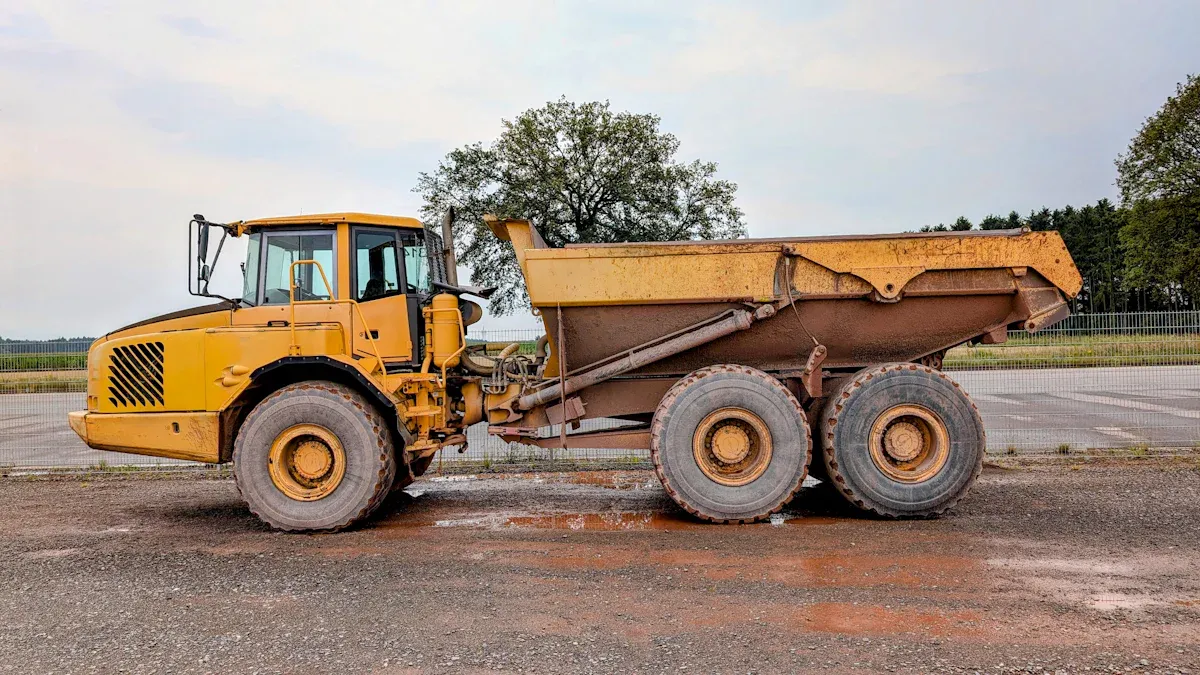
I always begin by inspecting the inside of your dumper tracks for any stamped size information. If I do not find a stamp, I then carefully measure the track width, determine the pitch, and count the number of links. I also utilize existing part numbers and consult machine specifications for thorough verification.
Key Takeaways
- Measure your dumper tracks carefully. Check the track width, the distance between lugs, and count all the links. This helps you find the right size.
- Look for stamped numbers on the tracks. These numbers can tell you the size and what machines the tracks fit. Also, check your machine’s manual for track details.
- Choose the right track based on where you use your dumper. Different track patterns work best for different ground types, like mud, dirt, or grass.
Measuring Your Dumper Tracks for Accurate Sizing
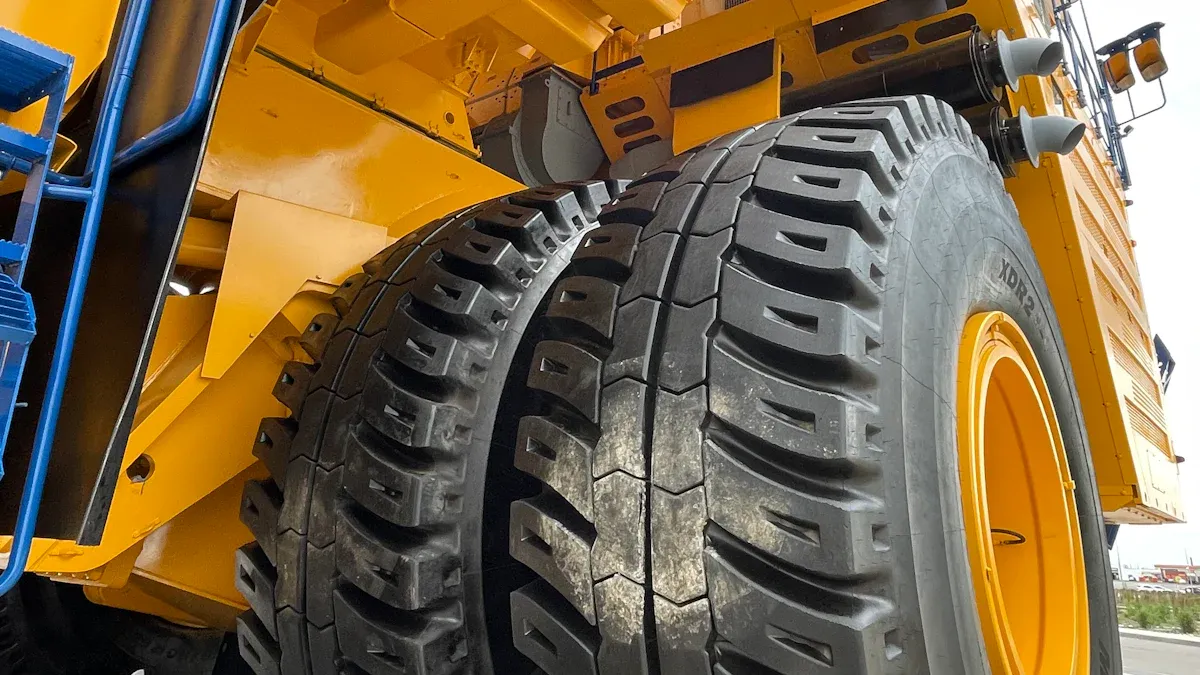
When you cannot find a stamped size, precise measurement becomes crucial. I approach this process systematically to ensure accuracy. This involves carefully measuring the track width, determining the pitch between lugs, and counting the total number of links.
How to Measure Track Width
Measuring the track width is the first step. I always ensure I get an accurate reading across the entire width of the track.
- Tools I use:
- Measuring Tape: A long, steel tape measure is essential for this task. It provides the necessary length and rigidity.
- Pen and Paper: I always keep these handy to record measurements immediately. This prevents any errors from memory.
- (Optional) Caliper: For extremely precise measurements, especially if I need to verify a specific dimension, a caliper can be useful. However, a tape measure usually suffices for overall width.
I lay the track as flat as possible. Then, I measure from the outer edge of one side of the track to the outer edge of the other side. I take this measurement at several points along the track’s length. This helps account for any wear or inconsistencies. I record the smallest consistent measurement I find. This gives me the most reliable width for your dumper tracks.
Determining Track Pitch
Determining the track pitch requires careful attention to detail. This measurement is the distance between the centers of consecutive drive lugs.
I follow a specific set of steps to ensure accuracy:
- Identify Drive Lugs: I first locate the raised sections on the track’s inner surface. These are typically small, rectangular blocks.
- Clean the Track: I remove any dirt or debris from the drive lugs. This ensures my measurements are precise.
- Locate Two Adjacent Lugs: I select two drive lugs that are next to each other.
- Find the Center of the First Lug: I precisely identify the center of the first lug.
- Measure Center-to-Center: I place a stiff measuring tool at the center of the first lug. I extend it to the center of the very next lug.
- Record Measurement: I note the distance. This represents the pitch measurement, typically in millimeters.
- Repeat for Accuracy: I take multiple readings between different pairs of lugs in various spots along the track. This gives me a more accurate average.
For best practices in measuring dumper rubber track pitch, I always:
- Use a stiff measuring tool, such as a rigid ruler or tape, for precise readings.
- Measure center-to-center, from the center of one lug to the center of the adjacent lug. I avoid edge-to-edge measurements.
- Take multiple readings, at least three different sections. I calculate the average to account for wear or inconsistencies.
- Ensure the track is flat by laying it as flat as possible. This prevents stretching or compressing that could affect the measurement.
- Record findings immediately to avoid forgetting measurements.
A crucial best practice for accurately determining dumper track pitch is to cross-reference all measurements and observations with the manufacturer’s specifications. I consult the owner’s manual or official parts catalog. This confirms that my measurements align with the recommended specifications for your specific machine model. If I find discrepancies, I re-measure. If uncertainty persists, I contact a reputable parts supplier for expert guidance based on the machine’s serial number. This meticulous approach helps prevent costly errors. It ensures the correct track size for optimal performance.
Counting the Number of Links
Counting the number of links is straightforward but essential. Each link is a segment of the track.
I start at a distinct point, often where the track joins. I count each individual link around the entire circumference of the track. I make sure to count every single link, including the master link if one is present. I double-check my count to avoid errors. This number, combined with the width and pitch, provides a complete picture of the track’s dimensions.
Leveraging Existing Information for Dumper Tracks
When direct measurements are difficult or inconclusive, I always turn to existing information. This approach often provides the most reliable path to identifying the correct track size. I systematically consult various sources to ensure I gather accurate data.
Utilizing Stamped Part Numbers
I frequently find crucial information stamped directly onto the dumper tracks themselves. These numbers are not just random digits; they encode vital specifications. I carefully inspect the track’s inner surfaces for these markings.
Here is what I typically find encoded in these stamped part numbers:
| Information Encoded | Description |
|---|---|
| Size | The overall dimensions of the track. |
| Style | The design or type of the track. |
| Machine Compatibility | Which specific machines the track is designed to fit. |
| Guiding System Details | How the track is guided, including guide type and placement. |
| OEM Compatibility | Indication of compatibility with specific Original Equipment Manufacturers (e.g., Bobcat, Takeuchi, Case). |
| Wide Guide (W) | Indicates a wide guiding system for broader roller engagement. |
| Guide with Plates / Outside Guided (K) | Guiding plates are on the outside, with rollers running along the edges. |
| Offset Centred Guide (Y) | Guiding lugs are offset from the centerline, matching specific undercarriage layouts. |
| Bobcat Compatible (B) | Specifically made to suit Bobcat machines. |
| Takeuchi Compatible (T) | Specifically made to suit Takeuchi machines. |
| Case Compatible (C) | Specifically made to suit Case machines. |
I always verify the authenticity and accuracy of these stamped part numbers. Legitimate parts feature consistent, clear markings. These markings adhere to manufacturer standards. Serial numbers appear in the correct format and position. Unusual font choices or irregular stamping depths often indicate unauthorized manufacturing. Many manufacturers maintain online verification portals. I use these portals to confirm serial numbers against manufacturer databases. This provides an additional layer of certainty.
I follow a detailed process to verify these numbers:
- I locate the physical part. I examine the actual component, not its packaging.
- I inspect all surfaces. I check sides, edges, base, and internal flanges for markings.
- I look for engraved, printed, or stamped markings. These include the manufacturer’s name, model number, serial number, and part number.
- I distinguish between model and part numbers. Model numbers refer to the entire device. Part numbers identify subcomponents.
- I clean the surface if necessary. I use a soft cloth and mild cleaner to remove grime without damaging markings.
- I record the full number exactly. I include prefixes, suffixes, dashes, and letters.
- I use a magnifying glass or phone macro lens. This helps me read tiny or worn engravings.
- I take multiple photos under different lighting. This captures obscured characters.
- I consult the manufacturer’s documentation. Datasheets, service manuals, and exploded diagrams list valid part numbers.
- I use official lookup tools. Many manufacturers offer online part search portals.
- I cross-reference with OEM catalogs. Original Equipment Manufacturer catalogs provide authoritative lists.
- I check distributor databases. Reputable suppliers maintain verified product data.
- I validate against known working units. I compare the part number from a functioning identical machine.
I also watch for suspicious signs that might indicate a counterfeit or incorrect part:
| Suspicious Sign | Possible Issue |
|---|---|
| No manufacturer logo or brand | Counterfeit or unbranded copy |
| Smudged, scratched, or inconsistent font | Altered or tampered labeling |
| Number doesn’t appear in official database | Incorrect transcription or fake part |
| Too low price compared to OEM | Substandard materials or performance |
| Mismatched weight or finish | Different specification despite same number |
Tip: I always note revision indicators like “A,” “B,” “R,” or “-REV2” at the end of part numbers. They denote critical design updates.
When markings are difficult to read, I use various tools:
- OCR (Optical Character Recognition) apps: Apps like Google Lens or ABBYY TextGrabber help extract text from blurry labels.
- Component cross-reference software: Tools like IHS Markit or Z2Data allow searching across thousands of manufacturers.
- Industry-specific databases: SAE standards, IEEE component libraries, or ISO registries for technical validation.
- Thread and dimension gauges: When the number is unreadable, physical measurements can narrow down possibilities.
Advanced verification systems exist. For example, the Pryor VeriSmart 2.1 can be installed on production lines. These systems use high-resolution imaging cameras. They have tight control of lighting and reading conditions. They check that the correct data has been marked. They also ensure the size, shape, and position of the dots comply with required standards. These systems verify the quality of human-readable codes, such as serial numbers or automotive VIN codes. They integrate with a manufacturer’s ERP or MES system. This checks each marked character against manufacturing records. It provides an accurate quality score.
Consulting Machine Manuals and Specifications
My machine’s owner’s manual is an invaluable resource. It contains detailed specifications for all components, including the tracked dumper tracks. I always consult this document first. It provides the original equipment manufacturer’s recommended track size and type. I look for sections on the undercarriage or track system. These sections typically list part numbers, dimensions, and specific track configurations. This information is authoritative. It comes directly from the machine’s creator.
Cross-Referencing with Manufacturer Data
After gathering information from stamped numbers and manuals, I cross-reference it with manufacturer data. This step confirms my findings. It also helps me identify compatible aftermarket options. I access official manufacturer websites and parts catalogs. These resources provide up-to-date information on track specifications.
I often consult data from key dumper track manufacturers:
- Winbull Yamaguchi
- Messersi
- Yanmar
- IHIMER
- Canycom
- Takeuchi
- Morooka
- Menzi Muck
- Merlo
- Kubota
- Bergmann
- Terramac
- Prinoth
Reliable data on manufacturer dumper tracks comes from comprehensive market research reports. These reports outline robust methodologies. A thorough research framework ensures depth, accuracy, and relevance. This includes primary data collection. I conduct structured interviews and consultations with equipment manufacturers, fleet operators, distributors, and industry thought leaders. Secondary research incorporates reputable trade publications, regulatory filings, technical white papers, and financial disclosures from key market participants. Data triangulation techniques reconcile disparate information sources. They validate conclusions. Quantitative details are extracted from supplier catalogs, import-export records, and patent databases. Expert validation rounds with sector specialists review preliminary findings. They refine analytical assumptions. This ensures actionable intelligence with high confidence.
Critical Considerations for Selecting Dumper Tracks

When I select new tracks, I always consider several critical factors. These factors ensure optimal performance, longevity, and safety for the machine. I focus on matching the track to the specific job and machine.
Matching Tread Patterns for Application
I know the right tread pattern makes a significant difference in performance. Different patterns suit various operating conditions.
- Block and Straight-Bar Patterns: Block patterns feature raised blocks. They offer excellent traction on soft or loose ground. They perform well in wet and muddy conditions. Straight-bar patterns provide good forward and backward traction on firmer surfaces. They offer a smooth ride and stability.
- Multi-Bar and Zig-Zag Patterns: Multi-bar patterns enhance traction and stability on uneven, soft, or muddy terrains. They create a larger surface area to reduce ground pressure and minimize slippage. Zig-zag patterns also provide good grip and help shed mud and debris.
- Turf and Non-Marking Patterns: Turf patterns have a smoother, less aggressive design. They protect delicate surfaces like grass or finished flooring, minimizing damage. Non-marking tracks often use these gentler patterns for indoor work or when avoiding marks is crucial.
- Directional and V-Pattern Patterns: V-patterns have a distinct ‘V’ shape pointing in the direction of travel. This helps push mud and debris out, maintaining excellent forward traction. These patterns offer superior grip on slopes and in challenging conditions for consistent, powerful movement.
I also consider the specific terrain.
| Tread Pattern | Suited Applications |
|---|---|
| Staggered Block | Highway, Gravel, Dirt, Sand, Turf |
| C-Lug | Highway, Gravel, Dirt, Sand, Mud, Clay, Turf, Rock |
| Multi-Bar | Turf, Dirt, Mud, Snow |
| EXT | Clay, Dirt, Snow, Mud |
| Zig Zag | Mud, Dirt, Clay, Sand, Turf |
Understanding Machine Make and Model Compatibility
I always confirm the track’s compatibility with my specific machine’s make and model. Even small differences in undercarriage design can lead to poor fit or premature wear. I consult the machine’s manual. I also cross-reference with manufacturer specifications. This step prevents costly mistakes and ensures proper function.
Assessing Track Quality and Material
I prioritize track quality. Dumper tracks are composed of rubber and steel. They are commonly made from a unique rubber compound. This compound is designed for durability and longevity. It offers resistance to wear and tear. I look for several indicators of high-quality construction:
- Use of advanced rubber compounds, often reinforced with additives like carbon black, to boost strength and resist wear.
- Adherence to strict quality assurance systems, including ISO9001:2015 standards, ensuring international benchmarks for durability and safety.
- Rigorous testing for abrasion resistance, tensile strength, and heat tolerance to assess performance under heavy loads, rough terrain, and extreme temperatures.
- Independent lab reviews and certifications (e.g., CE markings, ASTM standards) to confirm product reliability.
- A strong warranty, indicating manufacturer confidence in the product’s long life and performance.
- Advanced tread designs created using tools like finite element modeling and 3D groove-pattern technology for better grip, smoother rides, and longer life.
I emphasize precise measurements for your dumper tracks. They are crucial for your machine’s health. Correct track sizing ensures optimal performance and extends lifespan. I always encourage double-checking all specifications before you make a purchase. This prevents costly errors.
FAQ
How do I know if my dumper track needs replacing?
I look for deep cracks, missing lugs, or excessive stretching. These signs indicate significant wear.
Can I use a different brand of track on my dumper?
I can often use aftermarket tracks. I always ensure they match the OEM specifications for size and compatibility.
What is the typical lifespan of a dumper track?
A dumper track’s lifespan varies. It depends on usage, terrain, and maintenance. I expect several hundred to over a thousand hours.

Post time: Jan-05-2026