
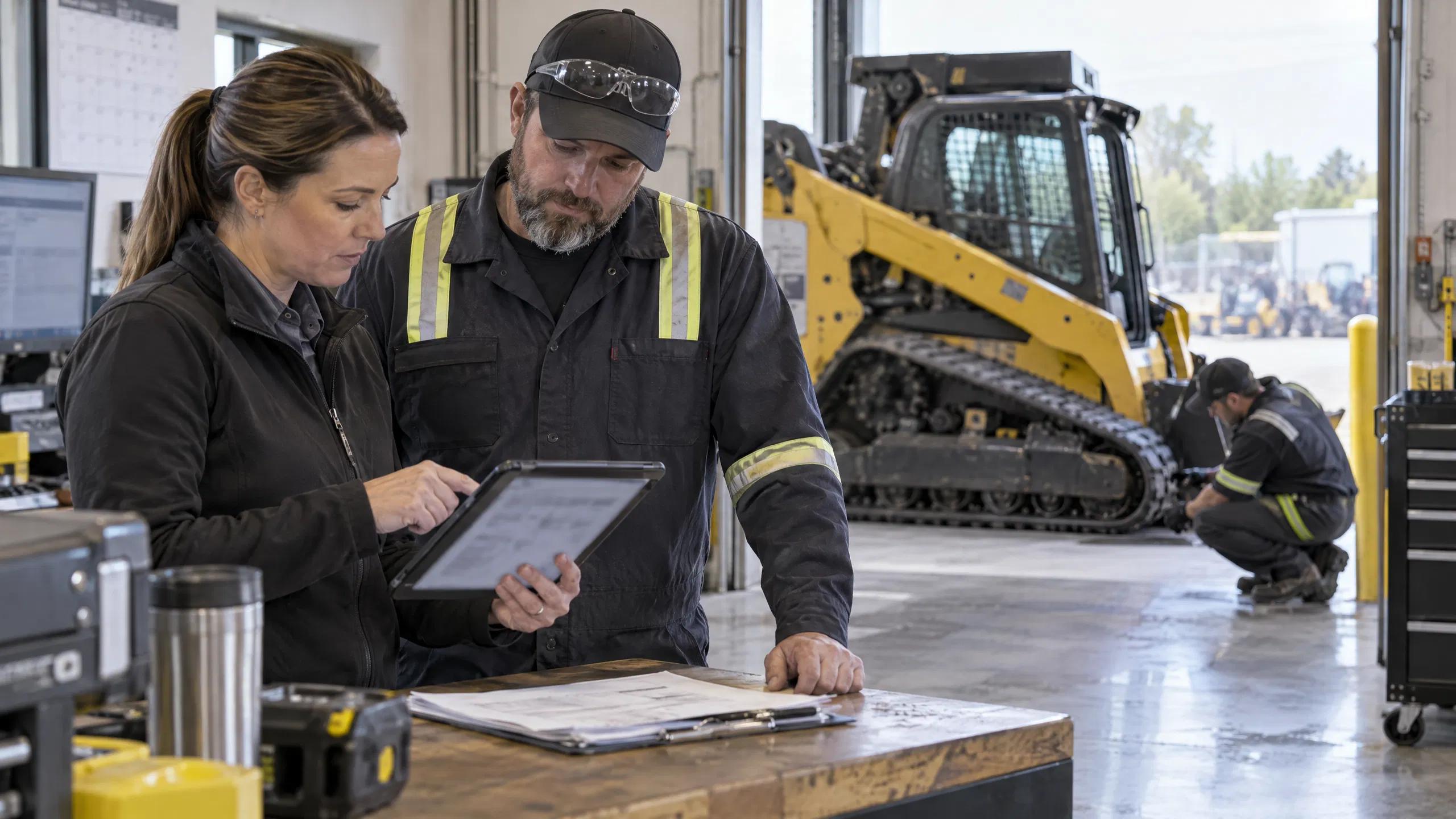
Unplanned track failure can disrupt a job, delay other equipment and create urgent purchasing and service costs. For dealers, contractors and fleet managers, the answer is not to replace every track on a fixed schedule regardless of condition. It is to combine regular inspection, operating history, supplier lead times and planned service windows into a consistent replacement process.
In this guide, we explain how we approach rubber track replacement planning to help reduce avoidable equipment downtime. The recommendations are general operational guidance, not a substitute for the equipment or track manufacturer’s instructions. Inspection criteria, adjustment procedures and replacement limits vary by machine and product.
Build a replacement plan around condition
A calendar reminder can prompt inspection, but it should not be the only basis for a replacement decision. Track condition can vary with machine configuration, workload, surface, operator practices and undercarriage condition. We recommend tracking operating hours alongside inspection findings so maintenance teams can identify changes and discuss them before a track becomes an urgent repair.
During routine checks, look for visible cuts, cracking, missing tread blocks, exposed reinforcement, unusual wear or damage to the guide area. Compare both sides of the machine and note whether wear is concentrated in one section. Record the date, machine hours, jobsite conditions and any action taken. Consistent photographs can help compare the same area over time.
A significant defect, abnormal wear or repeated tracking issue should be assessed promptly by qualified personnel. The goal is not to predict a precise failure date from appearance alone, but to decide whether closer monitoring, investigation or a planned replacement is appropriate. Always use manufacturer guidance for serviceability and replacement criteria.
Investigate the undercarriage before ordering
A new track may not solve a problem caused by another component. Rollers, idlers, sprockets, guides and other undercarriage parts influence how the track runs. Debris buildup, worn components, damage or a setup outside the specified range can contribute to wear or tracking problems.
Before approving track replacement, inspect the related components according to the machine manual. If a track has worn unevenly or failed sooner than expected, document the condition and have the cause assessed. Replacing it without addressing an underlying issue may lead to repeat downtime and additional cost.
Maintenance teams should avoid applying generic adjustment values across different machine models. Track tension and installation procedures are equipment-specific. Use the relevant instructions and trained technicians; do not assume that a procedure for one machine applies to another.
Coordinate procurement with service lead times
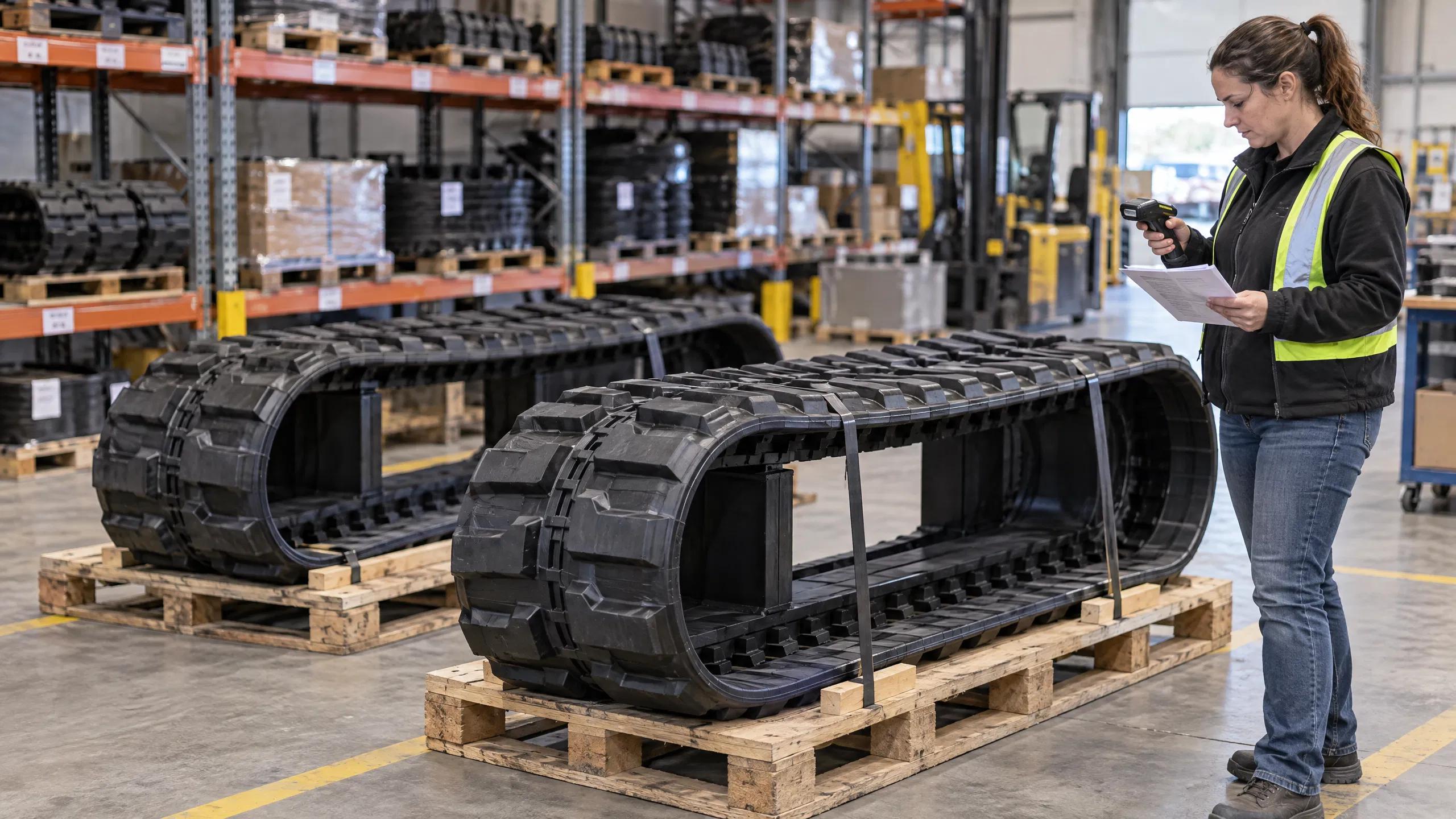
Procurement should begin before the track becomes an emergency. A replacement plan is more useful when it includes expected supplier lead times, availability, shipping time, installation capacity and the operational importance of the machine. For a critical unit, a longer lead time may justify earlier ordering or a different inventory strategy than for equipment with a suitable backup.
When requesting replacement rubber tracks, provide the full machine make and model, serial number where available, current track specifications and photographs of the track and undercarriage. Confirm fitment with the supplier before purchase, especially if the machine has a non-standard configuration or a history of replacement-part changes.
A quote should be evaluated beyond unit price. Check stock status, delivery terms, warranty conditions, installation support and the supplier’s process for resolving a fitment concern. Make sure the quoted product matches the specific machine and application. Keeping the final part reference and fitment confirmation with the machine record can simplify future orders.
Schedule the work to limit disruption
The maintenance window should reflect job schedules, machine availability, technician capacity and parts arrival. Where practical, align track replacement with other planned service work so the machine does not need to be taken out of operation multiple times. Confirm that the correct parts and tools are on hand before the machine is moved into the service area.
For fleets with multiple machines, maintenance planners can sequence work by operational priority. A machine with an imminent project assignment may need a different service window from one that can be temporarily substituted. Communicate the plan with operators and site supervisors so they know when the equipment will be unavailable and what backup arrangements exist.
Build some flexibility into the schedule. Delivery changes, inspection findings or additional undercarriage work can extend a service event. Recording those contingencies helps managers make realistic commitments rather than relying on an optimistic estimate.
Verify after installation
After a track is installed, complete the checks required by the machine and track manufacturers. Confirm correct fitment, installation and adjustment using the applicable instructions. Inspect the surrounding undercarriage and ensure that fasteners or other required components are addressed as specified.
Before returning the machine to work, document the installation date, machine hours, product reference and any related service performed. Follow the recommended post-installation inspection or monitoring procedures. If unusual noise, movement or tracking behavior appears, stop and have the setup checked rather than continuing to operate on an assumption.
These records support future fleet maintenance planning. They also help the team understand how the track performs in the actual application, while avoiding unsupported assumptions about a fixed service life.
Use fleet records to improve future planning
A useful maintenance record connects each machine to its track specification, inspection history, supplier, installation date and operating conditions. Over time, these records can help purchasing teams spot recurring issues, forecast likely demand and compare the experience of similar machines. They are not a guarantee of future performance, but they provide a better basis for planning than memory or emergency purchase history.
Dealers can support customers by asking for accurate machine identification early, documenting confirmed fitment and sharing product-specific maintenance information. Fleet managers can improve coordination by giving operators a straightforward way to report visible damage and by making inspection findings available to procurement and service teams.
Conclusion
Reducing equipment downtime through track planning requires coordination between inspection, diagnosis, purchasing and service scheduling. We recommend monitoring track condition, checking the entire undercarriage, verifying fitment before ordering and booking work around realistic lead times and operating priorities.
A documented process cannot eliminate unexpected failures, but it can help a business respond earlier, avoid preventable order errors and make more informed replacement decisions. For specific service limits, fitment and installation procedures, follow the instructions for the exact machine and track product.
Frequently Asked Questions
1. When should we start planning rubber track replacement?
Begin planning when inspections show developing wear or damage, or when service history indicates that replacement may be approaching. Use manufacturer criteria and qualified assessment rather than a universal hours-based rule.
2. Can we replace tracks based only on operating hours?
Hours are useful context but should not be the only factor. Condition, application, undercarriage health and manufacturer guidance also matter.
3. What information helps a supplier confirm replacement track fitment?
Provide the machine make, full model, serial number if available, track specifications, photographs and details of any non-standard modifications. Request written confirmation before ordering.
4. Should the undercarriage be inspected during track replacement?
Yes. Related components influence track operation. Inspect them according to the machine manufacturer’s guidance and address any relevant wear or damage.
5. How can fleet managers reduce downtime during a scheduled replacement?
Verify fitment and parts availability in advance, confirm the technician and service window, coordinate the work with other planned maintenance where practical, and communicate equipment availability to operations staff.

Post time: Nov-13-2026