
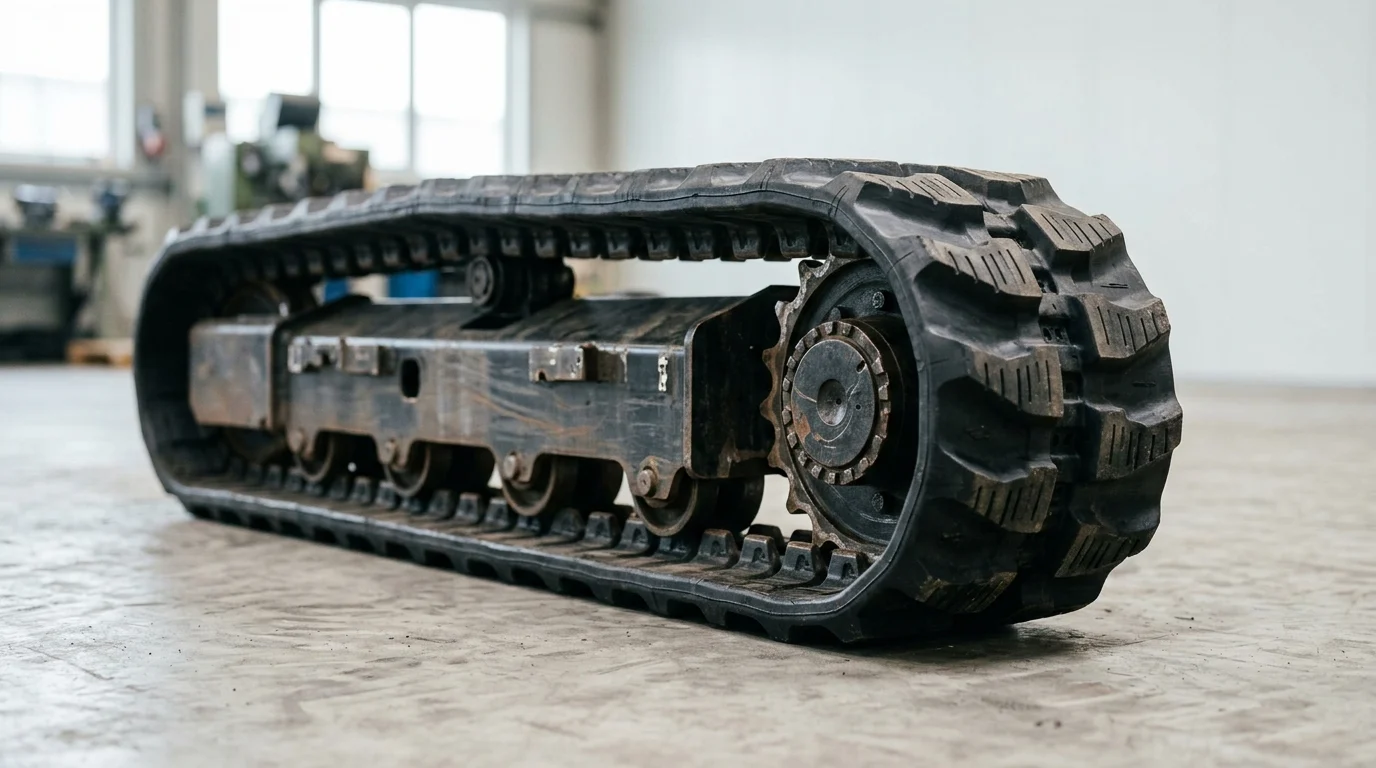
Why Rubber Excavator Tracks Affect Downtime
For heavy equipment fleet managers, minimizing downtime is the most critical factor for maintaining project profitability. In heavy civil construction, an unexpected track failure can result in costly idle labor and machine downtime—often estimated by industry associations at hundreds of dollars per hour, depending on the operation. Recently, there has been a significant industry shift toward rubber tracks for compact and mini excavators—typically those under 8 to 12 metric tons—as contractors look to reduce maintenance delays. While generally unsuitable for large, heavy-duty machines, rubber tracks on compact equipment help extend the overall service life of sensitive undercarriage components and chassis. However, it is important to note a key caveat regarding repairability: while steel tracks can often be field-repaired by replacing individual links, a rubber track cord failure or severe delamination typically necessitates a complete track replacement, which can be a major downtime factor.
What Rubber Excavator Tracks Are
To understand this shift and its impact on downtime, it is necessary to look at the physical construction of modern rubber excavator tracks. Unlike traditional steel chains, these tracks consist of a rubber belt reinforced with steel cord reinforcement and embedded metal core bars. This composite structure provides the necessary tensile strength to handle excavation tasks while maintaining the flexibility required for rapid transit across job sites. The vulcanized rubber compound protects the internal steel matrix from moisture, thereby preventing rust and internal degradation over the track’s lifecycle.
When Rubber Tracks Outperform Steel Tracks
Rubber tracks significantly outperform bare steel in urban, residential, and finished-surface environments. When operating on asphalt or concrete, bare steel tracks can lead to costly surface damage. While steel tracks equipped with bolt-on or clip-on rubber pads offer a common alternative for surface protection, dedicated rubber tracks often avoid pavement remediation costs entirely. This allows machines to operate directly on roads without laying down protective mats, though heavy loads or aggressive turning can still occasionally mark finished surfaces.
Furthermore, rubber tracks noticeably reduce machine vibration compared to steel alternatives. This reduction not only decreases operator fatigue during long shifts but also extends the lifespan of sensitive electronic and hydraulic components by minimizing the shock loads transferred through the chassis during operation. However, rubber tracks have distinct limitations. They can offer less traction than steel in wet clay or on steep side slopes, and they may be more prone to derailment on highly uneven terrain. Additionally, they are susceptible to accelerated wear in extreme heat, can be severely damaged during heavy demolition involving sharp steel debris, and degrade quickly when exposed to oils or hydrocarbons.
How to Compare Rubber Excavator Tracks
When evaluating different track options for compact excavators, comparing them goes beyond simply looking at the initial price tag. Contractors must analyze specific technical specifications, material properties, and performance metrics to ensure the tracks can handle intended operational demands without suffering premature failure. Additionally, mechanical compatibility is crucial; switching a machine between steel and rubber tracks may require different sprockets, idlers, or roller setups depending on the excavator’s make and model.
Key Specifications to Check
The most critical specifications to check during procurement are the track width, pitch, and number of links. These are typically expressed in a standardized formula, such as 300×52.5×80, which translates to a 300mm width, a 52.5mm pitch, and 80 metal links. Choosing an incorrect size, even by a few millimeters, significantly increases the risk of track derailment or excessive wear on the drive sprockets.
Additionally, buyers should always verify the rubber compound’s durability and the internal cord structure. High-quality rubber tracks utilize a robust rubber compound offering optimal resistance to chunking. It is important to note that tracks marketed by manufacturers as “premium” tiers often utilize continuous, heavy-duty steel cords to prevent the weak points associated with overlapping cord joints. Continuous, non-overlapping steel cords can withstand significantly more tensile stress before snapping compared to overlapping designs, drastically reducing the catastrophic failure rate on rocky terrain. Buyers should verify this specific cord construction rather than relying solely on marketing labels.
Performance, Cost, and Ground Protection
Balancing performance, total cost of ownership (TCO), and ground protection requires a clear understanding of operational trade-offs. Higher-tier rubber tracks often feature specialized tread patterns, such as C-lug or staggered block designs, which optimize traction on muddy slopes while keeping the machine’s ground pressure exceptionally low for a mid-sized mini excavator.
While specific lifespan and ground pressure figures vary widely by manufacturer, machine weight, and operating conditions, the following table illustrates qualitative industry baselines based on manufacturer data:
| Track Type | Relative Lifespan | Ground Pressure Impact | Total Cost of Ownership (TCO) Context |
|---|---|---|---|
| Traditional Steel | Longest | Highest | Higher in urban settings (due to surface remediation); Lower in demolition/quarries |
| Standard Rubber | Baseline | Low | Baseline for general landscaping and light dirt work |
| Premium Rubber | Extended | Low | Moderate (balances longer lifespan with surface protection) |
As the table illustrates, while steel offers the longest raw track lifespan, its TCO can be higher in urban settings due to the added costs of pavement remediation and accelerated undercarriage wear from vibration. Conversely, steel often yields a lower TCO in demolition, quarry, or heavy-rock applications where rubber would quickly be destroyed. Rubber provides a highly compelling middle ground for compact equipment in finished environments. It cuts ground pressure significantly, protects delicate surfaces, and still offers a reliable service life if properly maintained by operators.
How to Buy and Maintain Rubber Excavator Tracks
Securing the right tracks is only half the battle; how they are purchased and maintained ultimately dictates the return on investment. A proactive approach to procurement and daily undercarriage maintenance is essential to prevent unexpected mid-project failures and maximize the operational lifespan of the tracks.
Supplier, Warranty, and Fit Checks
When vetting vendors for Rubber Excavator Tracks or similar undercarriage components, contractors should strictly examine the warranty terms and dimensional guarantees before
Key Takeaways
- Use rubber tracks primarily on compact and mini excavators under about 8 to 12 metric tons where surface protection and reduced vibration matter most.
- Factor downtime into track selection because an unexpected track failure can idle labor and equipment at costs reaching hundreds of dollars per hour.
- Choose dedicated rubber tracks for urban, residential, asphalt, and concrete work to reduce pavement damage and avoid many remediation or matting costs.
- Inspect operating conditions before switching to rubber tracks, since sharp debris, hydrocarbons, extreme heat, wet clay, and steep slopes can shorten service life.
- Compare rubber track options by construction quality, steel cord reinforcement, rubber compound, fitment, and jobsite demands rather than purchase price alone.
Frequently Asked Questions
Why are contractors choosing rubber excavator tracks for compact machines?
Contractors use rubber tracks on compact and mini excavators to reduce pavement damage, lower vibration, improve operator comfort, and limit downtime caused by undercarriage wear on urban and residential jobs.
What size excavators are best suited for rubber tracks?
Rubber tracks are most common on compact and mini excavators, typically under about 8 to 12 metric tons, where surface protection and mobility are priorities.
Do rubber excavator tracks last longer than steel tracks?
They can extend undercarriage and chassis service life by reducing vibration and shock, but total track life depends on terrain, turning habits, heat exposure, debris, and maintenance.
Can rubber excavator tracks be repaired in the field?
Usually not in the same way as steel tracks. Steel links can often be replaced individually, while severe rubber track delamination or cord failure typically requires full track replacement.
Where do rubber tracks outperform steel tracks?
Rubber tracks perform best on asphalt, concrete, residential lots, and finished surfaces because they reduce surface damage and often eliminate the need for protective mats.

Post time: Sep-03-2026